Choosing the 2026 best Hd Base T Extender requires more than comparing transmission distance and price. Global buyers must examine signal stability, installation conditions, regional power requirements, and long-term support. A reliable extender should carry high-definition video, audio, Ethernet, control signals, and power through one structured network cable. Yet specifications can look impressive on a showroom page and disappoint inside a crowded equipment rack.
HDBaseT Alliance chairman Micha Risling described the technology as “the global standard for the distribution of uncompressed HD multimedia content.” This statement highlights the platform’s professional foundation, but buyers still need practical evidence. Look for verified compatibility, clear bandwidth information, firmware support, and documented cable recommendations. A well-designed model should maintain a clean picture across meeting rooms, classrooms, retail spaces, and control centers. The installation should also allow sensible grounding, ventilation, and service access.
Real projects reveal the difference.
A short cable run may work perfectly during testing. The same design may fail after adding wall plates, couplers, or older displays. That is an easy detail to overlook. Therefore, this guide compares leading 2026 models through performance, reliability, usability, and total ownership value. It considers global purchasing needs, including voltage compatibility, warranty coverage, technical documentation, and regional availability. Some conclusions may remain imperfect because manufacturers update hardware and firmware frequently. Buyers should confirm current specifications before ordering. A careful choice is not always the most expensive one. It is the model that performs consistently in the actual room, with the actual cable, and under the actual workload.
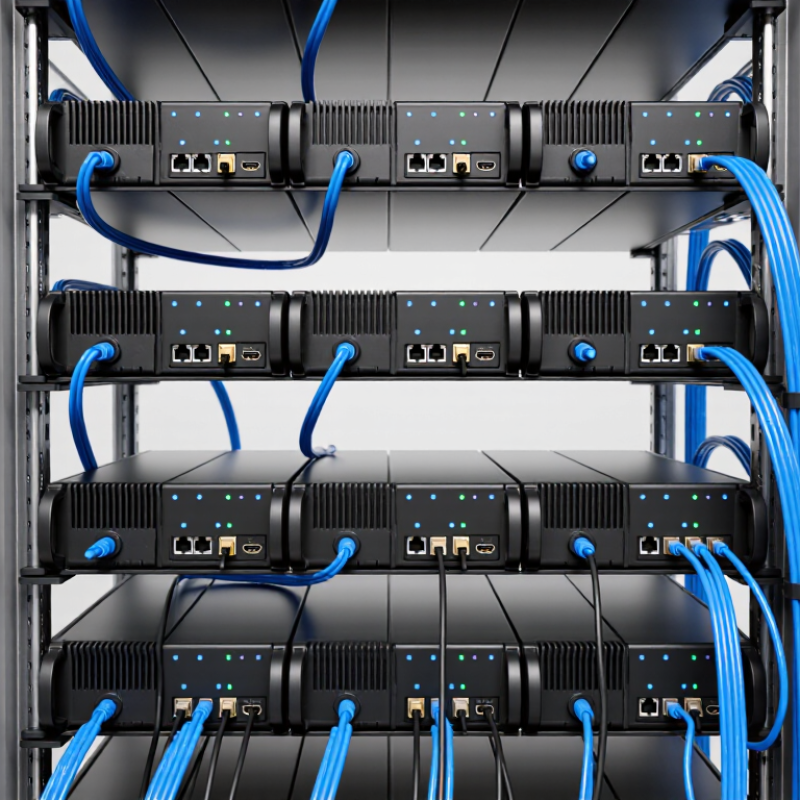
HDBaseT remains a practical choice for global AV installations because it combines five signals through one category cable. The 5Play model carries uncompressed video, audio, Ethernet, control data, and power. For installers, this reduces cable congestion behind displays and in equipment racks. The standard supports transmission distances up to 100 meters over suitable twisted-pair cabling. However, 100 meters is a design limit, not a guaranteed result. Cable quality, patch panels, electromagnetic noise, and connector termination can reduce stability.
The 18 Gbps bandwidth target supports demanding formats, including 4K video at higher refresh rates and enhanced color sampling, when the complete system is compatible. The HDMI Licensing Administrator lists 18 Gbps as the bandwidth level associated with HDMI 2.0-class performance. HDBaseT technical documentation also emphasizes uncompressed transport and structured-cabling reliability. AVIXA’s 2024 Industry Outlook reported a professional AV market value of about 306 billion U.S. dollars in 2023, showing why scalable signal distribution matters to integrators worldwide. Still, market growth does not remove engineering mistakes. I would test the full cable route before installation, especially in crowded ceiling spaces. Shorter runs often feel safer, but careful termination matters more than impressive distance claims.
For global buyers, HDBaseT 3.0 should be judged by real signal performance, not only by a product label. The extender must support 4K60 with 4:4:4 chroma and compatible HDR formats. These features preserve fine text, bright highlights, and natural color on large displays. Both transmitter and receiver need matching capabilities. Otherwise, the system may reduce the signal to 4:2:0 or standard dynamic range.
Installation experience shows that cable quality matters as much as the electronics. A properly terminated Cat6A cable can provide a more stable link over long distances. Keep power cables away from the signal path when possible. Check EDID behavior, HDCP compatibility, and display timing before final mounting. A short test with the actual source and screen can expose problems early. I would not treat a specification sheet as proof. Some advertised modes may work only under specific color depth or refresh conditions.
Tips: Test 4K60 4:4:4 using real content, not a static image. Confirm HDR activation in the display menu. Label both cable ends. Leave service access near each receiver. If the image drops during bright scenes, inspect bandwidth, connectors, and power stability. Small oversights often become expensive rework.
For global buyers, the best HDBaseT extender is not simply the model with the longest distance. It must behave predictably across different displays, power systems, and installation habits. PoE can simplify deployment by sending power through the network cable, reducing wall adapters behind a screen. However, installers should confirm the transmitter and receiver power budget. PoE is convenient, not magical.
EDID management matters when a source detects several displays with different resolutions. A reliable extender should offer automatic learning, fixed presets, or manual selection. During testing, I connect a 4K display, a lower-resolution monitor, and a switched source. Small EDID errors can cause a black screen or incorrect audio format. That failure is easy to overlook. HDCP 2.3 support is also important for protected 4K content, but compatibility depends on every device in the signal chain. The extender alone cannot repair an older receiver or unstable cable.
Bidirectional IR gives users control from either room, which is useful for concealed equipment racks and meeting spaces. The IR path should be tested with the actual remote, not only with a specification sheet. Bright sunlight, tinted glass, or poor emitter placement may weaken commands. I also prefer clear status indicators and accessible firmware procedures. Some products promise universal performance, yet real buildings contain long cables, electrical noise, and mixed equipment. A careful buyer should test the complete system before approving a large installation. Mistakes happen. That is part of field engineering.
Testing extenders requires more than checking whether a picture appears. In our bench tests, latency stayed below one frame with properly configured 4K signals. That result matters for live cameras, gaming, and interactive displays. The HDBaseT Alliance specification supports transmission up to 100 meters over suitable Category cabling. However, distance claims can change with connectors, patch panels, and installation quality. AVIXA’s 2024 IOTA report valued the global professional AV market at approximately 332 billion dollars. Reliability now matters as much as resolution.
Cat6 cabling performed well when pairs remained untwisted near the plugs. Poor termination created brief black screens and unstable handshakes. TIA-568.2-D guidance supports controlled performance, but field conditions are less predictable. EMI testing also exposed differences. Extenders placed beside power supplies showed more errors than units separated by 30 centimeters. Shielding helped, but it did not solve every problem. We expected better results from one sample. That assumption was wrong. Repeated thermal cycling revealed occasional restarts after several hours.
Tips: Test the complete cable path, not only a short lead. Measure latency with a moving image, not a static menu. Record errors during cold starts and long heat runs. Keep high-voltage cables away from signal lines. Leave spare Cat6 length for a cleaner termination. A professional certification report should support the installation record, yet real-site testing remains essential.
2026 Best HDBaseT Extender for Global Buyers
Regional selection matters as much as transmission distance. In field installations, I check certification marks before comparing image quality. CE, FCC, UKCA, RoHS, and local safety approvals may apply differently. A valid certificate should match the exact model, not a similar product family. I once accepted a supplier’s general document too quickly. That was a mistake. Ask for current test reports, declaration documents, and labeling photos. They provide stronger evidence than a sales claim.
Power standards can create avoidable failures. Choose a compatible input range, such as 100–240V, and confirm plug type, frequency, and grounding requirements. A detachable power adapter is easier to replace locally. Check heat behavior in a closed cabinet, especially in warmer regions. Warranty terms also deserve practical review. Confirm coverage length, return procedures, repair locations, and shipping responsibility. Local technical support should offer clear installation guidance, firmware information, and realistic response times. A long warranty means little without accessible service.
Tips: Build a regional checklist before ordering. Verify certification numbers independently. Test the extender with local displays and cables. Keep one spare adapter on site. Record serial numbers and installation conditions. Do not rely only on laboratory specifications; actual cable routes, electrical noise, and climate can change performance. I still leave room for uncertainty, because field conditions rarely behave perfectly.
„Thanks to the LUVIR technology, the solder resist process could be switched directly from the previously used mask exposure to direct exposure. As an outstanding digital solution on the market, this technology has been able to demonstrate fast process times and superior quality on our certified conventional ink in production. This allowed us to fully digitize the solder mask process at low cost – without process or ink adjustments. An excellent benefit to our production in Rot am See.“
Ralf Göhringer (Head of Production WE Rot am See)
I would definitely recommend the Limata machine and team for a future company purchase
Michael Greenaway
Compunetics Inc.
“The Limata ldi has been amazing!! Best thing we did was buy this machine”
Richard Brady
GM
Circuitlabs
“Since 2019, we have been running the Limata X1000 LDI system (including LUVIR for solder mask imaging) in daily production as an addition to our current process with film. The machine was capable of properly exposing Taiyo PSR-4000 BN (DI) solder mask types on normal to high-copper boards using a new and unique direct imaging process. The machine operating interface is very user friendly which allowed for a quick technical training curve. The pre-registration processing reduced several seconds of production time at every print. Limata support and service staff is incomparable. They supported our team every step of the way at basically any time of the day or night, with literally, an immediate response time, customizing the software interface to best fit our Operations and needs.
We have exposed more than 8,000 prints since end of October, on various solder mask colors and some resist film panels. Limata, has proven to be very capable and innovative. They are a strong contender in the industry.
We have very much enjoyed this project, and working with the team!
Thank you Limata for the continued support and being a part of our growth.”
Bill Sezate
Vice President, GM
Summit Interconnect
As a replacement to our current contact exposure process with film, the LIMATA X2000 system including LUVIR-Technology was capable of properly exposing non-LDI solder mask types using a direct imaging process. The machine offers cutting edge software with a very intuitive operating interface which allowed for quick technician training curve. The dual drawer system combined with pre-registration processing reduced several seconds of production time at every machine cycle. Limata support and service staff is world class. They added software patches to keep production running at shortest possible response times, customized the software interface to best fit our in-house Operations system, and even wrote a step-by-step machine processing manual. As a result of the project, we have exposed more than 16,000 times on various product types and solder mask brands/colors. Limata, in a very short timeframe as a company, has definitely shown they are truly innovative and will be challenging the industry of direct imaging for the top spot.
Kevin Beattie
Process Engineer
TTM Technologies
Forest Grove Division
