Choosing the right Pir Sensor Switch in 2026 requires more than comparing detection ranges and prices. It requires evidence.
The International Energy Agency reports that buildings consume about 30% of global final energy and create approximately 26% of energy-related emissions. The U.S. Department of Energy also identifies occupancy-based lighting controls as an important efficiency measure. These figures explain growing demand across offices, warehouses, hotels, schools, and residential projects. Yet market forecasts differ. Reports from MarketsandMarkets and Grand View Research use different product definitions, regions, and forecast periods. Buyers should question impressive numbers.
Comfort still matters.
Dr. Paul Waide, a recognized building-energy specialist, has emphasized that “energy savings must not come at the expense of comfort.” That principle should guide every Pir Sensor Switch evaluation. A device may detect movement accurately in a small office, then miss slow movement in a warehouse aisle. Heat sources, glass partitions, pets, ventilation drafts, and poor mounting angles can create false triggers. No sensor is perfect. Installation quality often decides the real result.
This guide compares passive infrared, microwave, dual-technology, ceiling-mounted, wall-mounted, and smart-networked options for global buyers. It considers detection coverage, voltage compatibility, relay capacity, IP ratings, standby power, commissioning, and regional certification requirements. It also examines supplier documentation and after-sales support, because a low purchase price can hide replacement delays. Some recommendations remain conditional. Building layouts, climate, user behavior, and local standards can change the best choice.
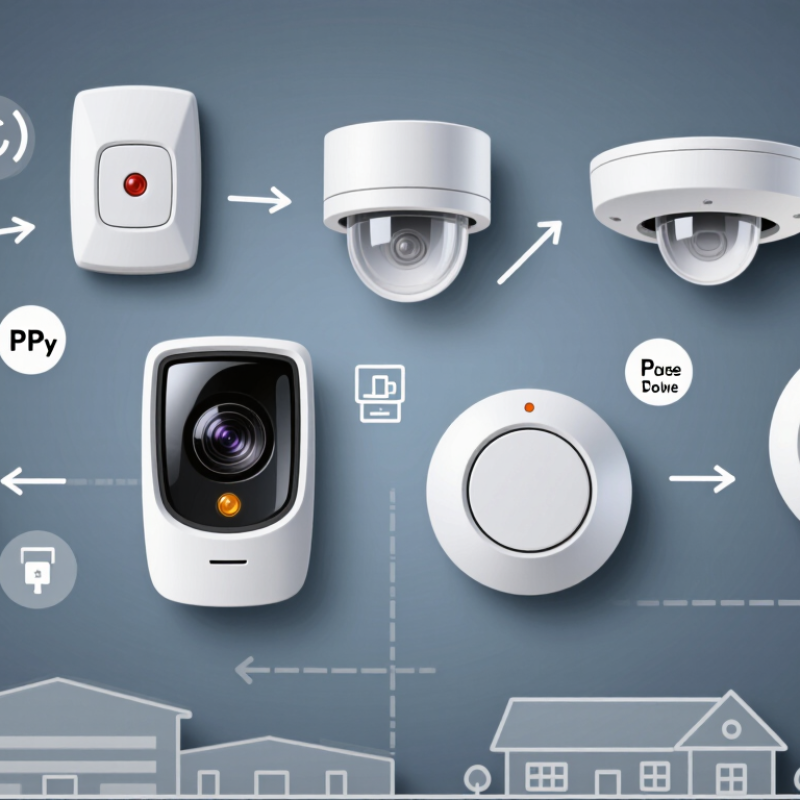
A PIR sensor switch detects movement by sensing changes in infrared energy. People and animals naturally emit heat, while walls and furniture remain relatively stable. The sensor does not record images. Instead, a pyroelectric element reacts when a warm object crosses its detection zones.
A small Fresnel lens divides the viewing area into multiple sections. Movement between these sections creates a changing infrared signal. The circuit then sends a command to a relay, which turns a light or connected load on. Most switches include adjustable time delays, sensitivity settings, and ambient-light controls. In practical installations, the delay prevents lights from switching off while someone is still working.
Placement matters more than many buyers expect. A sensor facing a doorway usually detects side-to-side movement better than direct movement. Heat sources, sunlight, air vents, and moving curtains may cause false triggers. Cold storage areas can also reduce detection distance. Not every room suits a PIR switch.
Different types serve different spaces. Wall-mounted models suit corridors, while ceiling-mounted versions provide broader coverage. Outdoor units need suitable protection against moisture and temperature changes. Buyers should check voltage, load capacity, detection angle, and local electrical requirements before installation. A higher sensitivity setting is not always better. It may create nuisance switching, which wastes energy and weakens user confidence. Testing the actual room remains essential, even when the technical specifications look convincing.
By 2026, global buyers can choose several PIR sensor switch types for homes, offices, warehouses, and outdoor areas. Each type suits a different installation condition. Ceiling-mounted models provide broad detection across rooms and corridors. Wall-mounted units work well near doors, stairways, and small offices. Flush models sit inside the wall for a cleaner appearance. Small spaces need careful positioning.
Outdoor PIR switches usually include weather-resistant housings and adjustable detection angles. Buyers should check the IP rating, operating temperature, and detection distance before ordering. Indoor models often combine motion sensing with daylight control. They can keep lights off when sunlight is sufficient. However, bright reflections or moving curtains may still create false triggers. The practical test matters more than the product description.
Automatic-on switches activate lights when movement appears. Manual-on, or vacancy, switches require a person to press the control first. This option can reduce unnecessary lighting in private rooms. Dual-technology models combine PIR sensing with another detection method, improving reliability in difficult spaces. Wireless versions simplify renovation work but require battery checks and signal planning. Dimming PIR switches support more comfortable lighting changes. During site checks, installers should confirm load capacity, neutral-wire requirements, ceiling height, and local electrical rules. A hallway can look simple. It is not always simple. Even experienced buyers may overlook pets, heat sources, or the sensor’s blind zone.
Comparing PIR sensor switches starts with the installation space. Wall-mounted models suit corridors, while ceiling units cover wider rooms. Check the detection angle, sensing distance, and adjustable time delay. A narrow hallway may need 120 degrees, not the widest available range. Small details matter.
Performance depends on more than sensitivity. Compare the rated voltage, switching load, standby power, and compatible lamp types. For outdoor or humid areas, examine the IP rating and housing seal. In practical tests, walk across the detection zone from different directions. PIR sensors often respond better to side-to-side movement than direct movement. Test it twice. Record the trigger distance and shut-off time.
Reliable comparison also requires attention to temperature and installation height. Heat from radiators, sunlight, or moving air can cause unwanted activation. A sensor placed behind a door may miss users entirely. Look for adjustable sensitivity and clear wiring instructions, especially when buyers source products for different electrical systems. Certifications and test reports add useful evidence, but they do not replace on-site checks. I have found that published detection ranges can feel optimistic in furnished rooms. That is not always a product failure; furniture, mounting height, and user movement change results. Buyers should compare measured performance under realistic conditions, not only impressive specification tables. A dependable switch should respond consistently, avoid frequent false triggers, and remain stable after repeated daily cycles.
In 2026, PIR sensor switches serve different spaces because movement patterns vary by region, building type, and climate. In European apartments, ceiling-mounted PIR switches suit corridors, stairwells, and shared entrances. They detect walking movement across a broad area and reduce lights left on unnecessarily. In offices, wall-mounted models work well near doors, meeting rooms, and small work zones. Their detection range is easier to adjust.
Warehouses and factories often need high-bay PIR sensors with longer coverage and stronger temperature tolerance. In hot regions, outdoor-rated switches are used for parking areas, pathways, and loading zones. Sealed housings help resist dust, humidity, and insects. Dual-technology sensors can reduce false triggers in spaces with airflow or unstable temperatures. They cost more, though. That trade-off is often underestimated.
The U.S. Department of Energy’s Energy Savings Potential of Occupancy Sensors in Commercial Buildings reports potential lighting reductions of roughly 20–60%, depending on occupancy patterns and control quality. The International Energy Agency reports that buildings consume about 30% of global final energy, making small control improvements commercially relevant. Real-world results are less perfect. Poor mounting height, blocked lenses, or low movement can cause missed detection. Installers should test each room at night and during normal use, rather than trusting catalog coverage alone. Audits also matter, especially where sunlight, ventilation, or cleaning schedules change daily.
Global buyers should select a PIR sensor switch by application, not appearance. Ceiling-mounted units suit open offices, warehouses, and corridors. Wall-mounted units work better in small rooms with predictable entry paths. A dual-technology model may reduce false triggers in areas with moving curtains or airflow, but it usually costs more and needs careful commissioning. Choose detection range, mounting height, time delay, and daylight control together. A sensor that misses a desk can waste energy and frustrate users.
The International Energy Agency reported that buildings consumed about 30% of global final energy in 2022. This makes control accuracy commercially important. Check whether the switch supports the local voltage, frequency, wiring method, and LED load. Two-wire designs simplify retrofits, while three-wire models often provide more stable performance. Verify relay capacity and LED inrush ratings. Small details matter. For humid or dusty locations, review the IP rating and operating temperature. Compliance should reference applicable IEC requirements, national electrical rules, and recognized conformity testing. Certification claims deserve evidence, not attractive packaging.
Field installation experience shows that settings often matter more than sensor sensitivity. A 10-minute timeout may waste energy in a rarely used restroom. A 30-second timeout may annoy office workers. Test real movement patterns during occupied hours. The IEA’s energy-efficiency analysis supports controls as a practical reduction measure, but savings vary by occupancy and commissioning quality. Buyers should request test reports, wiring diagrams, warranty terms, spare-part access, and documented detection results. A low purchase price can become expensive after repeated false-offs. That risk is easy to underestimate.
Ceiling-mounted PIR switches generally provide the widest coverage, while wall-mounted and corridor models are better for directional detection. Outdoor and high-bay applications require wider coverage, greater detection distance, and suitable environmental protection such as an appropriate IP rating. The figures show representative industry-standard coverage angles; buyers should confirm the exact range, installation height, ambient temperature, and IP rating in the product datasheet.
„Thanks to the LUVIR technology, the solder resist process could be switched directly from the previously used mask exposure to direct exposure. As an outstanding digital solution on the market, this technology has been able to demonstrate fast process times and superior quality on our certified conventional ink in production. This allowed us to fully digitize the solder mask process at low cost – without process or ink adjustments. An excellent benefit to our production in Rot am See.“
Ralf Göhringer (Head of Production WE Rot am See)
I would definitely recommend the Limata machine and team for a future company purchase
Michael Greenaway
Compunetics Inc.
“The Limata ldi has been amazing!! Best thing we did was buy this machine”
Richard Brady
GM
Circuitlabs
“Since 2019, we have been running the Limata X1000 LDI system (including LUVIR for solder mask imaging) in daily production as an addition to our current process with film. The machine was capable of properly exposing Taiyo PSR-4000 BN (DI) solder mask types on normal to high-copper boards using a new and unique direct imaging process. The machine operating interface is very user friendly which allowed for a quick technical training curve. The pre-registration processing reduced several seconds of production time at every print. Limata support and service staff is incomparable. They supported our team every step of the way at basically any time of the day or night, with literally, an immediate response time, customizing the software interface to best fit our Operations and needs.
We have exposed more than 8,000 prints since end of October, on various solder mask colors and some resist film panels. Limata, has proven to be very capable and innovative. They are a strong contender in the industry.
We have very much enjoyed this project, and working with the team!
Thank you Limata for the continued support and being a part of our growth.”
Bill Sezate
Vice President, GM
Summit Interconnect
As a replacement to our current contact exposure process with film, the LIMATA X2000 system including LUVIR-Technology was capable of properly exposing non-LDI solder mask types using a direct imaging process. The machine offers cutting edge software with a very intuitive operating interface which allowed for quick technician training curve. The dual drawer system combined with pre-registration processing reduced several seconds of production time at every machine cycle. Limata support and service staff is world class. They added software patches to keep production running at shortest possible response times, customized the software interface to best fit our in-house Operations system, and even wrote a step-by-step machine processing manual. As a result of the project, we have exposed more than 16,000 times on various product types and solder mask brands/colors. Limata, in a very short timeframe as a company, has definitely shown they are truly innovative and will be challenging the industry of direct imaging for the top spot.
Kevin Beattie
Process Engineer
TTM Technologies
Forest Grove Division
