In 2026, connector selection is becoming a design decision, not a purchasing detail. Vehicle electrification, compact appliances, and automated production demand stable contact performance. The International Energy Agency reported that global electric car sales exceeded 17 million units in 2024. That growth increases demand for reliable terminals, wire connectors, and sensor interfaces. The choice matters.
Industry forecasts support this direction. Grand View Research identifies automotive electronics, electrification, and advanced safety systems as major drivers of connector market growth through 2030. MarketsandMarkets also highlights rising demand for sealed, high-temperature, and miniaturized connectors in vehicles and industrial equipment. These trends give Stocko Connector products a relevant position for global buyers seeking practical connection systems. However, market growth alone does not prove suitability.
This guide examines leading Stocko connector types, including PCB terminals, wire-to-board connectors, quick-connect systems, and application-specific contact solutions. Each type will be considered through contact reliability, current capacity, housing design, installation method, and supply consistency. A connector that fits a sample may still fail under vibration, heat, or repeated assembly. Fit is not enough.
The evaluation also considers real purchasing conditions. Buyers may compare drawings, certifications, packaging, tooling requirements, and regional availability before approving a component. STOCKO’s long industrial experience offers useful technical confidence, but no catalog eliminates the need for testing. That assumption can fail. Product selection should follow the actual assembly environment, not only a familiar part number. References include the IEA Global EV Outlook 2025, Grand View Research connector market analysis, and MarketsandMarkets industry forecasts. These sources provide direction, while engineering validation remains essential.
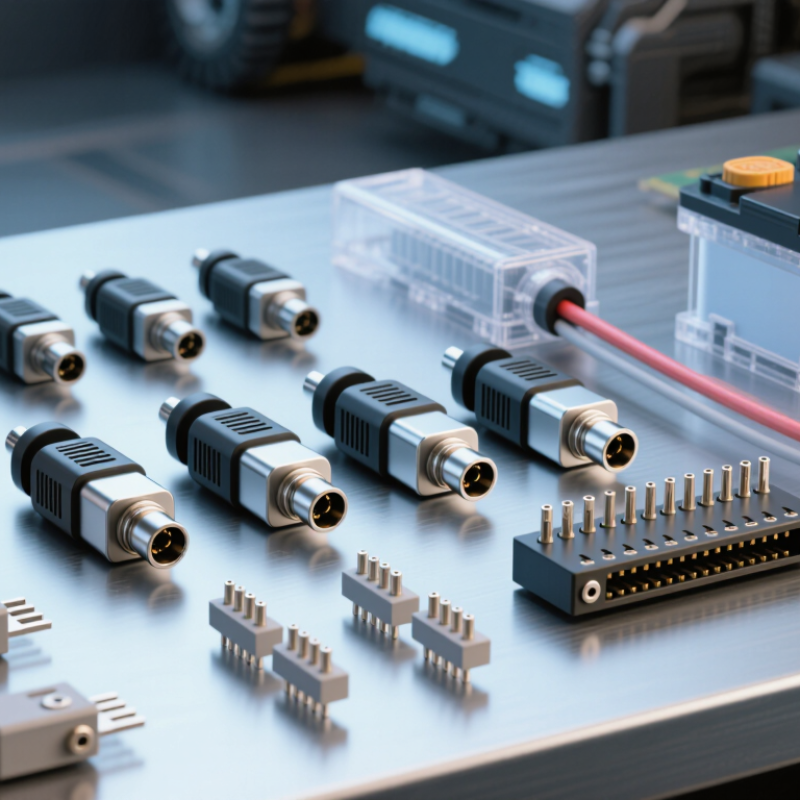
Stocko connector fundamentals begin with the contact system.
These compact components join wires, terminals, or circuit boards through controlled electrical contact. Their main parts are contacts, housings, locking features, and cable-entry sections. Contact material affects conductivity and corrosion resistance. Housing geometry controls insulation, alignment, and assembly speed.
Product classification should follow application, termination method, and circuit direction.
Wire-to-wire versions suit harness extensions. Wire-to-board types connect cables with PCBs. Board-to-board formats support compact internal assemblies.
Crimp, solder, and insulation-displacement terminations require different tools and quality checks.
Buyers should also compare pitch, current rating, voltage rating, operating temperature, and mating cycles.
Small details matter here.
A connector that fits physically may still fail electrically.
The global connector market was valued at about USD 84 billion in 2023, according to Grand View Research.
MarketsandMarkets projects continued growth through 2029, driven by vehicles, industrial equipment, and consumer electronics. These reports group many connector technologies together, so their figures do not represent Stocko-style products alone.
That limitation deserves attention.
In practical sourcing, buyers should request contact resistance data, retention-force results, material specifications, and production traceability. A clear drawing is useful, but it cannot replace sample testing. Some classifications also overlap, especially when one connector combines wire-to-board and locking functions.
Choosing the right connector type depends on the wiring task, not only on terminal size. For appliance harnesses, insulation-displacement connectors can reduce stripping work and support fast assembly. Crimp connectors suit vibration-prone equipment when contact pressure and pull-out strength are controlled. Wire-to-board versions fit compact control panels, while wire-to-wire designs simplify field replacement. Some choices are easy. Others need testing.
The global electrical connectors market was valued at about USD 84 billion in 2023, according to Grand View Research’s Electrical Connectors Market Report. Its forecast indicates continued growth through 2030, driven by vehicles, industrial controls, and connected equipment. This expansion increases demand for sealed connectors in damp areas, high-temperature terminals near motors, and low-profile parts inside crowded enclosures. Application details matter more than catalog popularity.
For signal wiring, fine-pitch board connectors can save space but may complicate inspection and repair. For power circuits, larger crimp contacts offer better current handling, although incorrect tooling can create hidden heating points. The IEC 60512 test series emphasizes measurable performance, including contact resistance, mechanical endurance, and insulation behavior. Buyers should request these results, plus mating-cycle data and material specifications. A practical weakness remains: laboratory ratings may not represent dusty factories or repeated manual handling. Sample testing under real installation conditions is still necessary.
Comparing compact wire connectors requires more than matching pin count.
Start with the housing design, contact layout, and installation method. A low-profile connector can save space inside a control panel, but its smaller body may limit wire size and heat dissipation. Check pitch carefully. A one-millimeter difference can create assembly errors.
Look at the contact system next.
Insulation-displacement designs reduce stripping work, while crimped contacts may offer stronger retention when properly installed. Compare rated current, voltage, contact resistance, and allowable temperature. These figures should be reviewed together. Higher current through a tightly packed housing can create noticeable heat. Derating matters.
Mechanical performance also deserves practical testing.
Inspect the locking feature with gloved hands. Measure insertion force. Check whether the connector remains secure after vibration and repeated mating cycles. In field service, awkward access often matters more than a polished specification sheet. I have seen suitable connectors fail because technicians could not release them safely. That was a design mistake, not a material failure.
Environmental conditions change the decision.
Dust, moisture, oil exposure, and thermal cycling can affect seals and insulation. Ask for test methods, not only headline values. A supplier with traceable inspection records, dimensional drawings, and batch controls offers stronger evidence of reliability. Still, no catalog can predict every installation. Build a sample harness, apply the expected load, and inspect it after real handling. Some assumptions will be wrong. That is useful.
Global connector selection depends on standards, materials, and real system conditions.
A connector may fit mechanically and still fail electrically. Buyers should verify IEC 61984 requirements for connector safety and applicable UL standards for regional approval. IEC 60529 ratings also matter when dust or water may reach the connection. RoHS and REACH documentation supports responsible material selection and supply-chain checks.
Contact materials affect performance.
Copper alloys provide reliable conductivity and spring strength. Tin plating suits many general applications, while gold plating can support low-signal stability and frequent mating. Housing materials such as PA66 or PBT offer useful heat resistance. Silicone seals improve protection in damp environments.
Always compare voltage, current, wire size, pitch, temperature range, and mating cycles. Small differences can create expensive redesigns. I have seen specifications that looked complete but omitted cable flexibility and vibration exposure.
Tips:
Request samples, dimensional drawings, test reports, and material declarations before approval. Test the connector with the actual cable, not only a catalog sample. Check keying, locking force, contact resistance, and clearance. A simple fit test is not enough. Review regional certification needs with a qualified engineer, especially for medical, automotive, or industrial equipment. Some assumptions may be wrong, so record every limitation and retest after design changes.
Selecting the Right Stocko Connector for International Procurement requires more than matching pin count. The global connectors market is projected to reach approximately USD 106 billion by 2029, according to MarketsandMarkets’ 2024 industry report. This growth reflects demand for smaller, higher-density assemblies across appliances, vehicles, and industrial controls. Buyers should verify pitch, rated current, voltage, contact resistance, insulation material, and operating temperature before comparing prices.
Fit comes first. A connector that locks securely on a clean production sample may loosen after vibration, thermal cycling, or repeated servicing. Check crimp height, conductor range, pull-out force, and mating-cycle data. Request samples from the intended production lot, not only from a laboratory batch. Intertek and UL research consistently highlights traceability and documented testing as key elements of reliable international sourcing.
Compliance also affects landed cost. Confirm RoHS and REACH declarations, customs documentation, packaging protection, and country-specific safety requirements. The 2024 World Bank Logistics Performance Index shows that border efficiency and shipment reliability remain uneven across markets. Therefore, ask suppliers for realistic lead times, alternate tooling plans, and inspection records. A low unit price can become expensive after rework, delays, or rejected batches. No selection matrix is perfect. Weather, assembly skill, and field maintenance can still expose assumptions that looked reasonable on paper.
„Thanks to the LUVIR technology, the solder resist process could be switched directly from the previously used mask exposure to direct exposure. As an outstanding digital solution on the market, this technology has been able to demonstrate fast process times and superior quality on our certified conventional ink in production. This allowed us to fully digitize the solder mask process at low cost – without process or ink adjustments. An excellent benefit to our production in Rot am See.“
Ralf Göhringer (Head of Production WE Rot am See)
I would definitely recommend the Limata machine and team for a future company purchase
Michael Greenaway
Compunetics Inc.
“The Limata ldi has been amazing!! Best thing we did was buy this machine”
Richard Brady
GM
Circuitlabs
“Since 2019, we have been running the Limata X1000 LDI system (including LUVIR for solder mask imaging) in daily production as an addition to our current process with film. The machine was capable of properly exposing Taiyo PSR-4000 BN (DI) solder mask types on normal to high-copper boards using a new and unique direct imaging process. The machine operating interface is very user friendly which allowed for a quick technical training curve. The pre-registration processing reduced several seconds of production time at every print. Limata support and service staff is incomparable. They supported our team every step of the way at basically any time of the day or night, with literally, an immediate response time, customizing the software interface to best fit our Operations and needs.
We have exposed more than 8,000 prints since end of October, on various solder mask colors and some resist film panels. Limata, has proven to be very capable and innovative. They are a strong contender in the industry.
We have very much enjoyed this project, and working with the team!
Thank you Limata for the continued support and being a part of our growth.”
Bill Sezate
Vice President, GM
Summit Interconnect
As a replacement to our current contact exposure process with film, the LIMATA X2000 system including LUVIR-Technology was capable of properly exposing non-LDI solder mask types using a direct imaging process. The machine offers cutting edge software with a very intuitive operating interface which allowed for quick technician training curve. The dual drawer system combined with pre-registration processing reduced several seconds of production time at every machine cycle. Limata support and service staff is world class. They added software patches to keep production running at shortest possible response times, customized the software interface to best fit our in-house Operations system, and even wrote a step-by-step machine processing manual. As a result of the project, we have exposed more than 16,000 times on various product types and solder mask brands/colors. Limata, in a very short timeframe as a company, has definitely shown they are truly innovative and will be challenging the industry of direct imaging for the top spot.
Kevin Beattie
Process Engineer
TTM Technologies
Forest Grove Division
