As the demand for stainless steel capillary tubing grows, industry trends reveal significant insights for buyers. In recent years, the global stainless steel tubing market has seen a compound annual growth rate (CAGR) of approximately 5%. Reports indicate that the adoption of stainless steel in medical applications is rising, driven by its biocompatibility and strength.
Buyers should keep an eye on innovations in manufacturing processes. For example, advancements in welding technology enhance the quality and durability of stainless steel capillary tubing. Companies are investing more in precision engineering to meet the increasing needs of various sectors, including pharmaceuticals and aerospace.
However, challenges persist. Sourcing high-grade raw materials is becoming more complex. Fluctuating metal prices can impact supply chain stability. It's important for buyers to reflect on these factors as they navigate their purchasing decisions. Understanding these nuances will enable informed choices in an evolving marketplace.
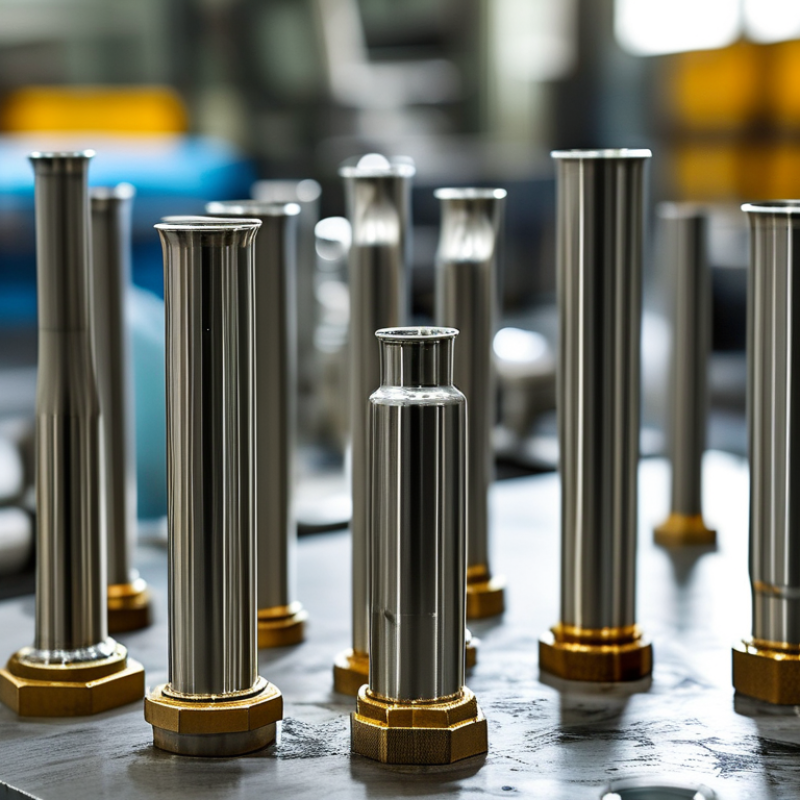
Stainless steel capillary tubing is making waves in various industries in 2026. Its unique structure enables precise fluid delivery, making it invaluable in medical devices. For instance, it is widely used in infusion systems and drug delivery mechanisms. The ability to withstand high pressure and resist corrosion enhances its reliability in critical applications.
Another prominent application of capillary tubing is in the aerospace sector. Here, it plays a crucial role in hydraulic systems and fuel lines. Manufacturers are increasingly opting for stainless steel due to its durability and safety features. The lightweight nature of the tubing is a significant advantage, especially in aircraft design. However, challenges remain in optimizing production processes to enhance efficiency and reduce costs.
In the research and analytical fields, stainless steel capillary tubing aids in chromatography. It allows for accurate fluid handling in laboratory settings. Researchers appreciate its ability to maintain the integrity of sensitive compounds. Nevertheless, sourcing consistent quality material can be a concern. Continuous improvements in material processing are necessary to ensure reliability in these applications.
| Application Area | Usage Percentage | Key Trends | Material Specifications |
|---|---|---|---|
| Medical Devices | 35% | Increasing biocompatibility | 316L stainless steel |
| Automotive Applications | 25% | Growth in lightweight structures | 304 stainless steel |
| Aerospace Components | 20% | Enhanced fatigue resistance | 15-5 PH stainless steel |
| Oil and Gas Industry | 15% | Corrosion resistance in harsh environments | Duplex stainless steel |
| Instrumentation | 5% | Precision manufacturing advancements | Alloy 20 stainless steel |
Advancements in the manufacturing processes for stainless steel capillary tubing are pivotal for 2026. According to a recent industry report, the demand for capillary tubing is expected to grow by 8% annually, driven by innovations in production techniques. Manufacturers increasingly leverage technologies like laser welding and advanced heat treatment. These methods improve precision and increase the strength of the tubing.
One notable trend is the adoption of automation in fabrication. Automated systems enhance consistency and reduce human error. Reports indicate that automation can increase production efficiency by up to 30%. Moreover, some companies are incorporating real-time quality monitoring systems. This ensures that every batch meets the stringent standards required for critical applications.
However, challenges remain. The integration of new technologies often requires substantial investment. Smaller manufacturers may struggle to keep pace. Additionally, while innovations improve quality, they can complicate supply chains. As trends evolve, keeping a balance between quality, cost, and efficiency is crucial for success.
Sustainability is reshaping the production of stainless steel capillary tubing. Eco-friendly practices are being adopted across the industry. According to a recent report by the International Stainless Steel Forum, over 60% of stainless steel production now involves recycled materials. This shift reduces waste and lowers energy consumption during manufacturing.
The demand for sustainable materials also drives innovation. Manufacturers are developing new technologies that minimize carbon footprints. Life cycle assessments reveal that using recycled stainless steel can cut emissions by up to 50%. Moreover, the European Union's ambitious Green Deal aims to push further for carbon-neutral steel production by 2050. This evolving landscape challenges companies to adapt or risk obsolescence.
However, the transition is not flawless. Some manufacturers struggle with sourcing enough recycled materials. The quality control of recycled inputs can vary, affecting product integrity. As the market grows, establishing reliable supply chains becomes increasingly important. Ensuring sustainability should not compromise quality in capillary tubing production. Balancing these aspects remains a critical challenge for industry leaders.
The demand for stainless steel capillary tubing is expected to surge in 2026 due to several market drivers. Industries such as automotive and healthcare are increasingly adopting these materials. According to a recent market research report, the global stainless steel tubing market is projected to grow at a CAGR of 6.5% from 2021 to 2026. This highlights the escalating demand across various sectors.
Healthcare specifically offers significant opportunities. The rise in minimally invasive surgeries has generated a need for smaller, more precise tubing. Data indicates that the medical segment will account for over 37% of market growth. This illustrates the crucial role of stainless steel capillary tubing in medical applications, including drug delivery and diagnostics.
Environmental factors also play a role. Sustainable practices are driving manufacturers to prefer stainless steel for its recyclability. However, challenges exist, such as fluctuating raw material prices and competition from alternatives like plastic. Companies will need to reassess their sourcing strategies and product development to stay relevant. The evolving preferences of buyers require a continuous adaptation to market needs, emphasizing the importance of flexibility in production processes.
The capillary tubing industry is experiencing notable shifts. Emerging technologies are driving efficiency and sustainability in manufacturing. According to a recent market report, the demand for stainless steel capillary tubing is projected to grow at a CAGR of 6.5% from 2023 to 2028. These advancements focus on precision, minimizing waste, and enhancing product longevity.
One key technology is laser welding. It offers superior strength and reduces the potential for corrosion. Additionally, companies are adopting automation to streamline production processes. This increases throughput while ensuring consistent quality. A study highlighted that automated systems can decrease production errors by up to 30%. This is a crucial factor for manufacturers.
**Tips:** Consider sourcing capillary tubing from suppliers who embrace these technologies. Look for products that boast low tolerance levels as well, which ensures reliable performance. Opting for tubes with advanced surface finish can also lead to better flow characteristics. Embracing these innovations may seem challenging, but understanding their benefits is essential for future growth.
„Thanks to the LUVIR technology, the solder resist process could be switched directly from the previously used mask exposure to direct exposure. As an outstanding digital solution on the market, this technology has been able to demonstrate fast process times and superior quality on our certified conventional ink in production. This allowed us to fully digitize the solder mask process at low cost – without process or ink adjustments. An excellent benefit to our production in Rot am See.“
Ralf Göhringer (Head of Production WE Rot am See)
I would definitely recommend the Limata machine and team for a future company purchase
Michael Greenaway
Compunetics Inc.
“The Limata ldi has been amazing!! Best thing we did was buy this machine”
Richard Brady
GM
Circuitlabs
“Since 2019, we have been running the Limata X1000 LDI system (including LUVIR for solder mask imaging) in daily production as an addition to our current process with film. The machine was capable of properly exposing Taiyo PSR-4000 BN (DI) solder mask types on normal to high-copper boards using a new and unique direct imaging process. The machine operating interface is very user friendly which allowed for a quick technical training curve. The pre-registration processing reduced several seconds of production time at every print. Limata support and service staff is incomparable. They supported our team every step of the way at basically any time of the day or night, with literally, an immediate response time, customizing the software interface to best fit our Operations and needs.
We have exposed more than 8,000 prints since end of October, on various solder mask colors and some resist film panels. Limata, has proven to be very capable and innovative. They are a strong contender in the industry.
We have very much enjoyed this project, and working with the team!
Thank you Limata for the continued support and being a part of our growth.”
Bill Sezate
Vice President, GM
Summit Interconnect
As a replacement to our current contact exposure process with film, the LIMATA X2000 system including LUVIR-Technology was capable of properly exposing non-LDI solder mask types using a direct imaging process. The machine offers cutting edge software with a very intuitive operating interface which allowed for quick technician training curve. The dual drawer system combined with pre-registration processing reduced several seconds of production time at every machine cycle. Limata support and service staff is world class. They added software patches to keep production running at shortest possible response times, customized the software interface to best fit our in-house Operations system, and even wrote a step-by-step machine processing manual. As a result of the project, we have exposed more than 16,000 times on various product types and solder mask brands/colors. Limata, in a very short timeframe as a company, has definitely shown they are truly innovative and will be challenging the industry of direct imaging for the top spot.
Kevin Beattie
Process Engineer
TTM Technologies
Forest Grove Division
