The future of Metric Tapered Roller Bearings is evolving rapidly. As industries demand precision and efficiency, these bearings play a pivotal role. Their unique design supports heavy loads while ensuring smooth operation. Key trends are emerging in this sector, driven by technological advancements and market needs.
Manufacturers are focusing on durability and performance. Enhanced materials are being used to extend lifespan and reduce maintenance. Innovations like advanced coatings and smart technologies are gaining traction. However, challenges remain. Balancing cost and quality is crucial for many businesses.
Understanding market dynamics is essential for stakeholders. Insights into user preferences and emerging applications can guide investment strategies. Companies must adapt or risk falling behind. The landscape of Metric Tapered Roller Bearings is not only competitive but also full of opportunities for growth and improvement.
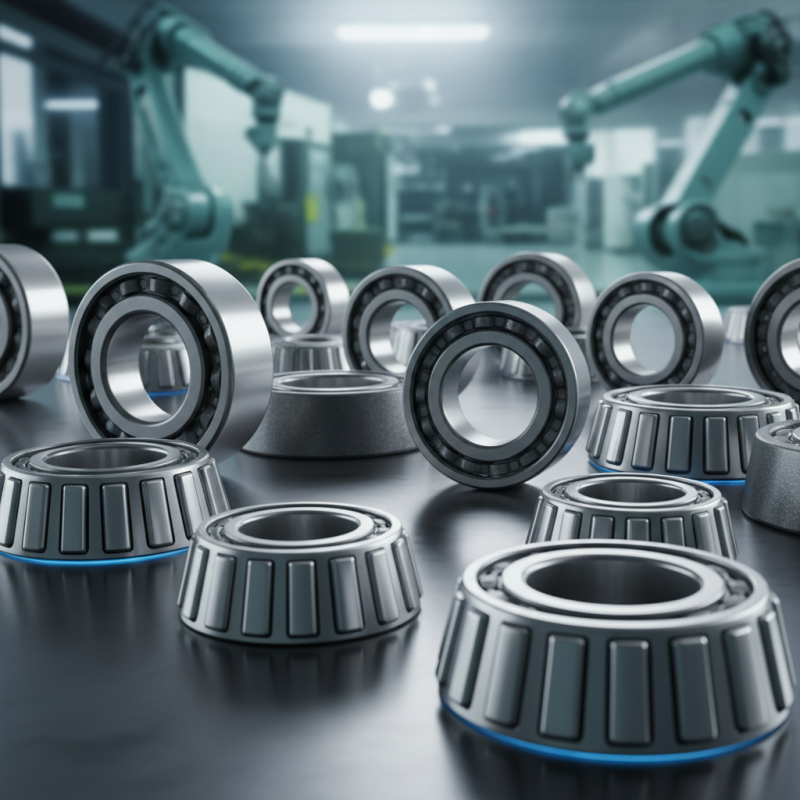
Tapered roller bearings play a crucial role in various industries, particularly in automotive and machinery applications. In 2026, the market for these bearings is projected to reach a valuation of approximately $15 billion, reflecting a compound annual growth rate of around 4% since 2021. This growth indicates a rising demand for high-performance bearings that can withstand heavy loads and offer reduced friction.
The efficiency of tapered roller bearings largely depends on their design precision and material quality. Recent reports indicate a trend towards the use of advanced materials, such as polymer composites, which enhance durability and performance. However, the industry faces challenges in technology adaptation and supply chain constraints. Many manufacturers struggle with the integration of new technologies into their production processes, which can hinder innovation.
Adoption of smart technologies is another key trend in 2026. Predictive maintenance systems using IoT will become more prominent, allowing for real-time monitoring. Yet, there are concerns regarding the costs and complexity of such systems, especially for small-to-medium enterprises. The increase in automation presents both opportunities and hurdles, as not all companies are equipped to make the leap into fully automated bearing solutions.
This chart represents the projected growth trends in the metric tapered roller bearings market for the year 2026. The data illustrates anticipated increases in demand across various applications, highlighting the automotive, industrial machinery, and aerospace sectors.
The market for tapered roller bearings is evolving rapidly. Recent reports indicate that the global tapered roller bearings market could reach a valuation of $50 billion by 2026. This growth is being driven by several key industry trends.
One major trend is the increasing demand for electric vehicles (EVs). EVs require high-performance bearings to improve efficiency and reduce friction. This has led to innovations in materials and designs to enhance durability. According to a study, the automotive segment is projected to account for over 30% of the total tapered roller bearings market share by 2025.
Another influencing factor is the shift towards automation in manufacturing. Industries are investing in advanced machinery that relies on reliable components. Reports suggest that the adoption of Industry 4.0 technologies will boost the need for high-precision tapered roller bearings. However, not every manufacturer is adapting quickly enough, leading to potential quality gaps in the supply chain.
Sustainability is also becoming a crucial consideration. There's a push for eco-friendly materials in bearing production. Some companies are exploring recyclable metals to meet growing environmental standards. Despite these efforts, achieving a balance between performance and sustainability remains a challenge that requires further reflection and adaptation.
| Trend | Insight | Impact on Industry | Forecast Year |
|---|---|---|---|
| Sustainability | Growing demand for eco-friendly materials in manufacturing. | Improved market competitiveness for manufacturers adopting sustainable practices. | 2026 |
| Technological Advancement | Integration of IoT for predictive maintenance and monitoring. | Reduction in downtime and maintenance costs. | 2026 |
| Customization | Increase in demand for customized bearing solutions. | Enhanced customer satisfaction and loyalty. | 2026 |
| Global Expansion | Emerging markets increasing demand for automotive and industrial applications. | Opportunities for market growth and investment. | 2026 |
| Digital Transformation | Use of digital platforms for supply chain management. | Improved efficiency and transparency in operations. | 2026 |
Technological innovations in metric tapered roller bearings are driving significant changes in various industries. The global market for tapered roller bearings is projected to grow with a CAGR of 5.2% from 2021 to 2026, reaching approximately $4.5 billion. Recent advancements focus on improving efficiency and durability. For example, innovations in materials, such as high-strength steels and advanced polymers, enhance performance under extreme conditions.
Further, smart technologies are integrating sensors into these bearings. This allows for real-time monitoring of temperature, vibration, and load. Data analytics enables predictive maintenance, reducing downtime and improving reliability. A study shows that companies employing these smart bearings report a 15% decrease in maintenance costs.
Despite these advancements, challenges persist. The high cost of integration and the need for skilled labor can hinder adoption. Many companies are still hesitant to transition from traditional bearings, fearing disruption. Balancing old and new technologies remains a pressing issue. As the market evolves, addressing these concerns will be crucial for industry-wide acceptance of technological innovations.
The demand for metric tapered roller bearings is expected to rise in 2026. Industries such as automotive, aerospace, and machinery are key players. Several factors drive this increase. Enhanced performance requirements mean high-quality bearings are crucial. This trend indicates a shift towards precision engineering.
Supply dynamics also show interesting patterns. Manufacturers face challenges in sourcing raw materials. This volatility affects production timelines and costs. Additionally, sustainability efforts influence material choices. Companies are exploring eco-friendly options. However, the transition can complicate supply chains.
Market insights reveal a gap between demand and supply. While demand increases, reliable suppliers must adapt. Inventory management becomes critical. Companies need to forecast accurately to avoid shortages. Consumer behavior shows a preference for durable products. Manufacturers must respond swiftly to these shifts and remain competitive.
The tapered roller bearing sector faces unique challenges and opportunities in 2026. As industries push for higher efficiency, manufacturers must adapt. Understanding the demands of electric vehicles and renewable energy is vital. These sectors require bearings that can handle greater loads while minimizing friction. Innovation in materials and design is crucial.
There’s also a struggle with supply chain stability. Production delays can disrupt the market. Additionally, fluctuating raw material costs create uncertainty. Companies must evaluate their sourcing strategies. Developing local supply chains could mitigate risks and enhance reliability.
Despite these obstacles, opportunities abound. Advancements in smart technology can lead to improved monitoring of bearings. Predictive maintenance can reduce downtime and enhance productivity. Embracing sustainability will attract eco-conscious customers. Focusing on custom solutions may offer a competitive edge. The existing market is ripe for transformation, but companies must navigate these complexities wisely.
„Thanks to the LUVIR technology, the solder resist process could be switched directly from the previously used mask exposure to direct exposure. As an outstanding digital solution on the market, this technology has been able to demonstrate fast process times and superior quality on our certified conventional ink in production. This allowed us to fully digitize the solder mask process at low cost – without process or ink adjustments. An excellent benefit to our production in Rot am See.“
Ralf Göhringer (Head of Production WE Rot am See)
I would definitely recommend the Limata machine and team for a future company purchase
Michael Greenaway
Compunetics Inc.
“The Limata ldi has been amazing!! Best thing we did was buy this machine”
Richard Brady
GM
Circuitlabs
“Since 2019, we have been running the Limata X1000 LDI system (including LUVIR for solder mask imaging) in daily production as an addition to our current process with film. The machine was capable of properly exposing Taiyo PSR-4000 BN (DI) solder mask types on normal to high-copper boards using a new and unique direct imaging process. The machine operating interface is very user friendly which allowed for a quick technical training curve. The pre-registration processing reduced several seconds of production time at every print. Limata support and service staff is incomparable. They supported our team every step of the way at basically any time of the day or night, with literally, an immediate response time, customizing the software interface to best fit our Operations and needs.
We have exposed more than 8,000 prints since end of October, on various solder mask colors and some resist film panels. Limata, has proven to be very capable and innovative. They are a strong contender in the industry.
We have very much enjoyed this project, and working with the team!
Thank you Limata for the continued support and being a part of our growth.”
Bill Sezate
Vice President, GM
Summit Interconnect
As a replacement to our current contact exposure process with film, the LIMATA X2000 system including LUVIR-Technology was capable of properly exposing non-LDI solder mask types using a direct imaging process. The machine offers cutting edge software with a very intuitive operating interface which allowed for quick technician training curve. The dual drawer system combined with pre-registration processing reduced several seconds of production time at every machine cycle. Limata support and service staff is world class. They added software patches to keep production running at shortest possible response times, customized the software interface to best fit our in-house Operations system, and even wrote a step-by-step machine processing manual. As a result of the project, we have exposed more than 16,000 times on various product types and solder mask brands/colors. Limata, in a very short timeframe as a company, has definitely shown they are truly innovative and will be challenging the industry of direct imaging for the top spot.
Kevin Beattie
Process Engineer
TTM Technologies
Forest Grove Division
