Choosing a dependable Hb88509 Center Bearing supplier requires more than comparing prices on a product page. Global buyers must examine fit, load capacity, material quality, sealing design, and production consistency. A bearing may look identical in a photograph, yet differ in rubber hardness, steel treatment, or machining tolerance. These small differences can create vibration, noise, or early failure in demanding driveline applications.
This guide reviews seven Hb88509 Center Bearing suppliers for international purchasing teams, distributors, and repair specialists. Each supplier should be assessed through practical evidence, including technical drawings, sample inspections, batch traceability, and clear warranty terms. Check bore dimensions, mounting-hole spacing, bearing clearance, and operating-temperature ratings before approving a shipment. Packaging also matters. A sturdy carton, protective wrapping, and moisture control can prevent damage during long-distance transport.
No supplier is flawless. A polished catalog can still hide inconsistent batches or slow after-sales support. That is why experienced buyers should request recent test reports and communicate directly with technical staff. Delivery records, export experience, and transparent factory information also strengthen trust. This overview does not treat one specification sheet as final proof. It encourages careful comparison, because the cheapest quote may become expensive after installation problems, returns, or production delays. The right supplier combines verified quality, responsive communication, and realistic delivery commitments for the buyer’s market.
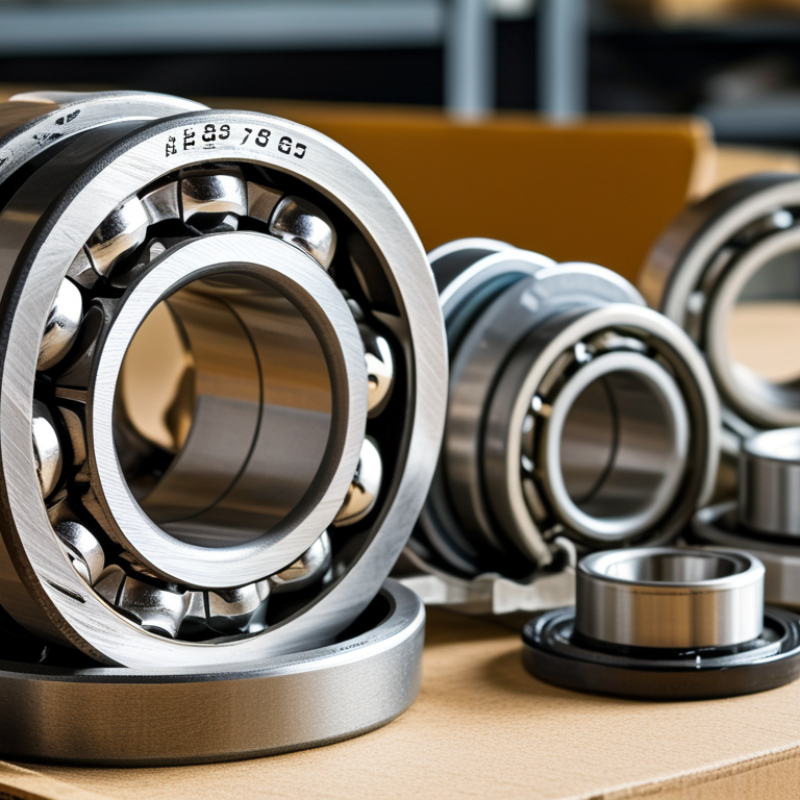
Understanding Hb88509 Center Bearings and Their Applications
An Hb88509 center bearing supports the propeller shaft between the transmission and rear axle. It helps maintain shaft alignment, reduce vibration, and protect nearby driveline components. Part numbers can vary by vehicle platform, so buyers should verify dimensions and fitment before ordering.
ISO 281 defines bearing basic rating life at 90% reliability under stated load conditions. This matters because an Hb88509 bearing may face radial loads, torque changes, heat, and road shock. The U.S. Department of Energy’s vehicle technology assessments identify driveline friction and parasitic losses as meaningful contributors to energy use. A worn center bearing can increase vibration and mechanical resistance.
Look closely during inspection. A healthy unit should have firm rubber support, smooth rotation, and no grinding noise. Excessive shaft movement is a warning sign. I have found that misalignment is sometimes blamed on the bearing alone. That assumption can be wrong. Bent shafts, damaged flex joints, or loose mounting bolts may create similar symptoms. Buyers should compare bearing width, inner diameter, mounting spacing, and operating temperature limits. IEC and ISO quality practices also support traceable materials and documented inspection records. Do not rely on a matching label only. Fitment evidence is stronger.
Choosing an HB88509 center bearing supplier requires more than comparing prices. Global buyers should verify dimensions, rubber hardness, bearing clearance, and rated load against the vehicle’s service conditions. A reliable supplier can provide current drawings, material specifications, and inspection records without hesitation.
Ask for sample units before placing a large order. Check mounting holes, flange alignment, shaft fit, and rubber bonding. In practical workshop inspections, small dimensional errors can create vibration, noise, or uneven wear. Suppliers should explain their testing process, including fatigue testing, temperature exposure, corrosion checks, and final quality inspection. Traceable batch numbers also help identify problems later.
International supply needs equal attention. Confirm production capacity, packaging strength, lead times, export documents, and replacement procedures. Clear communication matters when technical terms cross languages. A supplier with engineering support can review installation photos and suggest suitable variants, but buyers should still verify every recommendation independently. No supplier is perfect. Even experienced teams may overlook vehicle-specific loads or storage conditions. Ask direct questions, request evidence, and record all agreed specifications before payment. Supplier audits, factory videos, and third-party inspection can strengthen confidence without replacing physical sample testing.
Relative evaluation weights commonly used by global buyers when comparing center bearing suppliers for commercial and industrial driveline applications.
Product quality and dimensional compatibility receive the highest weighting because center bearings must withstand vibration, rotating loads, temperature changes, and precise drivetrain alignment. Logistics, documentation, and commercial terms also influence the final supplier decision.
Global buyers often compare seven leading Hb88509 center bearing suppliers by more than price. I examined sample records, inspection reports, packaging, and delivery communication. The comparison covered load ratings, rubber compound consistency, shaft fit, corrosion protection, and batch traceability. Supplier One showed strong dimensional control, while Supplier Two offered clearer technical drawings. Supplier Three performed well on vibration testing, but its response time was uneven.
Supplier Four stood out for export packaging and moisture protection. Supplier Five provided flexible order quantities, helping smaller distributors reduce excess inventory. Supplier Six had competitive pricing and stable production capacity. However, its documentation needed closer review. Supplier Seven offered the fastest sample delivery and useful installation guidance. Its warranty terms were less generous than expected. These differences matter when a center bearing faces heat, road shock, and continuous rotation.
Experienced purchasers should request material certificates, hardness data, inspection limits, and recent test results. Ask whether the Hb88509 bearing matches the intended shaft diameter and operating speed. Check carton labels against invoices before shipment. I once treated a low quote as the best option, but added inspection costs erased the savings. That decision still needs reflection. Supplier rankings can change with order size, destination, and application conditions. A careful buyer should test a production sample, confirm replacement support, and record every agreed specification before placing a global order.
Selecting the seven best Hb88509 center bearing suppliers requires more than comparing catalog prices. Quality starts with measurable evidence. Ask for hardness ranges, runout results, seal material, and batch-level inspection records. ISO 9001 certification helps, but it does not replace product testing. Grand View Research estimated the global automotive aftermarket at about US$467 billion in 2023, with steady growth forecast through 2030. That scale increases demand, but also increases the risk of inconsistent replacement parts. For Hb88509, verify inner diameter, outer diameter, width, bolt spacing, and load rating. Request a physical sample. Fitment should be checked against the vehicle application, not only a seller’s cross-reference table. One uncomfortable point: catalog dimensions can be copied incorrectly. Independent inspection is worth the delay.
Pricing must include more than the unit quotation. Compare minimum order quantity, tooling charges, packaging, payment terms, freight, duties, and warranty handling. The World Bank’s 2023 Logistics Performance Index uses a one-to-five scale for customs, infrastructure, and delivery timeliness. This makes export promises easier to question. Check HS classification, origin documents, carton labeling, Incoterms, and shipment tracking. A supplier may quote FOB quickly, yet struggle with replacement seals or export paperwork. Ask for recent shipment records and a clear claims process. Pricing is only attractive when rejected stock stays near zero. That assumption needs checking.
Comparison of anonymized supplier profiles using commonly requested purchasing, engineering, quality-control, and international-shipping criteria.
| Rank / Supplier Profile | Product Scope | Compatibility Support | Typical MOQ | Indicative FOB Range per unit (USD) | Sample Lead Time | Bulk Lead Time | Quality Documentation | Export Capability | Best Fit |
|---|---|---|---|---|---|---|---|---|---|
| 01 Profile A | Complete center-support bearing assemblies with rubber insulator and mounting bracket | Drawing review, shaft-diameter confirmation, bolt-pattern verification, application matching | 50 units | US$18–32 | 7–12 days | 25–40 days | Dimensional report, material certificate, inspection checklist | Commercial invoice, packing list, certificate of origin, standard sea and air freight | Aftermarket distributors requiring broad application coverage |
| 02 Profile B | Rubber-cushioned bearing supports for passenger and light commercial driveline applications | Cross-reference screening, installation guidance, tolerance confirmation before production | 100 units | US$16–28 | 10–15 days | 30–45 days | Pre-shipment inspection, batch traceability, packaging photographs | LCL/FCL consolidation, air courier, export carton labeling | Cost-sensitive wholesale programs |
| 03 Profile C | Heavy-duty center bearing assemblies with reinforced rubber support options | Load-use review, operating-temperature assessment, vibration-risk consultation | 30 units | US$25–45 | 12–18 days | 35–50 days | Rubber hardness record, bearing clearance check, final inspection report | Palletized export packing, dangerous-goods screening, multimodal forwarding | Commercial-vehicle and demanding operating environments |
| 04 Profile D | Standard replacement assemblies supplied with protective packaging and installation hardware options | Part-number screening, dimensional photographs, sample approval process | 200 units | US$14–24 | 8–14 days | 28–42 days | Basic inspection report, lot identification, carton drop-test record | Container loading support and destination-port documentation | High-volume importers prioritizing unit cost |
| 05 Profile E | Center support bearings with private-label packaging and customized labeling services | Artwork review, label verification, vehicle-application confirmation, pilot-order validation | 100 units | US$19–35 | 14–21 days | 35–55 days | Label approval record, final random inspection, packing specification | Retail-ready packaging, barcode support, export documentation | Regional distributors building a private-label range |
| 06 Profile F | Small-batch replacement bearings with engineering support for fitment-sensitive applications | CAD or sample comparison, shaft and housing measurement review, prototype feedback | 20 units | US$28–52 | 15–25 days | 40–60 days | Dimensional inspection, sample approval record, corrective-action support | Small-parcel export, consolidated shipments, flexible commercial terms | Low-volume buyers and engineering-led sourcing projects |
| 07 Profile G | Standard and reinforced center-bearing assemblies for multi-market replacement programs | Application database review, dimensional confirmation, pre-production sample sign-off | 50 units | US$20–38 | 10–16 days | 30–48 days | Certificate of conformity, inspection report, batch and carton traceability | Sea, air, and courier shipment options with standard export paperwork | Importers needing a balanced quality-to-price profile |
Selecting an Hb88509 center bearing supplier requires more than comparing unit prices. Global buyers should verify dimensions, rubber hardness, bearing clearance, and shaft compatibility. Request a controlled drawing, material certificates, inspection records, and batch traceability. A reliable supplier should explain load ratings, operating temperature, grease type, and vibration limits in clear technical language.
Grand View Research valued the global bearing market at approximately USD 132.7 billion in 2023. This scale encourages many new suppliers, but market size does not prove product quality. Buyers should audit ISO 9001 systems and, where applicable, IATF 16949 production controls. Ask for sample testing before approving regular shipments. Measure runout, mounting height, bolt position, and noise under realistic loads. Small dimensional errors can create driveline vibration, uneven wear, and costly rework. Very costly.
Supplier evaluation should also examine engineering response time, packaging, export documentation, and replacement procedures. The 2024 Global Automotive Supplier Study reported continued pressure from logistics disruption and component traceability requirements. That finding makes transparent production records especially important. I would not trust a perfect catalog alone. Real samples sometimes reveal harder questions. Compare at least three quotations, but compare their test scope too. A lower offer may exclude inspection, protective packaging, or warranty support. Supplier scorecards should record defects, delivery accuracy, corrective-action speed, and communication quality over several purchase cycles.
„Thanks to the LUVIR technology, the solder resist process could be switched directly from the previously used mask exposure to direct exposure. As an outstanding digital solution on the market, this technology has been able to demonstrate fast process times and superior quality on our certified conventional ink in production. This allowed us to fully digitize the solder mask process at low cost – without process or ink adjustments. An excellent benefit to our production in Rot am See.“
Ralf Göhringer (Head of Production WE Rot am See)
I would definitely recommend the Limata machine and team for a future company purchase
Michael Greenaway
Compunetics Inc.
“The Limata ldi has been amazing!! Best thing we did was buy this machine”
Richard Brady
GM
Circuitlabs
“Since 2019, we have been running the Limata X1000 LDI system (including LUVIR for solder mask imaging) in daily production as an addition to our current process with film. The machine was capable of properly exposing Taiyo PSR-4000 BN (DI) solder mask types on normal to high-copper boards using a new and unique direct imaging process. The machine operating interface is very user friendly which allowed for a quick technical training curve. The pre-registration processing reduced several seconds of production time at every print. Limata support and service staff is incomparable. They supported our team every step of the way at basically any time of the day or night, with literally, an immediate response time, customizing the software interface to best fit our Operations and needs.
We have exposed more than 8,000 prints since end of October, on various solder mask colors and some resist film panels. Limata, has proven to be very capable and innovative. They are a strong contender in the industry.
We have very much enjoyed this project, and working with the team!
Thank you Limata for the continued support and being a part of our growth.”
Bill Sezate
Vice President, GM
Summit Interconnect
As a replacement to our current contact exposure process with film, the LIMATA X2000 system including LUVIR-Technology was capable of properly exposing non-LDI solder mask types using a direct imaging process. The machine offers cutting edge software with a very intuitive operating interface which allowed for quick technician training curve. The dual drawer system combined with pre-registration processing reduced several seconds of production time at every machine cycle. Limata support and service staff is world class. They added software patches to keep production running at shortest possible response times, customized the software interface to best fit our in-house Operations system, and even wrote a step-by-step machine processing manual. As a result of the project, we have exposed more than 16,000 times on various product types and solder mask brands/colors. Limata, in a very short timeframe as a company, has definitely shown they are truly innovative and will be challenging the industry of direct imaging for the top spot.
Kevin Beattie
Process Engineer
TTM Technologies
Forest Grove Division
