The application of motors plays a crucial role in today's global industries. From manufacturing to transportation, motors drive efficiency and performance. As technology evolves, their use becomes more diverse and innovative.
In manufacturing, motors are central to automation. They power machines on assembly lines, making processes faster and more reliable. In transportation, electric motors are reshaping how we think about mobility. Electric vehicles, for example, rely heavily on efficient motor designs. This shift reduces emissions and promotes sustainable practices.
However, there are challenges. Not all industries have adapted quickly to these advancements. Some sectors still rely on outdated motor technologies. This can hinder progress and increase operational costs. Addressing these issues is essential for future growth. Understanding the application of motors helps industries innovate and improve their practices.
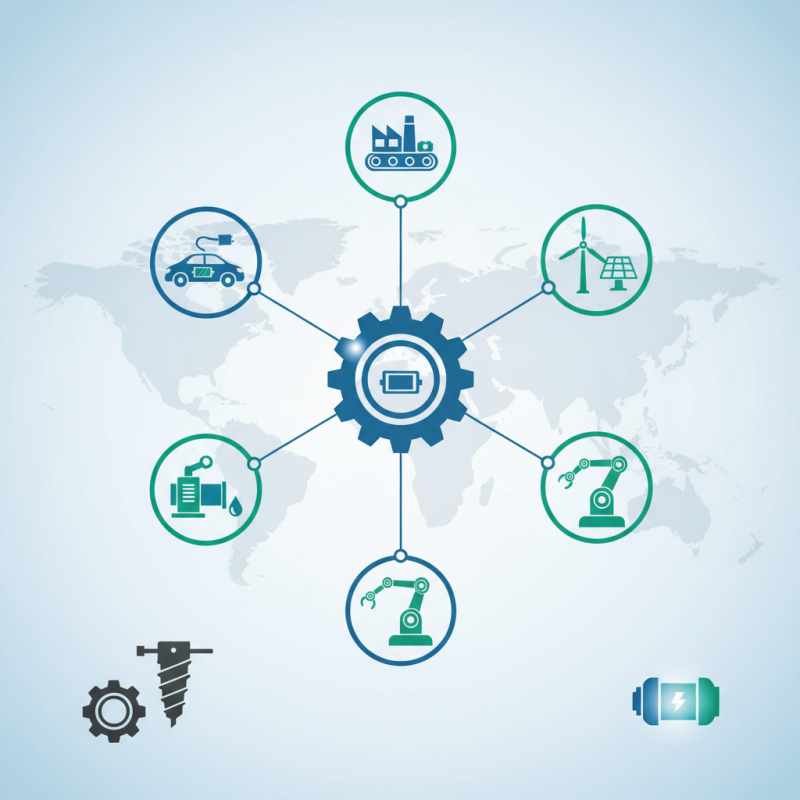
Motors play a critical role in various industries today. The manufacturing sector stands out as a key area where electric and hydraulic motors drive efficiency and innovation. According to the International Electrotechnical Commission (IEC), the industrial motor market is projected to reach $157 billion by 2027. This growth reflects an increasing reliance on automation and robotics across manufacturing processes.
In automotive production, motors power robotic arms for assembly lines. These systems enhance precision and reduce labor costs. Research from the National Institute of Standards and Technology (NIST) indicates that advanced motor technologies can improve operational efficiency by up to 30%. However, this shift towards automation raises concerns about workforce displacement and skills gaps in the labor market.
The food processing industry also relies heavily on motors for mixing, packaging, and conveying products. These applications ensure consistency and speed. A report from the Food Processing Association highlights that motors account for approximately 65% of energy consumption in processing plants. While motors improve productivity, this high energy use also invites scrutiny. It raises questions about sustainability and environmental impact, necessitating a balance between efficiency and ecological responsibility.
This chart illustrates the distribution of motor usage across various key industries in modern manufacturing processes. Automotive and manufacturing sectors have the highest utilization, reflecting their reliance on motor technologies for performance and efficiency.
Innovations in motor technology are transforming industrial efficiency across various sectors. Advanced motors now incorporate smart features, enabling real-time monitoring and adaptive performance. According to a report by the International Energy Agency, improving motor efficiency can reduce industrial energy consumption by up to 30%. This adjustment leads to significant cost savings and lower carbon emissions.
Developments such as variable frequency drives (VFDs) allow for precise speed control. These enhancements minimize energy waste and enhance productivity. The global electric motor market is projected to reach $165 billion by 2026, driven largely by demand for energy-efficient solutions. However, challenges remain. Many industries struggle to retro-fit older systems with these technologies, which hinders overall efficiency gains.
Data from the U.S. Department of Energy indicates that up to 40% of industrial electricity use can be attributed to motors. Despite these figures, not every facility has adopted advanced motor technologies. This gap reflects the need for improved awareness and investment. Implementing modern motors requires careful analysis. Without it, industries may miss opportunities to boost performance and sustainability.
The integration of motors in renewable energy applications is crucial for sustainability. Wind turbines rely on efficient motor systems to convert kinetic energy into electrical power. According to the International Energy Agency, global wind capacity is expected to double by 2025, underscoring the need for reliable motor technology.
Solar energy systems also benefit from advanced motor solutions. These motors track the sun’s path to maximize energy capture. A recent report indicated that solar capacity is projected to grow by 20% annually. However, challenges remain in optimizing these motor systems for various weather conditions. Maintenance and efficiency can impact overall energy yield significantly.
Energy storage systems, like batteries, utilize motors for effective energy management. Efficient motor operation in these systems can significantly reduce costs and increase longevity. The global battery market for renewable energy is expected to reach USD 250 billion by 2026. However, technological limitations can hinder performance under specific scenarios. Continuous innovation is required to overcome these hurdles.
Electric motors are reshaping the transportation landscape. They play a vital role in reducing emissions and enhancing energy efficiency. In electric vehicles (EVs), lightweight motors improve performance and extend range. Innovations in battery technology boost the effectiveness of these motors.
Public transportation is also experiencing a shift. Electric buses are gaining traction in various cities. They provide quieter and cleaner travel options. However, infrastructure challenges remain. Not all regions are ready for widespread electrification.
Rail systems are adopting advanced motor technologies, too. High-speed trains utilize these innovations to achieve faster speeds with lower energy consumption. While progress is evident, integrating electric systems requires careful planning and investment. Issues like grid capacity and maintenance need addressing before full implementation.
In today's industries, automation significantly shapes motor applications within global supply chains. As factories adopt advanced technologies, electric motors drive efficiency. These motors power robotics, conveyors, and automated assembly lines. The result is a notable increase in production speed and quality. However, this shift also poses challenges.
Automation can lead to a skill gap in the workforce. Many workers may not have the technical skills needed to operate new systems. Companies must invest in training programs. It’s crucial to ensure team members can adapt. Ignoring this issue risks operational slowdowns. Emphasizing lifelong learning can mitigate these gaps.
Tips: Monitor developments in motor technology. Staying informed helps businesses adapt and improve. Additionally, consider partnerships with tech firms. Collaboration can enhance skill acquisition and innovation in the workplace. Embrace change, but reflect on its impact. Each decision should balance efficiency with workforce well-being.
„Thanks to the LUVIR technology, the solder resist process could be switched directly from the previously used mask exposure to direct exposure. As an outstanding digital solution on the market, this technology has been able to demonstrate fast process times and superior quality on our certified conventional ink in production. This allowed us to fully digitize the solder mask process at low cost – without process or ink adjustments. An excellent benefit to our production in Rot am See.“
Ralf Göhringer (Head of Production WE Rot am See)
I would definitely recommend the Limata machine and team for a future company purchase
Michael Greenaway
Compunetics Inc.
“The Limata ldi has been amazing!! Best thing we did was buy this machine”
Richard Brady
GM
Circuitlabs
“Since 2019, we have been running the Limata X1000 LDI system (including LUVIR for solder mask imaging) in daily production as an addition to our current process with film. The machine was capable of properly exposing Taiyo PSR-4000 BN (DI) solder mask types on normal to high-copper boards using a new and unique direct imaging process. The machine operating interface is very user friendly which allowed for a quick technical training curve. The pre-registration processing reduced several seconds of production time at every print. Limata support and service staff is incomparable. They supported our team every step of the way at basically any time of the day or night, with literally, an immediate response time, customizing the software interface to best fit our Operations and needs.
We have exposed more than 8,000 prints since end of October, on various solder mask colors and some resist film panels. Limata, has proven to be very capable and innovative. They are a strong contender in the industry.
We have very much enjoyed this project, and working with the team!
Thank you Limata for the continued support and being a part of our growth.”
Bill Sezate
Vice President, GM
Summit Interconnect
As a replacement to our current contact exposure process with film, the LIMATA X2000 system including LUVIR-Technology was capable of properly exposing non-LDI solder mask types using a direct imaging process. The machine offers cutting edge software with a very intuitive operating interface which allowed for quick technician training curve. The dual drawer system combined with pre-registration processing reduced several seconds of production time at every machine cycle. Limata support and service staff is world class. They added software patches to keep production running at shortest possible response times, customized the software interface to best fit our in-house Operations system, and even wrote a step-by-step machine processing manual. As a result of the project, we have exposed more than 16,000 times on various product types and solder mask brands/colors. Limata, in a very short timeframe as a company, has definitely shown they are truly innovative and will be challenging the industry of direct imaging for the top spot.
Kevin Beattie
Process Engineer
TTM Technologies
Forest Grove Division
