In the ever-evolving landscape of engineering projects, the role of automatic welding solutions is crucial. As EPC projects expand, the demand for efficient and reliable welding techniques rises. Automatic Welding Solutions for EPC not only enhance productivity but also improve the quality of welds. With an increasing focus on safety and performance, these solutions respond to the complexities of modern construction.
Today's projects often face challenges such as tight schedules and budget constraints. In such an environment, automated welding technology provides a viable answer. It enables teams to tackle demanding specifications while balancing cost and efficiency. However, the integration of new technologies is not without challenges. Teams must adapt to the learning curve associated with automation.
Industry experts emphasize the value of investing in high-quality automatic welding solutions. Selecting the right equipment and skilled technicians is essential. Without the right foundation, even the best technologies may fail to deliver expected results. This balance between innovation and traditional techniques will shape the future of EPC projects in 2026. As companies navigate these changes, continuous evaluation of strategies will be crucial for success.
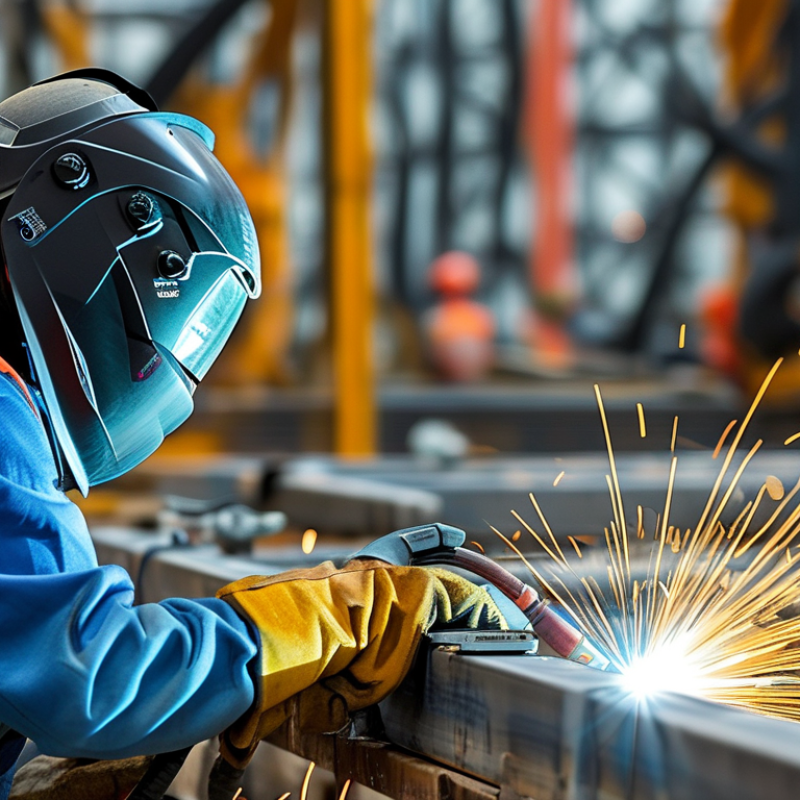
The landscape of Engineering, Procurement, and Construction (EPC) projects is rapidly evolving. By 2026, automatic welding technologies will play a crucial role in enhancing project efficiency. A recent report indicates that automated welding systems can reduce labor costs by up to 30%. This efficiency allows for quicker turnaround times while maintaining high-quality standards.
Advancements in robotics and AI are transforming automatic welding processes. For example, adaptive welding technology adjusts the parameters in real-time to ensure optimal weld quality. This adaptability is essential in complex projects, where materials and conditions may vary significantly. However, the integration of these technologies also raises concerns. Companies may face initial investment challenges and learning curves that can hinder immediate productivity.
Emerging data shows that companies adopting these technologies see a 40% increase in project completion rates. Despite this, many teams struggle with the transition to full automation. Training and adjusting existing workflows remain significant hurdles. The progress in automatic welding for EPC projects is promising, yet organizations must navigate these complexities to fully realize their potential.
| Technology | Application | Advantages | Projected Growth (%) |
|---|---|---|---|
| Robotic Welding | Heavy Equipment Manufacturing | High precision, reduced labor costs | 15% |
| Laser Welding | Metal Fabrication | Minimal heat-affected zone, fast processing | 20% |
| TIG Welding Automation | Pipeline Construction | Excellent control, suitable for thin materials | 12% |
| Friction Stir Welding | Aerospace Applications | Strong joints, no need for filler material | 10% |
| Plasma Arc Welding | Shipbuilding | High speed, versatile for different thicknesses | 18% |
Automation in welding is transforming project delivery in EPC sectors. This technology increases efficiency and reduces human error. For projects slated for 2026, understanding its impact is crucial. Automated welding systems perform tasks more precisely, allowing for consistent quality. This means projects can stay on schedule, meeting tight deadlines.
Tips for implementing automation effectively include investing in training for staff. Workers must understand how to operate advanced machinery. They should also know how to troubleshoot minor issues. Emphasizing teamwork between humans and machines can lead to better outcomes. Regular assessments of automated processes ensure continual improvement.
While automation shows promise, challenges remain. Not all projects can fully leverage automation due to complexity. Some skilled tasks still require human touch. It’s essential to evaluate what can be automated versus what needs manual intervention. Balancing machine and human efforts is key to achieving project goals.
As the demand for efficient welding solutions in EPC projects climbs, adhering to industry standards becomes crucial. The International Organization for Standardization (ISO) provides guidelines that ensure quality and safety in welding automation. Many companies are now focusing on ISO 3834, which outlines quality requirements for fusion welding of metallic materials. This standard helps manufacturers meet both client expectations and regulatory requirements.
Certifications like the American Welding Society (AWS) standards are also vital. These certifications validate a company’s welding processes and personnel qualifications. With over 50% of EPC projects requiring automated welding, achieving these standards is not just beneficial; it’s essential. According to industry reports, projects compliant with these standards show up to 30% improvement in weld quality.
Tips: Always assess the current certifications of your welding providers. Evaluating their adherence to these standards can save costs in the long run. Additionally, some automated welding technologies may not meet specific standards, leading to rework and delays.
Failure to comply can lead to significant setbacks. Reports indicate that projects lacking proper certification often face increased inspection costs. Therefore, ongoing training for welding personnel is necessary to keep them updated on evolving standards and best practices.
In recent years, the implementation of automated welding solutions has gained significant traction in EPC projects. According to a report from the International Institute of Welding, automated welding can enhance productivity by up to 40%. This increase translates into shorter project timelines and reduced labor costs. However, initial capital costs can be a barrier for many companies. The average investment for automated systems can reach $150,000 to $350,000, which may seem daunting.
Yet, the long-term benefits often outweigh these initial costs. Automated solutions reduce human error, leading to fewer defects and rework. A study by the American Welding Society indicated that rework due to welding defects can cost companies up to 20% of project budgets. Thus, even a modest improvement in weld quality can result in substantial savings. Still, firms must evaluate their specific contexts, as not all projects may justify the high initial investment.
Another critical aspect is workforce training. Transitioning to automation requires skilled operators. The investment in training programs is essential for maximizing the capabilities of automated systems. However, managing this training can be challenging. If not addressed, this gap may hinder the full realization of automation’s benefits. Therefore, companies must carefully weigh these factors in their cost-benefit analyses.
The integration of AI and robotics into welding processes is reshaping EPC industries. Automated systems can perform welding tasks with precision, reducing human error. Advanced algorithms enable real-time adjustments, enhancing the quality of welds. This shift can lead to safer work environments, as robots can take on dangerous tasks.
However, embracing these technologies is not without challenges. Training personnel to operate and maintain robotic systems is essential. Moreover, the reliance on technology may create gaps in traditional skills, which require careful consideration. Organizations need to balance automation with human expertise.
**Tips:** Invest in workforce training to ensure effective use of new technologies. Collaborate with tech experts to develop customized solutions that address specific project needs. Regularly evaluate the performance of automated systems to identify areas for improvement.
„Thanks to the LUVIR technology, the solder resist process could be switched directly from the previously used mask exposure to direct exposure. As an outstanding digital solution on the market, this technology has been able to demonstrate fast process times and superior quality on our certified conventional ink in production. This allowed us to fully digitize the solder mask process at low cost – without process or ink adjustments. An excellent benefit to our production in Rot am See.“
Ralf Göhringer (Head of Production WE Rot am See)
I would definitely recommend the Limata machine and team for a future company purchase
Michael Greenaway
Compunetics Inc.
“The Limata ldi has been amazing!! Best thing we did was buy this machine”
Richard Brady
GM
Circuitlabs
“Since 2019, we have been running the Limata X1000 LDI system (including LUVIR for solder mask imaging) in daily production as an addition to our current process with film. The machine was capable of properly exposing Taiyo PSR-4000 BN (DI) solder mask types on normal to high-copper boards using a new and unique direct imaging process. The machine operating interface is very user friendly which allowed for a quick technical training curve. The pre-registration processing reduced several seconds of production time at every print. Limata support and service staff is incomparable. They supported our team every step of the way at basically any time of the day or night, with literally, an immediate response time, customizing the software interface to best fit our Operations and needs.
We have exposed more than 8,000 prints since end of October, on various solder mask colors and some resist film panels. Limata, has proven to be very capable and innovative. They are a strong contender in the industry.
We have very much enjoyed this project, and working with the team!
Thank you Limata for the continued support and being a part of our growth.”
Bill Sezate
Vice President, GM
Summit Interconnect
As a replacement to our current contact exposure process with film, the LIMATA X2000 system including LUVIR-Technology was capable of properly exposing non-LDI solder mask types using a direct imaging process. The machine offers cutting edge software with a very intuitive operating interface which allowed for quick technician training curve. The dual drawer system combined with pre-registration processing reduced several seconds of production time at every machine cycle. Limata support and service staff is world class. They added software patches to keep production running at shortest possible response times, customized the software interface to best fit our in-house Operations system, and even wrote a step-by-step machine processing manual. As a result of the project, we have exposed more than 16,000 times on various product types and solder mask brands/colors. Limata, in a very short timeframe as a company, has definitely shown they are truly innovative and will be challenging the industry of direct imaging for the top spot.
Kevin Beattie
Process Engineer
TTM Technologies
Forest Grove Division
