In the rapidly evolving world of manufacturing, Cnc Metal Parts have emerged as a game-changer. According to John Smith, a renowned expert in CNC technology, “CNC metal parts enhance precision and efficiency like never before.” This statement captures the essence of why manufacturers have gravitated towards these advanced components.
CNC metal parts offer numerous advantages that elevate production standards. They enable consistent quality, allowing businesses to produce intricate designs with minimal waste. This precision not only leads to cost savings but also ensures reliability in end products. Moreover, manufacturers can quickly adapt to changing project needs, improving their agility in the market.
However, not all manufacturers fully exploit the benefits of CNC metal parts. Some may overlook the importance of proper training and investment in technology. As the industry continues to grow, reflecting on these challenges is essential. Understanding how to maximize the potential of CNC metal parts could be pivotal for long-term success in a competitive landscape.
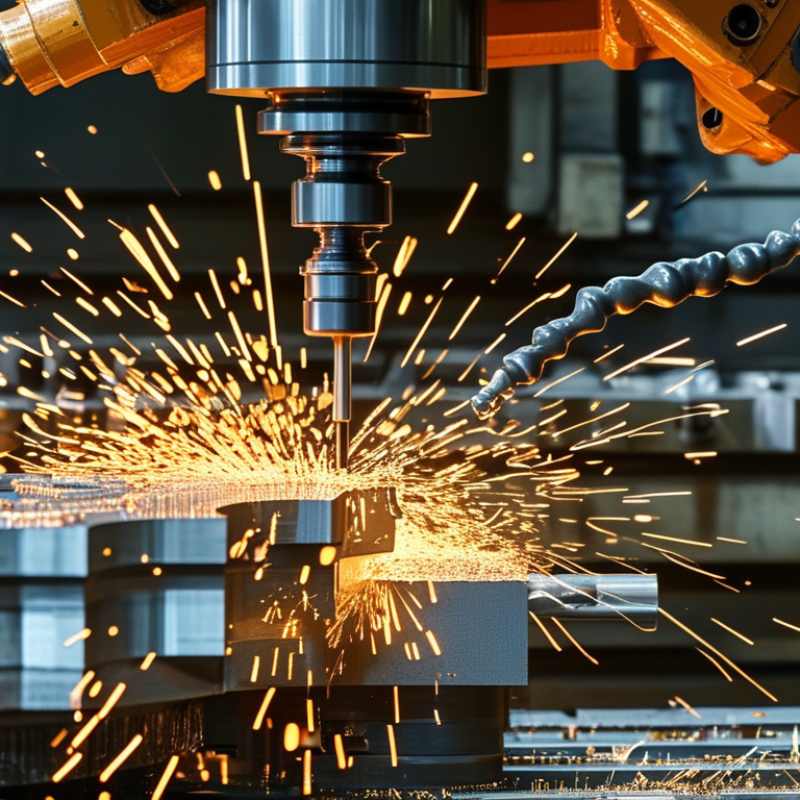
CNC metal parts offer significant benefits, especially in precision and accuracy for manufacturing. These components are designed to meet tight tolerances, ensuring that every piece fits perfectly in assembly. This precision reduces the risk of failure in manufactured products, leading to improved overall quality. The use of CNC technology minimizes human error, a common issue in traditional machining processes.
Tips: When selecting CNC services, prioritize suppliers with certifications. This ensures they adhere to high-quality standards. Additionally, consider reviewing past projects to gauge their precision levels.
Investing in CNC metal parts can enhance operational efficiency. These components allow for higher production speeds. However, the initial setup costs can be a concern. Businesses should weigh the long-term savings against these upfront expenses. Finding the right balance is essential.
Tips: Conduct a cost-benefit analysis before proceeding. This can help identify hidden expenses and potential savings. Remember, CNC technology evolves rapidly; staying updated is crucial. Regular training for your team can maximize your investment in CNC machines.
Cost efficiency is a primary advantage of using CNC metal components in mass production. These components enable manufacturers to reduce waste significantly. A precise cutting process minimizes the amount of scrap material generated during production. This precision not only saves resources but also lowers costs over time.
In addition, CNC machining offers quicker production rates. The automation involved allows for consistent output with minimal human intervention. However, companies must consider the initial investment in CNC technology. Some may hesitate due to high upfront costs. Yet, in the long run, the savings on labor and materials often justify the expense.
Quality control is another crucial aspect. CNC machines produce parts that meet tight tolerances, reducing errors. This leads to fewer defective items and returns. However, the reliance on technology can sometimes lead to overconfidence. A balance between machine and human oversight is essential to maintain high standards. By investing wisely in CNC metal parts, manufacturers can harness these benefits effectively.
CNC metal fabrication techniques offer remarkable design flexibility for manufacturers. This adaptability is essential in today’s competitive landscape. According to a report by the International Journal of Advanced Manufacturing Technology, up to 75% of companies cite the ability to customize parts rapidly as a significant advantage of CNC machining. This capability enables designers to adapt to new trends and customer needs with minimal downtime.
The precision of CNC machining also enhances this flexibility. Manufacturers can create intricate geometries that are often impossible with traditional methods. While this presents opportunities, it requires consistent quality control. Occasionally, the complexity of designs may lead to production errors. Regular inspections and adjustments can mitigate these risks and improve overall reliability.
**Tip**: Focus on prototyping. Testing designs before full production can reveal potential flaws early.
Moreover, CNC fabrication supports the integration of advanced materials. Manufacturers can explore lightweight yet durable options such as titanium alloys or high-strength steel. This versatility can ultimately lead to innovative products that meet diverse market demands. However, material selection must be reflective of the product's application to avoid compromising safety.
**Tip**: Stay updated on material trends to ensure you're using the best options. Take time to evaluate how new materials can enhance your designs.
| Benefit | Description | Impact on Manufacturing |
|---|---|---|
| Design Flexibility | CNC machining allows for complex designs that are difficult to achieve with traditional methods. | Enables innovative product designs. |
| Precision and Accuracy | CNC machines can achieve tight tolerances for parts, ensuring high-quality output. | Reduces waste and improves part functionality. |
| Cost-Effective for Production | CNC machining minimizes labor costs and material waste. | Lower overall production costs. |
| Reproducibility | CNC machines can replicate parts with high consistency and repeatability. | Ensures uniform product quality across production runs. |
| Material Versatility | CNC technology can cut and shape a wide variety of metals. | Wide range of applications across industries. |
| Speed of Production | CNC machining can operate continuously and produce large volumes quickly. | Increases throughput and efficiency. |
| Reduced Risk of Human Error | Automation reduces the chances of errors during production. | Improves accuracy and reliability of parts. |
| Integration with CAD Software | CNC can directly interpret CAD models for seamless design-to-production workflow. | Streamlines the manufacturing process. |
| Scalability | Easily scale production up or down based on demand. | Adapts quickly to market changes. |
| Sustainability | CNC machining can produce less waste compared to traditional methods. | Promotes environmentally friendly practices. |
CNC (Computer Numerical Control) machining significantly enhances material utilization, which is crucial for manufacturers. According to a report by the National Institute of Standards and Technology (NIST), improved CNC processes can reduce material waste by up to 30%. This reduction is achieved through precise cutting and shaping. By minimizing excess materials, manufacturers can lower production costs while also lessening their environmental footprint.
More efficient machining processes lead to higher yields. For instance, advanced CNC machines can precisely optimize the layout for cutting metal parts. This means less scrap material is produced. A study from the Manufacturing Institute reveals that companies using CNC machining see a 25% improvement in material efficiency. This efficiency translates into both financial savings and reduced disposal costs.
However, reliance on CNC technology also requires careful planning. Not all materials are suited for CNC processes. Some metals may lead to more waste if not properly managed. Companies must also regularly maintain their CNC machines to ensure optimal performance. Investing in proper training for operators can mitigate risks and enhance outcomes. Balancing efficiency with the realities of machine operation is key in achieving the desired benefits.
CNC technology has transformed manufacturing by significantly reducing production times. Traditional methods often involve manual processes that can be slow and prone to errors. CNC machines, on the other hand, operate through automation, enhancing speed and precision. This allows manufacturers to produce high-quality parts in a fraction of the time.
Consider a factory using CNC for prototyping. Instead of weeks, a prototype can be developed in days. This rapid turnaround is crucial for industries that demand quick adjustments based on market feedback. However, the reliance on technology might lead to a skills gap. Workers need adequate training to operate and maintain CNC machines efficiently.
Furthermore, while CNC technology improves production efficiency, it isn’t without challenges. Maintenance of CNC machines can be costly. Downtime due to technical issues can offset the speed gains. Manufacturers must balance the benefits of accelerated production with the need for continuous employee training and machine upkeep. This dual focus is essential for sustaining long-term success in a competitive landscape.
„Thanks to the LUVIR technology, the solder resist process could be switched directly from the previously used mask exposure to direct exposure. As an outstanding digital solution on the market, this technology has been able to demonstrate fast process times and superior quality on our certified conventional ink in production. This allowed us to fully digitize the solder mask process at low cost – without process or ink adjustments. An excellent benefit to our production in Rot am See.“
Ralf Göhringer (Head of Production WE Rot am See)
I would definitely recommend the Limata machine and team for a future company purchase
Michael Greenaway
Compunetics Inc.
“The Limata ldi has been amazing!! Best thing we did was buy this machine”
Richard Brady
GM
Circuitlabs
“Since 2019, we have been running the Limata X1000 LDI system (including LUVIR for solder mask imaging) in daily production as an addition to our current process with film. The machine was capable of properly exposing Taiyo PSR-4000 BN (DI) solder mask types on normal to high-copper boards using a new and unique direct imaging process. The machine operating interface is very user friendly which allowed for a quick technical training curve. The pre-registration processing reduced several seconds of production time at every print. Limata support and service staff is incomparable. They supported our team every step of the way at basically any time of the day or night, with literally, an immediate response time, customizing the software interface to best fit our Operations and needs.
We have exposed more than 8,000 prints since end of October, on various solder mask colors and some resist film panels. Limata, has proven to be very capable and innovative. They are a strong contender in the industry.
We have very much enjoyed this project, and working with the team!
Thank you Limata for the continued support and being a part of our growth.”
Bill Sezate
Vice President, GM
Summit Interconnect
As a replacement to our current contact exposure process with film, the LIMATA X2000 system including LUVIR-Technology was capable of properly exposing non-LDI solder mask types using a direct imaging process. The machine offers cutting edge software with a very intuitive operating interface which allowed for quick technician training curve. The dual drawer system combined with pre-registration processing reduced several seconds of production time at every machine cycle. Limata support and service staff is world class. They added software patches to keep production running at shortest possible response times, customized the software interface to best fit our in-house Operations system, and even wrote a step-by-step machine processing manual. As a result of the project, we have exposed more than 16,000 times on various product types and solder mask brands/colors. Limata, in a very short timeframe as a company, has definitely shown they are truly innovative and will be challenging the industry of direct imaging for the top spot.
Kevin Beattie
Process Engineer
TTM Technologies
Forest Grove Division
