Concrete Batching And Mixing Plants play a vital role in the construction industry. They enable the efficient production of concrete, which is the foundation of many structures. These plants ensure a consistent and high-quality mixture, essential for structural integrity.
Using a Concrete Batching And Mixing Plant can enhance project timelines significantly. They streamline operations, minimizing delays caused by material logistics. Additionally, these plants provide precise measurements, reducing waste and optimizing resources. However, reliance on technology can lead to challenges, such as equipment malfunctions or maintenance issues.
Furthermore, the initial investment in a Concrete Batching And Mixing Plant can be substantial. Companies must evaluate long-term benefits against upfront costs. Despite potential drawbacks, the advantages of these plants often outweigh the negatives. Their ability to improve efficiency and quality makes them invaluable in modern construction practices.
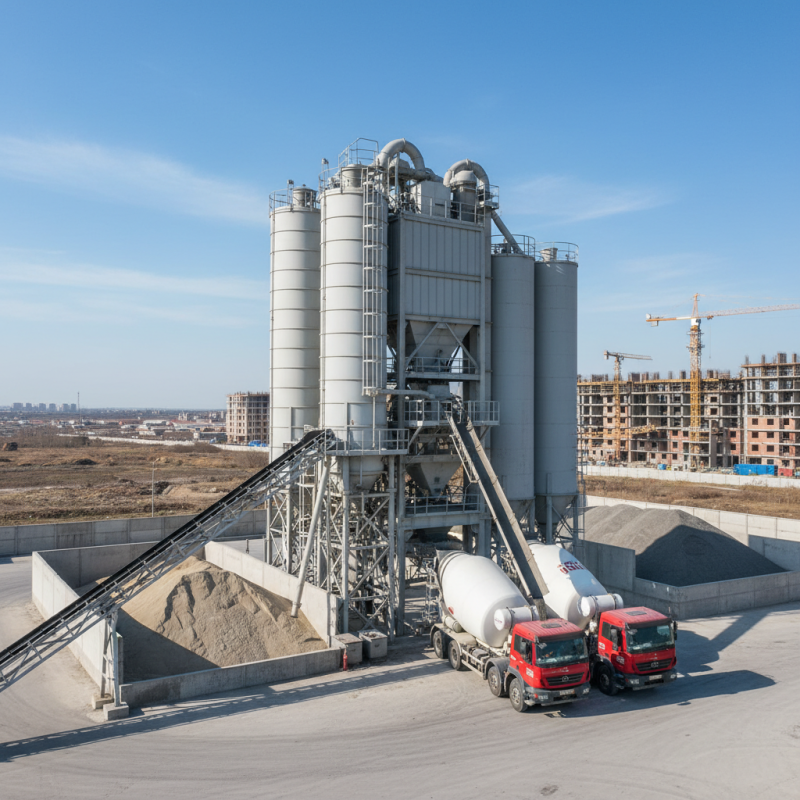
Concrete batching plants play a vital role in enhancing production efficiency. These facilities automate the mixing process, reducing human error. A streamlined approach ensures consistency in concrete quality. This consistency is crucial for construction projects of all sizes. Accurate measurements lead to fewer material waste and cost savings.
Furthermore, these plants facilitate faster production times. With advanced technology, mixing cycles are significantly reduced. This efficiency allows for larger volumes of concrete to be produced daily. Quick output aligns well with tight construction schedules. However, the reliance on technology may occasionally lead to mechanical failures. Regular maintenance is essential to avoid delays in production.
The implementation of batching plants also enhances scalability. As projects grow, production can be adjusted accordingly. Yet, expanding capacity requires careful planning. Overextending resources may lead to inefficiencies. Ultimately, balancing capacity and quality remains a constant challenge.
Automated mixing processes in concrete batching plants significantly enhance quality control. These systems reduce the chances of human error. By utilizing precise measurements and consistent mixing, they produce high-quality concrete. This is crucial for construction projects requiring specific strength and durability.
The reliability of automated systems means uniformity in every batch. Programmable settings allow for adjustments based on project needs. This leads to fewer defects and reworks. However, relying solely on machines can pose risks. Technical errors or software glitches might disrupt the process. Continuous monitoring and manual checks remain necessary for optimal results.
Additionally, automated mixing can lead to waste if not properly managed. Overproduction, due to inaccurate estimations, creates excess material. Regular evaluations of mixing ratios and maintenance of equipment are essential. Embracing automation is beneficial, but careful oversight is vital to maintain quality.
Concrete batching and mixing plants play a crucial role in reducing material waste during concrete production. According to a report by the National Ready Mixed Concrete Association, effective management of resources can save up to 20% of raw material costs. This percentage reflects the significant financial impact of optimizing batching processes.
Proper batching ensures precise ingredient proportions, leading to minimal excess. Excess materials lead to increased costs and waste, which can hurt the environment. A study indicated that approximately 30% of concrete produced is wasted due to poor batching. This wastage is a challenge for many contractors. Reducing waste not only aligns with sustainable practices but adds to the project’s profitability.
Tips: Review your batching process regularly. Analyzing data can highlight areas for improvement. Training staff on the importance of precise measurements can help mitigate waste. Additionally, utilize tools like moisture sensors to adjust mixtures in real-time. This can enhance accuracy and cut down material usage significantly. The goal should always be to balance efficiency with sustainability, striving for less waste and more savings.
Concrete batching and mixing plants offer significant advantages in creating custom concrete mix designs. This flexibility is especially crucial for large-scale projects requiring specific material properties. According to the American Concrete Institute, customized mixes can enhance structural integrity and durability, meeting diverse project demands.
With advancements in technology, it's easier to achieve precise mixtures. Recent industry reports indicate that 70% of contractors prefer tailored mixes over standard options. This preference is driven by the need for adaptability in various environmental conditions and structural requirements. For instance, infrastructure projects in coastal areas often require mixes resistant to salt water.
However, achieving the perfect formulation is not without challenges. Variations in raw material availability and quality can affect consistency. Ongoing experimentation and adjustments are necessary. While custom mixes provide competitive advantages, a miscalculation can lead to significant project delays and costs. Effective planning and knowledge of materials remain essential for achieving optimal results.
Concrete batching and mixing plants are increasingly recognized for their environmental benefits. Modern plants utilize advanced technology to minimize waste and enhance efficiency. They contribute significantly to reducing carbon emissions during concrete production. Efficient batching also lowers the energy required for mixing, which is essential in today’s eco-conscious landscape.
Water conservation is another key aspect. High-quality batching solutions use precise measurements, reducing excess water use. This precision leads to a more sustainable process. Recycling aggregates within the plants further supports this effort, limiting reliance on natural resources. Most plants have sensors that continuously monitor materials, assuring regulatory compliance.
However, challenges still exist. Some plants have yet to adopt eco-friendly practices fully. Outdated equipment can hinder progress, producing more waste than necessary. There’s a need for constant evaluation and improvement. Investing in modern, sustainable methods is crucial for future success. Engaging in practices that reduce the environmental footprint will pay off in the long run.
„Thanks to the LUVIR technology, the solder resist process could be switched directly from the previously used mask exposure to direct exposure. As an outstanding digital solution on the market, this technology has been able to demonstrate fast process times and superior quality on our certified conventional ink in production. This allowed us to fully digitize the solder mask process at low cost – without process or ink adjustments. An excellent benefit to our production in Rot am See.“
Ralf Göhringer (Head of Production WE Rot am See)
I would definitely recommend the Limata machine and team for a future company purchase
Michael Greenaway
Compunetics Inc.
“The Limata ldi has been amazing!! Best thing we did was buy this machine”
Richard Brady
GM
Circuitlabs
“Since 2019, we have been running the Limata X1000 LDI system (including LUVIR for solder mask imaging) in daily production as an addition to our current process with film. The machine was capable of properly exposing Taiyo PSR-4000 BN (DI) solder mask types on normal to high-copper boards using a new and unique direct imaging process. The machine operating interface is very user friendly which allowed for a quick technical training curve. The pre-registration processing reduced several seconds of production time at every print. Limata support and service staff is incomparable. They supported our team every step of the way at basically any time of the day or night, with literally, an immediate response time, customizing the software interface to best fit our Operations and needs.
We have exposed more than 8,000 prints since end of October, on various solder mask colors and some resist film panels. Limata, has proven to be very capable and innovative. They are a strong contender in the industry.
We have very much enjoyed this project, and working with the team!
Thank you Limata for the continued support and being a part of our growth.”
Bill Sezate
Vice President, GM
Summit Interconnect
As a replacement to our current contact exposure process with film, the LIMATA X2000 system including LUVIR-Technology was capable of properly exposing non-LDI solder mask types using a direct imaging process. The machine offers cutting edge software with a very intuitive operating interface which allowed for quick technician training curve. The dual drawer system combined with pre-registration processing reduced several seconds of production time at every machine cycle. Limata support and service staff is world class. They added software patches to keep production running at shortest possible response times, customized the software interface to best fit our in-house Operations system, and even wrote a step-by-step machine processing manual. As a result of the project, we have exposed more than 16,000 times on various product types and solder mask brands/colors. Limata, in a very short timeframe as a company, has definitely shown they are truly innovative and will be challenging the industry of direct imaging for the top spot.
Kevin Beattie
Process Engineer
TTM Technologies
Forest Grove Division
