The demand for ERW Steel Pipe has increased significantly among global buyers. This material offers remarkable advantages that can enhance various industrial applications. Often praised for its quality and durability, ERW Steel Pipe stands as a reliable choice in construction, automotive, and energy sectors.
ERW Steel Pipe is produced through an electric resistance welding process. This method ensures a uniform and precise manufacturing result. Furthermore, this type of pipe is known for its lightweight yet strong characteristics. Global buyers appreciate its cost-effectiveness and versatility. Yet, it's essential to consider the varying grades available in the market. Not all ERW Steel Pipes are created equal. Some may not meet specific industry standards, leading to potential project complications.
Understanding the local market dynamics is crucial when sourcing ERW Steel Pipe. Each supplier may offer different quality and pricing structures. Buyers should conduct thorough research and seek trusted manufacturers. This careful approach can prevent challenges in the long run. Ultimately, ERW Steel Pipe can provide significant benefits, but due diligence is necessary to reap these rewards.
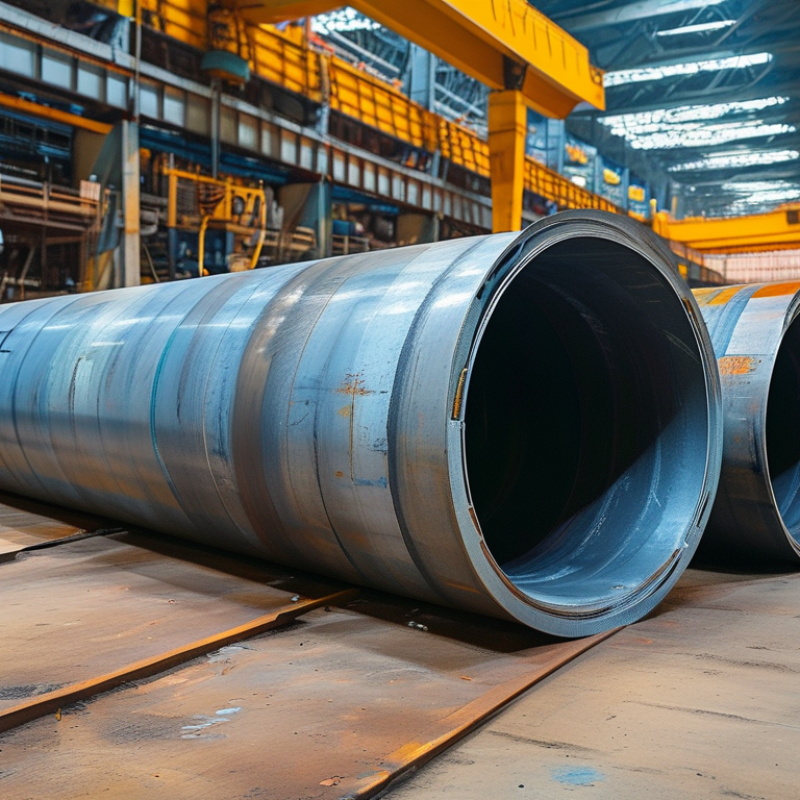
ERW steel pipe, or Electric Resistance Welded pipe, is a prominent choice for many industries. It is made by rolling metal strips into a tubular shape and welding them along the seam. This method offers a cost-effective solution for manufacturing steel pipes. According to a recent market report by Research and Markets, the global ERW steel pipe market is expected to grow at a CAGR of 5% through 2026, indicating its rising popularity.
One of the defining characteristics of ERW steel pipes is their uniform strength. These pipes possess a consistent wall thickness, enhancing structural integrity. The manufacturing process allows for various diameters and wall thicknesses, meeting diverse industry needs. The World Steel Association highlights that ERW pipes can withstand high pressures while remaining lightweight, making them ideal for various applications, from oil and gas to construction.
However, the quality of ERW pipes can vary depending on the manufacturer. Buyers should carefully assess specifications and certifications. Ensuring that the pipes meet the required standards can be challenging. Not all suppliers guarantee the same level of reliability. As the industry evolves, continuous improvements in welding technology can address some of these quality concerns, making ERW pipes an even more attractive option for buyers globally.
ERW steel pipes have garnered attention due to their cost-effectiveness, particularly in international markets. The production process of Electric Resistance Welded (ERW) pipes allows manufacturers to create cost-efficient solutions without sacrificing quality. According to industry reports, ERW pipes typically have lower production costs compared to seamless pipes, which can be up to 20% more expensive. This is particularly appealing for buyers looking to maximize their budgets while ensuring reliable infrastructure.
International buyers appreciate the versatility of ERW pipes. Their applications range from oil and gas transportation to construction and manufacturing. A report from a leading market research firm indicates that the demand for ERW pipes is projected to grow at a compound annual growth rate (CAGR) of 4.5% over the next five years. This growth is largely driven by the increasing need for efficient and affordable infrastructure solutions worldwide.
Tip: Always consider the specifications and standards required in your region. This knowledge can prevent costly errors later.
It is important to note that while ERW pipes are cost-effective, they may not be suitable for every application. For example, they have limitations in high-pressure environments. Buyers must evaluate the specific requirements of their projects to ensure they choose the right type of pipe. The reliability of ERW pipes in various conditions can vary, prompting buyers to seek expert advice when making decisions.
Tip: Consult professionals to understand the best pipe options for your projects. Their insights can enhance your purchasing strategy.
ERW (Electric Resistance Welding) steel pipes offer numerous benefits crucial for global buyers. Their quality arises from a precise manufacturing process. In 2021, the global ERW steel pipe market was valued at over $70 billion. This impressive figure reflects ongoing demand driven by construction and infrastructure projects worldwide.
Durability is a key feature of ERW pipes. They withstand high pressures and extreme temperatures. According to a report by ResearchAndMarkets, ERW pipes exhibit a tensile strength of approximately 350-500 MPa. This strength ensures prolonged life in various applications. However, buyers should consider that while ERW pipes are resilient, improper handling can lead to damage.
Moreover, ERW pipes are versatile. They can be produced in various sizes and shapes to meet specific needs. A study from Market Research Future outlines that the market for customized ERW pipes is projected to grow significantly. Yet, not all manufacturers maintain the same standards. Buyers must conduct thorough research on suppliers to ensure quality.
ERW steel pipes are widely used across various industries globally. The oil and gas sector relies heavily on these pipes for transportation. According to a recent report by Global Market Insights, the ERW steel pipe market is expected to reach $10 billion by 2026, driven by infrastructure development. These pipes are preferred for their adaptability and cost-effectiveness. They are lighter than seamless pipes, making them easier to handle and install.
In the construction industry, ERW steel pipes play a vital role. They are utilized for structural purposes, such as scaffolding and support frames. The American Institute of Steel Construction emphasizes that ERW pipes ensure better load-bearing capabilities. Their corrosion resistance also makes them a suitable choice for various environmental conditions. However, the challenge remains in maintaining quality control during manufacturing. Despite their advantages, inconsistent quality can lead to potential failures.
Moreover, the water supply and sewage sectors benefit from ERW steel pipes. These pipes are durable and can withstand high pressure. Regulations stipulate the need for high-quality materials in water systems. ERW pipes meet these criteria but require regular inspections. This introduces a layer of complexity in their usage. The need for meticulous monitoring underscores the importance of reliability in sourcing materials for global buyers.
ERW (Electric Resistance Welded) steel pipes offer significant sustainability benefits for global buyers. They are produced using a method that requires less energy compared to traditional welded pipes. According to a recent industry report, the manufacture of ERW pipes can reduce energy consumption by up to 20%. This lowers the overall carbon footprint, which is crucial in today’s climate-conscious market.
Moreover, ERW steel pipes are fully recyclable. At the end of their life cycle, these pipes can be repurposed into new steel products. This circular approach minimizes waste and reduces the demand for virgin materials. It's estimated that the recycling of steel saves approximately 74% of the energy required to produce new steel. This means substantial savings, both financially and environmentally.
However, it’s essential to consider the production methods as well. While ERW pipes are more efficient, the sourcing of raw materials can still impact their overall sustainability. Responsible sourcing practices are vital to further enhance their environmental benefits. Stakeholders must be aware of these issues for a more sustainable production chain. Addressing these challenges will strengthen the advantages of ERW steel pipes in the global market.
„Thanks to the LUVIR technology, the solder resist process could be switched directly from the previously used mask exposure to direct exposure. As an outstanding digital solution on the market, this technology has been able to demonstrate fast process times and superior quality on our certified conventional ink in production. This allowed us to fully digitize the solder mask process at low cost – without process or ink adjustments. An excellent benefit to our production in Rot am See.“
Ralf Göhringer (Head of Production WE Rot am See)
I would definitely recommend the Limata machine and team for a future company purchase
Michael Greenaway
Compunetics Inc.
“The Limata ldi has been amazing!! Best thing we did was buy this machine”
Richard Brady
GM
Circuitlabs
“Since 2019, we have been running the Limata X1000 LDI system (including LUVIR for solder mask imaging) in daily production as an addition to our current process with film. The machine was capable of properly exposing Taiyo PSR-4000 BN (DI) solder mask types on normal to high-copper boards using a new and unique direct imaging process. The machine operating interface is very user friendly which allowed for a quick technical training curve. The pre-registration processing reduced several seconds of production time at every print. Limata support and service staff is incomparable. They supported our team every step of the way at basically any time of the day or night, with literally, an immediate response time, customizing the software interface to best fit our Operations and needs.
We have exposed more than 8,000 prints since end of October, on various solder mask colors and some resist film panels. Limata, has proven to be very capable and innovative. They are a strong contender in the industry.
We have very much enjoyed this project, and working with the team!
Thank you Limata for the continued support and being a part of our growth.”
Bill Sezate
Vice President, GM
Summit Interconnect
As a replacement to our current contact exposure process with film, the LIMATA X2000 system including LUVIR-Technology was capable of properly exposing non-LDI solder mask types using a direct imaging process. The machine offers cutting edge software with a very intuitive operating interface which allowed for quick technician training curve. The dual drawer system combined with pre-registration processing reduced several seconds of production time at every machine cycle. Limata support and service staff is world class. They added software patches to keep production running at shortest possible response times, customized the software interface to best fit our in-house Operations system, and even wrote a step-by-step machine processing manual. As a result of the project, we have exposed more than 16,000 times on various product types and solder mask brands/colors. Limata, in a very short timeframe as a company, has definitely shown they are truly innovative and will be challenging the industry of direct imaging for the top spot.
Kevin Beattie
Process Engineer
TTM Technologies
Forest Grove Division
