Choosing the 2026 best Earth Rammer requires more than comparing impact force and engine power. Global buyers face different soil conditions, project standards, transport limits, and service expectations. A machine that performs well on damp clay may struggle in loose sand. This difference matters on foundations, trenches, road repairs, and utility work.
This guide examines practical performance through an experienced buyer’s lens. It considers compaction depth, operating weight, shoe design, vibration control, fuel use, noise, and operator comfort. It also reviews parts availability, warranty support, technical documentation, and dealer reliability. These details often decide whether a machine remains productive after several months.
A strong Earth Rammer should deliver steady impact without feeling unstable in the operator’s hands. Its control handle should reduce harsh vibration during repeated passes. The rammer should also start reliably in changing temperatures and maintain consistent performance on uneven ground. Small details matter.
There is no universal best model.
A specification sheet can look impressive, yet field results may differ. Soil moisture, maintenance habits, and operator experience can change the outcome. Buyers should test performance where possible and verify service coverage before ordering. Some comparisons may remain imperfect because manufacturers publish data under different conditions. That limitation deserves attention.
The following outline evaluates key purchasing factors for international buyers in 2026. It connects technical specifications with real jobsite needs, ownership costs, and long-term reliability. The goal is not to promote one machine blindly. It is to help buyers make a careful, evidence-based decision.
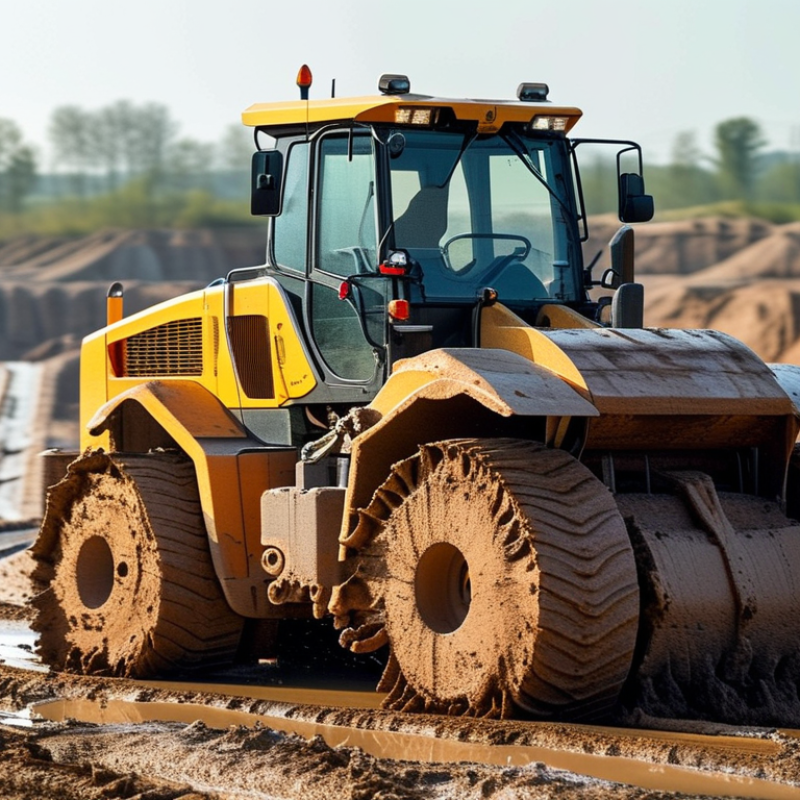
What defines the best earth rammer for global buyers in 2026? It is not simply the heaviest machine. Field experience shows that soil type, trench width, moisture, and access often matter more. A narrow shoe can compact a 300-millimeter trench neatly, while excessive force may damage fragile paving. Buyers should compare operating weight, impact force, vibration frequency, shoe size, fuel use, and starting performance. Cold mornings expose weak designs quickly.
The Federal Highway Administration’s Soil and Foundations Reference Manual stresses that density depends on moisture, lift thickness, and pass count, not machine force alone. This matters because one rammer cannot suit clay, granular fill, and recycled aggregate equally well. EU-OSHA identifies 2.5 m/s² A(8) as the hand-arm vibration action value, with 5 m/s² as the exposure limit. Therefore, declared vibration data deserves serious attention. The European Commission’s Stage V framework also makes engine emissions and documentation important for many markets. Yet paperwork can never replace field testing.
Tips: Request a soil-specific demonstration. Check the vibration value, service intervals, spare-part access, and transport weight. Ask whether technical manuals match your country’s language and safety rules. A slightly slower rammer may be better if operators can control it comfortably. I would avoid choosing from impact force alone. That shortcut still looks attractive, but it often produces disappointing results.
What Is the 2026 Best Earth Rammer for Global Buyers?
How Earth Rammers Work and Where They Are Used
An earth rammer compacts soil through repeated vertical impacts. Its engine turns a crank mechanism. Springs transfer energy to the compacting foot. The foot strikes the ground rapidly, pushing air from soil gaps. This action increases density around pipes, foundations, and narrow trenches. A stable rammer should maintain balanced movement without excessive bouncing. Operators need firm control, clear visibility, and comfortable handles during long shifts.
Earth rammers work best on cohesive soils, including clay and mixed backfill. They are common in road repairs, drainage projects, utility trenches, and small foundation areas. Their narrow feet reach places that larger rollers cannot enter. Compact layers matter. A thick lift may look firm above but remain loose underneath. In practice, moisture often decides the result. Dry soil resists compaction, while saturated soil may deform under impact.
Global buyers should compare impact force, operating weight, foot width, fuel efficiency, spare-part access, and service support. Emission requirements differ between countries, so technical documents need careful checking. Noise and vibration limits also affect site acceptance. One overlooked detail is transport weight. A powerful machine becomes less useful when workers cannot move it safely. The “best” earth rammer is not always the strongest model. That assumption is too simple. Soil testing, operator training, and realistic maintenance planning still shape final performance. Even experienced crews sometimes compact too quickly. A slower, measured rhythm often produces more reliable ground.
Earth rammers compact soil by repeatedly lifting and dropping a narrow rammer shoe. The impact force helps densify cohesive soil and trench backfill where larger rollers cannot reach. The chart shows typical impact-force ranges for common earth-rammer applications; actual specifications vary by machine design, soil condition, and operating method.
Choosing the best earth rammer for global buyers depends less on maximum impact force than soil response. In clay, a narrow foot and controlled impact help break and knead dense layers. Excessive force can cause rebound, operator fatigue, and uneven compaction. Moisture matters greatly. Clay that sticks to the shoe may need drainage or drying, not more impacts. Buyers should request test data from similar soil, rather than trusting brochure figures alone.
Loose sand and gravel behave differently. Higher operating frequency can settle small particles, while stable guidance prevents drifting. A wider shoe may cover more ground, but it can reduce pressure inside narrow trenches. For mixed fill, balance, throttle control, and consistent jump height become important.
Watch the rammer on a ten-meter test strip. Measure passes, density, and walking speed. Small details matter.
Wet silt requires drainage and careful lift thickness. An earth rammer cannot repair saturated soil. In rocky fill, impact durability and protected controls deserve close inspection. Ask about service access, wear parts, and vibration exposure data. These features affect ownership beyond the purchase price. I would not choose by engine size alone. It sounds convincing, but it can mislead. Soil can change across one site, sometimes within a few meters. A rammer that performs well on dry sand may struggle nearby in wet clay.
The best earth rammer depends on soil, trench width, and daily workload. Power alone can mislead buyers. Compare impact force in kilonewtons, vibration frequency, shoe size, and operating weight. A narrow shoe reaches confined trenches better. A wider shoe covers more ground but may reduce maneuverability.
Fuel use needs a clear measurement method. Request consumption in litres per operating hour, not only engine horsepower. The U.S. Energy Information Administration reports diesel contains about 137,381 Btu per gallon, helping buyers estimate energy input. The U.S. EPA’s nonroad engine data also shows that engine emissions depend on power category and operating conditions. Real fuel use changes with soil resistance, throttle habits, and idle time. I once underestimated these factors. The hourly cost rose noticeably.
Calculate operating cost with fuel, scheduled service, transport, downtime, and operator time. A simple cost sheet is more useful than a low purchase price. ASTM D1557 data supports comparing laboratory compaction effort, but field results still require moisture control and repeated passes. Do not treat laboratory density as a guaranteed jobsite result. That assumption is risky.
Tips: Ask for test conditions. Check impact force and shoe dimensions together. Record fuel use over one full shift. Include belts, filters, and service intervals. For global buyers, confirm local parts access and engine emission documentation. A slightly heavier machine may work better, but it can increase handling and transport costs.
What Is the 2026 Best Earth Rammer for Global Buyers?
The best earth rammer is not simply the heaviest or fastest machine. Safety evidence should come before price comparisons. Check the emergency stop, protective covers, stable handles, and clearly marked controls. The throttle should return smoothly when released. Test it before work begins.
Ask for vibration and noise data measured under realistic operating conditions. Long exposure can strain an operator’s hands, wrists, and hearing. A useful machine includes practical instructions, maintenance intervals, and warnings in a language workers understand. Inspect the fuel system, frame welds, foot assembly, and lifting points. Small cracks become expensive problems. Do not rely only on product photographs.
Compliance requires careful local checking. Confirm required certificates, electrical or engine documentation, emissions information, and import records for the destination market. Requirements differ between countries and sometimes between job sites. A supplier should provide traceable serial numbers and consistent technical files. Claims without supporting documents deserve caution.
After-sales support often decides the real purchase value. Ask how quickly common parts can ship, who handles warranty decisions, and whether remote troubleshooting is available. Request a parts list with service intervals and clear warranty exclusions. A short video showing cold starting and operation may reveal more than polished advertising. There is no perfect checklist. Buyers can still miss hidden transport damage or poorly trained operators. That risk should be planned for, not ignored.
„Thanks to the LUVIR technology, the solder resist process could be switched directly from the previously used mask exposure to direct exposure. As an outstanding digital solution on the market, this technology has been able to demonstrate fast process times and superior quality on our certified conventional ink in production. This allowed us to fully digitize the solder mask process at low cost – without process or ink adjustments. An excellent benefit to our production in Rot am See.“
Ralf Göhringer (Head of Production WE Rot am See)
I would definitely recommend the Limata machine and team for a future company purchase
Michael Greenaway
Compunetics Inc.
“The Limata ldi has been amazing!! Best thing we did was buy this machine”
Richard Brady
GM
Circuitlabs
“Since 2019, we have been running the Limata X1000 LDI system (including LUVIR for solder mask imaging) in daily production as an addition to our current process with film. The machine was capable of properly exposing Taiyo PSR-4000 BN (DI) solder mask types on normal to high-copper boards using a new and unique direct imaging process. The machine operating interface is very user friendly which allowed for a quick technical training curve. The pre-registration processing reduced several seconds of production time at every print. Limata support and service staff is incomparable. They supported our team every step of the way at basically any time of the day or night, with literally, an immediate response time, customizing the software interface to best fit our Operations and needs.
We have exposed more than 8,000 prints since end of October, on various solder mask colors and some resist film panels. Limata, has proven to be very capable and innovative. They are a strong contender in the industry.
We have very much enjoyed this project, and working with the team!
Thank you Limata for the continued support and being a part of our growth.”
Bill Sezate
Vice President, GM
Summit Interconnect
As a replacement to our current contact exposure process with film, the LIMATA X2000 system including LUVIR-Technology was capable of properly exposing non-LDI solder mask types using a direct imaging process. The machine offers cutting edge software with a very intuitive operating interface which allowed for quick technician training curve. The dual drawer system combined with pre-registration processing reduced several seconds of production time at every machine cycle. Limata support and service staff is world class. They added software patches to keep production running at shortest possible response times, customized the software interface to best fit our in-house Operations system, and even wrote a step-by-step machine processing manual. As a result of the project, we have exposed more than 16,000 times on various product types and solder mask brands/colors. Limata, in a very short timeframe as a company, has definitely shown they are truly innovative and will be challenging the industry of direct imaging for the top spot.
Kevin Beattie
Process Engineer
TTM Technologies
Forest Grove Division
