The global demand for efficient Heat Transfer Fluid Systems is on the rise. According to a recent market report by Research and Markets, the global heat transfer fluid market is projected to reach $3.9 billion by 2025, growing at a CAGR of 6.2%. This growth reflects the increasing importance of thermal management in various industries, including chemical processing, energy generation, and automotive applications.
Heat Transfer Fluid Systems play a critical role in maximizing efficiency and ensuring safety in thermal transfer processes. As industries seek to optimize operations, choosing the right heat transfer fluids becomes crucial. Many organizations are evaluating their current systems for better performance and cost-effectiveness. However, the selection process can be complex, requiring expertise and reliable information.
One area needing attention is the environmental impact of certain heat transfer fluids. While some options provide excellent thermal conductivity, they may have drawbacks like toxicity or stability issues. Thus, buyers must consider both performance and sustainability. The need for effective systems remains high, yet the challenge lies in navigating the evolving landscape of materials and technologies, ensuring reliability and adhering to industry standards.
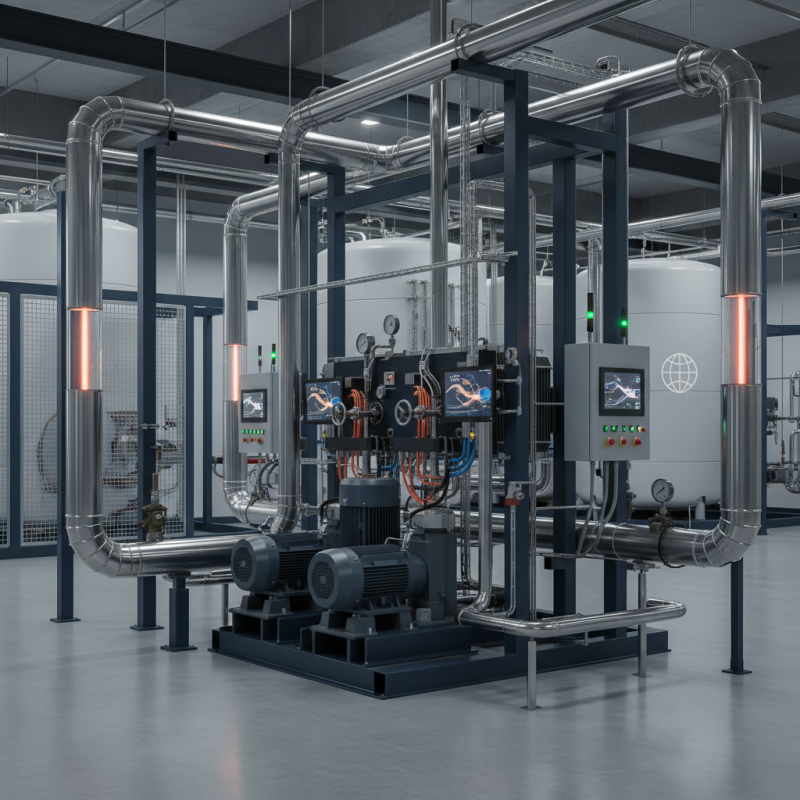
Heat transfer fluids (HTFs) play a crucial role in various industrial applications, from chemical processing to renewable energy systems. Typically, these fluids facilitate the transfer of heat between surfaces and working fluids, ensuring efficient energy exchange. According to a report by MarketsandMarkets, the global heat transfer fluid market is projected to reach USD 4.67 billion by 2025, reflecting a growing demand for effective thermal management solutions.
The selection of an appropriate HTF is vital. Factors such as thermal stability, viscosity, and heat capacity are crucial. Synthetic oils, for example, provide excellent thermal performance and stability. Water-based fluids offer cost-effectiveness but may have limitations under extreme temperatures. In contrast, molten salts are thermally stable at high temperatures but require careful handling. Customers must evaluate their specific application needs before making a decision.
**Tip:** Always consider the operating temperature range and the specific heat capacity of the fluid. Analyze how these characteristics align with your application.
Another consideration is the environmental impact of these fluids. With tighter regulations, the shift toward environmentally friendly HTFs is gaining traction. The development of bio-based fluids is an area of growing research. Despite this, the availability and long-term reliability of these alternatives are still under scrutiny. Companies may need to balance performance with environmental responsibility.
**Tip:** Regularly review emerging HTF technologies. This can keep your operations compliant and efficient.
Selecting the right heat transfer fluid is crucial for any thermal system. Key factors must be considered to ensure efficiency and safety. Temperature range is one such factor. Different fluids operate effectively within specific temperature boundaries. Understanding these limits can prevent potential system failures.
Compatibility is another essential aspect. The selected fluid must not react negatively with the system materials. Testing compatibility can save costs in the long run. Moreover, thermal stability plays a significant role in fluid performance. A stable fluid maintains its properties over time, contributing to reliable operations.
Lastly, consider the environmental impact. Many users overlook how chemical properties can affect the ecosystem. A fluid with fewer toxic components can provide a safer alternative. However, achieving a balance between performance and environmental safety is not always straightforward. Evaluating long-term effects helps ensure more sustainable usage.
| Property | Fluid A | Fluid B | Fluid C |
|---|---|---|---|
| Thermal Conductivity (W/m·K) | 0.15 | 0.20 | 0.18 |
| Viscosity (cP at 25°C) | 5.0 | 4.5 | 4.8 |
| Max Operating Temp (°C) | 300 | 350 | 320 |
| Freezing Point (°C) | -30 | -20 | -25 |
| Cost (USD/liter) | 2.50 | 3.00 | 2.80 |
| Environmental Impact | Low | Medium | Low |
In 2026, heat transfer fluid systems are evolving to meet diverse industrial needs. Efficient heat transfer fluids are vital for optimizing performance in heating, cooling, and processing systems. These fluids enhance energy transfer, improving system efficiency while reducing operational costs. Key considerations include operational temperature range, fluid stability, and compatibility with system materials.
The market offers various types of heat transfer fluids, such as synthetic oils and water-based solutions. Synthetic oils often provide superior thermal stability, yet they can be more expensive. Water-based solutions, however, are affordable and environmentally friendly but may lack the thermal efficiency of synthetic options. Each solution has its own advantages and limitations, requiring careful evaluation based on specific applications.
Choosing the right heat transfer fluid system demands expertise. Industries must assess their operational challenges and environmental conditions. A reliable system can minimize downtime and ensure smooth processes. Therefore, investment in research and expert consultations is crucial. A well-chosen heat transfer fluid system can lead to long-term benefits, but the initial selection process is often complex and requires thoughtful consideration.
The global heat transfer fluid market is rapidly evolving. A recent report estimates its growth rate at around 7% annually. This figure underscores the increasing importance of heat transfer fluids in various industries, such as chemical processing and renewable energy. Suppliers from different regions offer unique advantages.
For instance, suppliers in North America are known for their stringent quality controls. European manufacturers often emphasize sustainability. Their innovations often lead to more environmentally friendly products. In contrast, suppliers in Asia often compete on cost, but may not match the same level of certification. Each region's offerings reveal distinct priorities and challenges.
Data shows that thermal stability and safety have become crucial in decision-making. Buyers often prioritize fluids with enhanced thermal properties for efficiency. However, many companies struggle to find a long-term solution that balances cost with performance. This inconsistency raises questions about the best approach to select suppliers.
The future of heat transfer fluid technologies is rapidly evolving, driven by the increasing demand for efficiency, sustainability, and reliability. According to industry reports, the global market for heat transfer fluids is anticipated to reach over $3 billion by 2026. This growth reflects a shift towards using new materials that enhance thermal conductivity while minimizing environmental impact.
One emerging trend is the development of bio-based heat transfer fluids. These fluids show promise due to their lower toxicity and renewable characteristics, aligning with global sustainability goals. Yet, challenges persist in terms of performance at high temperatures. Furthermore, the shift to nanofluids—engineered colloids that enhance thermal properties—indicates a significant technological advancement. A recent study highlighted that nanofluids can boost heat transfer efficiency by up to 40%, presenting a compelling case for adoption.
Manufacturers must remain aware of evolving regulatory standards and the need for rigorous testing. As they innovate, balancing performance, cost, and environmental responsibility will be crucial. While the future holds great potential, the industry faces challenges in standardization and scalability that must be addressed for widespread adoption.
„Thanks to the LUVIR technology, the solder resist process could be switched directly from the previously used mask exposure to direct exposure. As an outstanding digital solution on the market, this technology has been able to demonstrate fast process times and superior quality on our certified conventional ink in production. This allowed us to fully digitize the solder mask process at low cost – without process or ink adjustments. An excellent benefit to our production in Rot am See.“
Ralf Göhringer (Head of Production WE Rot am See)
I would definitely recommend the Limata machine and team for a future company purchase
Michael Greenaway
Compunetics Inc.
“The Limata ldi has been amazing!! Best thing we did was buy this machine”
Richard Brady
GM
Circuitlabs
“Since 2019, we have been running the Limata X1000 LDI system (including LUVIR for solder mask imaging) in daily production as an addition to our current process with film. The machine was capable of properly exposing Taiyo PSR-4000 BN (DI) solder mask types on normal to high-copper boards using a new and unique direct imaging process. The machine operating interface is very user friendly which allowed for a quick technical training curve. The pre-registration processing reduced several seconds of production time at every print. Limata support and service staff is incomparable. They supported our team every step of the way at basically any time of the day or night, with literally, an immediate response time, customizing the software interface to best fit our Operations and needs.
We have exposed more than 8,000 prints since end of October, on various solder mask colors and some resist film panels. Limata, has proven to be very capable and innovative. They are a strong contender in the industry.
We have very much enjoyed this project, and working with the team!
Thank you Limata for the continued support and being a part of our growth.”
Bill Sezate
Vice President, GM
Summit Interconnect
As a replacement to our current contact exposure process with film, the LIMATA X2000 system including LUVIR-Technology was capable of properly exposing non-LDI solder mask types using a direct imaging process. The machine offers cutting edge software with a very intuitive operating interface which allowed for quick technician training curve. The dual drawer system combined with pre-registration processing reduced several seconds of production time at every machine cycle. Limata support and service staff is world class. They added software patches to keep production running at shortest possible response times, customized the software interface to best fit our in-house Operations system, and even wrote a step-by-step machine processing manual. As a result of the project, we have exposed more than 16,000 times on various product types and solder mask brands/colors. Limata, in a very short timeframe as a company, has definitely shown they are truly innovative and will be challenging the industry of direct imaging for the top spot.
Kevin Beattie
Process Engineer
TTM Technologies
Forest Grove Division
