In the evolving landscape of industrial machinery, hydraulic cylinders play a crucial role. Experts emphasize their importance for efficiency and functionality. For instance, John Smith, a renowned hydraulic systems consultant, states, "Choosing the right hydraulic cylinder can greatly enhance productivity and reduce downtime."
Global buyers face numerous options when selecting hydraulic cylinders. With various materials and designs available, the choices can be overwhelming. Not all cylinders meet international standards, which can lead to performance issues. Buyers must prioritize reliability and durability, especially in demanding applications.
Investing in high-quality hydraulic cylinders can yield significant benefits. However, not every product on the market fits every need. It is essential to evaluate specific requirements before making a decision. Understanding the nuances of hydraulic cylinder specifications is vital for optimized machinery performance.
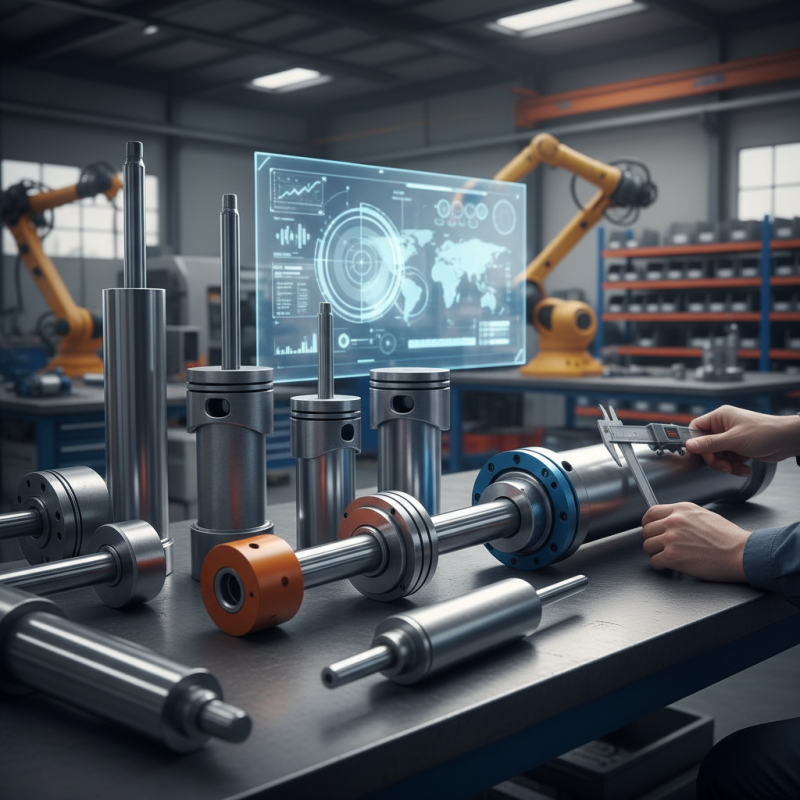
Hydraulic cylinders are essential components in various industries. They convert hydraulic energy into mechanical force. This force allows machinery to perform heavy tasks efficiently. According to recent industry reports, the global hydraulic cylinder market is expected to reach approximately $25 billion by 2026, growing at a CAGR of 5.6%. This growth reflects increased automation across sectors.
Applications of hydraulic cylinders vary widely. They are crucial in construction equipment, manufacturing machinery, and agricultural vehicles. In construction, for instance, excavators rely on hydraulic cylinders to lift and move heavy loads. The efficiency of these cylinders directly impacts productivity. However, issues like leaks can lead to significant downtime. Maintenance is often overlooked but is vital for longevity.
The role of hydraulic cylinders in enhancing operational efficiency cannot be overstated. As industries push for greater automation, the demand for reliable hydraulic systems continues to rise. Emerging technologies, such as IoT capabilities, offer promising improvements. Some companies have faced challenges integrating these technologies into existing systems. Continued innovation and investment will be necessary to keep pace with industry needs.
When selecting hydraulic cylinders, several key factors come into play. It's essential to evaluate the application's specific requirements. Consider factors like load capacity, stroke length, and operating pressure. These elements define how the cylinder will perform in real-world scenarios. Each application might require a different configuration. For instance, a construction project may demand high force and durability.
Material choice is critical. Cylinders must be made of high-quality materials to withstand extreme conditions. Corrosion resistance is vital in environments where exposure to moisture occurs. The cylinder's design should facilitate easy maintenance as well. Regular inspections and maintenance can prevent unexpected failures. Reflect on the long-term implications of your selection.
Moreover, compatibility with existing systems is a must. Ensure that the hydraulic cylinder integrates seamlessly with other components. Consult with experts if unsure about compatibility. Additionally, check for certification standards. This can assure you of the cylinder's reliability. The landscape of hydraulic technology constantly evolves. Staying updated can help in making informed decisions and ultimately improve performance.
Hydraulic cylinders are crucial in various industrial applications. These devices convert hydraulic energy into mechanical force. They are widely used in construction, manufacturing, and agricultural sectors. Understanding the popular types available helps buyers make informed choices.
One common type is the double-acting cylinder. It provides force in both directions, allowing more control and efficiency. This type is often used in heavy machinery, where precise movement is essential.
Single-acting cylinders, on the other hand, are simpler and cost-effective. They operate using pressure in one direction only, making them suitable for lighter tasks.
Telescopic cylinders are another option. They have multiple stages for extending longer strokes. This design is useful in applications where space is limited. However, they can be more complex and prone to wear over time.
It’s important for buyers to consider the application and expected lifespan. Every choice comes with trade-offs, so careful evaluation is necessary.
Hydraulic cylinders are essential components in many industries. They convert hydraulic energy into mechanical force, enabling precise movement and control. The global hydraulic cylinder market is projected to reach $16.4 billion by 2027, according to industry reports. Significant growth is anticipated due to rising demand from construction, agriculture, and manufacturing sectors.
Leading manufacturers and suppliers focus on efficiency and reliability to meet diverse customer needs. Many companies are investing in advanced technology to enhance performance. Recent data indicates that manufacturers adopting smart technology have seen a 15% improvement in energy efficiency. This trend highlights the importance of innovation in maintaining competitiveness.
Tip: Always evaluate the performance history of suppliers before making a decision. A reliable supplier should demonstrate proven experience in the industry.
Another crucial factor is compatibility. Ensure the hydraulic cylinder fits your specific application requirements. Research shows misapplication may lead to a 20% reduction in lifespan. Avoiding cheap imports is also wise, as these often compromise durability and safety.
Tip: Regular maintenance and inspections can extend the life of your hydraulic cylinders. Implementing a proactive maintenance plan can prevent costly downtimes.
Hydraulic cylinders are evolving rapidly. Innovation drives efficiency and performance in various industries. Manufacturers now focus on smart designs that enhance durability while minimizing maintenance needs. Advanced materials are used to reduce wear and extend the life of these crucial components.
Trends also include the integration of IoT. These technologies allow real-time monitoring of cylinder performance. As data is collected, predictive analytics can foresee potential failures. This shift enables operators to perform proactive maintenance, saving time and costs.
Tips: Always evaluate the operating conditions when selecting a hydraulic cylinder. Consider factors like load capacity and environmental challenges. Regular maintenance checks can prevent unexpected breakdowns. Stay informed about the latest technologies to improve performance.
„Thanks to the LUVIR technology, the solder resist process could be switched directly from the previously used mask exposure to direct exposure. As an outstanding digital solution on the market, this technology has been able to demonstrate fast process times and superior quality on our certified conventional ink in production. This allowed us to fully digitize the solder mask process at low cost – without process or ink adjustments. An excellent benefit to our production in Rot am See.“
Ralf Göhringer (Head of Production WE Rot am See)
I would definitely recommend the Limata machine and team for a future company purchase
Michael Greenaway
Compunetics Inc.
“The Limata ldi has been amazing!! Best thing we did was buy this machine”
Richard Brady
GM
Circuitlabs
“Since 2019, we have been running the Limata X1000 LDI system (including LUVIR for solder mask imaging) in daily production as an addition to our current process with film. The machine was capable of properly exposing Taiyo PSR-4000 BN (DI) solder mask types on normal to high-copper boards using a new and unique direct imaging process. The machine operating interface is very user friendly which allowed for a quick technical training curve. The pre-registration processing reduced several seconds of production time at every print. Limata support and service staff is incomparable. They supported our team every step of the way at basically any time of the day or night, with literally, an immediate response time, customizing the software interface to best fit our Operations and needs.
We have exposed more than 8,000 prints since end of October, on various solder mask colors and some resist film panels. Limata, has proven to be very capable and innovative. They are a strong contender in the industry.
We have very much enjoyed this project, and working with the team!
Thank you Limata for the continued support and being a part of our growth.”
Bill Sezate
Vice President, GM
Summit Interconnect
As a replacement to our current contact exposure process with film, the LIMATA X2000 system including LUVIR-Technology was capable of properly exposing non-LDI solder mask types using a direct imaging process. The machine offers cutting edge software with a very intuitive operating interface which allowed for quick technician training curve. The dual drawer system combined with pre-registration processing reduced several seconds of production time at every machine cycle. Limata support and service staff is world class. They added software patches to keep production running at shortest possible response times, customized the software interface to best fit our in-house Operations system, and even wrote a step-by-step machine processing manual. As a result of the project, we have exposed more than 16,000 times on various product types and solder mask brands/colors. Limata, in a very short timeframe as a company, has definitely shown they are truly innovative and will be challenging the industry of direct imaging for the top spot.
Kevin Beattie
Process Engineer
TTM Technologies
Forest Grove Division
