Choosing the best Industrial Touchscreen from China requires more than comparing prices, screen sizes, or factory photographs. A reliable panel must survive real production conditions: oil on gloves, water splashes, vibration, bright warehouse lighting, and continuous operation. The best choice depends on the application, not simply the supplier’s location.
Industry data supports this careful approach. MarketsandMarkets reports that the global industrial displays market is expanding as factories adopt automation, connected equipment, and human-machine interfaces. Grand View Research also identifies manufacturing and process industries as major users of rugged display technology. These trends explain why Chinese manufacturers now offer projected-capacitive, resistive, sunlight-readable, and embedded touchscreen systems for demanding environments. Yet market growth does not guarantee product quality.
Look closely.
A credible evaluation should examine IP ratings, operating temperature, touch response through gloves, brightness, connector protection, and long-term component availability. For example, a food-processing line may need a sealed IP65 front surface, while an outdoor control cabinet may require 1,000-nit brightness and thermal management. IEC 60529 provides the framework for IP protection claims, but certification documents still need verification.
Supplier experience matters. Ask for test records, burn-in procedures, sample units, and references from comparable installations. ISO 9001 certification can indicate controlled processes, although it cannot replace independent performance testing. Some manufacturers publish impressive specifications but provide limited evidence. That is an uncomfortable gap.
This guide compares Chinese Industrial Touchscreen suppliers through practical reliability, technical capability, customization, compliance, support, and total ownership cost. The “best” model may not be the cheapest one. It may be the panel that remains readable, responsive, and serviceable after thousands of operating hours.
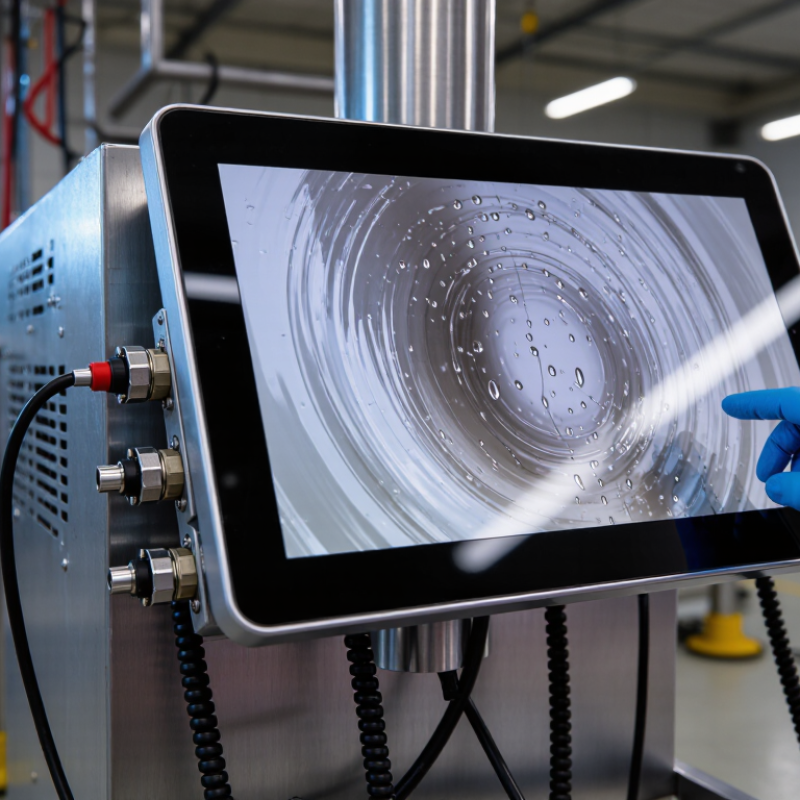
Industrial touchscreen is not simply a larger tablet with a metal frame. It is a human-machine interface designed for dust, vibration, temperature changes, and repeated operation. In a factory, an operator may press the same control hundreds of times while wearing gloves. The panel must respond accurately, even when oil marks the surface.
A reliable industrial touchscreen usually combines projected capacitive, resistive, or infrared sensing with hardened cover glass. Projected capacitive technology offers smooth multi-touch control, but thick gloves can reduce sensitivity. Resistive technology often works better with gloves or a stylus, although it may feel less fluid. Engineers should check brightness, viewing angle, ingress protection, shock resistance, and operating temperature. A screen that looks impressive in a showroom may fail beside a hot cutting machine.
From practical testing, sunlight readability and connector placement deserve more attention than many buyers expect. A sealed enclosure helps, but poor cable routing can still invite moisture. I have also seen specifications hide an important weakness: touch accuracy near the edges. That detail needs testing, not assumption. The best unit matches the production environment, software, mounting method, and maintenance habits. China’s manufacturing strength can support customization, yet sample testing and documented quality controls remain essential. Some decisions remain imperfect. Cost savings may quietly reduce long-term reliability.
What Is the Best Industrial Touchscreen from China?
Which Technical Features Matter Most?
The best industrial touchscreen is not defined by size alone. In practical installations, brightness, touch accuracy, and enclosure protection matter more. A screen should remain readable under direct warehouse lighting. Around 1,000 nits may suit bright indoor areas, while outdoor equipment may require more. That depends on glass treatment and viewing angle.
Capacitive touch usually feels responsive, but operators may wear gloves. Confirm glove, wet-finger, and stylus performance before ordering. I once tested a panel that worked perfectly with bare fingers but missed touches through thin gloves. Small details can stop production. Optical bonding can reduce internal reflections and improve contrast. It may also raise repair costs. That trade-off deserves attention.
Ingress protection is essential near dust, oil, or water. Check the complete assembly, not only the front glass. Temperature range, vibration resistance, and shock testing should match the machine environment. Industrial computers also need stable processors, sufficient memory, and reliable interfaces such as USB, Ethernet, serial ports, or CAN. Ask for test reports, certification records, sample units, and a clear warranty process. A supplier should explain component availability over several years. This is where many attractive quotations become uncertain. Test it. Measure boot time, touch latency, cable fit, and screen visibility on the actual production floor. A perfect specification sheet can still hide a disappointing user experience.
What Is the Best Industrial Touchscreen from China?
How Chinese Industrial Touchscreens Compare
Chinese industrial touchscreens vary widely in build quality, response, and long-term support. A serious comparison starts with the working environment, not the lowest quotation. In factory evaluations, I check brightness, glove operation, viewing angles, and touch accuracy near motors. A screen that looks sharp in a showroom may struggle under dust, vibration, or direct sunlight. That difference matters.
Many Chinese manufacturers offer practical customization. They can adjust panel sizes, mounting holes, connectors, and operating temperatures for specific machines. Capacitive touch usually feels smoother, while resistive touch can work better with gloves or pointed tools. Sealed front panels, often rated around IP65 or higher, help resist splashing and dust. However, an advertised rating means little without test records and consistent production control. Ask for sample units.
Cost is often a major advantage, but price alone can mislead. Some suppliers provide strong displays and reliable aluminum housings, while others reduce cost through weaker cables, uneven backlights, or limited testing. Request inspection reports, lifecycle expectations, spare-part plans, and evidence of quality management. Compatibility also deserves attention, especially with older controllers and industrial software. The comparison is not always flattering. A cheaper unit may create expensive downtime later. Even experienced buyers can overlook service response across time zones. I would test a small batch before approving a large installation.
| Comparison Category | Entry-Level Panel PC | Rugged Panel PC | High-Brightness Outdoor Panel | Stainless-Steel Washdown Panel | Best Fit |
|---|---|---|---|---|---|
| Typical Screen Sizes | 7–15.6 inches | 10.1–21.5 inches | 10.1–21.5 inches | 10.1–19 inches | Choose according to viewing distance and available panel space. |
| Display Technology | IPS LCD, LED backlight | IPS LCD, LED backlight | IPS LCD with high-luminance LED backlight | IPS LCD, LED backlight | IPS generally provides wider viewing angles than standard TN panels. |
| Typical Resolution | 1280 × 800 to 1920 × 1080 | 1280 × 800 to 1920 × 1080 | 1920 × 1080 is common on larger models | 1280 × 800 to 1920 × 1080 | Full HD is useful for detailed dashboards, maps, and machine interfaces. |
| Touch Technology | Projected capacitive or 5-wire resistive | Projected capacitive, resistive, or infrared | Projected capacitive with optional glove support | Projected capacitive or resistive | Resistive touch is often preferable when operators wear heavy gloves. |
| Touch Points | Up to 10 points for capacitive versions | Up to 10 points for capacitive versions | Up to 10 points for capacitive versions | Single-touch or multi-touch, depending on configuration | Multi-touch is useful for zooming, navigation, and gesture-based interfaces. |
| Typical Brightness | 250–400 cd/m² | 300–500 cd/m² | 800–1,500 cd/m² | 300–500 cd/m² | High brightness is recommended for direct sunlight or bright industrial areas. |
| Operating Temperature | Approximately 0°C to 50°C | Approximately -20°C to 60°C | Approximately -20°C to 60°C | Approximately 0°C to 50°C | Verify the complete system rating, including the CPU, storage, and power supply. |
| Storage Temperature | Approximately -20°C to 60°C | Approximately -30°C to 70°C | Approximately -30°C to 70°C | Approximately -20°C to 60°C | Storage limits are relevant during transport and unpowered periods. |
| Ingress Protection | Front IP65 is common | Front IP65; full enclosure options available | Front IP65; outdoor sealing depends on enclosure design | IP65 to IP69K options are available | IP ratings should be confirmed for the exact mounting face and cable interfaces. |
| Enclosure Materials | Aluminum alloy or ABS plastic | Aluminum alloy with reinforced mounting structure | Aluminum alloy with optical bonding options | 304 or 316 stainless steel | Stainless steel is suitable for food, beverage, chemical, and pharmaceutical areas. |
| Vibration Resistance | Suitable for standard factory environments | Designed for higher vibration and shock conditions | Suitable for outdoor equipment when correctly mounted | Suitable for production areas; mounting design remains important | Check the supplier’s test method and stated acceleration or frequency range. |
| Common Processor Options | Low-power Intel or ARM-based processors | Intel Celeron, Pentium, Core, or equivalent processors | Low-power Intel or ARM-based processors | Low-power Intel or ARM-based processors | Processor selection should match the application, software, and thermal limits. |
| Common Operating Systems | Windows, Linux, or Android | Windows or Linux; Android on selected configurations | Windows, Linux, or Android | Windows, Linux, or Android | Confirm driver compatibility for touch, serial ports, and industrial software. |
| Typical Interfaces | USB, HDMI, Ethernet, serial ports | USB, Ethernet, isolated serial ports, digital I/O options | USB, Ethernet, serial ports, optional wireless connectivity | USB, Ethernet, serial ports, optional digital I/O | Industrial interfaces should be specified before production to avoid redesigns. |
| Power Input | 12 VDC or 19 VDC; some models use 100–240 VAC | 9–36 VDC is common for industrial installations | 12 VDC, 24 VDC, or 9–36 VDC depending on model | 12 VDC or 24 VDC is common | Wide-range DC input helps accommodate industrial power systems. |
| Optical Bonding Availability | Usually optional | Optional or standard on premium configurations | Highly recommended for sunlight readability and reduced reflection | Optional | Optical bonding can improve contrast, durability, and touch performance. |
| Customization Potential | High for ports, mounting, logo-free front panels, and OS image | High for enclosure, processor, I/O, and temperature requirements | Medium to high for brightness, glass, and mounting design | High for stainless-steel thickness, sealing, and hygiene features | Chinese manufacturers commonly support OEM dimensions and interface customization. |
| Typical Lead Time | About 2–6 weeks for standard configurations | About 4–8 weeks for customized configurations | About 4–8 weeks depending on display and enclosure availability | About 5–10 weeks for custom stainless-steel fabrication | Confirm production time, sample approval, and shipping time separately. |
| Relative Cost Level | Low | Medium | Medium to High | High | Lower purchase cost should not replace evaluation of service life and support. |
| Main Advantages | Affordable, compact, and suitable for basic HMI tasks | Better thermal range, mechanical durability, and connectivity | Readable in bright environments and outdoor applications | Easy to clean and resistant to demanding washdown conditions | Application conditions should determine the preferred configuration. |
| Main Limitations | Limited thermal margin and mechanical protection on basic models | Higher cost and potentially greater power consumption | Higher energy use and more heat from the brighter backlight | Higher weight, cost, and fabrication lead time | Request environmental test documentation before large-scale deployment. |
| Recommended Application | Indoor automation, kiosks, light industrial monitoring | Factory floors, logistics, machine control, and mobile equipment | Outdoor cabinets, transportation, energy, and field-service equipment | Food processing, beverage production, pharmaceuticals, and chemical handling | The best option is the configuration that matches the environment and required service life. |
What Is the Best Industrial Touchscreen from China?
How to Evaluate Manufacturers and Product Quality
Choosing an industrial touchscreen requires more than comparing prices and screen sizes. A reliable manufacturer should explain its panel technology, touch controller, operating temperature, and expected service life. Ask for traceable component records. Vague answers deserve caution.
Request a production sample, not only a polished demonstration unit. Test it with wet fingers, work gloves, and a metal stylus. Check visibility under direct sunlight. Inspect the bezel, cable strain relief, mounting holes, and sealing around the glass. An IP rating should match the test conditions and enclosure design. Review applicable safety and electromagnetic compatibility reports. Certificates alone are not enough.
Factory evaluation can reveal practical weaknesses. Observe dust control, calibration stations, burn-in testing, and final inspection records. Ask how defective units are isolated and repaired. Confirm firmware control, spare parts availability, warranty terms, and long-term component support. In field evaluations, small details often matter most. A loose connector can stop an otherwise excellent display.
I once focused too heavily on resolution and missed touch latency during glove testing. That was a poor judgment. Manufacturers should welcome repeat testing and provide measurable limits. Their engineers should discuss failures openly, not promise perfection. A dependable supplier shares test methods, accepts reasonable audits, and documents changes before shipment. Supplier communication matters. Reliability begins before production.
How to evaluate manufacturers and product quality through standardized enclosure protection levels.
The chart compares commonly specified IP ratings under IEC 60529. The first digit indicates protection against solid particles and dust, while the second digit indicates protection against water. A higher rating can improve environmental resistance, but the best choice still depends on the installation environment, temperature range, touch performance, display quality, test reports, and manufacturer quality-control evidence.
Selecting the right industrial touchscreen starts with the working environment, not the screen size. A control panel beside a cutting machine may face oil mist, vibration, dust, and constant glove use. A warehouse terminal may need clear viewing under strong ceiling lights. Check the required IP rating, operating temperature, brightness, and mounting depth before comparing prices.
Choose projected capacitive touch for smooth finger and glove operation. Resistive touch may suit operators wearing thick gloves or using a stylus. Sunlight readability also matters. A bright display can still look poor through a reflective cover. Confirm the viewing angle with a real sample. Paper specifications are helpful, but they can hide uncomfortable details.
Tips: Test the touchscreen with wet gloves, dusty fingers, and repeated presses. Ask the supplier for interface details, panel-life data, repair procedures, and production quality records. Request samples from the intended production line, not only a demonstration unit. For Chinese suppliers, review inspection methods, communication speed, spare-part planning, and certification documents. A factory visit can reveal cable routing and sealing quality. It is not always possible, though. Independent inspection is a practical alternative.
Do not select the largest or brightest model automatically. Power consumption, heat, and replacement cost may become operational problems. A careful trial often exposes weaknesses that a specification sheet misses.
„Thanks to the LUVIR technology, the solder resist process could be switched directly from the previously used mask exposure to direct exposure. As an outstanding digital solution on the market, this technology has been able to demonstrate fast process times and superior quality on our certified conventional ink in production. This allowed us to fully digitize the solder mask process at low cost – without process or ink adjustments. An excellent benefit to our production in Rot am See.“
Ralf Göhringer (Head of Production WE Rot am See)
I would definitely recommend the Limata machine and team for a future company purchase
Michael Greenaway
Compunetics Inc.
“The Limata ldi has been amazing!! Best thing we did was buy this machine”
Richard Brady
GM
Circuitlabs
“Since 2019, we have been running the Limata X1000 LDI system (including LUVIR for solder mask imaging) in daily production as an addition to our current process with film. The machine was capable of properly exposing Taiyo PSR-4000 BN (DI) solder mask types on normal to high-copper boards using a new and unique direct imaging process. The machine operating interface is very user friendly which allowed for a quick technical training curve. The pre-registration processing reduced several seconds of production time at every print. Limata support and service staff is incomparable. They supported our team every step of the way at basically any time of the day or night, with literally, an immediate response time, customizing the software interface to best fit our Operations and needs.
We have exposed more than 8,000 prints since end of October, on various solder mask colors and some resist film panels. Limata, has proven to be very capable and innovative. They are a strong contender in the industry.
We have very much enjoyed this project, and working with the team!
Thank you Limata for the continued support and being a part of our growth.”
Bill Sezate
Vice President, GM
Summit Interconnect
As a replacement to our current contact exposure process with film, the LIMATA X2000 system including LUVIR-Technology was capable of properly exposing non-LDI solder mask types using a direct imaging process. The machine offers cutting edge software with a very intuitive operating interface which allowed for quick technician training curve. The dual drawer system combined with pre-registration processing reduced several seconds of production time at every machine cycle. Limata support and service staff is world class. They added software patches to keep production running at shortest possible response times, customized the software interface to best fit our in-house Operations system, and even wrote a step-by-step machine processing manual. As a result of the project, we have exposed more than 16,000 times on various product types and solder mask brands/colors. Limata, in a very short timeframe as a company, has definitely shown they are truly innovative and will be challenging the industry of direct imaging for the top spot.
Kevin Beattie
Process Engineer
TTM Technologies
Forest Grove Division
