Modular Conveyor Belt systems have become a practical choice for manufacturers seeking cleaner, more flexible material handling. Their interlocking plastic modules can be replaced section by section, reducing downtime when a damaged link appears near a transfer point. This matters in food processing, packaging, automotive, and warehouse operations, where every stopped minute can affect production targets. Grand View Research reports that the global conveyor system market continues to expand, supported by automation, e-commerce fulfillment, and modern manufacturing investments. The report also highlights rising demand for efficient and adaptable conveying equipment.
The market is broad and uneven. Many suppliers claim global leadership. Not every claim is equally transparent. This guide examines ten widely recognized Modular Conveyor Belt manufacturers through practical criteria, including product range, belt materials, hygienic design, engineering support, replacement availability, and regional service coverage. Industry references from MarketsandMarkets and Fortune Business Insights also connect conveyor growth with automation, labor efficiency, and smart factory development. These trends explain why buyers increasingly compare more than initial belt prices.
Real-world performance still depends on details. A belt running through a wet washdown area needs different materials than one carrying hot cartons. Sprocket alignment, transfer design, load weight, and cleaning routines can change the result. No ranking is perfect. Supplier strengths vary by industry and location. Therefore, this overview should support deeper technical checks, not replace them. Specifications, certifications, maintenance records, and local installation experience deserve equal attention before any purchasing decision. The best manufacturer is not always the largest. It is often the one that fits the line precisely.
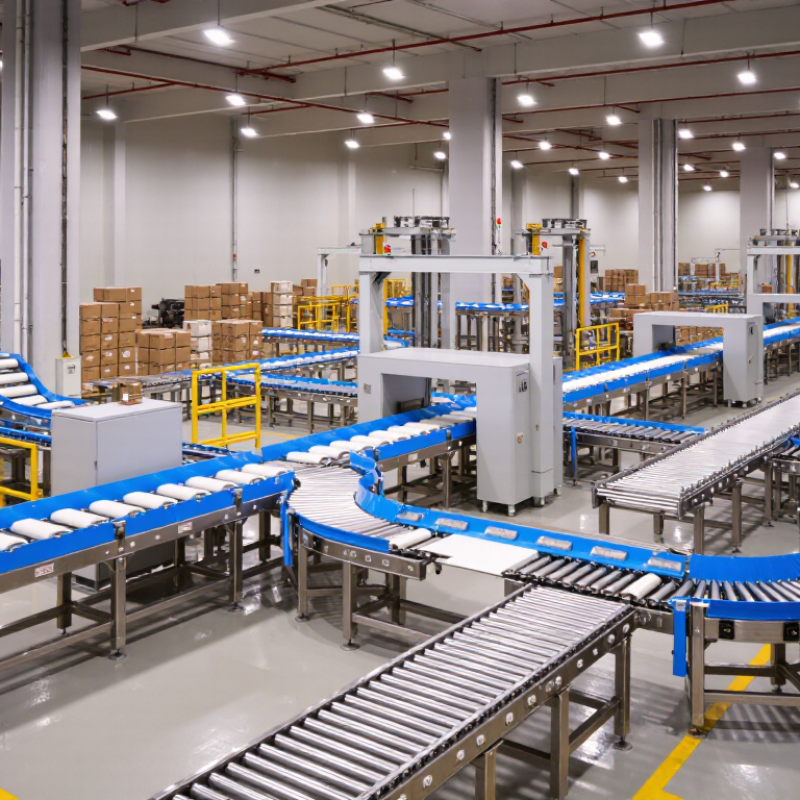
Modular conveyor belts are assembled from small, interlocking plastic or metal modules. Hinged rods connect the pieces, forming a flexible surface that moves around sprockets. Unlike a continuous belt, a damaged section can often be replaced without removing the entire conveyor. That can save maintenance time, though the actual repair depends on the belt design and machine layout.
As the drive sprocket turns, its teeth engage openings in the belt modules and pull the belt along a guided path. The flat surface carries cartons, containers, or loose products; perforated modules allow water and air to pass through. Think of a damp bottle line after washing: drainage can happen while products keep moving. The belt may also curve or climb, but only when its module style and support structure are designed for that route.
Fit matters. Engineers check product size, load, speed, temperature, cleaning needs, and transfer gaps before selecting a belt. A small opening can catch an edge. A poorly aligned sprocket can cause uneven wear. Modular belts are not maintenance-free, either; debris between modules can create problems. They are useful systems, but careful inspection still matters.
Choosing a modular conveyor belt manufacturer means checking more than belt price. Ask for material specifications, allowable operating temperatures, load limits, and test results. A belt moving wet food containers needs different surface geometry from one carrying abrasive components. The global conveyor systems market was valued at about USD 10.6 billion in 2023, according to Grand View Research. That figure reflects broad demand, not proof that any supplier meets your application’s needs.
Review engineering support and replacement-part availability. Request documentation on belt strength, joint design, chemical resistance, and cleaning procedures. Ask how the manufacturer validates performance under repeated starts and stops. A clear answer should include test conditions, not just a general claim of durability. The details matter. The Conveyor Equipment Manufacturers Association publishes technical standards and guidance that buyers can use when discussing system design and safety. Compare supplier documentation against your actual line speed, product weight, and washdown routine.
Tips: Send each candidate the same operating data, including belt width, temperature, load, and cleaning chemicals. Then compare written recommendations and lead times. A sample belt can reveal stiff links or awkward transfers, but one small sample cannot predict every failure. I would still ask for references from similar applications; supplier claims alone are a thin basis for a decision.
Ten Leading Modular Conveyor Belt Manufacturers Worldwide
The ten leading modular conveyor belt manufacturers worldwide serve food processing, packaging, automotive, and logistics operations. Their products use interlocking plastic modules that can be replaced individually, reducing repair time after a damaged section is found. Strong suppliers provide clear belt specifications, practical engineering support, and compatible sprockets. They also help buyers match belt materials to temperature, moisture, load, and cleaning conditions. Manufacturing experience matters. A belt that performs well on a dry carton line may not suit a wet washdown area. There is no single universal ranking; capability and service vary by region and application.
Tips: Ask for belt material data, allowable temperature ranges, and load guidance before ordering. Check whether replacement modules and sprockets are readily available. Request a sample if surface grip or product transfer is critical. Small details matter.
Buyers should compare more than purchase price. Look at expected service life, downtime during repairs, and the supplier’s ability to recommend a suitable pitch and open area. Ask how the belt behaves around tight transfers and frequent starts. These checks can prevent costly trial and error, though specifications alone cannot replace testing under real operating conditions. Even experienced teams sometimes overlook cleaning access. Walk the line before selecting a belt.
Comparing modular conveyor belt manufacturers worldwide means looking beyond belt dimensions. Product ranges differ in pitch, material, surface texture, and allowable temperature. Some suppliers focus on straight-running belts, while others offer modules for curves, transfers, or incline handling. A belt that suits a dry packaging line may perform poorly near washdown stations. Ask for load limits, cleaning guidance, and compatible sprocket details.
Service coverage can matter as much as the product itself. Check whether a manufacturer provides layout support, installation guidance, replacement modules, and troubleshooting in your operating region. Response times are difficult to judge from brochures alone. Request references from facilities with similar products, line speeds, and cleaning routines. Small differences matter.
Industry coverage varies, too. Food processing may require open surfaces that drain quickly, while parcel handling often prioritizes impact resistance and reliable tracking. Automotive and general manufacturing lines may need durable belts for heavier loads. Compare documented material properties and application limits, not just broad industry lists. A sample section can reveal flexibility and surface grip, but it cannot prove long-term performance. Even careful comparisons leave uncertainty; real operating conditions are rarely identical.
This anonymized comparison summarizes common modular conveyor belt supplier capabilities and market segments. It is not a ranked list of named manufacturers; product availability, service coverage, and specifications vary by supplier and region.
| Supplier Profile | Typical Modular Belt Products | Common Services | Typical Industry Coverage | Key Comparison Consideration |
|---|---|---|---|---|
| General-purpose conveyor specialist | Straight-running modular belts; common open and closed surface styles | Belt selection, replacement parts, basic conveying guidance | Packaging, manufacturing, distribution | Check belt dimensions, load limits, and compatibility with the existing conveyor. |
| Food-processing belt supplier | Washdown-oriented modular belts; open-area and flush-grid designs | Material selection support, hygiene-related product documentation, replacement belts | Food processing, beverage, meat and poultry handling | Confirm food-contact suitability, cleaning requirements, and operating-temperature limits. |
| Beverage and bottling conveyor specialist | Low-friction, high-speed, and accumulation-oriented belt options | Line integration support, layout advice, wear-part supply | Bottling, canning, beverage packaging | Evaluate container stability, accumulation behavior, and transfer-point design. |
| Curved-conveyor belt supplier | Radius belts and compatible sprocket or conveyor components | Curve sizing guidance, belt replacement, component matching | Food, packaging, parcel handling, general manufacturing | Verify belt width, inside radius, direction of travel, and required curve angle. |
| Spiral-conveyor belt specialist | Modular belts designed for spiral conveying applications | Application engineering, belt and sprocket recommendations, maintenance support | Food, bakery, packaging, cooling and freezing lines | Check spiral geometry, belt tensioning, product stability, and operating conditions. |
| Incline and elevation conveying supplier | Cleated or high-grip modular belt configurations | Cleat selection, incline assessment, replacement components | Agriculture, food handling, packaging, bulk product movement | Match cleat design and spacing to product size, incline angle, and throughput. |
| Heavy-duty conveying supplier | Robust modular belt constructions and heavy-load configurations | Load and wear assessment, component supply, application support | Automotive, industrial manufacturing, material handling | Review impact, abrasion, load distribution, and conveyor-frame strength. |
| Low-friction conveying specialist | Low-friction top-surface belts for sliding or accumulation applications | Surface and material guidance, wear-part recommendations | Packaging, assembly, case handling, consumer goods | Compare friction characteristics with product material and accumulation needs. |
| Perforated and drainage belt supplier | Open-area, perforated, and drainage-oriented modular belt styles | Open-area selection, cleaning and drainage application guidance | Food washing, dewatering, cooling, and process lines | Select opening size with regard to product retention, drainage, and cleaning. |
| Regional conveyor-system integrator | Modular belts sourced for complete conveyor and material-handling systems | System design, installation, commissioning, and local maintenance (where offered) | Regional manufacturing, warehousing, food, and packaging | Confirm whether the supplier manufactures belts or integrates products from multiple sources. |
Before purchasing, request current technical data sheets and confirm material suitability, belt dimensions, operating environment, cleaning method, lead time, warranty terms, and local service availability.
Selecting a modular conveyor belt manufacturer starts with the product, not the catalog. Map the items you move: their size, weight, surface, and temperature. A damp food-processing line needs different belt materials and cleanability than a dry packaging station. Measure the available floor space, transfer points, and required throughput. Small details matter. A tight turn can cause jams if the belt geometry is poorly matched.
Ask manufacturers for material specifications, load limits, and guidance on belt tension and sprocket alignment. Request references from applications similar to yours, and check how they handle wear parts and technical support. Clear answers are a good sign. Vague promises are not. If possible, share a simple line drawing or photos of your conveyor area; these can reveal clearance problems before installation.
Compare total operating needs, not just the purchase price. Ask about lead times, replacement modules, maintenance training, and how quickly common components can be supplied. A belt that is easy to repair may save hours when production stops. I have seen teams overlook washdown routines, then discover that cleaning takes longer than expected. That part is easy to underestimate. Still, no checklist replaces a site trial: confirm the belt tracks reliably under real loads before committing to a full system.
Compare suppliers against the requirements that matter most to your application. The ratings below are an illustrative buyer-priority framework, not survey results or manufacturer-specific data.
Rate each criterion from 1 (low priority) to 5 (critical), then use the same criteria to compare shortlisted suppliers. Verify belt compatibility, operating conditions, cleaning requirements, replacement-part availability, and technical support for your specific conveyor.
„Thanks to the LUVIR technology, the solder resist process could be switched directly from the previously used mask exposure to direct exposure. As an outstanding digital solution on the market, this technology has been able to demonstrate fast process times and superior quality on our certified conventional ink in production. This allowed us to fully digitize the solder mask process at low cost – without process or ink adjustments. An excellent benefit to our production in Rot am See.“
Ralf Göhringer (Head of Production WE Rot am See)
I would definitely recommend the Limata machine and team for a future company purchase
Michael Greenaway
Compunetics Inc.
“The Limata ldi has been amazing!! Best thing we did was buy this machine”
Richard Brady
GM
Circuitlabs
“Since 2019, we have been running the Limata X1000 LDI system (including LUVIR for solder mask imaging) in daily production as an addition to our current process with film. The machine was capable of properly exposing Taiyo PSR-4000 BN (DI) solder mask types on normal to high-copper boards using a new and unique direct imaging process. The machine operating interface is very user friendly which allowed for a quick technical training curve. The pre-registration processing reduced several seconds of production time at every print. Limata support and service staff is incomparable. They supported our team every step of the way at basically any time of the day or night, with literally, an immediate response time, customizing the software interface to best fit our Operations and needs.
We have exposed more than 8,000 prints since end of October, on various solder mask colors and some resist film panels. Limata, has proven to be very capable and innovative. They are a strong contender in the industry.
We have very much enjoyed this project, and working with the team!
Thank you Limata for the continued support and being a part of our growth.”
Bill Sezate
Vice President, GM
Summit Interconnect
As a replacement to our current contact exposure process with film, the LIMATA X2000 system including LUVIR-Technology was capable of properly exposing non-LDI solder mask types using a direct imaging process. The machine offers cutting edge software with a very intuitive operating interface which allowed for quick technician training curve. The dual drawer system combined with pre-registration processing reduced several seconds of production time at every machine cycle. Limata support and service staff is world class. They added software patches to keep production running at shortest possible response times, customized the software interface to best fit our in-house Operations system, and even wrote a step-by-step machine processing manual. As a result of the project, we have exposed more than 16,000 times on various product types and solder mask brands/colors. Limata, in a very short timeframe as a company, has definitely shown they are truly innovative and will be challenging the industry of direct imaging for the top spot.
Kevin Beattie
Process Engineer
TTM Technologies
Forest Grove Division
