In the ever-evolving landscape of packaging technology, choosing the right equipment is crucial. The Multi-Lane Powder Packing Machine stands out among packaging solutions for powders. Industry expert John Smith, a mechanical engineer with over 15 years of experience, once stated, “Selecting the best multi-lane machine can streamline production and enhance efficiency.”
A Multi-Lane Powder Packing Machine offers several advantages. It significantly increases output by enabling simultaneous packing on multiple lanes. This efficiency can reduce costs and speed up production lines. Companies can achieve higher productivity with fewer resources. However, many businesses struggle to select the best machine for their specific needs.
Understanding the specific requirements of your product is essential. The ideal machine should align with your production goals and product characteristics. Not every Multi-Lane Powder Packing Machine is the same. Some may suit dry powders better than others. Taking the time to analyze these factors can lead to improved operational success. Yet, many fail to consider this, leading to inefficiencies. Thus, careful reflection and planning are needed to make a wise investment in packaging technology.
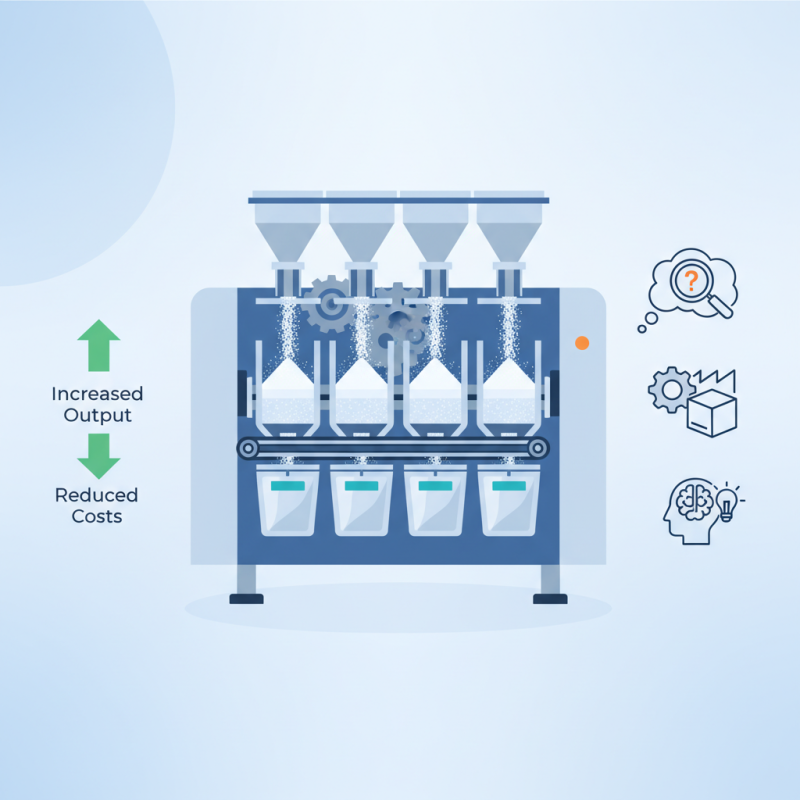
Multi lane powder packing machines play a crucial role in various industries, including food, pharmaceuticals, and chemicals. These machines enhance efficiency by packing multiple lanes of powders simultaneously. According to a recent industry report, 50% of manufacturers have increased production capacity by incorporating this technology. This advancement streamlines operations while maintaining high accuracy in filling weights.
Understanding the basics of these machines is vital for businesses. Key features include adjustable lane configurations and precise dosing systems. The versatility of multi lane machines allows them to handle different powder types, catering to diverse market demands. However, some operators face challenges with machine calibration, leading to inconsistent fill levels. Regular training and maintenance are essential for optimal performance.
Data indicates that 70% of production downtime is due to equipment malfunctions. Investing in a reliable multi lane packing machine can mitigate this issue. However, not all machines are created equal. It’s important to assess specific needs, production speed, and powder characteristics before making a decision. This ensures the chosen equipment aligns perfectly with operational goals. The right machine can significantly impact overall productivity and profitability.
When selecting a multi-lane powder packing machine, consider several crucial features. The machine’s speed is one aspect that greatly affects productivity. Faster machines can package more products in a shorter time frame. However, speed shouldn't compromise accuracy. An effective machine should consistently achieve precise weight and volume measurements. A balance between speed and accuracy is essential for optimal operation.
Another important feature is the machine’s adaptability. Different powders may require unique packaging techniques. Choose a machine that can handle various powder types. This flexibility can be crucial in meeting different client demands. Additionally, ease of cleaning and maintenance should not be overlooked. A machine that is difficult to clean can lead to contamination and downtime.
Durability is also a key consideration. Investing in a machine built with high-quality materials ensures longevity. However, even the best machines can experience wear and tear. Regular maintenance and checks can help identify potential issues early. It's beneficial to have a plan in place for upkeep to avoid unexpected breakdowns. Each of these features can significantly influence your operations and should be carefully evaluated.
When selecting a multi-lane powder packing machine, it’s crucial to understand the different types available. There are various configurations, each designed for specific packing needs. Some machines offer vertical sealing, while others provide horizontal sealing options. The choice often depends on the type of powder being packaged. For instance, fine powders may require machines with advanced feeding systems to ensure consistency.
Efficiency is another critical factor. Multi-lane approaches can significantly increase production rates. However, not every machine is optimized for rapid output. Some might struggle with high-speed operations, causing delays. It’s important to consider the machine’s construction. Durability matters as well. Cheaper materials may reduce longevity and reliability.
Exploring user reviews can be enlightening. Users often share valuable insights on performance and maintenance. It’s essential to weigh the pros and cons before making a purchase. Consider whether the features truly meet your demands. Remember, investing in quality ensures better results. This choice impacts productivity and profitability in the long run.
In the multi-lane powder packing market, understanding key players is crucial. Recent market analysis shows that this segment is growing at a compound annual growth rate (CAGR) of around 6.5%. Success in this field relies on choosing the right manufacturer. Factors such as machine efficiency and reliability play a pivotal role.
Leading firms often invest in advanced technology. This includes automation features and precise dosing systems. Research indicates that machines with these capabilities can enhance productivity by up to 30%. However, not every model delivers consistent performance. Users sometimes encounter issues like system jams or inaccurate filling, calling for careful consideration before purchasing.
Moreover, it is vital to evaluate customer support from manufacturers. A report from industry experts notes that companies with robust after-sales services perform better in customer satisfaction. Buyers should weigh options carefully. Remember, the ultimate goal is to enhance packaging speed while maintaining quality. Finding the best fit requires a blend of research and real-world testing.
Optimizing powder packing efficiency is essential for businesses. It ensures consistent quality while minimizing waste. One effective approach is to calibrate your packing machine regularly. Accurate adjustments can enhance speed and precision. Pay attention to the settings for various powder types. Different powders behave uniquely during the packing process.
Another key factor is proper material handling. Ensure that the environment is clean and dry. Contamination can lead to product inconsistency. Consider using bulk containers to streamline the transfer process. These containers can reduce spillage and make filling easier.
Training staff is vital for effective operation. Employees must understand the machine’s features and limitations. Regular workshops can help in this regard. Mistakes often stem from misunderstanding. Have a system for reporting issues, which fosters a culture of improvement. Consider these aspects carefully and strive for a balanced approach in your packing operations.
„Thanks to the LUVIR technology, the solder resist process could be switched directly from the previously used mask exposure to direct exposure. As an outstanding digital solution on the market, this technology has been able to demonstrate fast process times and superior quality on our certified conventional ink in production. This allowed us to fully digitize the solder mask process at low cost – without process or ink adjustments. An excellent benefit to our production in Rot am See.“
Ralf Göhringer (Head of Production WE Rot am See)
I would definitely recommend the Limata machine and team for a future company purchase
Michael Greenaway
Compunetics Inc.
“The Limata ldi has been amazing!! Best thing we did was buy this machine”
Richard Brady
GM
Circuitlabs
“Since 2019, we have been running the Limata X1000 LDI system (including LUVIR for solder mask imaging) in daily production as an addition to our current process with film. The machine was capable of properly exposing Taiyo PSR-4000 BN (DI) solder mask types on normal to high-copper boards using a new and unique direct imaging process. The machine operating interface is very user friendly which allowed for a quick technical training curve. The pre-registration processing reduced several seconds of production time at every print. Limata support and service staff is incomparable. They supported our team every step of the way at basically any time of the day or night, with literally, an immediate response time, customizing the software interface to best fit our Operations and needs.
We have exposed more than 8,000 prints since end of October, on various solder mask colors and some resist film panels. Limata, has proven to be very capable and innovative. They are a strong contender in the industry.
We have very much enjoyed this project, and working with the team!
Thank you Limata for the continued support and being a part of our growth.”
Bill Sezate
Vice President, GM
Summit Interconnect
As a replacement to our current contact exposure process with film, the LIMATA X2000 system including LUVIR-Technology was capable of properly exposing non-LDI solder mask types using a direct imaging process. The machine offers cutting edge software with a very intuitive operating interface which allowed for quick technician training curve. The dual drawer system combined with pre-registration processing reduced several seconds of production time at every machine cycle. Limata support and service staff is world class. They added software patches to keep production running at shortest possible response times, customized the software interface to best fit our in-house Operations system, and even wrote a step-by-step machine processing manual. As a result of the project, we have exposed more than 16,000 times on various product types and solder mask brands/colors. Limata, in a very short timeframe as a company, has definitely shown they are truly innovative and will be challenging the industry of direct imaging for the top spot.
Kevin Beattie
Process Engineer
TTM Technologies
Forest Grove Division
