China has become a major destination for dependable pcb solutions, from rapid prototypes to high-volume multilayer production. Its strength is not simply low cost. It includes dense supplier networks, advanced fabrication equipment, and experienced engineering teams.
A practical buyer should examine more than a polished factory website. Ask about layer registration, controlled impedance, thermal cycling, copper thickness, and component traceability. Request recent inspection records. Review ISO 9001, IATF 16949, or IPC-related process controls when they match the product’s risk level. A factory should also explain how it handles solder-mask defects, via reliability, and engineering changes.
Details matter.
John W. Mitchell, former IPC president and chief executive, stated, “The electronics industry is a global industry, and the standards that support it must be global as well.” His point remains useful when comparing Chinese PCB suppliers. A reliable partner should communicate through recognized technical standards, not vague promises.
The best pcb solutions in China depend on application, volume, schedule, and failure tolerance. A medical controller needs different controls than a consumer lighting board. An automotive design may require deeper validation and stricter documentation. Price can guide a shortlist, but it cannot prove reliability.
There is also room for honest reflection. Some suppliers present impressive capabilities but provide limited evidence. Others offer fast delivery while underestimating testing time. Buyers should verify claims through samples, factory audits, and small production runs. The strongest choice may not be the cheapest one. It is the supplier that makes quality visible, measurable, and repeatable.
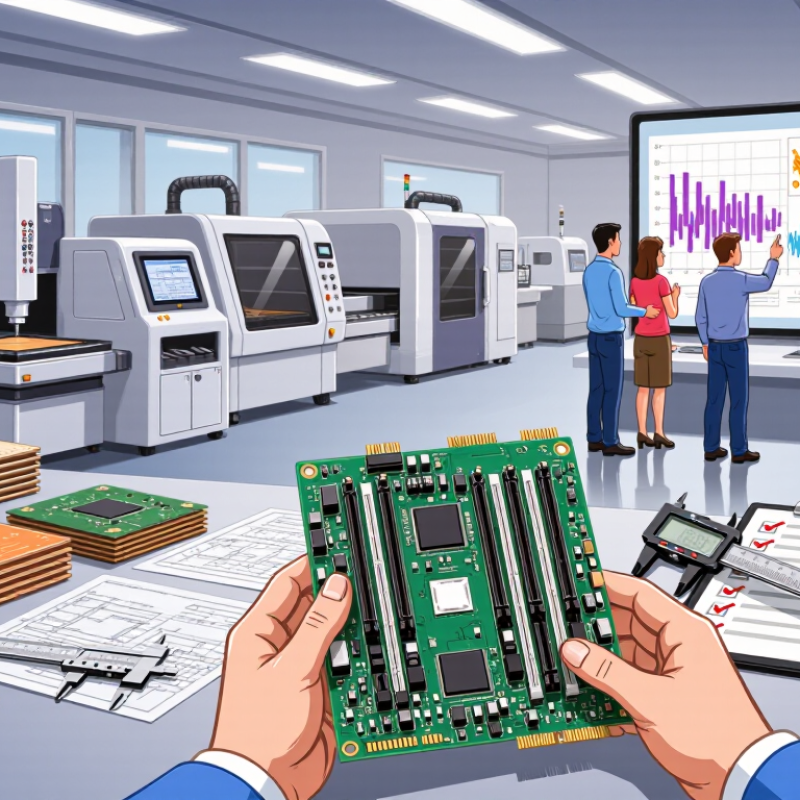
A competitive PCB solution in China is not defined by low price alone. It combines stable fabrication, responsive engineering, and predictable delivery. Experienced buyers inspect layer registration, copper thickness, impedance reports, and solder-mask coverage before approving samples. A capable supplier should explain tolerances in clear language, not hide behind technical phrases. In production, traceability matters: each panel should connect to material records, inspection results, and revision history. This evidence supports reliable decisions when a prototype becomes a monthly order. Small details matter. A missing test record can cost more than the original saving.
Cost competitiveness also comes from local supply networks, efficient tooling, and practical design-for-manufacturing advice. Engineers may suggest wider spacing, fewer unusual drill sizes, or a better panel layout. These changes can reduce waste without weakening performance. However, low quotations deserve careful questions. Does the price include electrical testing, packaging, and rework handling? Can the production team meet the required stack-up repeatedly? My view is slightly cautious: fast communication is valuable, but it cannot replace documented quality controls. Some suppliers promise flexibility, then struggle with a minor revision.
Tips: Request a small sample first. Compare measured results with drawings. Ask for cross-section data, inspection frequency, and change-control procedures. Keep one approved sample for future comparison. Confirm shipping buffers, because a perfect board arriving late is still a problem.
What Are the Best PCB Solutions in China?
How China’s PCB Manufacturing Ecosystem Is Structured
China’s PCB ecosystem is organized around connected production layers. Material suppliers provide copper foil, laminates, solder mask, and chemical solutions. Board fabricators then handle drilling, imaging, plating, etching, and surface finishing. Nearby assembly companies add components, solder joints, inspection, and functional testing. This proximity can shorten lead times and reduce transport risks.
The strongest suppliers usually support both prototypes and repeat production. Their engineering teams review stackups, trace widths, impedance targets, and thermal requirements before fabrication. Automated optical inspection checks alignment and solder quality. Electrical testing can identify open circuits and shorts. For demanding products, engineers may request cross-section analysis and process records. These details matter more than attractive capacity claims.
The ecosystem also includes logistics firms, tooling workshops, testing laboratories, and compliance consultants. A buyer can coordinate many steps within one industrial region. However, this structure is not automatically reliable. A fast quotation may hide weak documentation or unstable process control. I would verify material certificates, inspection standards, factory audits, and change-control procedures. Small design revisions can expose communication gaps. That is easy to underestimate. Good PCB solutions depend on traceability, practical engineering feedback, and consistent quality across every connected layer.
| Dimension | Indicator | Reported Data | What It Means for PCB Buyers | Reference Basis |
|---|---|---|---|---|
| Global Position | Share of global PCB production value | Approximately 50% or more in recent industry estimates | China is the largest single PCB manufacturing base, providing broad capacity across commodity, mid-range, and advanced board categories. | Prismark industry market reports, 2023–2024 estimates |
| Industrial Structure | Main ecosystem layers | 7 connected layers | The ecosystem generally includes design and engineering, laminate and copper materials, chemicals and consumables, equipment, board fabrication, assembly and testing, and logistics or export services. | Industry supply-chain structure reported by IPC and public manufacturing studies |
| Regional Clusters | Major production regions | 4 principal clusters | The Pearl River Delta is associated with electronics and export manufacturing; the Yangtze River Delta with advanced electronics and engineering; the Bohai Rim with industrial and research activity; and central or western regions with expanding cost-sensitive capacity. | Public regional industry and manufacturing development data |
| Product Coverage | Common board categories | 6 major categories | China’s production base covers single-sided and multilayer rigid boards, flexible circuits, rigid-flex boards, HDI boards, and IC-substrate-related products. | IPC technology classifications and industry product surveys |
| Layer Capability | Typical commercial range | 2–20+ layers for mainstream production | Standard multilayer production is widely available. Very high layer counts, ultra-fine lines, advanced substrates, and highly controlled impedance require stricter supplier qualification. | Common capability ranges in published Chinese PCB fabrication specifications |
| Fine-Line Technology | HDI and microvia usage | Established mass-production capability | Laser microvias, sequential build-up, fine-line routing, and via-in-pad processes are established in China, particularly for mobile, computing, automotive, and communications applications. | IPC HDI technology definitions and public process capability data |
| Material Supply | Core material groups | 5 essential groups | The material chain includes copper-clad laminate, copper foil, prepreg, solder mask and inks, and process chemicals. Standard materials are broadly available, while ultra-low-loss and high-frequency grades may involve stricter sourcing requirements. | IPC material classifications and electronics-material market reports |
| Manufacturing Flow | Typical production stages | 12–15 controlled steps | A representative flow includes imaging, inner-layer etching, lamination, drilling, desmear, copper plating, outer-layer imaging, solder mask, surface finishing, electrical testing, inspection, and packaging. | IPC process documentation and standard PCB factory process maps |
| Surface Finishing | Frequently specified finishes | 5 common options | The most frequently specified finishes are HASL, lead-free HASL, ENIG, immersion silver, and OSP. Finish selection affects solderability, flatness, shelf life, and cost. | IPC-4550 series and common industry specifications |
| Quality Systems | Common management standards | ISO 9001 and sector-specific standards | General quality management is commonly supported by ISO 9001. Automotive, aerospace, medical, and other regulated applications may require additional process, traceability, and customer-specific audits. | ISO standards and IPC quality-system guidance |
| Automotive Supply | Typical compliance framework | IATF 16949 plus application controls | Automotive PCB sourcing normally requires stronger traceability, change control, reliability testing, failure analysis, and production-part approval procedures than general commercial electronics. | IATF 16949 and automotive electronics quality practices |
| Environmental Compliance | Restricted-substance requirements | RoHS and REACH commonly requested | Export-oriented PCB programs generally require declarations or testing for restricted substances, halogen status, conflict minerals, and chemical-substance compliance where applicable. | European Union RoHS and REACH regulatory frameworks |
| Production Lead Time | Typical commercial ranges | About 5–10 working days for standard boards; 10–20+ for complex HDI or rigid-flex | Actual timing depends on layer count, material availability, surface finish, testing, engineering review, order quantity, and whether tooling is required. | Typical published fabrication schedules; project-specific confirmation required |
| Cost Structure | Main cost drivers | 6 primary drivers | The largest cost variables are material type, copper weight, layer count, board utilization, drilling or microvia density, surface finish, testing requirements, and order volume. | Standard PCB quotation and cost-engineering practices |
| Order Flexibility | Production model | Prototype, small-batch, and mass production | China supports a wide range of order sizes, but the best supplier profile differs by project stage: rapid prototyping favors engineering responsiveness, while mass production requires yield, capacity, and supply continuity. | Common manufacturing-service models in the Chinese electronics sector |
| Engineering Support | Pre-production review | DFM, DFT, stack-up, and impedance review | A qualified supplier should review drill design, annular rings, copper balance, solder-mask clearances, controlled impedance, manufacturability, and test access before releasing production data. | IPC design and manufacturability guidance |
| Testing and Inspection | Common controls | AOI, electrical test, dimensional inspection, and reliability checks | The required control plan should match the risk level. High-reliability boards may also require microsection analysis, solderability testing, thermal stress testing, CAF evaluation, or cross-sectional verification. | IPC-A-600, IPC-6010 series, and customer quality plans |
| Best-Fit Applications | Typical end markets | 8 broad application areas | The ecosystem serves consumer electronics, telecommunications, computing, industrial controls, automotive electronics, renewable-energy equipment, medical devices, and aerospace or defense programs. | Public electronics manufacturing and PCB market segmentation reports |
| Supplier Selection | Recommended evaluation dimensions | 8 qualification dimensions | Evaluate technology capability, quality certification, process stability, material traceability, engineering response, testing coverage, capacity planning, export documentation, and total delivered cost. | Common international PCB procurement and supplier-audit practices |
What Are the Best PCB Solutions in China?
China offers many PCB types for different products and production volumes. Single-sided boards suit simple controls, sensors, and low-cost devices. Double-sided boards provide more routing space without excessive thickness. Multilayer PCBs handle dense circuits, power distribution, and compact communication equipment.
Rigid-flex boards combine stable mounting with flexible connections around hinges or narrow spaces. HDI technology uses microvias and fine traces for smaller, faster devices. Metal-core PCBs can improve heat transfer in lighting and power applications. High-frequency materials support controlled signals, but material selection requires careful testing. Experienced manufacturers usually provide impedance control, solder-mask inspection, AOI, X-ray checks, and electrical testing. Traceability records also make quality problems easier to investigate.
Tips: Define layer count, copper weight, board thickness, and surface finish early. Ask for impedance reports and sample test data. A cheaper quote may hide higher assembly or inspection costs. Check thermal behavior with a real prototype, not only software estimates. No design is perfect. Even a well-reviewed layout may need revisions after vibration, heat, or connector testing. Some engineers overlook assembly clearance near tall components. That small mistake can delay production. Reliable PCB solutions depend on clear drawings, controlled processes, and honest feedback between designers and manufacturers.
What Are the Best PCB Solutions in China?
How to Evaluate PCB Manufacturers and Suppliers in China
Choosing a PCB supplier in China requires more than comparing unit prices. The best fit depends on design complexity, volume, risk tolerance, and support after delivery. Ask for the factory’s production scope, not only a sales brochure. Confirm layer counts, board materials, minimum trace widths, controlled impedance, and surface finishes. A capable supplier should explain limits clearly. Vague answers deserve caution. Request recent sample panels and inspection records. Check whether each sample matches your intended stack-up and copper weight.
Evaluate quality systems through documents and direct questions. Look for current ISO 9001 certification, relevant IPC workmanship standards, and RoHS compliance evidence when required. Then audit the process. Observe incoming material checks, drilling, imaging, plating, electrical testing, and final inspection. Ask how defects are recorded and corrected. Traceability should reach the material lot and production date. It sounds routine. It is not. A factory may pass a document review yet struggle with rushed orders, engineering changes, or uneven communication. Test these areas with a small pilot order.
A reliable supplier provides a realistic quotation with tooling, testing, packaging, and freight separated. Compare lead times against actual capacity, especially before holidays or peak seasons. Review engineering support carefully. Can the team flag solder-mask clearance, thermal issues, or manufacturability risks before production? Written change control prevents costly misunderstandings. Do not ignore communication quality. One missed tolerance can erase a low price. I would also score response speed, corrective-action quality, and delivery consistency. My evaluation would not be perfect; early assumptions can be wrong. Recheck them against production data, not promises.
This weighted evaluation framework prioritizes product quality, process capability, and delivery reliability when comparing PCB suppliers. Buyers can adjust the percentages according to application risk, volume, certification requirements, and total cost of ownership.
When comparing PCB solutions in China, buyers should inspect more than a factory’s sample board. Ask for stack-up drawings, impedance records, cross-section photos, and recent yield data. A reliable supplier explains copper thickness, laminate grade, solder-mask limits, and drill tolerance clearly. During practical sourcing work, production consistency often matters more than a perfect prototype. Check three consecutive lots, not one attractive shipment. Small details expose weak process control.
Cost deserves a wider lens. Compare tooling, engineering changes, inspection, packaging, freight, taxes, and expected rework. A low unit price can become expensive when poor solderability causes delays. Request quotations with identical specifications and clear volume breaks. Also ask how scrap is measured. Some suppliers report only shipped boards, which can hide yield problems. This comparison feels slower. It is usually safer. I would still challenge my assumptions, because a higher price does not automatically mean better quality.
Compliance should be documented before purchase orders are released. Confirm material declarations, restricted-substance controls, traceability, and applicable safety certifications for the destination market. Ask whether test reports match the exact board construction, not an older design. Verify revision control, change-notification procedures, and secure handling of customer files. Audits, video inspections, and independent laboratory checks can strengthen confidence. No certificate replaces process evidence. Record open risks, responsible owners, and deadlines in the supplier review.





„Thanks to the LUVIR technology, the solder resist process could be switched directly from the previously used mask exposure to direct exposure. As an outstanding digital solution on the market, this technology has been able to demonstrate fast process times and superior quality on our certified conventional ink in production. This allowed us to fully digitize the solder mask process at low cost – without process or ink adjustments. An excellent benefit to our production in Rot am See.“
Ralf Göhringer (Head of Production WE Rot am See)
I would definitely recommend the Limata machine and team for a future company purchase
Michael Greenaway
Compunetics Inc.
“The Limata ldi has been amazing!! Best thing we did was buy this machine”
Richard Brady
GM
Circuitlabs
“Since 2019, we have been running the Limata X1000 LDI system (including LUVIR for solder mask imaging) in daily production as an addition to our current process with film. The machine was capable of properly exposing Taiyo PSR-4000 BN (DI) solder mask types on normal to high-copper boards using a new and unique direct imaging process. The machine operating interface is very user friendly which allowed for a quick technical training curve. The pre-registration processing reduced several seconds of production time at every print. Limata support and service staff is incomparable. They supported our team every step of the way at basically any time of the day or night, with literally, an immediate response time, customizing the software interface to best fit our Operations and needs.
We have exposed more than 8,000 prints since end of October, on various solder mask colors and some resist film panels. Limata, has proven to be very capable and innovative. They are a strong contender in the industry.
We have very much enjoyed this project, and working with the team!
Thank you Limata for the continued support and being a part of our growth.”
Bill Sezate
Vice President, GM
Summit Interconnect
As a replacement to our current contact exposure process with film, the LIMATA X2000 system including LUVIR-Technology was capable of properly exposing non-LDI solder mask types using a direct imaging process. The machine offers cutting edge software with a very intuitive operating interface which allowed for quick technician training curve. The dual drawer system combined with pre-registration processing reduced several seconds of production time at every machine cycle. Limata support and service staff is world class. They added software patches to keep production running at shortest possible response times, customized the software interface to best fit our in-house Operations system, and even wrote a step-by-step machine processing manual. As a result of the project, we have exposed more than 16,000 times on various product types and solder mask brands/colors. Limata, in a very short timeframe as a company, has definitely shown they are truly innovative and will be challenging the industry of direct imaging for the top spot.
Kevin Beattie
Process Engineer
TTM Technologies
Forest Grove Division
