In today's rapidly evolving world, the demand for precise environmental control is paramount. A reliable Temperature and Humidity Sensor plays a crucial role in various applications, from smart homes to industrial settings. These sensors not only measure but also ensure optimal conditions for both human comfort and equipment performance.
As we approach 2026, global buyers seek advanced sensors that offer enhanced accuracy and durability. This growing demand showcases the importance of understanding sensor specifications and technology trends. Many sensors excel in specific environments, while others may fall short. Therefore, buyers must navigate this landscape meticulously to make informed decisions.
The complexity of selecting the right Temperature and Humidity Sensor encourages reflection on one's needs. Choosing a sensor requires balancing features and budget. Not every sensor may fit every scenario. Consider this challenge carefully when seeking to improve your environmental monitoring solutions.
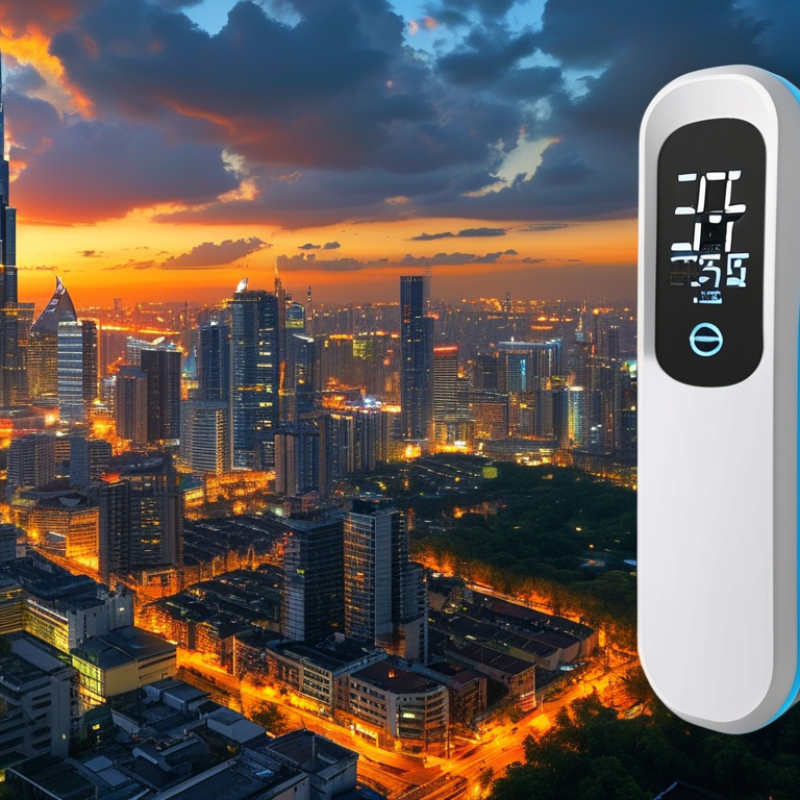
The temperature and humidity sensor market is evolving rapidly. As more industries recognize the importance of monitoring environmental conditions, demand is increasing. These sensors play a key role in agriculture, climate control, and smart home applications. Sellers must keep abreast of emerging trends to stay competitive.
In 2026, sensor accuracy will be a significant selling point. Customers want reliable data that reflects real-time conditions. Wireless capabilities are also gaining traction. Many consumers prefer data they can access from their smartphones, enhancing user experience. However, not all sensors offer this feature, which can lead to frustration.
Consider incorporating robust testing protocols into product development. This ensures each sensor meets industry standards. To succeed, manufacturers must also prioritize user education. Informing buyers about product benefits can differentiate a brand in a crowded market. The landscape is shifting, and reflection on customer feedback will be vital for growth. Embrace change and adapt to meet evolving expectations.
When selecting a temperature and humidity sensor in 2026, several key specifications are vital. Accuracy is crucial. For many applications, a tolerance of ±1°C and ±2% relative humidity is ideal. Reports suggest that accuracy directly impacts product quality in sectors like agriculture and pharmaceuticals. Additionally, response time is another crucial factor. Sensors with a response time of fewer than 10 seconds are preferable for real-time monitoring.
Durability should not be overlooked. Look for sensors designed to withstand extreme environments, including high humidity and dust. Many studies highlight that inadequate sensor protection leads to frequent failures. For outdoor applications, IP ratings indicate resistance to environmental conditions. A minimum of IP65 is advisable for reliable performance.
Consider power requirements as well. Low power consumption sensors extend battery life and reduce maintenance costs. Wireless capabilities also play a significant role, enabling remote monitoring. Connecting sensors to IoT platforms enhances data accessibility, allowing better decision-making.
It's essential to recognize that not all sensors will perform perfectly in every condition. Testing in your specific environment is important to avoid potential issues. Regular calibration might be necessary for maintaining accuracy. Understanding these aspects will aid in selecting the best sensor for your needs.
| Sensor Type | Temperature Range (°C) | Humidity Range (%) | Accuracy (Temperature) | Accuracy (Humidity) | Response Time (s) | Power Supply (V) |
|---|---|---|---|---|---|---|
| Digital Sensor | -40 to 125 | 0 to 100 | ±0.5 | ±2 | 0.5 | 3.3 |
| Analog Sensor | -30 to 85 | 10 to 90 | ±1 | ±3 | 1.0 | 5 |
| Wireless Sensor | -40 to 85 | 0 to 100 | ±0.3 | ±2.5 | 0.8 | 3.6 |
| Smart Sensor | -20 to 70 | 20 to 80 | ±0.2 | ±1.5 | 0.4 | 5 |
The temperature and humidity sensor market is witnessing significant growth, driven by advancements in technology and increasing demand across various sectors. According to industry reports, the market is projected to reach $2.5 billion by 2026, with a compound annual growth rate of around 7%. This is a clear indicator of the evolving landscape in sensor technology.
Top brands focus on innovation to enhance sensor performance. They are developing models with improved accuracy and energy efficiency. Studies reveal that dynamic calibration techniques enhance precision by up to 20%. Users in agriculture and HVAC systems benefit greatly from these advancements. Precise measurements of humidity and temperature can lead to better crop yields and energy savings.
However, not all models deliver consistent performance. Some sensors face challenges with calibration and durability under varying conditions. Reports indicate that as many as 15% of deployments fail to meet industry standards. It’s crucial for buyers to consider these factors when selecting sensors. Investing in reliable models ensures that users can count on accurate environmental data.
The rise of the Internet of Things (IoT) has significantly shaped the development of temperature and humidity sensor technology. With more devices connected, the demand for accurate and reliable environmental monitoring has intensified. Smart homes and industrial settings now require continuous data to optimize performance. IoT facilitates real-time monitoring, allowing users to respond promptly to changing conditions. This capability enhances efficiency and saves energy.
Many sensors now incorporate advanced technologies like machine learning. These algorithms can predict trends based on historical data. Although promising, this evolution may face challenges. Not all sensors can provide consistent accuracy across various environments. Calibration remains crucial, and errors can lead to misguided decisions. Furthermore, user awareness of sensor limitations can often be lacking, impacting overall system reliability.
Integrating sensors into larger IoT ecosystems offers many benefits, but it also requires careful thought. Users must consider data privacy and security risks. As technology advances, the focus should also be on creating robust, scalable solutions. Companies need to prioritize seamless integration with existing systems and ensure providing clear user feedback. Balancing innovation with these aspects is vital for a successful deployment in the market.
When sourcing temperature and humidity sensors in 2026, it's essential to focus on reliability and performance. Look for suppliers with a strong reputation for quality. Industry certifications can offer insights into a manufacturer’s reliability. Familiarize yourself with the technological advancements in sensor accuracy. Precision is crucial for various applications, from agriculture to HVAC systems.
Assess the support that suppliers offer. Technical assistance can significantly impact your projects. Look for those who provide detailed documentation and responsive customer service. This support can save time during troubleshooting. Consider user reviews to gauge the experience of others with the products and suppliers.
Explore various sourcing channels. Online platforms can provide access to numerous manufacturers, but verify their legitimacy. Attending trade shows can also connect you with industry leaders. It allows for firsthand experience with products. Quality sensors might be slightly more expensive, but the investment pays off in the long run. Prioritize informed decisions over the cheapest options.
„Thanks to the LUVIR technology, the solder resist process could be switched directly from the previously used mask exposure to direct exposure. As an outstanding digital solution on the market, this technology has been able to demonstrate fast process times and superior quality on our certified conventional ink in production. This allowed us to fully digitize the solder mask process at low cost – without process or ink adjustments. An excellent benefit to our production in Rot am See.“
Ralf Göhringer (Head of Production WE Rot am See)
I would definitely recommend the Limata machine and team for a future company purchase
Michael Greenaway
Compunetics Inc.
“The Limata ldi has been amazing!! Best thing we did was buy this machine”
Richard Brady
GM
Circuitlabs
“Since 2019, we have been running the Limata X1000 LDI system (including LUVIR for solder mask imaging) in daily production as an addition to our current process with film. The machine was capable of properly exposing Taiyo PSR-4000 BN (DI) solder mask types on normal to high-copper boards using a new and unique direct imaging process. The machine operating interface is very user friendly which allowed for a quick technical training curve. The pre-registration processing reduced several seconds of production time at every print. Limata support and service staff is incomparable. They supported our team every step of the way at basically any time of the day or night, with literally, an immediate response time, customizing the software interface to best fit our Operations and needs.
We have exposed more than 8,000 prints since end of October, on various solder mask colors and some resist film panels. Limata, has proven to be very capable and innovative. They are a strong contender in the industry.
We have very much enjoyed this project, and working with the team!
Thank you Limata for the continued support and being a part of our growth.”
Bill Sezate
Vice President, GM
Summit Interconnect
As a replacement to our current contact exposure process with film, the LIMATA X2000 system including LUVIR-Technology was capable of properly exposing non-LDI solder mask types using a direct imaging process. The machine offers cutting edge software with a very intuitive operating interface which allowed for quick technician training curve. The dual drawer system combined with pre-registration processing reduced several seconds of production time at every machine cycle. Limata support and service staff is world class. They added software patches to keep production running at shortest possible response times, customized the software interface to best fit our in-house Operations system, and even wrote a step-by-step machine processing manual. As a result of the project, we have exposed more than 16,000 times on various product types and solder mask brands/colors. Limata, in a very short timeframe as a company, has definitely shown they are truly innovative and will be challenging the industry of direct imaging for the top spot.
Kevin Beattie
Process Engineer
TTM Technologies
Forest Grove Division
