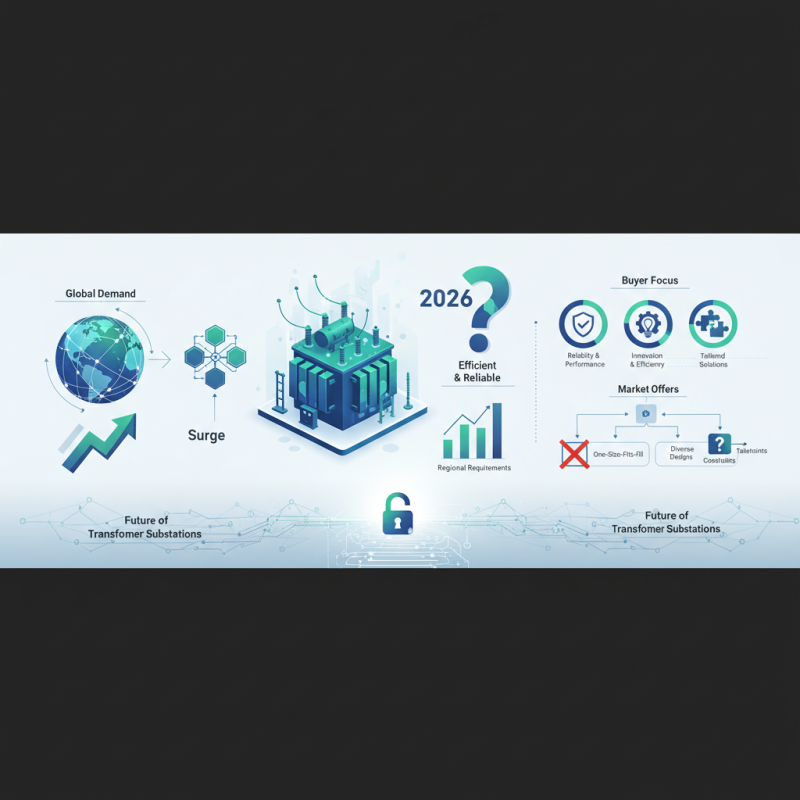
In recent years, the demand for efficient and reliable Transformer Substations has surged globally. These facilities play a crucial role in electrical distribution, ensuring power reaches consumers without interruptions. As we approach 2026, buyers are seeking the best transformer substation solutions to meet their diverse needs.
Selecting the right solution involves understanding both technological advancements and regional requirements. Global buyers must evaluate options based on reliability and performance. Many transformer substations struggle with efficiency issues. By recognizing these challenges, buyers can make more informed decisions.
The market offers various designs and capabilities. However, not all solutions are created equal. Buyers need to assess their own requirements carefully. A one-size-fits-all approach may lead to constraints down the line. Ultimately, the future of transformer substations hinges on thoughtful innovations and tailored solutions.
The landscape of transformer substation technology is evolving rapidly. By 2026, advancements will focus on enhancing efficiency and sustainability. According to recent market analysis, over 30% of global energy comes from renewable sources. This shift drives demand for innovative transformer solutions that integrate seamlessly with green energy.
Smart grids will be central to transformer substation technologies. These systems utilize IoT and AI for real-time monitoring and management. Studies show that smart grid solutions can improve operational efficiency by up to 20%. This efficiency translates into enhanced reliability for electricity distribution. However, companies must thoughtfully address cybersecurity risks, as increased connectivity can expose systems to threats.
Tip: Regularly evaluate your infrastructure for vulnerabilities. Conducting audits will help in maintaining robust security measures.
Sustainability trends underscore the importance of eco-friendly materials. The industry is witnessing a shift towards biodegradable and recyclable insulation oils. Such materials can significantly reduce environmental impact. However, it is essential to balance sustainability with cost-effectiveness. The perception of "green" sometimes leads to higher costs without guaranteed performance.
Tip: Collaborate with experienced engineers to assess new materials for feasibility in your projects.
When choosing transformer substation solutions, key features significantly impact performance. Reliability is crucial in ensuring a consistent energy supply. According to a recent industry report, 70% of outages stem from substation failures. A robust design minimizes the risk of these issues. Opt for solutions with advanced monitoring technologies. They can predict failures before they occur.
Efficiency is another vital aspect. Modern transformer substations improve energy use by up to 30%. Energy loss means higher operational costs. Effective cooling systems, for example, enhance overall performance. Many solutions now integrate IoT technology, allowing real-time data analysis that optimizes energy management.
**Tips:** Assess the modularity of the solutions. This flexibility ensures scalability for future growth while minimizing waste. Additionally, consider user-friendly interfaces. Skilled operators can make quick adjustments, which is essential during peak demand periods. Always prioritize safety features as they protect personnel and equipment.
In 2026, transformer substations play a crucial role in global energy distribution. The surge in renewable energy sources, like wind and solar, demands advanced substation solutions. Reports suggest a projected market growth of 5.2% annually in this sector. This means manufacturers need to adapt to changing energy demands.
Leading manufacturers focus on efficiency and sustainability. Innovations in transformer design contribute to reduced energy losses. Smart grid technologies are becoming central to their offerings. These technologies enhance monitoring and control, improving overall reliability. Current statistics indicate that integrating these technologies could increase efficiency by 15%.
Despite the overall progress, challenges remain. Complex installation processes can delay project timelines. Additionally, many regions still rely on outdated equipment. Addressing these hurdles is essential for achieving optimal performance. The pursuit of modern solutions continues to shape the competitive landscape of transformer substations. Manufacturers must remain agile to meet evolving market demands and environmental regulations.
When considering transformer substation solutions, cost plays a crucial role. Buyers should assess both initial investment and long-term expenses. Equipment quality affects reliability and operational costs. Lower prices often indicate compromised performance. Investing in high-quality solutions can save money over time.
Installation costs can vary significantly. Site conditions, logistics, and labor all influence final expenses. It’s essential to obtain detailed quotes and analyze each component. Sometimes, opting for a cheaper solution leads to unexpected maintenance costs. Regular maintenance is vital to ensure optimal performance, which can add to overall expenses.
Buyers must also think about future needs. Upgrading or expanding a substation requires careful planning and budgeting. A solution that meets current demands may not suffice in the long run. Evaluating growth potential helps prevent costly alterations later. Understanding local regulations and standards can help in making informed choices.
In 2026, regulatory standards are evolving significantly and shaping the landscape for transformer substation purchases. Buyers must stay informed about these regulations. Standards often dictate design specifications, operational efficiency, and safety protocols. Compliance not only ensures safety but also enhances the reliability of power distribution systems.
The impact of these regulations can be profound. For instance, countries may have specific guidelines regarding emissions and noise levels. Such details might initially appear trivial. However, they can affect project timelines and budgets. Buyers need to conduct thorough research to understand these nuances. Choosing a solution that fits within these regulatory frameworks is crucial for seamless operation.
Additionally, the consequences of non-compliance can be severe. Fines and operational downtimes may result from oversight. Reliable documentation and certification become paramount in such a context. Moreover, fluctuations in regulations can create uncertainty in the market. Buyers should be ready to adapt as rules change. The complexity of navigating these standards requires a careful, informed approach.
„Thanks to the LUVIR technology, the solder resist process could be switched directly from the previously used mask exposure to direct exposure. As an outstanding digital solution on the market, this technology has been able to demonstrate fast process times and superior quality on our certified conventional ink in production. This allowed us to fully digitize the solder mask process at low cost – without process or ink adjustments. An excellent benefit to our production in Rot am See.“
Ralf Göhringer (Head of Production WE Rot am See)
I would definitely recommend the Limata machine and team for a future company purchase
Michael Greenaway
Compunetics Inc.
“The Limata ldi has been amazing!! Best thing we did was buy this machine”
Richard Brady
GM
Circuitlabs
“Since 2019, we have been running the Limata X1000 LDI system (including LUVIR for solder mask imaging) in daily production as an addition to our current process with film. The machine was capable of properly exposing Taiyo PSR-4000 BN (DI) solder mask types on normal to high-copper boards using a new and unique direct imaging process. The machine operating interface is very user friendly which allowed for a quick technical training curve. The pre-registration processing reduced several seconds of production time at every print. Limata support and service staff is incomparable. They supported our team every step of the way at basically any time of the day or night, with literally, an immediate response time, customizing the software interface to best fit our Operations and needs.
We have exposed more than 8,000 prints since end of October, on various solder mask colors and some resist film panels. Limata, has proven to be very capable and innovative. They are a strong contender in the industry.
We have very much enjoyed this project, and working with the team!
Thank you Limata for the continued support and being a part of our growth.”
Bill Sezate
Vice President, GM
Summit Interconnect
As a replacement to our current contact exposure process with film, the LIMATA X2000 system including LUVIR-Technology was capable of properly exposing non-LDI solder mask types using a direct imaging process. The machine offers cutting edge software with a very intuitive operating interface which allowed for quick technician training curve. The dual drawer system combined with pre-registration processing reduced several seconds of production time at every machine cycle. Limata support and service staff is world class. They added software patches to keep production running at shortest possible response times, customized the software interface to best fit our in-house Operations system, and even wrote a step-by-step machine processing manual. As a result of the project, we have exposed more than 16,000 times on various product types and solder mask brands/colors. Limata, in a very short timeframe as a company, has definitely shown they are truly innovative and will be challenging the industry of direct imaging for the top spot.
Kevin Beattie
Process Engineer
TTM Technologies
Forest Grove Division
