As the demand for versatile printing solutions grows, the UV Flatbed Printer has emerged as a top choice for many industries. These printers are known for their ability to produce high-quality prints on various surfaces. Global buyers now seek the best options available in 2026.
With advancements in technology, the UV Flatbed Printer market has expanded significantly. This evolution presents an array of features and capabilities to consider. From speed to print quality, each model offers unique advantages, making selection a complex task. Buyers must evaluate their specific needs carefully, ensuring they invest in a reliable machine.
Furthermore, not all UV Flatbed Printers are created equal. Some brands may promise high performance but lack the durability required for intensive use. It's vital to research and compare various models and manufacturers. Gathering insights from industry experts can help navigate these challenges and lead to informed decisions.
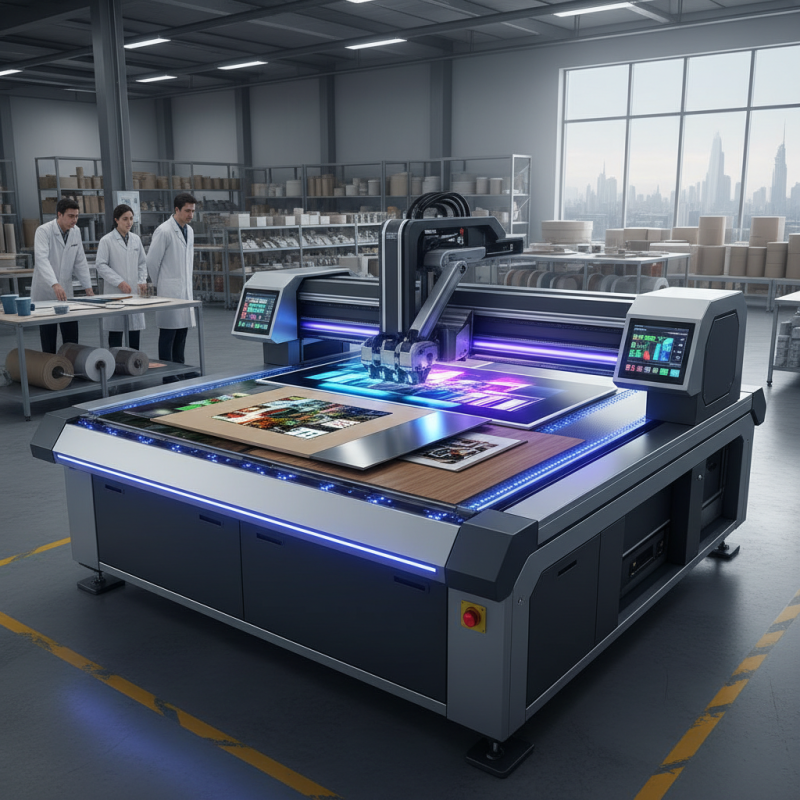
The UV flatbed printer market is expected to see significant growth from 2021 to 2026. A recent report indicates a compound annual growth rate (CAGR) of about 9% during this period. This growth is driven by the increasing demand for high-quality printing in various industries, including signage, packaging, and promotional products.
Advancements in UV printing technology are transforming production capabilities. Many companies are exploring eco-friendly inks and faster printing speeds. The ability to print on diverse substrates, such as wood, metal, and glass, enhances versatility. However, buyers face challenges, such as high initial investment costs and the need for skilled operators. These factors can hinder smaller businesses from entering the market.
Market trends also reveal a shift towards automation and smart technologies. Many manufacturers are developing printers with integrated software for better workflow management. Yet, these innovations bring complexity, requiring user training and reliable support services. Businesses must weigh the costs and benefits carefully. Continuous industry developments suggest that keeping an eye on emerging technologies is crucial for maintaining competitiveness.
When selecting a UV flatbed printer, several key features demand attention. Print quality is paramount. A high-resolution printer produces crisp, vibrant images, crucial for enhancing brand visibility. According to industry reports, devices that offer resolutions above 1200 dpi can greatly improve the fidelity of prints. This is essential for businesses seeking to deliver exceptional products.
Another critical factor is the materials compatibility. A versatile UV flatbed printer should handle various substrates, including wood, metal, glass, and acrylic. Research shows that printers with broader media capabilities can attract diverse clientele. However, many businesses overlook the importance of substrate testing. Insufficient testing can lead to print failures and costly reprints, highlighting the need for careful consideration in this area.
Finally, speed and productivity levels should align with workload expectations. While high-speed printers seem advantageous, machines that compromise on quality for faster output may disappoint. Buyers must assess not only print speeds but also the overall lifespan and maintenance costs. Some reports signal that printers with robust service contracts yield better long-term results. This insight can guide informed purchasing decisions, ultimately shaping overall efficiency.
When considering the best UV flatbed printers for global buyers, it's essential to explore top brands and models that deliver quality and reliability. Many manufacturers have entered the market, yet not all provide the same level of performance and durability. Potential buyers often seek printers that can handle different materials effectively, including wood, glass, and metal. The versatility of these machines is a significant selling point, as businesses require equipment that can adapt to various projects.
Among the most crucial features is print quality. High-resolution outputs are essential for projects that demand sharp images and vivid colors. Some models boast advanced ink technologies that improve color accuracy and consistency. While many users appreciate these advancements, they often report issues like ink drying or clogging, which can disrupt workflows. These setbacks remind us that no machine is perfect, and careful maintenance is vital.
Another aspect worth examining is the ease of use. Several models claim to prioritize user-friendly interfaces, but not all fulfill these promises. Some operators find themselves navigating complex systems, leading to frustration. Feedback from seasoned users can offer valuable insights. They often highlight the importance of training to maximize the printer's potential. A well-informed operator can mitigate many common issues, making the decision process clearer for global buyers looking for the best UV flatbed printers.
When exploring the 2026 UV flatbed printers, customer reviews and ratings reveal a wealth of insights. Users frequently highlight the machine’s durability and the quality of prints on various materials. While some printers excel in speed, others prioritize precision. Finding the right balance often depends on specific needs. Consider what you mainly print: signs, textiles, or ceramics.
Tips: Look for feedback on customer service. A printer may perform well, but support after purchase is crucial. Some buyers shared their frustration with brands that did not respond quickly when issues arose. Longevity and reliability in a printer matter more than flashy features that may not be necessary for every user.
Moreover, price plays a significant role in decision-making. Many customers have expressed disappointment over models that underperformed despite high costs. Reviews often mention that some budget options perform better than expected. Make sure to read multiple reviews to get a complete picture before making a decision. Remember, not every popular model will suit your unique requirements.
The UV flatbed printer market is growing globally. According to Smithers Pira's report, the market is projected to reach $3.8 billion by 2026. Pricing for UV flatbed printers varies significantly by region. In North America, average prices can be as high as $150,000. In contrast, Asian markets often offer similar models for around $100,000. These differences can influence purchasing decisions significantly.
Geographical factors play a critical role. Shipping costs, import taxes, and local demand affect pricing. In Europe, prices may hover around $120,000 due to higher regulatory compliance costs. Meanwhile, manufacturers in Southeast Asia leverage lower labor costs. This results in more affordable options. However, the quality and technology of the printers may vary greatly, raising the question of reliability.
Ultimately, buyers must carefully assess their needs. The temptation to choose lower-priced options can lead to regrets later. Balancing cost with reliability and service is essential. While data suggests diverse pricing globally, the quality remains a pivotal consideration in making an informed decision.
„Thanks to the LUVIR technology, the solder resist process could be switched directly from the previously used mask exposure to direct exposure. As an outstanding digital solution on the market, this technology has been able to demonstrate fast process times and superior quality on our certified conventional ink in production. This allowed us to fully digitize the solder mask process at low cost – without process or ink adjustments. An excellent benefit to our production in Rot am See.“
Ralf Göhringer (Head of Production WE Rot am See)
I would definitely recommend the Limata machine and team for a future company purchase
Michael Greenaway
Compunetics Inc.
“The Limata ldi has been amazing!! Best thing we did was buy this machine”
Richard Brady
GM
Circuitlabs
“Since 2019, we have been running the Limata X1000 LDI system (including LUVIR for solder mask imaging) in daily production as an addition to our current process with film. The machine was capable of properly exposing Taiyo PSR-4000 BN (DI) solder mask types on normal to high-copper boards using a new and unique direct imaging process. The machine operating interface is very user friendly which allowed for a quick technical training curve. The pre-registration processing reduced several seconds of production time at every print. Limata support and service staff is incomparable. They supported our team every step of the way at basically any time of the day or night, with literally, an immediate response time, customizing the software interface to best fit our Operations and needs.
We have exposed more than 8,000 prints since end of October, on various solder mask colors and some resist film panels. Limata, has proven to be very capable and innovative. They are a strong contender in the industry.
We have very much enjoyed this project, and working with the team!
Thank you Limata for the continued support and being a part of our growth.”
Bill Sezate
Vice President, GM
Summit Interconnect
As a replacement to our current contact exposure process with film, the LIMATA X2000 system including LUVIR-Technology was capable of properly exposing non-LDI solder mask types using a direct imaging process. The machine offers cutting edge software with a very intuitive operating interface which allowed for quick technician training curve. The dual drawer system combined with pre-registration processing reduced several seconds of production time at every machine cycle. Limata support and service staff is world class. They added software patches to keep production running at shortest possible response times, customized the software interface to best fit our in-house Operations system, and even wrote a step-by-step machine processing manual. As a result of the project, we have exposed more than 16,000 times on various product types and solder mask brands/colors. Limata, in a very short timeframe as a company, has definitely shown they are truly innovative and will be challenging the industry of direct imaging for the top spot.
Kevin Beattie
Process Engineer
TTM Technologies
Forest Grove Division
