A bridge crane is a vital piece of equipment used in various industries. It is designed to lift and move heavy loads with precision. This machine typically consists of a bridge that spans the width of a workspace, supported by two or more end trucks. The crane operates on elevated rails, allowing it to travel back and forth over a designated area.
Understanding how a bridge crane works involves exploring its components. It features a hoist, which is responsible for lifting objects, and controls that enable operators to maneuver loads safely. However, proper training and maintenance are crucial for optimal performance. Without these, accidents can occur, highlighting the need for effective safety protocols.
Despite their effectiveness, bridge cranes are not without challenges. Users must stay vigilant about wear and tear. Regular inspections are necessary to ensure reliability. This ongoing commitment to maintenance can appear daunting but is essential for safe operation. In the end, recognizing the functionality and complexity of a bridge crane is key to maximizing its advantages in any workspace.
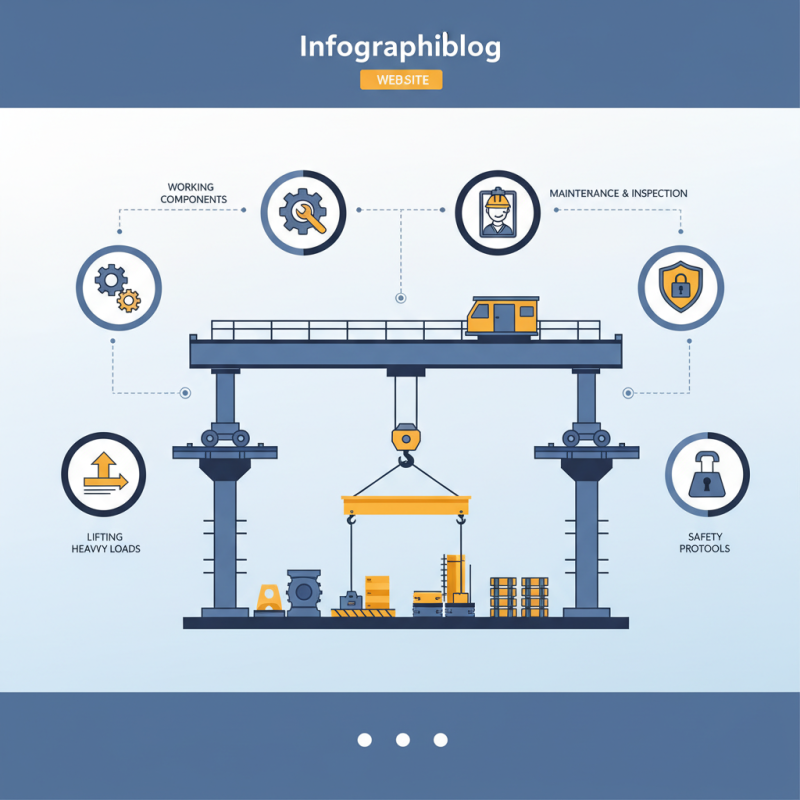
Bridge cranes are critical tools in various industrial settings. They are designed to lift and move heavy loads across a vast distance, typically over a workstation or assembly line. A bridge crane consists of a horizontal beam, known as the bridge, which moves along two parallel tracks. The hoist, which is connected to this beam, lifts items vertically.
These cranes are highly versatile. They can handle different types of materials, making them essential in construction and manufacturing. Operators control the crane using a pendant or remote control, providing flexibility in maneuverability. The setup of a bridge crane can vary, with some systems offering the ability to travel in multiple directions.
However, with all their benefits, bridge cranes necessitate careful operation. Training is essential for operators to ensure safety. Miscommunication or lack of awareness can lead to accidents. Regular maintenance is equally crucial to avoid mechanical failures. Understanding these nuances helps organizations effectively integrate bridge cranes in their workflow.
A bridge crane is a crucial piece of equipment found in various industries. It consists of several key components that allow it to function effectively. The main structure is the bridge itself, which runs along horizontal rails and supports the lifting mechanism. This structural design enables the crane to cover a substantial area, making it versatile for different tasks.
One of the most important components is the hoist. This device is responsible for lifting and lowering loads. Proper maintenance of the hoist is essential for safety. Regular checks can prevent unforeseen breakdowns. Another vital component is the trolley, which moves the hoist side to side along the bridge. Ensuring that the trolley runs smoothly will enhance operational efficiency.
**Tips:** Overloading a bridge crane is a dangerous practice. Always adhere to the specified weight limits. Additionally, operators should receive proper training. An inexperienced operator can lead to accidents. Safety should always be a priority in heavy lifting.
| Component | Description | Function |
|---|---|---|
| Bridge | The main horizontal section that spans the distance between the supporting rails. | Supports the load and allows movement across the area. |
| Hoist | The mechanism responsible for lifting and lowering loads. | Picks up cargo and moves it vertically. |
| Trolley | Moves along the bridge and supports the hoist. | Enables lateral movement of the load across the bridge. |
| Control System | The electrical and software components that control the crane's movements. | Allows operators to manage the crane's functions remotely. |
| End Trucks | The assemblies that connect the bridge to the rails. | Facilitates movement of the bridge along the supporting rails. |
Bridge cranes are essential for lifting heavy materials in various industries. Their operation relies on several intricate mechanisms that ensure efficiency and safety. At the core, a bridge crane consists of a hoist, trolley, and bridge system. The hoist lifts items vertically, while the trolley moves horizontally along the bridge. This design allows for smooth movement across work areas, reducing the need for manual labor.
The bridge itself spans the width of the workspace, supported by end trucks on each side. These end trucks facilitate easy movement along the rails. Control systems vary from basic push-button setups to sophisticated remote controls, enhancing usability. The combination of these components makes bridge cranes versatile for warehouses and factories. However, users often underestimate the importance of regular maintenance. Overlooking small issues can lead to costly repairs and safety hazards.
Safety features are also crucial aspects. Many bridge cranes include limit switches and emergency stop buttons. These mechanisms prevent accidents and protect operators. Continuous training for users is recommended to minimize error rates and enhance operation efficiency. Even experienced operators can overlook guidelines when under pressure. Improving operational knowledge and addressing common pitfalls remains imperative for any facility utilizing bridge cranes.
Bridge cranes are essential in various industries, facilitating heavy lifting and material movement. They excel in manufacturing, construction, and shipping. In factories, bridge cranes help transfer heavy equipment and raw materials along production lines. This streamlines operations, reduces manual labor, and minimizes workplace accidents.
In construction, bridge cranes enable the safe lifting of large materials like steel beams and concrete panels. They improve site efficiency, allowing workers to focus on tasks that require fine skill. However, improper usage of bridge cranes can lead to accidents. Training and adherence to safety protocols are necessary, as mistakes can be costly.
The shipping industry also benefits from bridge cranes. They quickly load and unload cargo ships, increasing turnover rates at ports. This efficiency is critical in a competitive market. Yet, reliance on technology can create vulnerabilities. Regular maintenance checks are crucial to avoid unexpected downtime. Understanding these nuances ensures bridge cranes remain effective tools in various applications.
Bridge cranes play a vital role in material handling. Their design allows for lifting heavy loads with precision. However, safety must come first in their operation. Workers can often overlook safety features, leading to potential hazards. Understanding these features is essential for a safe working environment.
Regular inspections are crucial for bridge crane maintenance. Operators should check the hoist, trolleys, and wires frequently. Any signs of wear should not be ignored. A small crack in the wire can lead to serious accidents. It is advisable to keep a maintenance log for tracking issues over time. This can help identify patterns and improve safety measures.
Tips: Always wear appropriate safety gear while operating a bridge crane. Use tag lines to control the load during movement. If an issue arises, pause and assess the situation. Taking these precautions can save lives and enhance operational efficiency. Regular training sessions can also build a culture of safety. Encourage all operators to voice concerns. Open communication often prevents accidents.
This chart illustrates the performance metrics of a typical bridge crane, including load capacity, operating speed, expected service life, and maintenance frequency. Understanding these metrics is essential for optimal operation and safety compliance.
„Thanks to the LUVIR technology, the solder resist process could be switched directly from the previously used mask exposure to direct exposure. As an outstanding digital solution on the market, this technology has been able to demonstrate fast process times and superior quality on our certified conventional ink in production. This allowed us to fully digitize the solder mask process at low cost – without process or ink adjustments. An excellent benefit to our production in Rot am See.“
Ralf Göhringer (Head of Production WE Rot am See)
I would definitely recommend the Limata machine and team for a future company purchase
Michael Greenaway
Compunetics Inc.
“The Limata ldi has been amazing!! Best thing we did was buy this machine”
Richard Brady
GM
Circuitlabs
“Since 2019, we have been running the Limata X1000 LDI system (including LUVIR for solder mask imaging) in daily production as an addition to our current process with film. The machine was capable of properly exposing Taiyo PSR-4000 BN (DI) solder mask types on normal to high-copper boards using a new and unique direct imaging process. The machine operating interface is very user friendly which allowed for a quick technical training curve. The pre-registration processing reduced several seconds of production time at every print. Limata support and service staff is incomparable. They supported our team every step of the way at basically any time of the day or night, with literally, an immediate response time, customizing the software interface to best fit our Operations and needs.
We have exposed more than 8,000 prints since end of October, on various solder mask colors and some resist film panels. Limata, has proven to be very capable and innovative. They are a strong contender in the industry.
We have very much enjoyed this project, and working with the team!
Thank you Limata for the continued support and being a part of our growth.”
Bill Sezate
Vice President, GM
Summit Interconnect
As a replacement to our current contact exposure process with film, the LIMATA X2000 system including LUVIR-Technology was capable of properly exposing non-LDI solder mask types using a direct imaging process. The machine offers cutting edge software with a very intuitive operating interface which allowed for quick technician training curve. The dual drawer system combined with pre-registration processing reduced several seconds of production time at every machine cycle. Limata support and service staff is world class. They added software patches to keep production running at shortest possible response times, customized the software interface to best fit our in-house Operations system, and even wrote a step-by-step machine processing manual. As a result of the project, we have exposed more than 16,000 times on various product types and solder mask brands/colors. Limata, in a very short timeframe as a company, has definitely shown they are truly innovative and will be challenging the industry of direct imaging for the top spot.
Kevin Beattie
Process Engineer
TTM Technologies
Forest Grove Division
