Choosing the right Chemical Storage Cabinet is a safety decision, not merely a purchasing task. A cabinet may look strong, yet poor ventilation, weak hinges, or unclear labeling can create daily risks. Global buyers must examine construction, capacity, compatibility, certification, and after-sales support before comparing prices.
Industry guidance makes this need clear. OSHA’s Hazard Communication Standard, 29 CFR 1910.1200, requires accessible information about chemical hazards and safe handling. NFPA 30 also provides detailed guidance for storing flammable and combustible liquids. Its requirements influence cabinet design, fire resistance, quantity limits, and installation practices. FM Global’s property-loss guidance further emphasizes separation, spill control, and reliable fire protection. These sources do not replace local regulations. They offer a practical foundation.
Market research adds another perspective. Grand View Research identifies chemical storage equipment as a growing industrial safety segment, driven by laboratories, manufacturing, healthcare, and energy facilities. Growth sounds positive, but it can encourage rushed buying. That is where judgment matters.
Dr. James A. Kaufman, founder of the Laboratory Safety Institute, said, “Safety is not expensive, it is priceless.” His statement remains useful when a cheaper cabinet appears attractive. A low price can hide replacement costs, damaged inventory, or unsafe storage conditions. Still, no cabinet solves every hazard. Buyers must review chemical compatibility, room conditions, inspection routines, and staff training. Small mistakes happen. The goal is to make them less likely and less costly.
This guide presents ten practical buying tips for global purchasers. It connects technical specifications with real workplace details, from a leaking container shelf to a cabinet door that no longer closes properly.
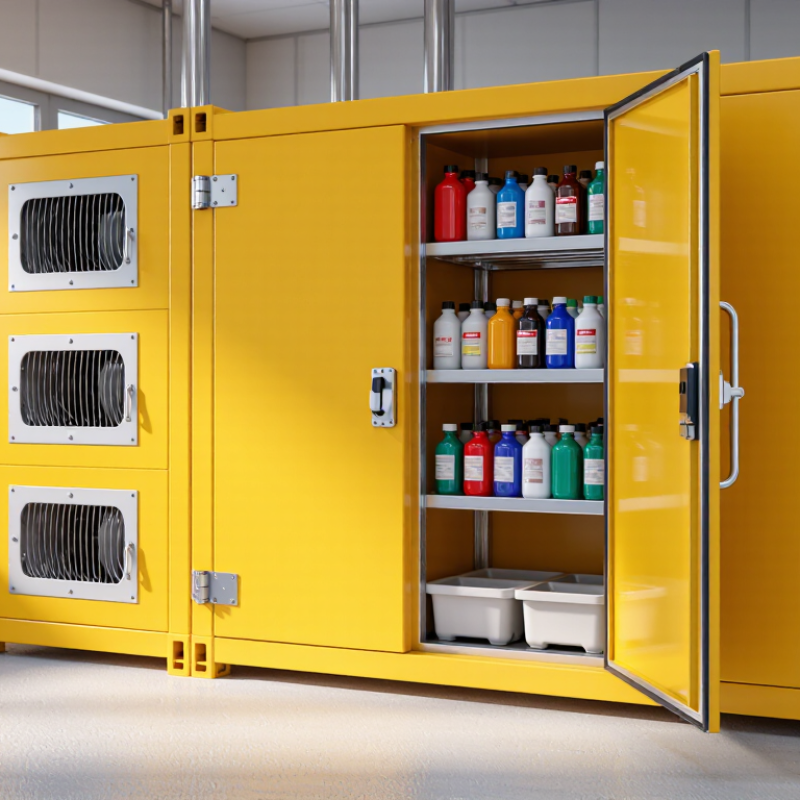
Before selecting a cabinet, list each chemical by product name, concentration, physical form, and maximum quantity. A clear inventory helps reveal whether liquids need spill trays or powders need protection from moisture. Do not group products by color or alphabet alone. Check each Safety Data Sheet for incompatibilities, storage temperature, ventilation, and handling instructions.
OSHA’s Hazard Communication Standard specifies a 16-section format for Safety Data Sheets. Sections 7 and 10 describe handling, storage, stability, and reactivity. Use them to identify chemicals that must be kept apart, then match cabinet materials and features to the actual hazards.
For example, a corrosive liquid may require a compatible, corrosion-resistant interior and a tray sized for the container. Small details matter.
In practice, teams sometimes estimate quantities from purchase orders rather than checking shelves; that can leave a cabinet undersized. Confirm the planned load, container sizes, and site conditions, then check applicable local fire and building requirements. A cabinet that fits the room may still be unsuitable for its contents.
Choosing a chemical storage cabinet starts with compatibility, not appearance. Steel offers strength and often suits general laboratory chemicals. However, corrosive vapors can damage unprotected metal over time. Stainless steel resists corrosion better, but it is not suitable for every chemical. High-density polyethylene works well with many acids and bases. Fiberglass-reinforced plastic can provide another durable option.
Check the chemical’s safety data sheet before selecting materials. Compare the cabinet lining, shelves, seals, and spill tray with the listed hazards. A practical site lesson is simple: one compatible shelf does not make the entire cabinet compatible. Inspect hinges, fasteners, and door seals too. Small details fail first. I have seen buyers focus on wall thickness while overlooking a weak tray.
Tips Ask for material resistance data, load ratings, and test documentation. Confirm whether the cabinet includes adjustable shelves, leak containment, and clear hazard labels. For flammable liquids, consider tested fire-resistant construction, self-closing doors, and suitable ventilation arrangements. Do not add an unapproved fan or drill new openings. That can reduce protection.
Tips Review local workplace and fire-safety requirements before ordering. Check door clearance, anchoring points, and delivery access at the installation site. A cabinet may meet a specification yet fit poorly in a crowded room. Leave enough space for inspection and safe handling. Recheck your chemical inventory every year, because storage needs change.
Capacity is not the number printed in a catalog. Measure the usable shelf space instead. Include bottles, trays, labels, and required clearance. Leave room for safe handling and future purchases. A crowded shelf increases the chance of spills and damaged containers. During site reviews, I check whether the largest bottle can be removed without moving others. Small details matter.
Organization should match the chemicals and daily workflow. Use adjustable shelves, spill trays, and clear location labels. Keep incompatible materials in separate, clearly identified sections. Store frequently used containers between waist and shoulder height. Heavy containers belong on lower shelves. An organized cabinet saves time during inspections and reduces rushed handling. I once underestimated door clearance near a workbench. The cabinet fit, but the door blocked a walking path. That mistake changed how I verify layouts.
Access control deserves equal attention. Choose a lock system that suits the room’s routine, such as controlled keys, cards, or monitored electronic access. Limit entry to trained, authorized personnel. Check whether access records can show who opened the cabinet and when. Ask for load ratings, material compatibility data, and relevant test documentation. A lock alone does not create control. Training, inventory checks, and prompt removal of empty containers complete the process. Do not rely only on appearance. A polished cabinet can still have weak procedures. Review the setup with actual users before purchasing, because their habits may reveal problems that drawings miss.
10 Chemical Storage Cabinet Buying Tips for Global Buyers
A chemical storage cabinet is not compliant simply because a supplier calls it “international.” Standards differ by country, chemical class, cabinet size, and installation site. Ask for the exact test standard, edition, laboratory, and certification scope. Request full test reports, not only a logo or certificate number. Check fire-resistance duration, door self-closing performance, leak containment, shelf loading, and ventilation design. A neat certificate can still hide a mismatch.
Before comparing prices, give the supplier your destination country, facility type, and chemical inventory. Provide current safety data sheets, including storage temperature and incompatibility information. Local rules may require separate cabinets for flammables, corrosives, oxidizers, or toxic substances. They may also control cabinet placement, aisle clearance, grounding, ventilation, signage, and maximum stored volume. Confirm whether local electrical approval or import documentation is required. Name the regulation.
Use an independent safety officer or qualified inspector to review the documents. Ask for traceable material specifications, coating details, production inspection records, and warranty limits. Inspect the delivered cabinet for dents, damaged seals, missing labels, and unstable shelves. Keep a written compliance file. Document every decision. Buyers often focus on certification and overlook daily handling space. That mistake is easy to repeat. Recheck the rules after installation, because local guidance can change and the first interpretation may be wrong.
10 Chemical Storage Cabinet Buying Tips for Global Buyers
A reliable supplier should provide clear drawings, material specifications, and recent test reports. Ask how the cabinet handles corrosion, load pressure, door operation, and shelf adjustment. Factory photographs are useful, but they are not enough. Request sample inspection records and traceable quality documents. Check production capacity, response time, warranty terms, and spare-part support. A low price means little if replacement shelves arrive months later. Supplier evaluation should include communication quality, not only technical claims.
Shipping conditions can damage even a well-built cabinet. Confirm packed dimensions, crate materials, moisture protection, shock indicators, and stacking limits before payment. Ask whether the quoted service includes port handling, customs paperwork, inland delivery, and unloading equipment. Delivery terms must be understood by both parties. Insurance coverage should match the cabinet’s replacement value and the likely transport risks. Small omissions become expensive surprises.
Compare total cost, not the invoice alone. Include duties, inspection fees, local transport, installation, ventilation accessories, and future maintenance. Request a landed-cost estimate with separate line items. Freight prices may change, so leave a reasonable allowance. No spreadsheet is perfect. I would also test one cabinet before placing a large order, even when the supplier appears experienced. That extra step can expose weak hinges, poor coating, or confusing assembly instructions. Supplier promises should be checked against physical evidence and written commitments.
| No. | Buying Tip | What to Evaluate | Practical Requirement or Benchmark | Documents or Evidence to Request | Shipping and Import Considerations | Total-Cost Impact |
|---|---|---|---|---|---|---|
| 1 | Match the cabinet to the chemical hazard | Confirm whether the cabinet is intended for flammable liquids, corrosives, toxic substances, pesticides, or general laboratory chemicals. | The cabinet construction, lining, shelves, ventilation approach, and labeling should be suitable for the chemical class and local safety rules. | Safety Data Sheets, chemical compatibility chart, product specification, and intended-use statement. | Provide the supplier with the chemical list and destination country before quotation; classification affects transport and customs documentation. | A lower purchase price can create replacement, corrosion, leakage, or compliance costs if the cabinet is chemically incompatible. |
| 2 | Verify applicable standards and local regulations | Determine which fire, workplace-safety, building, environmental, and electrical requirements apply at the installation site. | Ask for the exact test method, certification scope, and edition of the standard rather than accepting a general “compliant” claim. | Test reports, declarations of conformity, certification scope, technical drawings, and installation instructions. | Certification accepted in one market may not satisfy the authority having jurisdiction in another market. | Include possible inspection fees, local modifications, certification review, and permit-related expenses. |
| 3 | Check construction materials and corrosion resistance | Review steel thickness, coating system, weld quality, door construction, hinges, handles, shelves, and spill containment. | Materials should be compatible with the stored chemicals and the site environment, including humidity, salt exposure, and temperature. | Material grades, coating data sheet, corrosion-resistance test information, load rating, and shelf-adjustment details. | Confirm whether protective packaging prevents scratches, deformation, and moisture damage during ocean or road transport. | Durable materials may cost more initially but reduce repair, coating failure, and premature replacement risk. |
| 4 | Confirm capacity, load rating, and usable dimensions | Compare external dimensions with doorways, elevators, rack layouts, and the actual footprint of containers and drums. | Check shelf load rating, sump capacity, internal clearances, door swing, and allowance for labels and safe handling. | Dimension drawing, net and gross weight, shelf load test, sump volume, and pallet or crate dimensions. | Oversized or heavy cabinets can increase freight class, handling charges, warehouse fees, and installation requirements. | Calculate cost per usable storage volume, not only the external cabinet price. |
| 5 | Evaluate doors, locks, and access control | Inspect self-closing or manual-closing operation, latch quality, lock type, emergency access, and key or access-card control. | The door design should support the cabinet’s intended hazard class and prevent unauthorized or accidental access. | Door-cycle test results, lock specification, replacement-key policy, maintenance instructions, and spare-part list. | Verify that keys, locks, and replacement parts can be shipped and serviced in the destination market. | Include spare locks, service visits, downtime, and internal access-control administration. |
| 6 | Clarify ventilation and electrical options | Determine whether ventilation is required, optional, or restricted for the chemical type and site design. | Do not assume that connecting a cabinet to an exhaust system automatically makes storage safer; ventilation must be assessed by a competent safety professional. | Airflow data, fan specifications, wiring diagram, electrical rating, grounding details, and installation guidance. | Electrical components may require destination-country plugs, voltage compatibility, hazardous-area assessment, or separate approval. | Add ducting, electrical installation, testing, energy use, and periodic maintenance to the landed-cost calculation. |
| 7 | Review packaging and shipping protection | Assess protection against impact, moisture, abrasion, tipping, and deformation during multimodal transport. | Packaging should secure doors, shelves, removable parts, and casters while allowing safe unloading and inspection. | Packing specification, photos of packed units, drop or vibration test information, moisture protection method, and packing list. | Confirm Incoterms, container or pallet dimensions, cargo insurance responsibilities, and procedures for transit damage claims. | Compare freight, insurance, packaging disposal, port handling, customs brokerage, and inland delivery charges. |
| 8 | Confirm export and import documentation | Make sure the product description, tariff classification, origin information, and shipment paperwork are consistent. | The cabinet itself may not be dangerous goods, but shipments containing chemicals require the relevant dangerous-goods documentation and packaging controls. | Commercial invoice, packing list, certificate of origin where applicable, technical file, HS classification support, and transport documents. | Check customs duties, value-added or sales taxes, import permits, language requirements, and broker review before dispatch. | Documentation errors can cause storage charges, customs delays, rework, penalties, and missed delivery deadlines. |
| 9 | Assess supplier quality and after-sales capability | Evaluate manufacturing controls, inspection procedures, traceability, response time, warranty terms, and spare-parts availability. | A reliable supplier should provide consistent drawings, controlled revisions, inspection records, and a clear nonconformance process. | Factory audit information, quality-control plan, sample inspection report, warranty policy, service procedure, and references without undisclosed brand claims. | Confirm local service coverage, remote technical support, replacement-part lead times, and return procedures across borders. | Supplier reliability affects inspection cost, downtime, emergency freight, warranty recovery, and lifecycle maintenance expense. |
| 10 | Calculate total cost of ownership | Compare purchase price with freight, duties, installation, inspection, maintenance, energy use, training, and end-of-life disposal. | Use a landed-cost and lifecycle-cost model for the same capacity, specification, delivery term, and service scope. | Itemized quotation, Incoterms, estimated shipping weights, warranty exclusions, service rates, spare-part prices, and disposal guidance. | Request separate pricing for delivery to site, unloading, positioning, assembly, testing, and removal of transport packaging. | Total cost = purchase price + freight + insurance + duties/taxes + installation + compliance costs + maintenance + disposal. |
Note: Chemical storage requirements vary by chemical properties, quantity, workplace conditions, and jurisdiction. Always verify the final specification with the applicable authority and a qualified safety professional.
„Thanks to the LUVIR technology, the solder resist process could be switched directly from the previously used mask exposure to direct exposure. As an outstanding digital solution on the market, this technology has been able to demonstrate fast process times and superior quality on our certified conventional ink in production. This allowed us to fully digitize the solder mask process at low cost – without process or ink adjustments. An excellent benefit to our production in Rot am See.“
Ralf Göhringer (Head of Production WE Rot am See)
I would definitely recommend the Limata machine and team for a future company purchase
Michael Greenaway
Compunetics Inc.
“The Limata ldi has been amazing!! Best thing we did was buy this machine”
Richard Brady
GM
Circuitlabs
“Since 2019, we have been running the Limata X1000 LDI system (including LUVIR for solder mask imaging) in daily production as an addition to our current process with film. The machine was capable of properly exposing Taiyo PSR-4000 BN (DI) solder mask types on normal to high-copper boards using a new and unique direct imaging process. The machine operating interface is very user friendly which allowed for a quick technical training curve. The pre-registration processing reduced several seconds of production time at every print. Limata support and service staff is incomparable. They supported our team every step of the way at basically any time of the day or night, with literally, an immediate response time, customizing the software interface to best fit our Operations and needs.
We have exposed more than 8,000 prints since end of October, on various solder mask colors and some resist film panels. Limata, has proven to be very capable and innovative. They are a strong contender in the industry.
We have very much enjoyed this project, and working with the team!
Thank you Limata for the continued support and being a part of our growth.”
Bill Sezate
Vice President, GM
Summit Interconnect
As a replacement to our current contact exposure process with film, the LIMATA X2000 system including LUVIR-Technology was capable of properly exposing non-LDI solder mask types using a direct imaging process. The machine offers cutting edge software with a very intuitive operating interface which allowed for quick technician training curve. The dual drawer system combined with pre-registration processing reduced several seconds of production time at every machine cycle. Limata support and service staff is world class. They added software patches to keep production running at shortest possible response times, customized the software interface to best fit our in-house Operations system, and even wrote a step-by-step machine processing manual. As a result of the project, we have exposed more than 16,000 times on various product types and solder mask brands/colors. Limata, in a very short timeframe as a company, has definitely shown they are truly innovative and will be challenging the industry of direct imaging for the top spot.
Kevin Beattie
Process Engineer
TTM Technologies
Forest Grove Division
