The rise of urbanization worldwide has amplified the challenges of parking management. This situation calls for innovative solutions, like the Smart Car Parking System. These systems promise efficiency, safety, and space optimization. They are designed to tackle increasing vehicle numbers in crowded cities.
China has emerged as a leader in developing cutting-edge parking technologies. As global buyers explore advanced solutions, Chinese manufacturers present compelling options. Their Smart Car Parking Systems often feature automated features, real-time monitoring, and user-friendly interfaces. However, questions about quality and reliability persist among potential buyers.
Investing in a Smart Car Parking System requires careful consideration. Prospective buyers should assess both functionality and local compatibility. The need for customization and regular maintenance is essential. Balancing efficiency with user experience is critical. In the rapidly evolving market, staying informed and cautious is vital when choosing a reliable system.
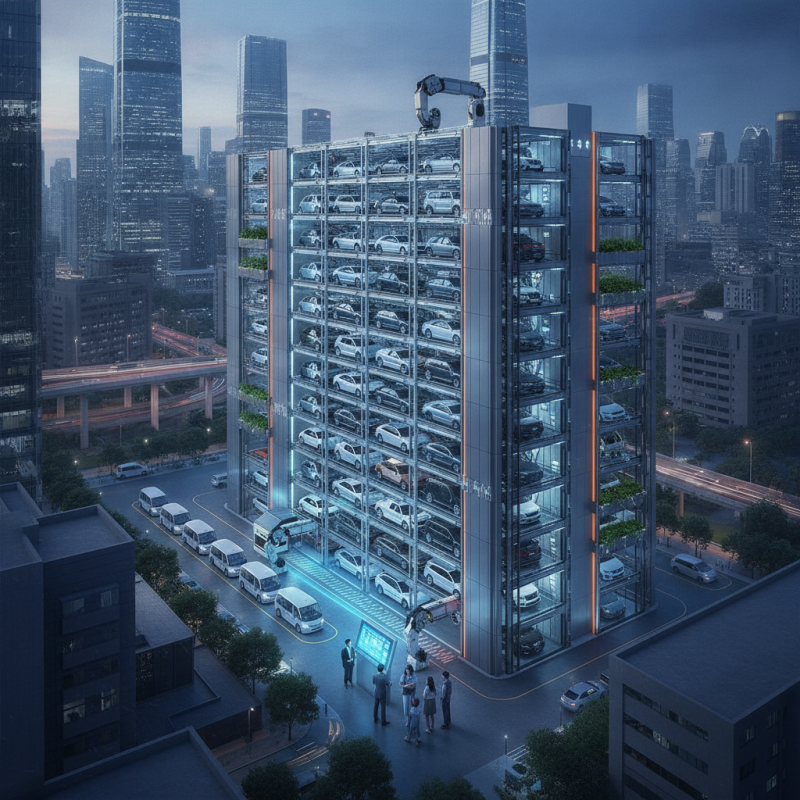
Smart car parking systems in China are rapidly evolving. These systems utilize advanced technologies like AI, sensors, and IoT. They aim to optimize parking management in urban areas. Many cities face severe parking shortages. Traditional parking solutions often fall short. Smart systems provide efficiency and reduce congestion.
In bustling cities, real-time data is crucial. These systems can guide drivers to available spaces instantly. This reduces the time spent searching for parking. Drivers receive notifications through mobile apps. Yet, these systems are not without flaws. Connectivity issues may arise, causing delays. Not all users adapt easily to new technologies.
The integration of smart parking in China reflects a growing trend. Demand for seamless urban mobility is rising. Authorities are investing in infrastructure improvements. However, as technology evolves, challenges will emerge. Ensuring user-friendly interfaces is essential. Continuous feedback from users can improve these smart solutions. This approach fosters reliability and trust in smart car parking systems.
The emergence of smart parking technologies in China offers impressive innovations for global buyers. These systems integrate advanced sensors, mobile applications, and data analytics to optimize parking space usage. According to a recent industry report from MarketsandMarkets, the smart parking market is expected to grow at a CAGR of 18.5% from 2023 to 2028. This substantial growth indicates a rising demand for efficient parking solutions, especially in urban areas.
Key features of these technologies include real-time space availability updates. Drivers can access information about open spots via mobile apps. This reduces time spent searching for parking, contributing to decreased traffic congestion. A study from the Urban Mobility Report highlights that about 30% of city traffic stems from drivers looking for parking. This emphasizes the need for smart parking systems.
Moreover, China's smart parking solutions often leverage AI for predictive analytics. They not only identify available spaces but also anticipate patterns based on historical data. Such technology could encounter challenges in areas with insufficient data or infrastructure limitations. While the potential is significant, the effectiveness of these systems is contingent on continuous improvement and adaptation to user needs.
China is making waves in the smart parking industry. With growing urbanization, parking space is more in demand than ever. Despite advancements, issues remain. China's smart parking systems often face concerns about reliability and scalability. In contrast, many global solutions emphasize robust integration and user experience.
The technology behind smart parking varies globally. China's systems focus on cost-effectiveness, which can sometimes compromise quality. Global solutions often prioritize seamless technology, featuring app-based management and real-time updates. This reflects broader user needs but often at a higher price point.
User feedback reveals mixed feelings about Chinese smart solutions. Many appreciate affordability but voice concerns over functionality. Reliability is crucial for any smart system. As cities evolve, a balance between cost, efficiency, and quality is vital for future growth. Understanding these dynamics can help buyers make informed choices.
As urban populations continue to swell, smart parking systems have become essential. In China, this market is rapidly evolving due to rising vehicle ownership and the need for efficient space management. Cities are grappling with congestion and limited parking spots. Therefore, the demand for smart parking solutions is at an all-time high.
Chinese smart parking systems provide innovative features such as real-time space detection and mobile payment options. These systems not only save time but also reduce stress for drivers. However, there are challenges to consider. Implementation costs can be high, and the technology must integrate seamlessly with existing infrastructure. Additionally, user adoption is crucial for success. Not everyone is tech-savvy, and many prefer traditional methods.
While the potential for growth in global markets is promising, it’s important to address the limitations. Some regions may lack the necessary infrastructure to support advanced systems. Moreover, local regulations can present hurdles. Exploring these factors will be key to understanding the feasibility of Chinese smart parking solutions abroad. Balancing innovation with practical limitations is essential for broader acceptance.
| Feature | Value |
|---|---|
| Market Size (2023) | $5 Billion |
| Projected Growth Rate (2024-2028) | 15% CAGR |
| Key Driver | Urbanization |
| Technological Innovation | AI and IoT Integration |
| End-User Segments | Commercial and Residential |
| Challenges | High Initial Investment |
| Main Competitors | Local and Global Systems |
China's smart car parking systems offer innovative solutions to address parking challenges. However, international buyers face unique obstacles. Understanding these can lead to better investment decisions.
A report from the International Parking Institute highlights that urban areas face a shortage of parking spaces. Driven by rapid urbanization, demand is projected to increase by 30% in the coming decade. In this context, China's systems, often equipped with AI and IoT technology, provide valuable options. Yet, buyers must navigate language barriers, differing regulations, and cultural nuances that can complicate partnerships.
Additionally, quality control remains a point of concern. Data from industry surveys reveal that 25% of international buyers reported discrepancies in product quality after purchase. This emphasizes the need for thorough due diligence. International buyers should prioritize suppliers with solid reputations and transparent operations. Investing in quality over cost can mitigate risks and ultimately lead to better outcomes.
„Thanks to the LUVIR technology, the solder resist process could be switched directly from the previously used mask exposure to direct exposure. As an outstanding digital solution on the market, this technology has been able to demonstrate fast process times and superior quality on our certified conventional ink in production. This allowed us to fully digitize the solder mask process at low cost – without process or ink adjustments. An excellent benefit to our production in Rot am See.“
Ralf Göhringer (Head of Production WE Rot am See)
I would definitely recommend the Limata machine and team for a future company purchase
Michael Greenaway
Compunetics Inc.
“The Limata ldi has been amazing!! Best thing we did was buy this machine”
Richard Brady
GM
Circuitlabs
“Since 2019, we have been running the Limata X1000 LDI system (including LUVIR for solder mask imaging) in daily production as an addition to our current process with film. The machine was capable of properly exposing Taiyo PSR-4000 BN (DI) solder mask types on normal to high-copper boards using a new and unique direct imaging process. The machine operating interface is very user friendly which allowed for a quick technical training curve. The pre-registration processing reduced several seconds of production time at every print. Limata support and service staff is incomparable. They supported our team every step of the way at basically any time of the day or night, with literally, an immediate response time, customizing the software interface to best fit our Operations and needs.
We have exposed more than 8,000 prints since end of October, on various solder mask colors and some resist film panels. Limata, has proven to be very capable and innovative. They are a strong contender in the industry.
We have very much enjoyed this project, and working with the team!
Thank you Limata for the continued support and being a part of our growth.”
Bill Sezate
Vice President, GM
Summit Interconnect
As a replacement to our current contact exposure process with film, the LIMATA X2000 system including LUVIR-Technology was capable of properly exposing non-LDI solder mask types using a direct imaging process. The machine offers cutting edge software with a very intuitive operating interface which allowed for quick technician training curve. The dual drawer system combined with pre-registration processing reduced several seconds of production time at every machine cycle. Limata support and service staff is world class. They added software patches to keep production running at shortest possible response times, customized the software interface to best fit our in-house Operations system, and even wrote a step-by-step machine processing manual. As a result of the project, we have exposed more than 16,000 times on various product types and solder mask brands/colors. Limata, in a very short timeframe as a company, has definitely shown they are truly innovative and will be challenging the industry of direct imaging for the top spot.
Kevin Beattie
Process Engineer
TTM Technologies
Forest Grove Division
