Chlorinated Poly Vinyl Chloride, commonly known as CPVC, is an important polymer in the manufacturing industry. Its unique properties make it suitable for various applications, particularly in plumbing and piping systems. CPVC is resistant to heat and corrosion, ensuring long-lasting performance in both residential and commercial settings.
Many industries benefit from Chlorinated Poly Vinyl Chloride due to its versatility. It is used in chemical processing, where resistance to strong acids is essential. Furthermore, its lightweight nature simplifies installation processes, saving both time and resources. However, the environmental impact of CPVC production is a topic for reflection.
While CPVC offers many benefits, some concerns about its sustainability remain. The production process can be energy-intensive. As awareness grows, there is a need for responsible sourcing and recycling efforts in the CPVC industry. Despite these challenges, Chlorinated Poly Vinyl Chloride stands out as a valuable material in modern construction and manufacturing.
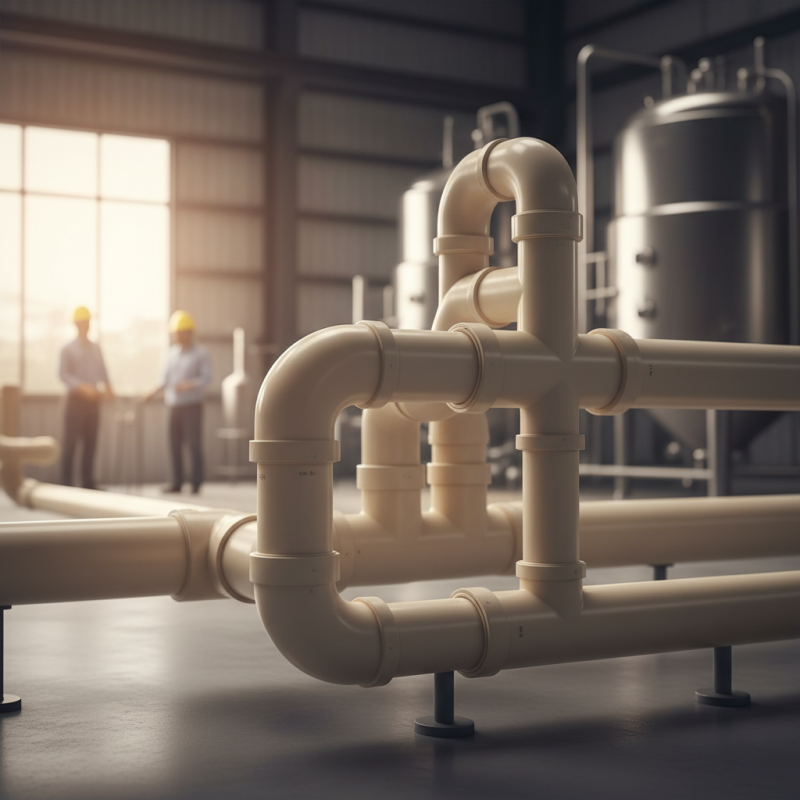
Chlorinated Poly Vinyl Chloride (CPVC) is a versatile plastic known for its toughness and resistance to corrosion. It is primarily used in residential and industrial piping applications. According to a recent industry report by Persistence Market Research, the CPVC market is expected to grow significantly, driven by the increasing demand for durable piping solutions.
One of the key benefits of CPVC is its ability to withstand high temperatures. It can handle water temperatures up to 200°F (93°C), making it ideal for hot water distribution systems. Additionally, CPVC is resistant to various chemicals, which extends its lifespan in even the harshest environments. This advantage is notable in industries such as construction, where reliable materials are vital. Industry statistics indicate that the construction sector accounts for over 40% of CPVC usage globally.
However, while CPVC provides many benefits, it comes with certain drawbacks. Installation processes can be complex, requiring skilled labor. If not installed correctly, the pipes may warp or leak over time. Furthermore, debates exist regarding its environmental impact during production and disposal. As demand for sustainable materials rises, these concerns may affect future CPVC usage. Addressing these issues responsibly is crucial for the industry's growth and sustainability.
Chlorinated Poly Vinyl Chloride (CPVC) has become a significant material in various industries due to its unique properties. One of its most notable characteristics is its excellent resistance to heat and corrosion. This makes it ideal for plumbing and chemical processing applications. According to a study by the Plastics Industry Association, the demand for CPVC in the plumbing sector is projected to grow by over 5% annually.
Another key property of CPVC is its flame retardancy. It can withstand high temperatures without igniting, which is crucial for construction materials in commercial buildings. Research indicates that CPVC reduces the spread of flames, providing additional safety for occupants. The flexibility combined with strength allows CPVC pipes to endure stress from the environment. However, some industry experts caution against the potential brittleness of CPVC when exposed to certain chemicals or extreme conditions.
In terms of environmental impact, CPVC can be recycled, though not universally. This offers benefits for sustainability, but the recycling rate remains low in practice. There’s a need for better infrastructure and education on recycling CPVC products. The ongoing discussions in the industry reflect a desire to improve both the performance and sustainability of this versatile material.
Chlorinated Poly Vinyl Chloride (CPVC) is a versatile material known for its exceptional durability. It is widely used in various industries such as plumbing, construction, and electrical. In plumbing, CPVC pipes resist corrosion and withstand high temperatures. They are ideal for hot and cold water systems, reducing the risk of leaks. This reliability makes CPVC a popular choice among plumbers.
In the construction sector, CPVC is valued for its flame resistance. This property is crucial for building materials. CPVC does not burn easily and helps in managing fire hazards. Additionally, in electrical applications, CPVC protects wires and cables. Its insulating properties add layers of safety. However, some contractors express concerns about installation difficulties. Proper training is essential for effective usage.
Manufacturers continuously seek to improve CPVC formulations. They aim to enhance performance and reduce environmental impact. Yet, some challenges remain in balancing strength with flexibility. Future innovations will likely focus on these aspects. Overall, while CPVC shows immense potential, ongoing efforts can further fine-tune its applications and benefits.
Chlorinated Poly Vinyl Chloride (CPVC) is becoming popular in construction and plumbing. Its advantages over other materials are notable. For instance, CPVC pipes handle higher temperatures than traditional PVC. They can withstand temperatures up to 200°F, making them suitable for hot water applications. According to engineering studies, CPVC systems can reduce energy costs by 20% in heating applications.
Another key benefit of CPVC is its resistance to corrosion and scaling. Unlike metal pipes, CPVC does not rust, ensuring a longer lifespan. Research from the American Society of Plumbing Engineers indicates that CPVC has a service life of over 50 years. Furthermore, the material is lightweight, which simplifies handling and installation. It significantly lowers labor costs during projects.
**Tips:** When selecting piping materials, consider temperature ratings. Ensure compatibility with existing systems to avoid future issues. Regular inspections can also help mitigate potential risks, prolonging the lifespan of CPVC installations. Proper maintenance is crucial, even for durable materials.
Chlorinated Poly Vinyl Chloride (CPVC) is widely used in construction and plumbing. However, its impact on the environment raises important discussions. CPVC is durable and heat resistant, making it suitable for hot water systems. Yet, the production and disposal of CPVC can introduce harmful toxins into ecosystems. This reality shadows its benefits.
When using CPVC, consider its environmental footprint. Always ensure proper disposal to minimize landfill impact. Recycling options may exist in your area. Green building practices increasingly advocate for alternatives. Research biodegradable materials that offer similar benefits. This shift reflects a growing awareness of sustainability in construction.
CPVC also has safety implications. Although it can withstand high temperatures, caution is necessary. Prolonged exposure to certain chemicals during installation can be hazardous. Proper ventilation is key when working with it. Always wear appropriate safety gear. Understanding these risks contributes to responsible usage.
„Thanks to the LUVIR technology, the solder resist process could be switched directly from the previously used mask exposure to direct exposure. As an outstanding digital solution on the market, this technology has been able to demonstrate fast process times and superior quality on our certified conventional ink in production. This allowed us to fully digitize the solder mask process at low cost – without process or ink adjustments. An excellent benefit to our production in Rot am See.“
Ralf Göhringer (Head of Production WE Rot am See)
I would definitely recommend the Limata machine and team for a future company purchase
Michael Greenaway
Compunetics Inc.
“The Limata ldi has been amazing!! Best thing we did was buy this machine”
Richard Brady
GM
Circuitlabs
“Since 2019, we have been running the Limata X1000 LDI system (including LUVIR for solder mask imaging) in daily production as an addition to our current process with film. The machine was capable of properly exposing Taiyo PSR-4000 BN (DI) solder mask types on normal to high-copper boards using a new and unique direct imaging process. The machine operating interface is very user friendly which allowed for a quick technical training curve. The pre-registration processing reduced several seconds of production time at every print. Limata support and service staff is incomparable. They supported our team every step of the way at basically any time of the day or night, with literally, an immediate response time, customizing the software interface to best fit our Operations and needs.
We have exposed more than 8,000 prints since end of October, on various solder mask colors and some resist film panels. Limata, has proven to be very capable and innovative. They are a strong contender in the industry.
We have very much enjoyed this project, and working with the team!
Thank you Limata for the continued support and being a part of our growth.”
Bill Sezate
Vice President, GM
Summit Interconnect
As a replacement to our current contact exposure process with film, the LIMATA X2000 system including LUVIR-Technology was capable of properly exposing non-LDI solder mask types using a direct imaging process. The machine offers cutting edge software with a very intuitive operating interface which allowed for quick technician training curve. The dual drawer system combined with pre-registration processing reduced several seconds of production time at every machine cycle. Limata support and service staff is world class. They added software patches to keep production running at shortest possible response times, customized the software interface to best fit our in-house Operations system, and even wrote a step-by-step machine processing manual. As a result of the project, we have exposed more than 16,000 times on various product types and solder mask brands/colors. Limata, in a very short timeframe as a company, has definitely shown they are truly innovative and will be challenging the industry of direct imaging for the top spot.
Kevin Beattie
Process Engineer
TTM Technologies
Forest Grove Division
