Choosing the right Continuous Waste Tire Pyrolysis Plant is crucial for businesses focused on tire recycling. According to recent industry reports, the pyrolysis market is expected to grow significantly. By 2027, the market could reach $2 billion, reflecting a strong demand for sustainable waste management solutions.
Efficiency is vital when selecting a plant. A well-designed Continuous Waste Tire Pyrolysis Plant can process over 20 tons of tires daily. However, not all technologies deliver the same results. Some plants may struggle with energy consumption and emissions, raising concerns among operators.
Reliability of equipment plays a critical role in operational success. Companies must evaluate suppliers carefully. Looking at their track record provides insights into which plants yield consistent performance. Ultimately, making a thoughtful choice hinges on balancing efficiency, technology, and supplier credibility.
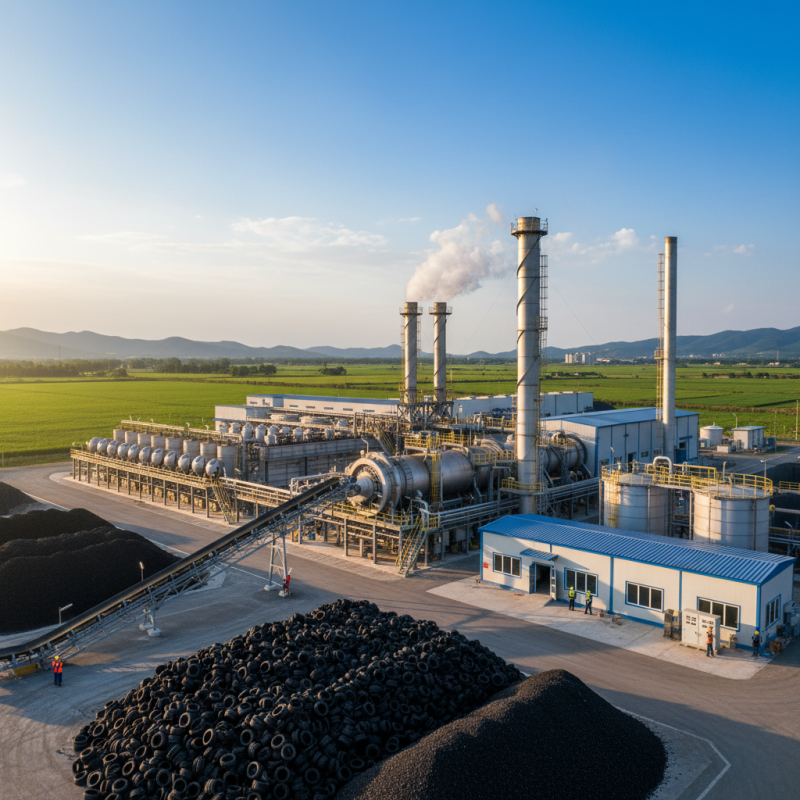
Continuous waste tire pyrolysis technology is a revolutionary method for recycling tires. It converts scrap tires into valuable products like oil, carbon black, and gas. Understanding this process is crucial for effective waste management.
The pyrolysis process involves heating tires in an oxygen-free environment. This minimizes combustion and maximizes fuel production. As the tires break down, volatile gases are collected, cooled, and condensed into liquid fuel. The solid residue, carbon black, can be used in various applications, including rubber products.
However, selecting the right pyrolysis plant requires careful consideration. Not all plants offer the same efficiency or technology. Evaluating the technology used, energy consumption, and production capacity is essential. An operator's experience also plays a vital role. It's not just about the machinery but also about how well the team understands the complexities of the process. There’s a learning curve involved, and optimization takes time.
When selecting the best continuous waste tire pyrolysis plant, several key features should guide your decision. Focus on the material used in construction. High-quality steel and advanced heat-resistant materials enhance durability. Consider the plant's efficiency. A well-designed pyrolysis system should maximize oil yield while minimizing energy consumption. Also, look at the technology employed. Advanced thermal processes can lead to better output and lower emissions.
Safety features are crucial in any pyrolysis plant. Look for systems equipped with sensors and automatic shut-off mechanisms. These ensure the safe operation of the plant. Furthermore, examine the plant's capacity. It should align with your processing needs and local waste supply. Think about the maintenance requirements too. Easy access for cleaning and repairs can save time and costs.
Environmental considerations play a significant role in your choice. Ensure the plant meets emissions standards. Good plants should also have efficient waste management systems. Remember to ask about technical support and training. After installation, ongoing support is vital for optimal operation. Reflect on your needs and keep refining your criteria based on real-world insights.
| Feature | Importance | Description |
|---|---|---|
| Feed Rate | High | Indicates the amount of waste tires processed per hour |
| Energy Consumption | High | The energy required for the process should be minimized for cost efficiency |
| End Products Quality | Critical | the quality of oil, carbon black, and gas produced should meet industry standards |
| Automation Level | Moderate | High automation can reduce labor costs and improve efficiency |
| Safety Features | Essential | Includes pressure relief valves, automatic shut-off, and fire suppression systems |
| Maintenance Requirements | Important | Simpler maintenance means lower downtime and operational costs |
| Compliance with Regulations | Critical | The plant must meet environmental regulations and standards |
When choosing a continuous waste tire pyrolysis plant, it's crucial to evaluate the efficiency and yield of the outputs. The pyrolysis process transforms waste tires into valuable products such as oil, gas, and carbon black. An efficient plant maximizes the conversion rate of tires into these outputs, directly impacting profitability.
Consider the technology used in the pyrolysis process. Advanced systems often have better heat distribution and can process tires more uniformly. This uniform processing can lead to higher yields of oil and other by-products. Moreover, factors such as temperature and retention time during pyrolysis can significantly influence output efficiency.
Tips:
Keep in mind that excess emissions and by-products can result from inefficient systems. Pay attention to the environmental compliance of the plant. It is essential to balance output efficiency with sustainability. Analyzing these elements will guide you to a more reliable choice in a continuous waste tire pyrolysis plant. Be prepared for unforeseen issues, as the operational complexities can vary by setup and facility.
When selecting the best continuous waste tire pyrolysis plant, a thorough comparative analysis of manufacturers is crucial. A recent industry report highlighted that the global market for pyrolysis systems is projected to reach USD 50 billion by 2026. This rapid growth emphasizes the importance of choosing equipment that provides both efficiency and reliability.
Leading manufacturers often differ in their technology and output quality. Some plants can convert up to 95% of waste tires into useful products. However, the efficiency can vary significantly based on the process used. For instance, batch systems may offer lower initial costs but can lead to higher operating expenses over time. Vendors that invest in advanced technologies tend to produce higher-grade oil and carbon byproducts.
The safety and environmental compliance of these systems cannot be overlooked. Many plants still struggle with emissions and residue management, revealing a need for reflection in their designs. Manufacturers who prioritize sustainable practices, while also providing detailed operational data, tend to build stronger reputations in the industry. Understanding these metrics can guide buyers toward more informed decisions in a competitive market.
This chart illustrates the comparative processing capacity (in tons per day) of various continuous waste tire pyrolysis plants. It can help potential buyers understand the differences in output capacity when selecting the best equipment for their needs.
When considering a continuous waste tire pyrolysis plant, regulatory compliance is crucial. Each region has specific laws governing waste disposal, emissions, and operational safety. A thorough understanding of these regulations is essential for any potential investor. Not all pyrolysis plants meet the required environmental standards, which can lead to legal complications and environmental damage.
Evaluating the environmental impact is equally important. Effective pyrolysis should minimize harmful emissions. Advanced plants utilize state-of-the-art filtration systems to reduce pollutants like volatile organic compounds. Transparency in emissions data is vital. Prospective operators should demand clear information regarding a plant's environmental footprint.
The design of the plant itself can also influence its compliance. Plants built with sustainability in mind are more likely to adhere to regulations. However, some facilities cut corners to reduce costs. This can result in higher emissions and possible fines. Prospective buyers should conduct thorough evaluations, verifying the plant's history of environmental performance. Choosing wisely can lead to a sustainable business model.
„Thanks to the LUVIR technology, the solder resist process could be switched directly from the previously used mask exposure to direct exposure. As an outstanding digital solution on the market, this technology has been able to demonstrate fast process times and superior quality on our certified conventional ink in production. This allowed us to fully digitize the solder mask process at low cost – without process or ink adjustments. An excellent benefit to our production in Rot am See.“
Ralf Göhringer (Head of Production WE Rot am See)
I would definitely recommend the Limata machine and team for a future company purchase
Michael Greenaway
Compunetics Inc.
“The Limata ldi has been amazing!! Best thing we did was buy this machine”
Richard Brady
GM
Circuitlabs
“Since 2019, we have been running the Limata X1000 LDI system (including LUVIR for solder mask imaging) in daily production as an addition to our current process with film. The machine was capable of properly exposing Taiyo PSR-4000 BN (DI) solder mask types on normal to high-copper boards using a new and unique direct imaging process. The machine operating interface is very user friendly which allowed for a quick technical training curve. The pre-registration processing reduced several seconds of production time at every print. Limata support and service staff is incomparable. They supported our team every step of the way at basically any time of the day or night, with literally, an immediate response time, customizing the software interface to best fit our Operations and needs.
We have exposed more than 8,000 prints since end of October, on various solder mask colors and some resist film panels. Limata, has proven to be very capable and innovative. They are a strong contender in the industry.
We have very much enjoyed this project, and working with the team!
Thank you Limata for the continued support and being a part of our growth.”
Bill Sezate
Vice President, GM
Summit Interconnect
As a replacement to our current contact exposure process with film, the LIMATA X2000 system including LUVIR-Technology was capable of properly exposing non-LDI solder mask types using a direct imaging process. The machine offers cutting edge software with a very intuitive operating interface which allowed for quick technician training curve. The dual drawer system combined with pre-registration processing reduced several seconds of production time at every machine cycle. Limata support and service staff is world class. They added software patches to keep production running at shortest possible response times, customized the software interface to best fit our in-house Operations system, and even wrote a step-by-step machine processing manual. As a result of the project, we have exposed more than 16,000 times on various product types and solder mask brands/colors. Limata, in a very short timeframe as a company, has definitely shown they are truly innovative and will be challenging the industry of direct imaging for the top spot.
Kevin Beattie
Process Engineer
TTM Technologies
Forest Grove Division
