Choosing the right Package Delivery Robot can be daunting. As businesses adapt to an evolving delivery landscape, these robots offer significant advantages. They promise efficiency and cost savings. However, not all robots are created equal.
When selecting a Package Delivery Robot, consider your specific needs. Do you require advanced navigation or enhanced load capacity? Each business has unique demands. Moreover, it’s essential to evaluate the robot's reliability and software updates. Regular maintenance is crucial for optimal performance.
Reflect on your long-term goals. Investing in a Package Delivery Robot is not merely a purchase. It should align with your business strategy. Take your time. Explore various options, and learn from others’ experiences. A well-chosen robot can transform your delivery process, but the wrong choice can lead to frustration.
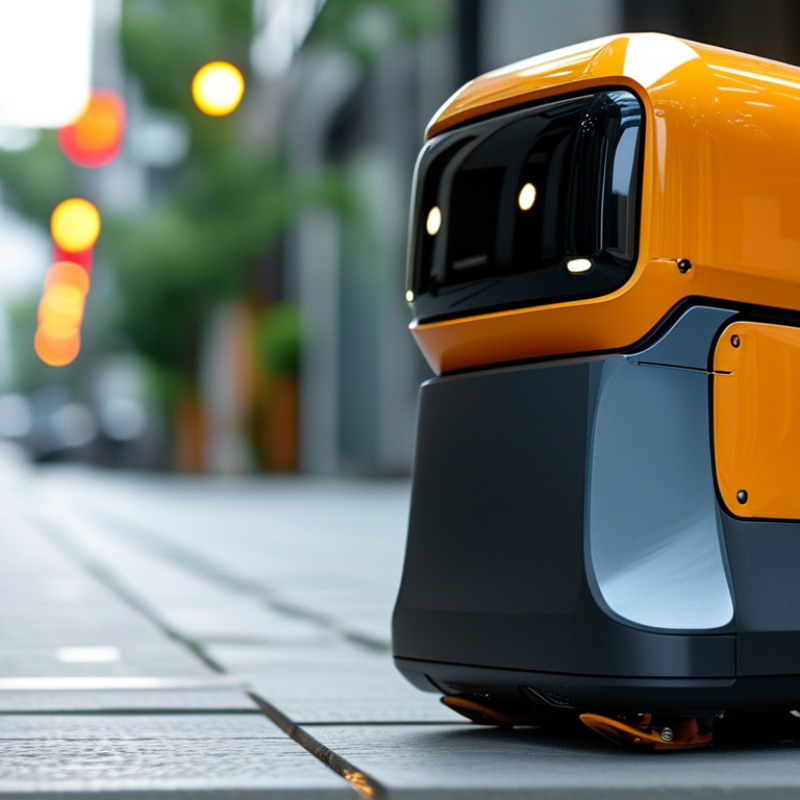
Understanding your business needs is crucial when choosing a package delivery robot. Different sectors, such as retail and logistics, require distinct solutions. According to a report by Gartner, 75% of businesses that have implemented robotic process automation saw a significant increase in efficiency. This aligns with the growing need for speed and precision in deliveries. Businesses must assess their package sizes, frequency of deliveries, and the terrain their robots will navigate.
Moreover, packaging types differ among industries. For example, fragile items need robots equipped to handle delicate deliveries. The need for adaptability is paramount. A survey from Statista indicated that 64% of companies prioritize seamless integration of robots into existing workflows. Companies should evaluate whether the robot can operate in crowded environments or indoors, impacting design choices.
Analyzing the return on investment (ROI) is also vital. Investing in advanced robotics can be costly. However, projections suggest that the market for delivery robots will reach $1.1 billion by 2025. Businesses must weigh initial costs against long-term savings. It is essential to identify areas where robots can reduce labor costs or increase productivity. Evaluate your goals critically. Determine whether you need robots for immediate package delivery or longer-term supply chain solutions.
When selecting a delivery robot for your business, there are key features to consider. The robot's design and ability to navigate various terrains are essential. A large study by the International Delivery Robotics Association found that 72% of successful deployments were in environments where robots could adapt to different surfaces and obstacles. Consider your delivery area’s layout. Can the robot handle curbs or steps?
Battery life is another crucial aspect. Some robots operate for only two to three hours. This limitation can hinder operational efficiency. Businesses need robots that can last through multiple delivery cycles without frequent recharging. According to a report by MarketInsights, robots with a battery life exceeding six hours have shown a 50% improvement in delivery efficiency.
Safety features like obstacle detection and emergency stopping systems are vital. A comprehensive survey indicated that safety concerns were a major barrier for 65% of potential users. Additionally, one should analyze maintenance requirements. Frequent repairs can be costly. It’s important that the technology behind the robot is reliable, reducing the need for constant upkeep. Balancing innovative features with practical reliability is key when making your choice.
When evaluating the cost-effectiveness of delivery robot options, it's essential to consider various factors. The initial investment is just one part of the equation. Maintenance and operational costs can add up over time. You need to analyze how maintenance affects your budget. A robot that saves labor costs might require expensive repairs. This could balance out the initial savings.
Another key aspect is the robot's efficiency. How quickly can it deliver packages? A slower robot might lead to customer dissatisfaction. Tracking its performance metrics can provide insight. Are there frequent disruptions in the delivery process? Understanding these patterns can help identify potential issues.
Don't overlook the technology behind the robots. Advanced features can enhance delivery efficiency but might also raise costs. Weigh the benefits against the expense. Sometimes, investing in a basic model can be more beneficial in the long run. Businesses should assess their specific needs. What suits one industry might not work for another. Reflecting on your unique situation is vital for making the best choice. Investing wisely can lead to greater satisfaction and improved customer service.
When selecting a delivery robot for your business, comparing different brands is essential. Various models offer unique features, catering to different business needs. For example, some robots have advanced navigation systems. These systems enable them to maneuver through crowded spaces effortlessly. Others may excel in battery life, allowing for extended delivery hours.
Consider the type of terrain your robot will need to navigate. Indoor environments require different specifications compared to outdoor ones. For instance, models designed for indoor use might be smaller and more agile. In contrast, outdoor robots may have robust wheels to handle curbs and rough surfaces. Pay attention to weight capacity as well. Some models can carry heavier loads, which might better suit your business requirements.
However, not every robot will perform flawlessly in every scenario. Some may struggle with steep inclines or adverse weather conditions. It's crucial to analyze these shortcomings and reflect on how they impact your operations. User reviews often highlight specific challenges faced in real-life situations. These insights can guide you toward a more informed choice. When choosing, balance innovation with reliability to find a delivery solution that truly meets your business needs.
| Model | Load Capacity (lbs) | Battery Life (hours) | Speed (mph) | Operating Environment | Price Range ($) |
|---|---|---|---|---|---|
| Model A | 20 | 8 | 3 | Indoor/Outdoor | 3000 - 4000 |
| Model B | 25 | 10 | 4 | Indoor | 4000 - 5000 |
| Model C | 15 | 6 | 2.5 | Outdoor | 2500 - 3500 |
| Model D | 30 | 12 | 5 | Indoor/Outdoor | 5000 - 6000 |
When choosing a delivery robot for your business, support and maintenance are crucial factors. These robots require regular monitoring and servicing to ensure smooth operation. Understanding the long-term support options is essential for uninterrupted service. Some companies may offer 24/7 customer service, while others may have limited hours. Evaluate your business needs against the support hours offered.
It's also worth considering the type of maintenance services provided. Not all robots are created equal; some may need more frequent repairs. Investigate preventative maintenance plans. These plans can significantly reduce downtime and repair costs. The reliability of the robot can hinge on how well these plans are executed, which is often overlooked.
Additionally, ask for feedback from current users. Real-world experiences can shed light on the reliability of support services. You may hear mixed reviews. Some businesses may praise quick response times, while others may highlight delays. These insights can help you make informed decisions. Remember, investing in a delivery robot is not just about the initial purchase. Long-term operational success depends on effective support and continual maintenance.
„Thanks to the LUVIR technology, the solder resist process could be switched directly from the previously used mask exposure to direct exposure. As an outstanding digital solution on the market, this technology has been able to demonstrate fast process times and superior quality on our certified conventional ink in production. This allowed us to fully digitize the solder mask process at low cost – without process or ink adjustments. An excellent benefit to our production in Rot am See.“
Ralf Göhringer (Head of Production WE Rot am See)
I would definitely recommend the Limata machine and team for a future company purchase
Michael Greenaway
Compunetics Inc.
“The Limata ldi has been amazing!! Best thing we did was buy this machine”
Richard Brady
GM
Circuitlabs
“Since 2019, we have been running the Limata X1000 LDI system (including LUVIR for solder mask imaging) in daily production as an addition to our current process with film. The machine was capable of properly exposing Taiyo PSR-4000 BN (DI) solder mask types on normal to high-copper boards using a new and unique direct imaging process. The machine operating interface is very user friendly which allowed for a quick technical training curve. The pre-registration processing reduced several seconds of production time at every print. Limata support and service staff is incomparable. They supported our team every step of the way at basically any time of the day or night, with literally, an immediate response time, customizing the software interface to best fit our Operations and needs.
We have exposed more than 8,000 prints since end of October, on various solder mask colors and some resist film panels. Limata, has proven to be very capable and innovative. They are a strong contender in the industry.
We have very much enjoyed this project, and working with the team!
Thank you Limata for the continued support and being a part of our growth.”
Bill Sezate
Vice President, GM
Summit Interconnect
As a replacement to our current contact exposure process with film, the LIMATA X2000 system including LUVIR-Technology was capable of properly exposing non-LDI solder mask types using a direct imaging process. The machine offers cutting edge software with a very intuitive operating interface which allowed for quick technician training curve. The dual drawer system combined with pre-registration processing reduced several seconds of production time at every machine cycle. Limata support and service staff is world class. They added software patches to keep production running at shortest possible response times, customized the software interface to best fit our in-house Operations system, and even wrote a step-by-step machine processing manual. As a result of the project, we have exposed more than 16,000 times on various product types and solder mask brands/colors. Limata, in a very short timeframe as a company, has definitely shown they are truly innovative and will be challenging the industry of direct imaging for the top spot.
Kevin Beattie
Process Engineer
TTM Technologies
Forest Grove Division
