Choosing the right material for your project is crucial. The decision between alloy steel and stainless steel can significantly impact performance and cost. According to a report from the World Steel Association, the utilization of stainless steel has grown by 6% annually. However, alloy steel offers unique benefits that may meet specific needs better.
Alloy steel, known for its strength and toughness, can outperform stainless steel in varying applications. For instance, in automotive manufacturing, alloy steel is often preferred for its high tensile strength. Conversely, stainless steel is resistant to corrosion, making it ideal for environments exposed to moisture. The International Stainless Steel Forum states that stainless steel consumption reached 50 million tons in recent years, reflecting its significance in the market.
While both materials have advantages, reflecting on the specific requirements of your application is essential. Consider factors such as cost, strength, and environmental conditions. The decision isn’t straightforward and requires careful analysis. Understanding these materials' properties will guide you to the most suited choice for your needs.
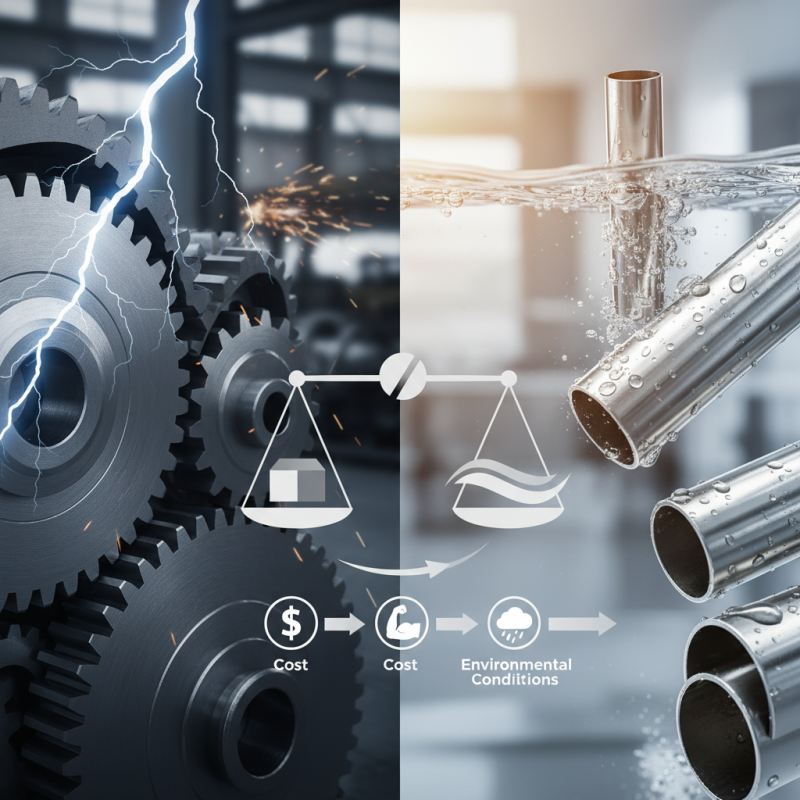
When selecting between alloy steel and stainless steel, understanding their basic properties is crucial. Alloy steel typically contains a mix of elements such as chromium, nickel, or molybdenum, which enhance its strength and hardness. According to industry sources, alloy steels can have yield strengths exceeding 150,000 psi. They are particularly suitable for heavy-duty applications like construction and automotive manufacturing.
In contrast, stainless steel is known for its corrosion resistance. Composed primarily of iron, carbon, and a minimum of 10.5% chromium, it resists oxidation and rust. Studies indicate that stainless steel can retain its luster and performance, even in extreme environments. This makes it ideal for kitchen appliances and medical tools. Notably, over 70% of stainless steel is recycled, highlighting its sustainable aspect.
When comparing these metals, consider your specific needs. Alloy steel may offer better toughness for structural components, while stainless steel excels in maintaining clean surfaces. It's essential to reflect on these factors. Both materials have their trade-offs. Understanding their core properties and potential applications can lead to more informed choices in material selection.
When comparing alloy steel and stainless steel, strength and durability are key factors to consider. Alloy steel typically contains additional elements like nickel and chromium, enhancing its mechanical properties. According to a report by the Steel Institute, alloy steel can withstand higher tensile strength, often exceeding 1000 MPa. This makes it ideal for heavy-duty applications such as construction and automotive components where structural integrity is critical.
On the other hand, stainless steel is renowned for its corrosion resistance. The addition of chromium, which must be at least 10.5%, creates a protective oxide layer. The American Iron and Steel Institute states that certain grades of stainless steel can endure prolonged exposure to harsh environments. However, they are generally less strong than high-performance alloy steels. This trade-off between corrosion resistance and strength can lead to reflections about the specific requirements of projects.
You may face challenges when choosing the right material. It's important to evaluate specific use cases thoroughly. For example, in maritime applications, stainless steel may prove more beneficial despite its lower strength. In contrast, if the material is subject to high loads, alloy steel may be the better option. Engaging in a detailed analysis of your requirements will yield the best outcomes.
| Property | Alloy Steel | Stainless Steel |
|---|---|---|
| Tensile Strength (MPa) | 400 - 1400 | 520 - 800 |
| Corrosion Resistance | Moderate | High |
| Weight | Heavier | Lighter |
| Cost | Lower | Higher |
| Weldability | Good | Variable |
| Applications | Construction, Machinery | Medical Devices, Food Industry |
Choosing the right material for your project is crucial. When it comes to steel, alloy steel and stainless steel offer different advantages. Corrosion resistance is a key factor to consider. Stainless steel provides excellent resistance to rust and corrosion. It contains chromium, which forms a protective oxide layer.
Alloys can be more susceptible to corrosion. However, it has enhanced strength and hardness. This makes it ideal for high-stress applications. If your project is in a humid or wet environment, stainless steel may be the better choice. It maintains its integrity over time, reducing maintenance costs.
Keep in mind that corrosion resistance is not the only aspect to evaluate. The intended application plays a significant role in your decision. Sometimes, a balance between strength and resistance is needed. Assessing these needs carefully will help you make an informed choice. Each project is unique, and so are the materials involved.
When evaluating your budget for alloy steel versus stainless steel, several factors come into play. Alloy steel typically costs less due to its simpler composition. However, the lower price may not always lead to the best long-term value. Consider the application and environment where the material will be used. For example, if corrosion resistance is crucial, stainless steel may save money in maintenance over time.
The initial cost isn't the only thing to consider. Alloy steel is often easier to machine, reducing fabrication costs. Yet, if your project requires high corrosion resistance, stainless steel could be more suitable, despite its higher upfront cost. You might need to re-evaluate your project's specific needs. Weighing the long-term benefits against initial costs can lead to a more informed decision.
Lastly, consult with industry experts to assess your options thoroughly. There are instances where the cheapest material choice led to costly failures. Reliable information and professional advice can make a difference. A deeper understanding can guide you in balancing initial expenditure with future requirements.
In various industries, the choice between alloy steel and stainless steel significantly affects performance and durability. Alloy steel is widely used in construction and automotive applications due to its high strength and toughness. It is ideal for building structures, pipelines, and vehicle components that withstand heavy loads. However, its susceptibility to corrosion can be a drawback in environments with moisture and aggressive chemicals.
Stainless steel offers excellent corrosion resistance and is often preferred in food processing and medical equipment. Its smooth surface prevents bacterial growth, making it suitable for these critical applications. Nevertheless, it can be more expensive than alloy steel, leading to budget considerations in project planning. Certain stainless steel grades may not endure heavy mechanical stress as effectively as alloy steel does.
Selecting the right material necessitates a thorough analysis of specific needs. Consider the required strength, weight, and environmental factors. Each choice has unique challenges. Both materials have distinct advantages and shortcomings. Having expertise in these aspects can guide better material selection for your projects. It is essential to reflect on your long-term needs and potential trade-offs.
„Thanks to the LUVIR technology, the solder resist process could be switched directly from the previously used mask exposure to direct exposure. As an outstanding digital solution on the market, this technology has been able to demonstrate fast process times and superior quality on our certified conventional ink in production. This allowed us to fully digitize the solder mask process at low cost – without process or ink adjustments. An excellent benefit to our production in Rot am See.“
Ralf Göhringer (Head of Production WE Rot am See)
I would definitely recommend the Limata machine and team for a future company purchase
Michael Greenaway
Compunetics Inc.
“The Limata ldi has been amazing!! Best thing we did was buy this machine”
Richard Brady
GM
Circuitlabs
“Since 2019, we have been running the Limata X1000 LDI system (including LUVIR for solder mask imaging) in daily production as an addition to our current process with film. The machine was capable of properly exposing Taiyo PSR-4000 BN (DI) solder mask types on normal to high-copper boards using a new and unique direct imaging process. The machine operating interface is very user friendly which allowed for a quick technical training curve. The pre-registration processing reduced several seconds of production time at every print. Limata support and service staff is incomparable. They supported our team every step of the way at basically any time of the day or night, with literally, an immediate response time, customizing the software interface to best fit our Operations and needs.
We have exposed more than 8,000 prints since end of October, on various solder mask colors and some resist film panels. Limata, has proven to be very capable and innovative. They are a strong contender in the industry.
We have very much enjoyed this project, and working with the team!
Thank you Limata for the continued support and being a part of our growth.”
Bill Sezate
Vice President, GM
Summit Interconnect
As a replacement to our current contact exposure process with film, the LIMATA X2000 system including LUVIR-Technology was capable of properly exposing non-LDI solder mask types using a direct imaging process. The machine offers cutting edge software with a very intuitive operating interface which allowed for quick technician training curve. The dual drawer system combined with pre-registration processing reduced several seconds of production time at every machine cycle. Limata support and service staff is world class. They added software patches to keep production running at shortest possible response times, customized the software interface to best fit our in-house Operations system, and even wrote a step-by-step machine processing manual. As a result of the project, we have exposed more than 16,000 times on various product types and solder mask brands/colors. Limata, in a very short timeframe as a company, has definitely shown they are truly innovative and will be challenging the industry of direct imaging for the top spot.
Kevin Beattie
Process Engineer
TTM Technologies
Forest Grove Division
