In today's fast-paced business environment, the adoption of an Interactive Humanoid Robot is becoming increasingly popular. These robots are not just machines; they are designed to interact with customers and employees in a human-like manner. This interaction enhances customer experience and improves engagement. Businesses are realizing the importance of a personal touch, even in automation.
Investing in an Interactive Humanoid Robot can set your brand apart. These robots can greet customers, answer questions, and provide information in real-time. They create a unique atmosphere that traditional methods struggle to achieve. However, the integration of such technology requires careful consideration. It's crucial to ensure that the robot aligns with your brand values and meets the needs of your target audience.
Moreover, while the benefits are clear, challenges do exist. There might be hesitations related to maintenance or the effectiveness of the interaction. Employees may have mixed feelings about working alongside a robot. Therefore, it is vital to address these concerns thoughtfully. Balancing the advantages and limitations will lead to a more effective implementation of Interactive Humanoid Robots in your business.
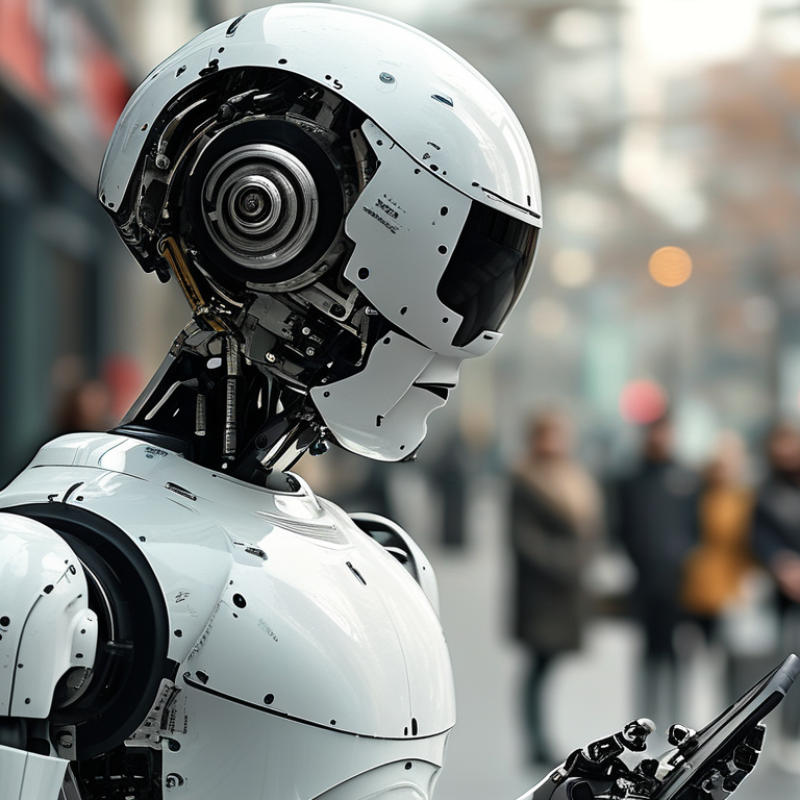
Interactive humanoid robots are transforming how businesses operate. They offer numerous benefits that can enhance efficiency and improve customer engagement. These robots can serve various roles, from receptionists to sales assistants. Their ability to interact with customers in a human-like manner creates a unique experience that can enhance brand loyalty.
One significant advantage of using these robots is their capability to provide consistent service. Unlike humans, they do not suffer from fatigue or mood swings. A robot can greet every customer with the same enthusiasm and politeness, which ensures a pleasant and uniform experience for all. However, it's important to remember that not every customer may respond positively to robotic interaction. Some people prefer traditional human service, which can lead to mixed reactions.
Additionally, interactive robots can gather data on customer preferences and behaviors. This information can help businesses tailor their services more effectively. But relying solely on robots for this task may overlook the invaluable insights gained from human interactions. Understanding the balance between automation and personal touch is crucial. As businesses explore this technology, they must continually assess its effectiveness and adapt to their customers' needs.
The rise of interactive humanoid robots is reshaping customer engagement. These robots can simulate human interaction, providing personalized experiences that captivate audiences. They can greet customers, answer queries, or even assist with product demonstrations. This creates a unique atmosphere that blurs the lines between technology and personal touch.
Incorporating humanoid robots into your business can boost brand perception. They offer a fresh way to connect with customers, especially in environments like retail and hospitality. Imagine a robot warmly welcoming guests or guiding them through a complex product lineup. It enhances both service and user experience, making interactions memorable.
Tips for implementation include: start with a clear purpose. Understand what tasks your robot will handle. Train your staff to work alongside these machines effectively. Additionally, monitor customer feedback to refine the robot's role. A continuous improvement mindset is vital; don’t shy away from adjustments. Embrace the learning curve and adapt as you go.
Interactive humanoid robots are transforming the business landscape. A recent report from the International Federation of Robotics shows that businesses adopting robotic technologies have seen a productivity increase of 30% on average. These robots streamline workflow effectively, handling repetitive tasks with precision. As a result, human workers can focus on more complex challenges.
However, integrating robotics is not without its challenges. The initial investment can be significant, and training staff to work alongside robots is essential. According to the World Economic Forum, nearly 85 million jobs may transition due to automation by 2025. It’s vital for companies to consider employee adaptation. Balancing technology and human interaction is crucial for successful implementation.
Moreover, businesses must evaluate task suitability. Not all workflows benefit from robotics. Certain processes require human intuition and creativity. A study by McKinsey revealed that about 60% of jobs could be partially automated. This data highlights the importance of strategic planning. While robots can enhance efficiency, they should complement human abilities, not replace them. Therefore, thoughtful integration of humanoid robots could lead to significant improvements in operational efficiency.
| Dimension | Description | Impact on Business |
|---|---|---|
| Cost Reduction | Decrease operational costs through automation | 20% reduction in costs |
| Employee Productivity | Free up human resources for higher-value tasks | Increase productivity by 30% |
| Customer Engagement | Humanoid robots enhance customer interaction | Improved customer satisfaction ratings |
| Data Analytics | Collection of customer data for better insights | Enhanced decision-making capabilities |
| Safety Compliance | Reduction in human error and safety issues | Decreased incidents by 40% |
In today's business landscape, interactive humanoid robots offer both innovative solutions and unique challenges. A cost-benefit analysis reveals that investing in these robots can enhance customer interactions and streamline operations. For example, businesses that deploy humanoid robots for customer service often find that they can reduce staffing costs. However, it is essential to consider initial investment costs, maintenance, and the need for regular updates.
Companies must weigh the financial implications carefully. While the purchase of a humanoid robot may seem high, the potential return on investment from increased efficiency could justify the expense. Additionally, organizations should evaluate the training required for staff to work alongside these robots. This integration can be a headache but can lead to smoother operations down the line.
Tip: Focus on the specific tasks that humanoid robots can perform well. They excel at repetitive tasks and data collection. This can free up human staff for more complex responsibilities.
Tip: Remember that not all businesses are suited for humanoid robots. Analyze your business model before diving into implementation. It's crucial to ensure that the technology aligns with your operational needs and customer expectations.
The evolution of humanoid robots in the business sector is remarkable. Businesses are increasingly adopting these interactive machines. They enhance customer engagement and streamline operations. As technology advances, robots are becoming more capable of understanding human emotions. They can read facial expressions and respond accordingly, creating a more personalized experience. This adaptability could change how companies interact with customers.
Future trends indicate that these robots will be equipped with advanced AI. This capability may allow for improved decision-making in various business functions. For instance, in retail, humanoid robots could manage inventory by predicting demand patterns. Such innovations could optimize supply chains.
However, implementing these technologies is not without challenges. Training staff to work alongside robots can require significant time and resources.
Many companies may struggle with integrating robots into their existing workflows. There are concerns regarding initial costs and return on investment. It’s important to assess whether investing in humanoid robots aligns with a company’s goals. Balancing innovation with practical considerations is key to leveraging the potential of humanoid robotics.
„Thanks to the LUVIR technology, the solder resist process could be switched directly from the previously used mask exposure to direct exposure. As an outstanding digital solution on the market, this technology has been able to demonstrate fast process times and superior quality on our certified conventional ink in production. This allowed us to fully digitize the solder mask process at low cost – without process or ink adjustments. An excellent benefit to our production in Rot am See.“
Ralf Göhringer (Head of Production WE Rot am See)
I would definitely recommend the Limata machine and team for a future company purchase
Michael Greenaway
Compunetics Inc.
“The Limata ldi has been amazing!! Best thing we did was buy this machine”
Richard Brady
GM
Circuitlabs
“Since 2019, we have been running the Limata X1000 LDI system (including LUVIR for solder mask imaging) in daily production as an addition to our current process with film. The machine was capable of properly exposing Taiyo PSR-4000 BN (DI) solder mask types on normal to high-copper boards using a new and unique direct imaging process. The machine operating interface is very user friendly which allowed for a quick technical training curve. The pre-registration processing reduced several seconds of production time at every print. Limata support and service staff is incomparable. They supported our team every step of the way at basically any time of the day or night, with literally, an immediate response time, customizing the software interface to best fit our Operations and needs.
We have exposed more than 8,000 prints since end of October, on various solder mask colors and some resist film panels. Limata, has proven to be very capable and innovative. They are a strong contender in the industry.
We have very much enjoyed this project, and working with the team!
Thank you Limata for the continued support and being a part of our growth.”
Bill Sezate
Vice President, GM
Summit Interconnect
As a replacement to our current contact exposure process with film, the LIMATA X2000 system including LUVIR-Technology was capable of properly exposing non-LDI solder mask types using a direct imaging process. The machine offers cutting edge software with a very intuitive operating interface which allowed for quick technician training curve. The dual drawer system combined with pre-registration processing reduced several seconds of production time at every machine cycle. Limata support and service staff is world class. They added software patches to keep production running at shortest possible response times, customized the software interface to best fit our in-house Operations system, and even wrote a step-by-step machine processing manual. As a result of the project, we have exposed more than 16,000 times on various product types and solder mask brands/colors. Limata, in a very short timeframe as a company, has definitely shown they are truly innovative and will be challenging the industry of direct imaging for the top spot.
Kevin Beattie
Process Engineer
TTM Technologies
Forest Grove Division
