Manufacturers today face the challenge of increasing efficiency and reducing costs while maintaining product quality. Machine Coating emerges as a leading solution, helping businesses meet these goals. According to a recent industry report by MarketsandMarkets, the global machine coating market is expected to grow significantly, with a projected CAGR of 6.1% from 2021 to 2026. This growth reflects an increasing reliance on advanced coating technologies.
Machine Coating offers numerous benefits, including enhanced durability and superior performance. This technology can extend the lifespan of parts, reducing replacement costs. Additionally, studies show that properly coated surfaces can improve efficiency by up to 20%. However, some manufacturers may overlook the importance of selecting adequate coatings for specific applications. This oversight can lead to suboptimal results and increased costs over time.
As industries evolve, the demand for innovative solutions grows. Machine Coating stands out as a key player in this transformation. Nevertheless, it is essential for manufacturers to carefully evaluate their needs and the available technologies. Investing time to understand machine coating can result in significant long-term advantages, ensuring products meet ever-changing market demands.
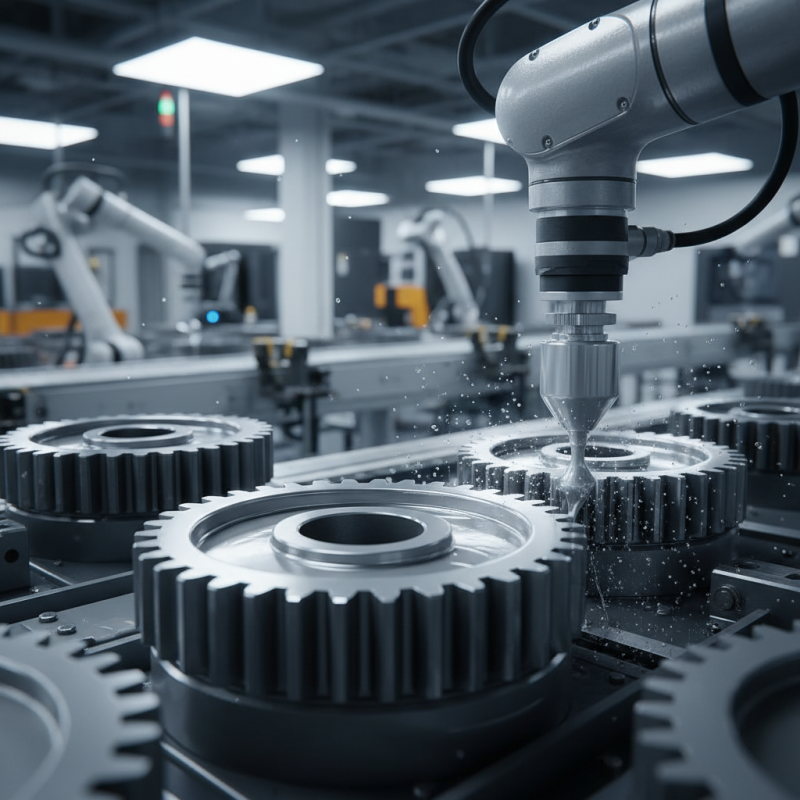
Machine coating has emerged as a vital process in modern manufacturing. It involves applying a thin protective layer to various components. This technique not only enhances durability but also improves overall performance. For instance, studies indicate that machine coating can increase the lifespan of machinery by 30% or more. This improvement leads to decreased downtime and reduced maintenance costs.
The financial benefits are notable. A report by the Coating Industry Association highlighted that manufacturers can save up to 15% on operational costs through effective machine coating applications. These coatings can resist corrosion, abrasion, and extreme temperatures. Additionally, they can be tailored to specific environments, ensuring maximum efficiency. Some manufacturers report a 20% increase in productivity after switching to machine-coated components.
However, the adoption of machine coating is not without its challenges. The initial investment can be significant, and not all coatings are compatible with every material. Moreover, there is an ongoing need to monitor the application process to avoid inconsistencies. As beneficial as machine coating is, manufacturers must carefully evaluate their specific requirements. Proper analysis ensures that the chosen coating maximizes benefits while minimizing risks.
Machine coating offers several advantages for manufacturing processes. One significant benefit is the enhanced durability of products. Machine-coated surfaces are resistant to wear, corrosion, and chemicals. This resistance extends the lifespan of components, leading to lower maintenance costs. Manufacturers appreciate these long-term savings, which can significantly impact their profitability.
Another advantage is improved aesthetics. A high-quality machine coating provides a uniform and attractive finish. This appeal can influence customer choices, making products stand out in a competitive market. However, not all coatings provide the same quality. It's essential to choose the right application method and material for desired results.
Despite its benefits, challenges do exist. Application can be complex, requiring skilled operators and proper equipment. Quality assurance checks are vital to avoid defects. Manufacturers must remain vigilant, ensuring coatings meet specifications. Ultimately, understanding these nuances can lead to more effective use of machine coatings in production.
When comparing machine coating to traditional methods, the differences are striking. Machine coating offers precision that manual methods often lack. The process utilizes advanced technology, ensuring uniform thickness across surfaces. This precision reduces material waste and enhances durability.
Traditional coating methods can lead to inconsistencies. Variations in application techniques result in uneven coatings. This inconsistency can affect the product's performance over time. Machine coating minimizes these risks, creating a more reliable finish. However, it requires an initial investment in equipment and skilled personnel.
Another notable aspect is efficiency. Machine coating can handle larger volumes, making it suitable for high-demand projects. Yet, some may question whether it can replicate the craftsmanship of traditional methods. Balancing technology with human expertise can be challenging but worthwhile. Understanding these nuances helps manufacturers make informed choices for their specific needs.
Machine coating has found its place in various industries, showcasing its versatility and benefits. In automotive manufacturing, machine coating enhances durability. It protects components from wear and corrosion. A well-coated part lasts longer and reduces maintenance needs. Think of gears and engines; they require reliable coatings to ensure optimal performance.
In the aerospace sector, machine coating plays a crucial role. It provides protection against extreme temperatures and harsh environments. Coated components in turbines and airframes demonstrate improved strength and longevity. However, it’s essential to ensure proper application techniques. A poorly applied coating can lead to failures, costing time and money.
In the medical field, machine coating is vital too. Instruments require sterile, non-reactive surfaces. Coatings that meet these criteria ensure patient safety. Yet, the complexities of this process can present challenges. Each industry must tailor its approach, recognizing that one size does not fit all.
When choosing machine coating solutions, several factors come into play. The type of coating material is crucial. Different materials offer various benefits like heat resistance or corrosion protection. Consider the environment where the coated items will be used. Extreme temperatures or chemical exposure will impact the coating's performance. A thorough assessment of the application is necessary.
Another vital aspect is the coating method. Processes like spraying, dipping, or electroplating each have unique advantages. The choice often hinges on the complexity of the components. Additionally, thorough surface preparation cannot be overlooked. Proper cleaning and treatment significantly influence the adhesion and durability of the coating. Inadequate preparation can lead to peeling and failures.
Cost is also a central issue. While some advanced coatings offer long-term savings through durability, initial investment might be high. Balance upfront costs with potential maintenance savings. Ultimately, each decision requires careful thought and may need to be revisited as new technologies emerge in the industry.
„Thanks to the LUVIR technology, the solder resist process could be switched directly from the previously used mask exposure to direct exposure. As an outstanding digital solution on the market, this technology has been able to demonstrate fast process times and superior quality on our certified conventional ink in production. This allowed us to fully digitize the solder mask process at low cost – without process or ink adjustments. An excellent benefit to our production in Rot am See.“
Ralf Göhringer (Head of Production WE Rot am See)
I would definitely recommend the Limata machine and team for a future company purchase
Michael Greenaway
Compunetics Inc.
“The Limata ldi has been amazing!! Best thing we did was buy this machine”
Richard Brady
GM
Circuitlabs
“Since 2019, we have been running the Limata X1000 LDI system (including LUVIR for solder mask imaging) in daily production as an addition to our current process with film. The machine was capable of properly exposing Taiyo PSR-4000 BN (DI) solder mask types on normal to high-copper boards using a new and unique direct imaging process. The machine operating interface is very user friendly which allowed for a quick technical training curve. The pre-registration processing reduced several seconds of production time at every print. Limata support and service staff is incomparable. They supported our team every step of the way at basically any time of the day or night, with literally, an immediate response time, customizing the software interface to best fit our Operations and needs.
We have exposed more than 8,000 prints since end of October, on various solder mask colors and some resist film panels. Limata, has proven to be very capable and innovative. They are a strong contender in the industry.
We have very much enjoyed this project, and working with the team!
Thank you Limata for the continued support and being a part of our growth.”
Bill Sezate
Vice President, GM
Summit Interconnect
As a replacement to our current contact exposure process with film, the LIMATA X2000 system including LUVIR-Technology was capable of properly exposing non-LDI solder mask types using a direct imaging process. The machine offers cutting edge software with a very intuitive operating interface which allowed for quick technician training curve. The dual drawer system combined with pre-registration processing reduced several seconds of production time at every machine cycle. Limata support and service staff is world class. They added software patches to keep production running at shortest possible response times, customized the software interface to best fit our in-house Operations system, and even wrote a step-by-step machine processing manual. As a result of the project, we have exposed more than 16,000 times on various product types and solder mask brands/colors. Limata, in a very short timeframe as a company, has definitely shown they are truly innovative and will be challenging the industry of direct imaging for the top spot.
Kevin Beattie
Process Engineer
TTM Technologies
Forest Grove Division
