Choosing the right AC/DC Power Supply can be daunting. According to John Smith, a renowned expert in the power supply industry, "Understanding your specific needs is crucial when selecting an AC/DC power supply." His insight highlights the importance of thorough consideration.
AC/DC power supplies come in various sizes, configurations, and specifications. Each type serves different applications, from simple electronics to complex industrial machinery. A mismatch can lead to equipment failure, inefficiency, or safety risks. Buyers often overlook essential factors, such as voltage requirements and load capacity, which may lead to costly consequences.
Investing time in research is vital. It helps identify reliable brands and specifications. While many options promise high performance, not all deliver. Users should evaluate effectiveness and durability as well. Experience shows that flexibility in choosing AC/DC power supplies can pay off. Reflect on what you need, and ensure your selection aligns with those goals.
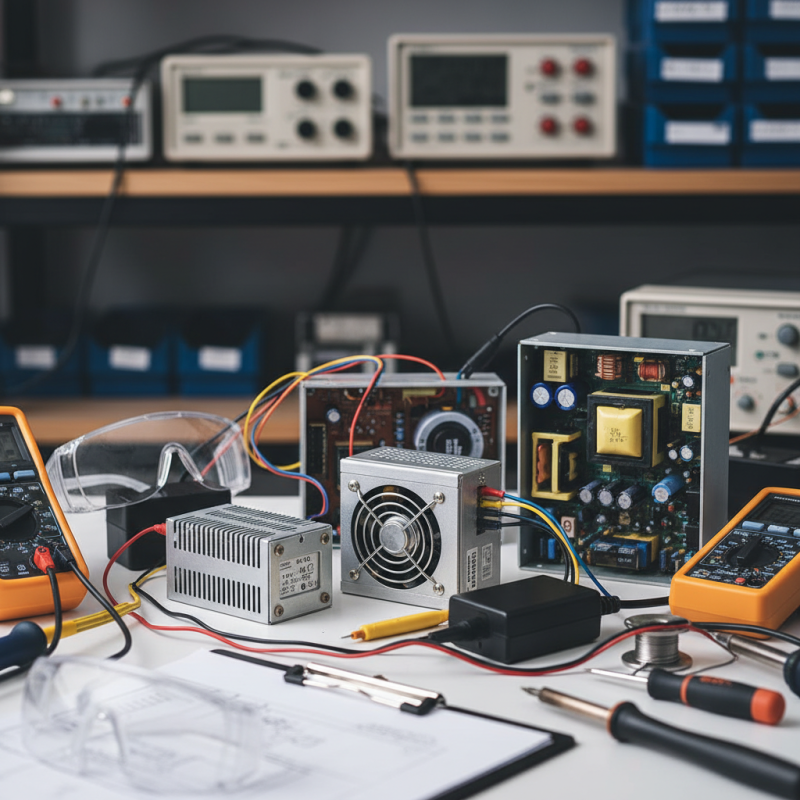
Evaluating voltage and current requirements is crucial when choosing an AC DC power supply. Different devices need specific voltage levels to operate correctly. For example, many electronic circuits work best at 5V or 12V. To avoid damage, ensure the power supply matches these values. A report from the International Electrotechnical Commission notes that improper voltage can cause permanent damage to electronics.
When considering current requirements, look at the device's power rating. Power (in watts) equals voltage times current. If your device requires 10 watts at 5 volts, it needs 2 amps. Research shows that inadequate current can lead to device malfunction. Using a power supply with a higher current rating is often safer, as devices will only draw what they need.
**Tip:** Check device specifications thoroughly. Mismatched specifications may lead to performance issues.
**Tip:** Use multimeters to measure actual voltage and current drawn by your devices when testing.
Be cautious with underestimating power needs. It might seem practical to use a lower-rated power supply. A recent industry survey indicates that this can lead to overheating and device failures. It's better to err on the side of caution when selecting a power supply to avoid future problems.
When selecting an AC DC power supply, knowing the different types is crucial. Linear power supplies provide stable and low-noise voltage. They are suitable for sensitive electronics. However, they can be bulky and inefficient. Switching power supplies, on the other hand, are smaller and more efficient. They handle varying power demands well but can introduce noise into the system.
Each type of power supply has unique features and applications. For example, if you're powering LED lights, a dimmable driver might be necessary. It allows you to adjust brightness levels. In contrast, industrial equipment may require rugged, modular power supplies. These types often support higher wattages and provide redundancy for reliability.
Choosing the right power supply is not always straightforward. Miscalculating wattage needs can lead to equipment failure. Additionally, understanding input voltage and frequency is vital. Many users overlook this and end up with incompatible supplies. Reflection on your specific application and future needs is essential for making the best choice.
| Power Supply Type | Input Voltage Range (V) | Output Voltage (V) | Output Current (A) | Efficiency (%) | Key Features |
|---|---|---|---|---|---|
| Linear Power Supply | 100-240 | 5, 12, 24 | 0.1 - 10 | 80-90 | Low noise, stable output |
| Switching Power Supply | 90-264 | 5, 12, 15, 24, 48 | 1 - 30 | 85-95 | Compact size, lightweight |
| Programmable Power Supply | 100-240 | 0-30 | 0.1 - 5 | 90-94 | Adjustable output, remote control |
| Battery Charger | 100-240 | 12, 24, 48 | 1 - 20 | 85-90 | Smart charging, multiple safety features |
| Uninterruptible Power Supply (UPS) | 100-240 | 230 | 0.5 - 10 | 90-95 | Backup power, surge protection |
When selecting an AC DC power supply, understanding efficiency rating standards is crucial. These standards help gauge how well a power supply converts electricity. The most recognized ones include Energy Star and 80 PLUS certifications. They indicate not just energy savings, but also reliability. An efficient power supply manages heat better, prolonging overall performance.
Efficiency ratings reflect overall design. A power supply with a Bronze rating is decent but can consume more energy compared to Gold or Platinum-rated models under the same load. This could result in higher electricity bills. Pay attention to load requirements for the devices you intend to power. It may seem easier to just choose the most efficient option, but this doesn't always translate into the best value.
Consider your specific needs when choosing a power supply. High efficiency can be beneficial in long-term scenarios, but may not always be necessary for short-term or low-load applications. Sometimes, it’s tempting to compromise on efficiency for lower upfront costs. However, reevaluating your energy consumption goals can reveal the need for a more efficient, possibly more costly, option. Efficiency isn’t just a number; it’s about sustainable and reliable power usage.
When selecting an AC DC power supply, form factor is a key factor. The physical size and shape must fit your application. Compact devices may require smaller, more integrated designs. On the other hand, larger systems might accommodate bulkier power supplies. Evaluate the available space in your project. It’s crucial to measure dimensions accurately.
Cooling solutions are equally important. Overheating can lead to failure and inefficiency. Consider how the power supply will be used. For high-load applications, active cooling may be necessary. Fans or heatsinks can prevent thermal issues. Passive cooling might suffice for lighter loads. Understand the environment your device operates in. Dusty or humid locations can require additional protection.
Reflect on your needs. Sometimes, a more powerful supply is tempting. However, it could lead to wasted energy and space. A balanced approach is essential. Don’t overlook the importance of efficiency ratings. They impact not just performance, but long-term operational costs. Therefore, take your time. Make informed decisions based on real requirements.
When selecting an AC DC power supply, ensuring compliance with safety and regulatory standards is paramount. Organizations like the International Electrotechnical Commission (IEC) and Underwriters Laboratories (UL) outline crucial safety measures. For instance, the IEC 60950-1 standard addresses the safety of information technology equipment. Non-compliance can lead to dangerous faults and significant risks.
Evaluating certifications is essential. According to industry reports, over 30% of power supply failures are linked to inadequate adherence to these standards. It's also vital to consider environmental factors in testing procedures. For example, the RoHS directive limits hazardous substances in electrical components. A non-compliant supply might not only endanger users but also face regulatory penalties.
While many manufacturers claim to meet these standards, a lack of transparency can create confusion. Some reports indicate that as much as 20% of products do not adhere to the specified criteria. Buyers should conduct thorough research before purchase. Always verify the certifications and quality ratings documented by credible sources. This diligence protects both the end-user and ensures the longevity of electronic devices.
„Thanks to the LUVIR technology, the solder resist process could be switched directly from the previously used mask exposure to direct exposure. As an outstanding digital solution on the market, this technology has been able to demonstrate fast process times and superior quality on our certified conventional ink in production. This allowed us to fully digitize the solder mask process at low cost – without process or ink adjustments. An excellent benefit to our production in Rot am See.“
Ralf Göhringer (Head of Production WE Rot am See)
I would definitely recommend the Limata machine and team for a future company purchase
Michael Greenaway
Compunetics Inc.
“The Limata ldi has been amazing!! Best thing we did was buy this machine”
Richard Brady
GM
Circuitlabs
“Since 2019, we have been running the Limata X1000 LDI system (including LUVIR for solder mask imaging) in daily production as an addition to our current process with film. The machine was capable of properly exposing Taiyo PSR-4000 BN (DI) solder mask types on normal to high-copper boards using a new and unique direct imaging process. The machine operating interface is very user friendly which allowed for a quick technical training curve. The pre-registration processing reduced several seconds of production time at every print. Limata support and service staff is incomparable. They supported our team every step of the way at basically any time of the day or night, with literally, an immediate response time, customizing the software interface to best fit our Operations and needs.
We have exposed more than 8,000 prints since end of October, on various solder mask colors and some resist film panels. Limata, has proven to be very capable and innovative. They are a strong contender in the industry.
We have very much enjoyed this project, and working with the team!
Thank you Limata for the continued support and being a part of our growth.”
Bill Sezate
Vice President, GM
Summit Interconnect
As a replacement to our current contact exposure process with film, the LIMATA X2000 system including LUVIR-Technology was capable of properly exposing non-LDI solder mask types using a direct imaging process. The machine offers cutting edge software with a very intuitive operating interface which allowed for quick technician training curve. The dual drawer system combined with pre-registration processing reduced several seconds of production time at every machine cycle. Limata support and service staff is world class. They added software patches to keep production running at shortest possible response times, customized the software interface to best fit our in-house Operations system, and even wrote a step-by-step machine processing manual. As a result of the project, we have exposed more than 16,000 times on various product types and solder mask brands/colors. Limata, in a very short timeframe as a company, has definitely shown they are truly innovative and will be challenging the industry of direct imaging for the top spot.
Kevin Beattie
Process Engineer
TTM Technologies
Forest Grove Division
