Choosing the right LPG Storage Tank is crucial for safety and efficiency. Many factors influence this decision. Understanding your specific needs plays a significant role.
LPG tanks come in various shapes and sizes. You might feel overwhelmed by the options available. Think about the space you have and the amount of gas you require. Consider whether you need an above-ground or underground tank. Each has its advantages and disadvantages. This choice affects installation and accessibility.
It’s important to recognize potential challenges. For instance, local regulations can complicate things. You might not find the perfect tank that meets all your needs. Reflect on your priorities carefully. Making the wrong choice could lead to safety risks or financial loss. Take your time and evaluate all aspects before making a decision.
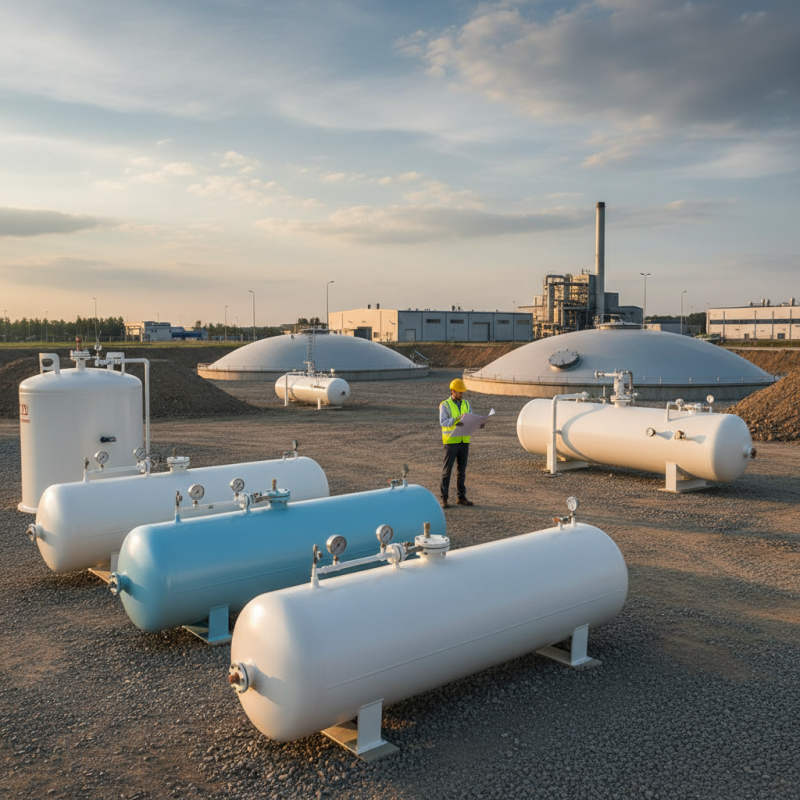
When looking for the right LPG Storage Tank, understanding the types and their applications is crucial. LPG tanks come in various sizes and styles. Some are above-ground, while others are underground. Above-ground tanks are easier to access. They are simpler to install, but they may take up valuable property space. Underground tanks, on the other hand, offer more protection from weather and theft. However, installation costs can be higher and more complicated.
Choosing the right tank also depends on your usage. Small businesses may require smaller tanks. Larger industrial operations often need bigger capacity. The tank's location matters too. For residential use, the tank should be away from ignition sources. It's vital to consider local regulations. Some areas have strict rules regarding tank placement and maintenance. Not following these can lead to penalties.
Lastly, think about maintenance. Some tanks require regular inspections, while others are more low-maintenance. Neglecting maintenance can lead to leaks or safety issues. Ultimately, selecting the right LPG storage tank requires careful thought. Reflect on your specific needs and always prioritize safety.
When evaluating storage capacity for LPG, it's crucial to determine your specific needs. According to recent industry reports, a typical household may require between 200 to 1,000 liters of LPG annually. Factors such as heating, cooking, and hot water use will affect this number. Larger businesses, such as restaurants or industrial facilities, often need much more—up to 5,000 liters or greater. Knowing your consumption patterns is essential, as overestimating capacity can lead to wasted resources.
Monitoring consumption can be tricky. Many users underestimate their needs. A missed calculation could result in disruptions. Regular audits of LPG usage can help with this. Tracking the frequency of refills can also provide insight. Some studies suggest that 30% of users do not accurately assess their needs. This often leads to storage capacities that are either insufficient or excessive.
When selecting a tank, consider both current and future demands. Fluctuations in usage can occur, and it’s essential to be prepared. Having a tank that can accommodate these changes will save time and money. Moreover, an overly large tank can incur higher initial costs and maintenance issues. Opting for the right size is a balance. It requires both introspection and data analysis to ensure optimal selection.
When selecting an LPG storage tank, the material you choose plays a crucial role in durability. Tanks are made from various materials, such as steel or plastic. Steel tanks are often more robust, but they can rust. On the other hand, plastic tanks resist corrosion but may not be as sturdy. Think about where the tank will be placed. Is there heavy traffic nearby? Will it be exposed to extreme weather? These factors will help determine which material is best suited for your needs.
Durability is not just about material. It also involves the tank's construction quality. Ensure it meets safety standards. A poorly constructed tank may fail, leading to leaks or worse. Regular inspections are essential. A tank might look good from the outside but could harbor unseen issues. Check for signs of wear and tear. You may overlook minor dings or scratches, but they can compromise the tank's integrity. Making the right choice here requires careful thought and a bit of research.
When selecting an LPG storage tank, safety features are paramount. A good tank should have robust construction to withstand environmental challenges. Look for tanks made from durable materials that can prevent leaks or ruptures. Double-walled designs provide extra protection by containing any spillage. This feature is crucial in reducing risks associated with LPG storage.
In addition to construction, compliance with industry standards is vital. Ensure the tank meets local regulations regarding safety and environmental protection. Many regions require certifications that demonstrate adherence to strict safety protocols. Ignoring these can lead to tragic accidents and heavy fines. Regular inspection and maintenance should be a routine part of your safety plan. These practices can catch potential issues early, but many overlook this necessity.
Consider how you will store your LPG tank, too. Factors like location and accessibility impact both safety and compliance. Avoid placing tanks near potential hazards, like flammable materials. Easy access for maintenance is essential but often disregarded. Reflecting on these aspects can enhance safety and ensure compliance. An LPG tank is an asset, but only if it's handled properly.
When selecting an LPG storage tank, several factors influence installation and maintenance. The tank size is crucial. A small tank might not meet your needs, while a large tank can be costly and take up too much space. Assess your consumption levels before finalizing the size. Location matters too. Tanks should be installed away from structures and populated areas to ensure safety.
Maintenance is another critical aspect. Regular inspections are necessary to prevent leaks and corrosion. Sometimes, tank maintenance can be neglected. This negligence can lead to significant problems down the road. Familiarizing yourself with maintenance schedules helps avoid costly repairs. Ensure that safety valves and gauges are functioning correctly. Regular checks can save you headaches later.
Installation requirements also vary depending on local regulations. Some regions have strict guidelines regarding tank placement. Ignoring these could lead to fines or installation delays. It’s vital to consult local authorities or experts before proceeding. Finding the right balance between cost, safety, and compliance can be challenging. Taking time to reflect on these factors will lead to a more informed decision.
„Thanks to the LUVIR technology, the solder resist process could be switched directly from the previously used mask exposure to direct exposure. As an outstanding digital solution on the market, this technology has been able to demonstrate fast process times and superior quality on our certified conventional ink in production. This allowed us to fully digitize the solder mask process at low cost – without process or ink adjustments. An excellent benefit to our production in Rot am See.“
Ralf Göhringer (Head of Production WE Rot am See)
I would definitely recommend the Limata machine and team for a future company purchase
Michael Greenaway
Compunetics Inc.
“The Limata ldi has been amazing!! Best thing we did was buy this machine”
Richard Brady
GM
Circuitlabs
“Since 2019, we have been running the Limata X1000 LDI system (including LUVIR for solder mask imaging) in daily production as an addition to our current process with film. The machine was capable of properly exposing Taiyo PSR-4000 BN (DI) solder mask types on normal to high-copper boards using a new and unique direct imaging process. The machine operating interface is very user friendly which allowed for a quick technical training curve. The pre-registration processing reduced several seconds of production time at every print. Limata support and service staff is incomparable. They supported our team every step of the way at basically any time of the day or night, with literally, an immediate response time, customizing the software interface to best fit our Operations and needs.
We have exposed more than 8,000 prints since end of October, on various solder mask colors and some resist film panels. Limata, has proven to be very capable and innovative. They are a strong contender in the industry.
We have very much enjoyed this project, and working with the team!
Thank you Limata for the continued support and being a part of our growth.”
Bill Sezate
Vice President, GM
Summit Interconnect
As a replacement to our current contact exposure process with film, the LIMATA X2000 system including LUVIR-Technology was capable of properly exposing non-LDI solder mask types using a direct imaging process. The machine offers cutting edge software with a very intuitive operating interface which allowed for quick technician training curve. The dual drawer system combined with pre-registration processing reduced several seconds of production time at every machine cycle. Limata support and service staff is world class. They added software patches to keep production running at shortest possible response times, customized the software interface to best fit our in-house Operations system, and even wrote a step-by-step machine processing manual. As a result of the project, we have exposed more than 16,000 times on various product types and solder mask brands/colors. Limata, in a very short timeframe as a company, has definitely shown they are truly innovative and will be challenging the industry of direct imaging for the top spot.
Kevin Beattie
Process Engineer
TTM Technologies
Forest Grove Division
