In the ever-evolving agricultural sector, choosing a Vegetable and Fruit Optical Sorter can transform your business. Renowned expert Dr. Jane Thompson states, "The efficiency of technology is redefining how we approach sorting." This highlights the importance of modern solutions in ensuring quality and consistency.
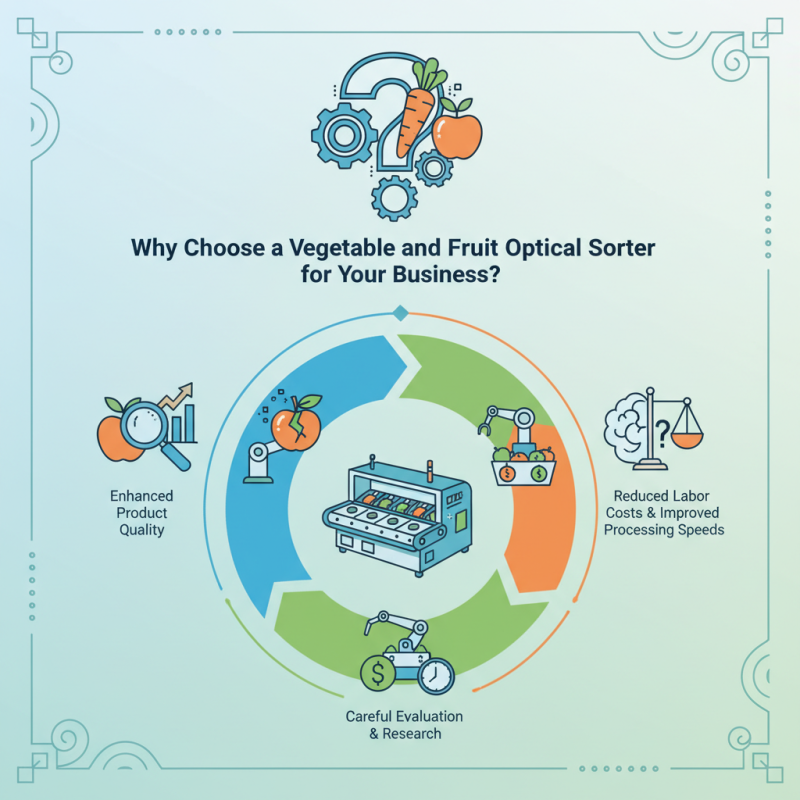
Investing in a Vegetable and Fruit Optical Sorter offers numerous advantages. It enhances product quality by accurately sorting and grading fruits and vegetables based on size, color, and imperfections. This means less waste and higher customer satisfaction. Moreover, the automation of sorting reduces labor costs and improves processing speeds, a critical factor in today’s fast-paced market.
However, it is essential to evaluate the choices carefully. Not every optical sorter is created equal. Some models may lack the precision required for certain produce types. Balancing cost with functionality often requires in-depth research and reflection. Understanding these machines is vital, as each has its strengths and weaknesses.
Optical sorters are revolutionizing the fruit and vegetable processing industry. By using advanced cameras and software, these machines can detect color, shape, and size variations. This results in higher quality products and increased efficiency. An optical sorter can significantly reduce human error, which can occur when sorting by hand. This technology ensures that only the best produce reaches the consumer.
Tips: Regular maintenance of optical sorters is essential. It keeps the machines running smoothly. A well-maintained sorter can operate for years. Training your staff on the proper use of these machines can further enhance their effectiveness.
Additionally, using optical sorters limits waste. Unwanted produce is quickly identified and removed. This not only boosts profit margins but also ensures a commitment to quality. However, it’s important to understand that not all produce types may be suitable for sorting. Testing different products can help determine the best fit for your operations. Ultimately, adopting this technology can lead to more consistent and reliable processing in your facility.
The use of optical sorters in the fruit and vegetable industry significantly enhances product quality and consistency. According to a report by the Food and Agriculture Organization, up to 30% of produce is wasted due to defects. Optical sorters minimize this loss by rapidly analyzing the quality of each item. They assess size, color, and surface defects, ensuring only the best products reach consumers.
Moreover, the efficiency of optical sorters is remarkable. Research indicates that these machines can sort up to 10 tons of produce per hour. This capability not only streamlines operations but also reduces labor costs. Yet, some companies still rely on manual sorting, which can lead to inconsistent quality. This inconsistency affects brand trust and may result in financial losses.
Incorporating optical technology does not come without challenges. Initial investment costs can be high, and training staff may require time and resources. However, the long-term benefits of reduced waste and higher product quality often outweigh these hurdles. Improved consistency leads to satisfied customers and repeat purchases, driving overall growth in a competitive market.
When considering how to enhance operational efficiency, many businesses look towards optical sorting technology for fruits and vegetables. This technology significantly reduces labor costs. Traditional sorting often requires a large workforce to sort, inspect, and package products. Optical sorters, however, automate this process. They can inspect thousands of items per minute. This efficiency minimizes the need for manual labor.
Waste management is another critical area where optical sorters shine. They can identify and remove defective or substandard products in real-time. This technology reduces the amount of food waste produced during the sorting process. By discarding only the unfit items, businesses can ensure higher quality for consumers. It also means that more products can be sold, driving profit margins up.
However, embracing this technology requires thoughtful consideration. Initial investment costs might seem daunting. Companies must weigh potential savings against upfront expenses. Additionally, staff training is essential to maximize the system's benefits. Relying solely on automation without proper understanding may lead to inefficiencies. Balancing technology use with human expertise remains a vital aspect for optimal results.
| Dimension | Description | Estimated Savings |
|---|---|---|
| Labor Costs | Reduction in manual sorting labor | Up to 30% |
| Waste Reduction | Minimizing waste through precise sorting | 15-20% |
| Processing Time | Faster processing with automated sorting | 25% reduction |
| Product Quality | Improved quality control leading to better market value | Increased revenue potential by 10% |
| Energy Efficiency | Lower energy consumption compared to manual sorting | 5-10% savings |
Optical sorters are revolutionizing the way businesses handle fruits and vegetables. These machines use advanced technology to detect and sort produce based on various criteria. Cameras and sensors analyze each item, ensuring consistent quality and freshness. This automation minimizes human error and increases efficiency during sorting.
Choosing the right optical sorter requires careful consideration. Many businesses struggle with the initial investment. It's essential to weigh the long-term benefits, like reduced labor costs and higher product quality. Investing in a reliable sorter can lead to significant savings over time.
Tips: Regular maintenance of your optical sorter is crucial. Schedule routine checks to ensure optimal performance. Training your staff on proper operation can further enhance effectiveness. Educate them on troubleshooting common issues, as this can save valuable time.
While optical sorters excel in detecting defects, they may miss some issues. Occasionally, they struggle with certain color variations. It's vital to acknowledge these limitations. Periodic assessments help refine your sorting process and adapt to new produce varieties. Choose a sorter and remain open to constant improvement.
Optical sorting technology has transformed the way businesses handle fruits and vegetables. By using advanced imaging techniques, optical sorters can identify the size, color, and quality of produce at lightning speed. This precision ensures that only the best products reach consumers, enhancing your reputation in the market. With growing consumer demand for high-quality products, adopting this technology can distinguish your business from competitors.
Investing in an optical sorter not only improves product quality but also boosts operational efficiency. When your sorting process is efficient, it reduces labor costs and minimizes waste. However, not every business sees immediate returns on this investment. The initial cost and learning curve can be daunting. Some companies may struggle to integrate new technology into their existing processes, leading to hesitation in adopting it.
Despite these challenges, the potential for growth is undeniable. As the market becomes more competitive, those who embrace innovation will thrive. Optical sorting helps companies respond rapidly to market changes, ensuring they stay relevant. Quality and efficiency are key to maintaining consumer trust and loyalty. Through careful consideration and adaptation, businesses can significantly enhance their market presence.
„Thanks to the LUVIR technology, the solder resist process could be switched directly from the previously used mask exposure to direct exposure. As an outstanding digital solution on the market, this technology has been able to demonstrate fast process times and superior quality on our certified conventional ink in production. This allowed us to fully digitize the solder mask process at low cost – without process or ink adjustments. An excellent benefit to our production in Rot am See.“
Ralf Göhringer (Head of Production WE Rot am See)
I would definitely recommend the Limata machine and team for a future company purchase
Michael Greenaway
Compunetics Inc.
“The Limata ldi has been amazing!! Best thing we did was buy this machine”
Richard Brady
GM
Circuitlabs
“Since 2019, we have been running the Limata X1000 LDI system (including LUVIR for solder mask imaging) in daily production as an addition to our current process with film. The machine was capable of properly exposing Taiyo PSR-4000 BN (DI) solder mask types on normal to high-copper boards using a new and unique direct imaging process. The machine operating interface is very user friendly which allowed for a quick technical training curve. The pre-registration processing reduced several seconds of production time at every print. Limata support and service staff is incomparable. They supported our team every step of the way at basically any time of the day or night, with literally, an immediate response time, customizing the software interface to best fit our Operations and needs.
We have exposed more than 8,000 prints since end of October, on various solder mask colors and some resist film panels. Limata, has proven to be very capable and innovative. They are a strong contender in the industry.
We have very much enjoyed this project, and working with the team!
Thank you Limata for the continued support and being a part of our growth.”
Bill Sezate
Vice President, GM
Summit Interconnect
As a replacement to our current contact exposure process with film, the LIMATA X2000 system including LUVIR-Technology was capable of properly exposing non-LDI solder mask types using a direct imaging process. The machine offers cutting edge software with a very intuitive operating interface which allowed for quick technician training curve. The dual drawer system combined with pre-registration processing reduced several seconds of production time at every machine cycle. Limata support and service staff is world class. They added software patches to keep production running at shortest possible response times, customized the software interface to best fit our in-house Operations system, and even wrote a step-by-step machine processing manual. As a result of the project, we have exposed more than 16,000 times on various product types and solder mask brands/colors. Limata, in a very short timeframe as a company, has definitely shown they are truly innovative and will be challenging the industry of direct imaging for the top spot.
Kevin Beattie
Process Engineer
TTM Technologies
Forest Grove Division
