In 2026, selecting a Regulated Power Supply is crucial for various applications. This decision impacts performance and reliability in industry and electronics. The choice can feel overwhelming. There are many factors to consider, such as voltage, current, and efficiency.
Knowing the specifications is essential. Not all supplies are created equal. Some may not meet your requirements, leading to potential issues. For example, an inadequate supply might cause voltage fluctuations. These can damage sensitive equipment. Users must assess their needs carefully.
Make sure to explore different brands and technologies. Reviews from peers can offer insights. However, don’t rely solely on opinions. Each project has unique demands. Ultimately, a tailored approach is necessary for achieving optimal performance.
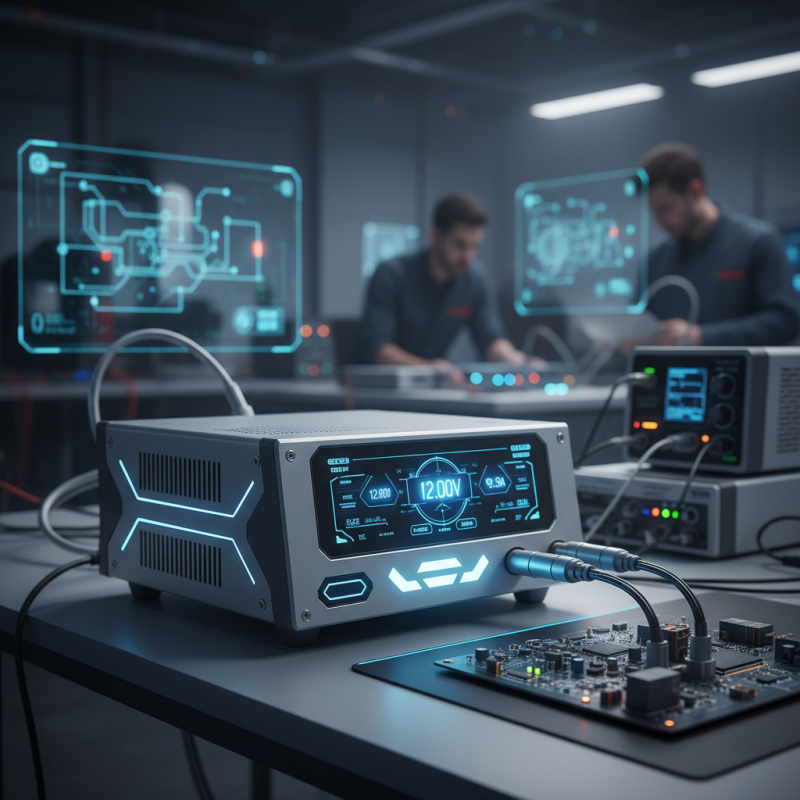
When choosing a regulated power supply, understanding the basics is essential. A regulated power supply maintains a constant voltage or current, essential for sensitive electronic devices. The global market for regulated power supplies is expected to exceed $30 billion by 2026, highlighting their significance. These systems help reduce fluctuations that can damage equipment.
Different types of regulated power supplies exist, including linear and switching models. Linear supplies provide a steady output by dissipating excess voltage as heat. However, they are less efficient. In contrast, switching power supplies are compact and more efficient but can introduce electrical noise. In a recent study, 45% of electronics engineers indicated a preference for switching supplies due to efficiency, despite potential noise issues.
It’s crucial to consider load requirements. Many designs fail to accommodate varying loads. For instance, a regulated supply might struggle with sudden changes in device demand. This can lead to performance issues. As power demands grow, designers need to evaluate their choices carefully. Balancing efficiency and stability can be tricky, and understanding your application is vital.
| Feature | Description | Importance |
|---|---|---|
| Voltage Output | The fixed or adjustable voltage provided by the power supply. | Crucial for matching the power needs of equipment. |
| Current Rating | Maximum current the power supply can deliver. | Essential for safe operation without overheating. |
| Regulation Type | Linear or switching regulation mechanisms. | Affects efficiency, noise, and performance. |
| Size and Form Factor | Physical dimensions and weight of the unit. | Important for space-constrained applications. |
| Efficiency Rating | The ratio of output power to input power. | Higher efficiency reduces energy costs and heat. |
| Protection Features | Overvoltage, overcurrent, and thermal protection. | Prevents damage to both the power supply and connected devices. |
| Certifications | Compliance with safety and EMI standards. | Ensures reliability and user safety. |
| Cost | Price point of the power supply. | Must align with budget constraints while meeting needs. |
When you select a regulated power supply in 2026, keep several key features in mind. Efficiency is crucial. Higher efficiency means less heat generation and lower energy costs. Look for units that boast over 80% efficiency. This can save you money in the long run.
Another feature to consider is the load regulation. A power supply should maintain a stable output voltage despite changes in load. Look for models with tight load regulation specifications. This ensures your devices receive the stable power they need.
Don't ignore the importance of protection features. Overload, short-circuit, and thermal protection can save your devices from damage. A power supply with these features reflects good design. Finally, think about the size and weight. Sometimes, compact designs compromise performance. Be ready to balance space constraints and functionality.
Choosing the right power supply involves understanding your power needs. This is critical for efficiency and longevity. According to a 2023 industry report, nearly 25% of equipment failures stem from inadequate power supply choices. Knowing your voltage and current requirements is vital. It ensures your devices operate effectively without damage.
Assessing your current and future applications is also essential. Do you need a steady voltage source? Or will your applications demand variable voltage? A study from Energy Star indicated that improper sizing could lead to energy losses of up to 30%. This emphasizes the importance of calculating your total load accurately. It’s not just about what you need today but also what you might use tomorrow.
In the evolving tech landscape, power supply needs can vary greatly. Factors such as temperature and load changes can affect performance. Some setups might require additional features, such as remote monitoring. Without these, users may find it challenging to adapt. Reflecting on these elements during selection could save time and resources in the long run.
When selecting a regulated power supply in 2026, it's pivotal to understand the various types available. Linear power supplies offer simplicity and low noise. They work well for sensitive electronics. However, they may lack efficiency. Their heat generation can be a concern in tight spaces.
On the other hand, switching power supplies provide greater efficiency. They are compact and lightweight, making them suitable for modern tech. Yet, they can introduce noise. This may interfere with precise measurements. Consider your application carefully. Will you prioritize efficiency or tranquility?
Linear and switching power supplies are just two options. There are others, such as programmable power supplies. They offer flexibility and control. But they can be more complex to set up. Each type has its strengths and weaknesses. Your choice will impact performance outcomes. Take time to reflect on your specific needs.
When selecting a regulated power supply, understanding safety standards is crucial. Power supplies must comply with safety regulations like IEC 60950 and UL 60950. These standards ensure that devices are safe for consumer use, minimizing risks of electric shock and fire hazards. The updated 2026 compliance requirements focus on stricter testing protocols.
Recent industry reports indicate that 28% of electrical accidents are linked to equipment failures. This statistic emphasizes the need for reliable safety evaluation when choosing a power supply. Users must ensure the devices undergo rigorous testing. Look for certifications that demonstrate adherence to international standards.
Another important aspect is environmental compliance. The latest guidelines push for energy efficiency and reduced harmful emissions. Power supplies should have certifications such as Energy Star or CE Marking. This not only supports a healthy planet but also reduces operational costs. Reflecting on these factors can lead to better decision-making. Remember, safety and efficiency go hand in hand in powering our future.
„Thanks to the LUVIR technology, the solder resist process could be switched directly from the previously used mask exposure to direct exposure. As an outstanding digital solution on the market, this technology has been able to demonstrate fast process times and superior quality on our certified conventional ink in production. This allowed us to fully digitize the solder mask process at low cost – without process or ink adjustments. An excellent benefit to our production in Rot am See.“
Ralf Göhringer (Head of Production WE Rot am See)
I would definitely recommend the Limata machine and team for a future company purchase
Michael Greenaway
Compunetics Inc.
“The Limata ldi has been amazing!! Best thing we did was buy this machine”
Richard Brady
GM
Circuitlabs
“Since 2019, we have been running the Limata X1000 LDI system (including LUVIR for solder mask imaging) in daily production as an addition to our current process with film. The machine was capable of properly exposing Taiyo PSR-4000 BN (DI) solder mask types on normal to high-copper boards using a new and unique direct imaging process. The machine operating interface is very user friendly which allowed for a quick technical training curve. The pre-registration processing reduced several seconds of production time at every print. Limata support and service staff is incomparable. They supported our team every step of the way at basically any time of the day or night, with literally, an immediate response time, customizing the software interface to best fit our Operations and needs.
We have exposed more than 8,000 prints since end of October, on various solder mask colors and some resist film panels. Limata, has proven to be very capable and innovative. They are a strong contender in the industry.
We have very much enjoyed this project, and working with the team!
Thank you Limata for the continued support and being a part of our growth.”
Bill Sezate
Vice President, GM
Summit Interconnect
As a replacement to our current contact exposure process with film, the LIMATA X2000 system including LUVIR-Technology was capable of properly exposing non-LDI solder mask types using a direct imaging process. The machine offers cutting edge software with a very intuitive operating interface which allowed for quick technician training curve. The dual drawer system combined with pre-registration processing reduced several seconds of production time at every machine cycle. Limata support and service staff is world class. They added software patches to keep production running at shortest possible response times, customized the software interface to best fit our in-house Operations system, and even wrote a step-by-step machine processing manual. As a result of the project, we have exposed more than 16,000 times on various product types and solder mask brands/colors. Limata, in a very short timeframe as a company, has definitely shown they are truly innovative and will be challenging the industry of direct imaging for the top spot.
Kevin Beattie
Process Engineer
TTM Technologies
Forest Grove Division
