Choosing Bathroom Door Hinges in 2026 requires more than matching a finish to the faucet. A hinge controls movement, alignment, privacy, and long-term safety. It also affects how the door feels every morning.
Michael Turner, a senior architectural hardware consultant, explains, “A hinge is small hardware with a large responsibility.” His point is easy to overlook. A polished hinge may look excellent in a showroom, yet fail when exposed to steam, cleaning chemicals, or a heavy glass door. The correct choice depends on door weight, material, opening direction, frame construction, and bathroom humidity.
This guide examines the practical decisions behind modern Bathroom Door Hinges. It considers stainless steel grades, corrosion resistance, load ratings, adjustable tension, concealed designs, and soft-closing features. Each detail matters. Small errors become noisy doors, loose screws, or uneven gaps.
Some buyers focus too heavily on appearance. That is understandable, but incomplete. A matte-black finish cannot compensate for weak mounting plates. Likewise, a durable hinge may still be unsuitable for a thin composite door. We should also admit that product labels are not always clear. Ratings can vary between manufacturers, and installation conditions may change performance.
The following sections help homeowners, designers, and installers compare options with greater confidence. They encourage careful measurements, verified specifications, and realistic expectations. The best hinge is rarely the most expensive one. It is the one properly matched to the door, frame, environment, and daily use.
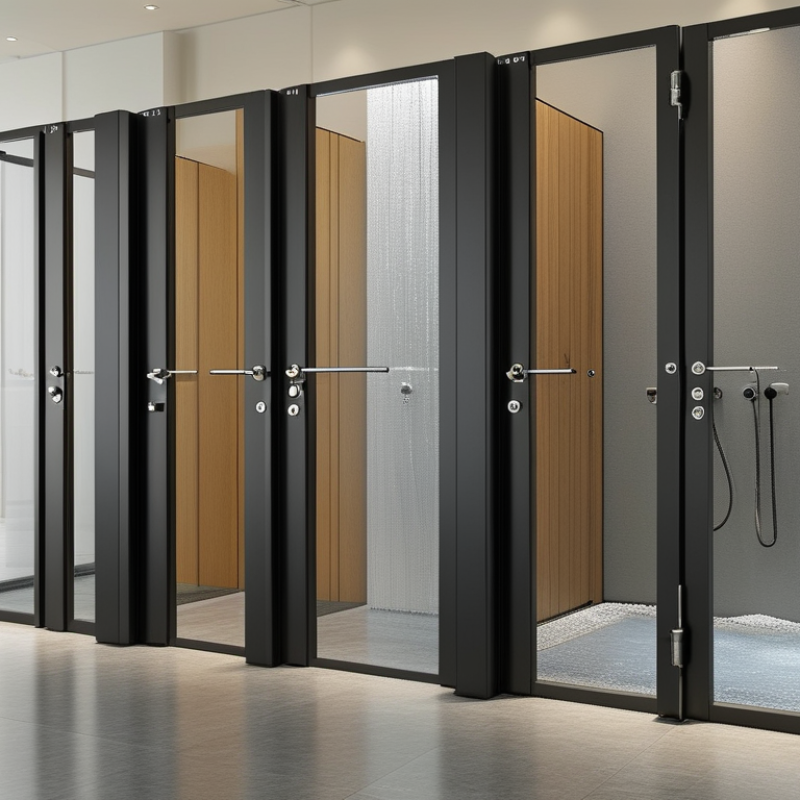
Choosing bathroom door hinges in 2026 starts with identifying the door, not browsing finishes. A solid wood door needs stronger hinges than a lightweight hollow-core door. Glass doors require hardware designed specifically for glass panels. Pocket doors, sliding doors, and folding doors usually need different systems entirely. I once measured only the door width and ordered the wrong hinge size. The frame depth was the real problem.
Measure the door height, width, thickness, and approximate weight. Check the existing hinge positions and screw holes. A standard interior door may use two or three hinges, while a heavier bathroom door often needs additional support. Record the door swing, too. It should clear the vanity, toilet, and nearby wall without striking them. Small clearances matter. Moisture also changes the decision. Select corrosion-resistant materials and protected fasteners for rooms with frequent steam.
Installation requirements deserve equal attention. Determine whether the frame accepts mortised hinges or surface-mounted hinges. Confirm that the hinge leaf fits the recess without forcing the door outward. Use screws long enough to grip the frame, but avoid plumbing and electrical routes. For a new installation, inspect the jamb for level and solid backing. A hinge can be correctly rated yet still sag on weak framing. Recheck alignment after a week of use. Bathrooms reveal mistakes quickly.
How to Choose Bathroom Door Hinges in 2026?
Bathroom hinges face warm vapor, splashed water, cleaning chemicals, and constant movement. Material selection matters more than appearance. The 2016 NACE IMPACT study estimated global corrosion costs at 2.5 trillion dollars annually, equal to about 3.4% of global GDP. That figure includes many industries, but it explains why small hardware deserves serious attention. Stainless steel offers strong corrosion resistance. Grade 316 usually performs better than 304 in chloride-rich environments, such as coastal homes. Brass can work well, but its protective finish must remain intact. Zinc alloy is affordable, yet exposed edges may deteriorate faster.
Finish quality changes daily performance. Brushed surfaces can disguise light scratches, while polished finishes show water spots quickly. PVD coatings may provide strong surface hardness, but poor preparation still causes peeling. Electroplated finishes also depend on coating thickness and complete edge coverage. Check the hinge barrel, screw holes, and cut edges closely. These areas often fail first. I once judged a hinge by its attractive face alone. That was a poor test.
Ask for corrosion evidence, not vague claims. ASTM B117 and ISO 9227 describe salt-spray testing methods, but test hours do not directly equal bathroom service life. A 240-hour result cannot promise ten years of use. Look for test conditions, substrate details, coating thickness, and failure criteria. Also inspect the door’s ventilation and cleaning routine. Even premium metal can corrode in trapped moisture. The overlooked detail is often installation. A damp screw cavity can undermine an otherwise excellent hinge.
316 stainless steel provides the strongest resistance to humid, chloride-rich bathroom environments, followed by 304 stainless steel. Brass performs well when properly plated, while zinc alloy and aluminum require a durable protective finish. PVD and high-quality chrome finishes generally offer better wear and corrosion protection than standard decorative finishes. Ratings are practical 1–5 guidance scores, not standardized laboratory results.
Choosing bathroom door hinges in 2026 requires more than matching a finish. Start with the door style and its construction. Butt hinges suit many wooden or composite doors, while pivot hinges work well when the door needs a clean, balanced movement. Concealed hinges create a quieter appearance, but they demand accurate routing and careful alignment. Moisture changes can expose weak materials quickly. Choose corrosion-resistant hardware for humid rooms, especially near showers.
Load capacity should include the door, glass panels, handles, and repeated daily use. A hinge rated exactly to the door’s weight leaves little safety margin. I prefer calculating the total load, then selecting hinges with a practical reserve. Wider or heavier doors may need three hinges instead of two. Installation quality matters as much as the rating. Even strong hinges can sag when screws enter damaged wood or unsuitable wall material.
Tips: Check the real door weight, not the catalog estimate. Confirm the hinge’s tested load rating and recommended quantity. Measure the required opening angle before drilling. A 90-degree opening may strike a vanity, towel rail, or wall. An adjustable hinge can correct minor alignment problems, but it cannot fix a poor frame. I once underestimated clearance around a bathroom cabinet; the door opened correctly, yet daily use felt awkward. That small mistake changed the entire fixture layout. Test the swing with cardboard before installation.
| Hinge Style | Best Bathroom Door Application | Typical Door Material | Typical Door Weight Range | Recommended Hinge Quantity | Typical Load Capacity | Common Opening Angle | Key Advantages | Important Selection Considerations |
|---|---|---|---|---|---|---|---|---|
| Standard Butt Hinge | Conventional hinged bathroom doors in residential and light commercial interiors | Wood, composite, hollow-core, or lightweight metal doors | Up to approximately 45 kg | 2 hinges for light doors; 3 hinges for heavier, taller, or frequently used doors | Approximately 20–45 kg per door when correctly sized and installed; capacity depends on hinge size, screws, frame, and door construction | Approximately 90°–180°, depending on knuckle design, frame clearance, and door-stop position | Widely available, economical, easy to replace, and suitable for most standard door frames | Use corrosion-resistant stainless steel or plated finishes in humid rooms. Check the hinge leaf size, screw length, door thickness, and frame strength. |
| Ball-Bearing Butt Hinge | Heavy or frequently used bathroom doors, including public washrooms and accessible facilities | Solid-core wood, composite, or metal doors | Approximately 35–80 kg | Usually 3 hinges; use additional hinges when specified by the door manufacturer | Approximately 45–80 kg per door in common heavy-duty applications | Approximately 90°–180° | Reduced friction, smoother operation, and better durability under repeated use | Confirm the load rating for the complete hinge set. The frame, fasteners, and door edge must also be suitable for the door weight. |
| Concealed Hinge | Modern interior bathroom doors where the hinge should not be visible when the door is closed | Cabinet-style doors, flush interior doors, and specially prepared wood or composite doors | Approximately 10–40 kg, depending on hinge size and quantity | Typically 2–3 hinges; use the installation chart supplied for the specific hinge | Commonly approximately 10–40 kg per door system | Usually approximately 100°–120°; some models provide wider opening with a suitable stop-free layout | Clean appearance, adjustable alignment, and protection from direct splash exposure | Requires accurate cup and mounting-plate preparation. Verify door thickness, overlay, adjustment range, and whether the hinge is rated for humid environments. |
| Pivot Hinge | Frameless, flush, or minimalist bathroom doors; useful when the door should pivot from the top and bottom | Wood, composite, aluminum-framed, or tempered glass doors with compatible fittings | Approximately 20–80 kg | One top-and-bottom pivot set; additional support may be required for large or heavy doors | Approximately 30–80 kg per pivot set, depending on the floor, ceiling, and frame connection | Commonly 90°–180°; some systems are designed for single-direction opening or controlled return | Can support wide doors, offers a distinctive appearance, and may allow two-way or self-closing movement | Floor and head reinforcement are critical. Confirm the required setback, pivot position, floor loading, door clearance, and closing direction. |
| Continuous Hinge | Tall, heavy, misalignment-prone, or high-traffic bathroom doors where load distribution is important | Wood, composite, metal, or reinforced interior doors | Approximately 45–135 kg, depending on hinge length and construction | One full-height hinge running along most or all of the door edge | Approximately 45–135 kg per full-length hinge, subject to the tested model and fixing pattern | Usually approximately 90°–180° | Spreads the door load along the frame, helps reduce sagging, and improves alignment over time | Use corrosion-resistant material in humid environments. The hinge must be cut to the correct length and fixed with enough suitable fasteners. |
| Glass Door Patch Hinge | Frameless tempered-glass shower doors and glass bathroom enclosures | Tempered safety glass, commonly around 8–12 mm thick, subject to the glass system specification | Approximately 20–45 kg per door | Usually 2 hinges for standard shower doors; 3 may be required for taller or heavier doors | Commonly approximately 25–45 kg per door system, depending on hinge count and tested configuration | Usually 90°; some systems allow approximately 90°–180° or include a defined closing position | Designed for frameless glass, provides a clean appearance, and can include self-closing or hold-open functions | Use only with compatible tempered glass and the specified cut-outs. Do not drill or modify tempered glass after manufacture; verify wall and glass-side reinforcement. |
| Self-Closing Hinge | Bathroom, washroom, and shower-area doors that need to return automatically to a closed position | Wood, composite, metal, or compatible glass door systems | Approximately 15–60 kg, depending on the model and door width | Usually 2 hinges for light doors or 3 hinges for heavier doors; follow the closing-force specification | Approximately 20–60 kg per door system, with separate limits for door width and closing force | Commonly 90°–120°; many models close from a partially open position | Helps maintain privacy, reduce drafts, and keep moisture contained in shower or washroom areas | Ensure the closing force is strong enough for the door but not excessive for users. Check latch alignment, seal resistance, door width, and accessibility requirements. |
Selection note: The load and angle values above are typical planning ranges rather than universal standards. Always use the tested rating and installation instructions for the exact hinge, door, frame, fasteners, and wall construction. In humid bathroom environments, select materials and finishes specifically rated for corrosion resistance.
How to Choose Bathroom Door Hinges in 2026?
Check Door Clearance, Screw Placement, and Mounting Compatibility
Measure the door’s full swing before choosing bathroom door hinges. Open it slowly and watch the handle, wall, vanity, and towel rail. A hinge may fit the door but still create an awkward collision. Leave practical clearance around the jamb and floor, especially where tile edges are uneven. Humidity can also swell timber doors slightly. Measure in the bathroom, not only in a workshop.
Screw placement deserves careful attention. The hinge leaf should sit flat against the door and frame, without touching paint ridges or damaged wood. Mark every hole, then drill small pilot holes to reduce splitting. Use corrosion-resistant screws suited to the frame material. A loose screw often signals weak timber, not a poor hinge. Check the hinge side after several openings. I once trusted an existing hole pattern too quickly, and the door sagged later. That was avoidable.
Mounting compatibility involves more than matching hinge size. Compare door thickness, hinge weight rating, leaf shape, screw spacing, and frame construction. A hinge designed for a solid frame may fail on hollow material. Confirm the door’s opening direction and required overlay before installation. For heavy, glass, or unusually thick doors, verify measurements with the technical documentation or a qualified installer. Small errors matter here. Recheck everything.
Choosing bathroom door hinges means balancing durability, maintenance, safety, and total cost. Humidity attacks hinge knuckles, screws, and exposed cut edges. Choose corrosion-resistant stainless steel with compatible fasteners. A durable coating also matters. ASTM B117 salt-spray testing helps compare finishes, but it cannot reproduce every bathroom. Ventilation and cleaning habits still influence service life. That limitation deserves attention.
For architectural hinges, ANSI/BHMA A156.1 cycle classifications provide useful evidence. Grade 1 hinges are tested for 2.5 million cycles, Grade 2 for 1.5 million, and Grade 3 for 350,000 cycles. These are laboratory targets, not guarantees.
Check the door’s weight, frequency of use, and frame alignment before selecting a grade.
A misaligned door can overload even a high-grade hinge. Small errors become expensive.
Safety should remain practical. The CDC reports more than three million older adults receive emergency treatment for fall injuries annually. That figure is not a hinge-specific statistic, but it supports smoother, predictable door movement. Avoid sharp projections, loose pins, and hinges that slam unexpectedly. Maintenance should involve simple inspections, gentle cleaning, and timely screw replacement.
A cheap hinge that stains quickly may cost more after repeated replacement. I would not choose only by finish or advertised load capacity. Ask for test documentation, corrosion information, installation limits, and replacement-part availability. Sometimes the “best” hinge is simply the one that remains adjustable after years of damp mornings.
„Thanks to the LUVIR technology, the solder resist process could be switched directly from the previously used mask exposure to direct exposure. As an outstanding digital solution on the market, this technology has been able to demonstrate fast process times and superior quality on our certified conventional ink in production. This allowed us to fully digitize the solder mask process at low cost – without process or ink adjustments. An excellent benefit to our production in Rot am See.“
Ralf Göhringer (Head of Production WE Rot am See)
I would definitely recommend the Limata machine and team for a future company purchase
Michael Greenaway
Compunetics Inc.
“The Limata ldi has been amazing!! Best thing we did was buy this machine”
Richard Brady
GM
Circuitlabs
“Since 2019, we have been running the Limata X1000 LDI system (including LUVIR for solder mask imaging) in daily production as an addition to our current process with film. The machine was capable of properly exposing Taiyo PSR-4000 BN (DI) solder mask types on normal to high-copper boards using a new and unique direct imaging process. The machine operating interface is very user friendly which allowed for a quick technical training curve. The pre-registration processing reduced several seconds of production time at every print. Limata support and service staff is incomparable. They supported our team every step of the way at basically any time of the day or night, with literally, an immediate response time, customizing the software interface to best fit our Operations and needs.
We have exposed more than 8,000 prints since end of October, on various solder mask colors and some resist film panels. Limata, has proven to be very capable and innovative. They are a strong contender in the industry.
We have very much enjoyed this project, and working with the team!
Thank you Limata for the continued support and being a part of our growth.”
Bill Sezate
Vice President, GM
Summit Interconnect
As a replacement to our current contact exposure process with film, the LIMATA X2000 system including LUVIR-Technology was capable of properly exposing non-LDI solder mask types using a direct imaging process. The machine offers cutting edge software with a very intuitive operating interface which allowed for quick technician training curve. The dual drawer system combined with pre-registration processing reduced several seconds of production time at every machine cycle. Limata support and service staff is world class. They added software patches to keep production running at shortest possible response times, customized the software interface to best fit our in-house Operations system, and even wrote a step-by-step machine processing manual. As a result of the project, we have exposed more than 16,000 times on various product types and solder mask brands/colors. Limata, in a very short timeframe as a company, has definitely shown they are truly innovative and will be challenging the industry of direct imaging for the top spot.
Kevin Beattie
Process Engineer
TTM Technologies
Forest Grove Division
