Choosing the right 430 stainless steel wire mesh can be a daunting task. With numerous options on the market, it's essential to understand what suits your specific needs. According to industry expert Dr. Emily Harper, "The right choice in wire mesh can greatly enhance the durability and performance of your projects." Her insight emphasizes the importance of selecting quality materials.
The 430 stainless steel wire mesh is recognized for its unique combination of affordability and corrosion resistance. It finds applications in various fields, from construction to automotive. However, not all products are created equal. Understanding the specifications and intended use of the mesh is crucial. Many buyers overlook essential factors like mesh size and wire diameter, which can impact functionality.
Evaluating your needs requires careful consideration. Reflecting on your project's demands is key. Will the mesh withstand harsh environments? Knowing the answers guides your choices. Making informed decisions about 430 stainless steel wire mesh ensures that you invest in something both practical and reliable.
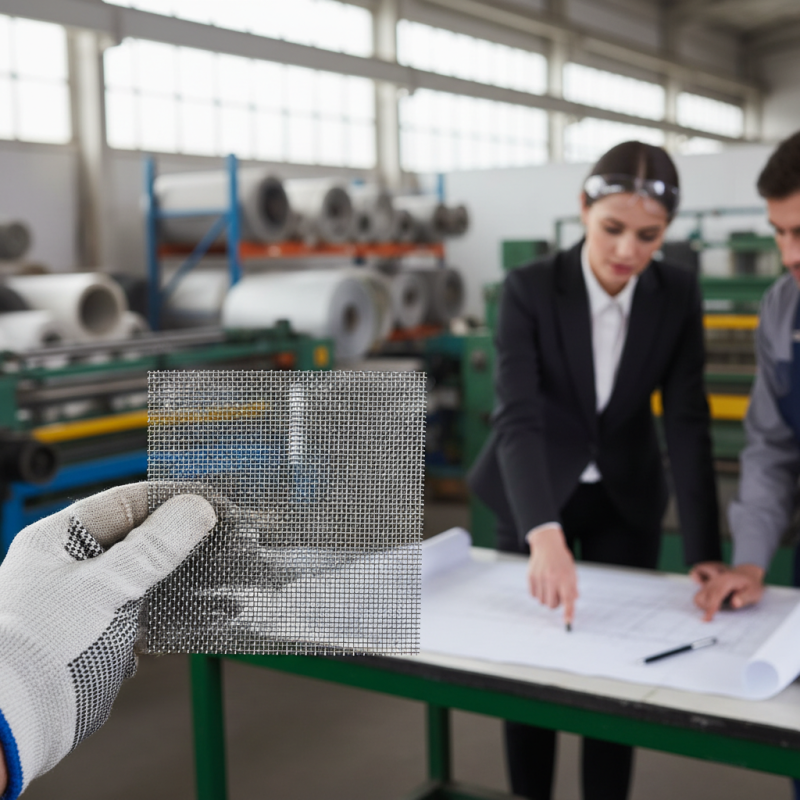
430 stainless steel is a popular choice due to its unique properties. This alloy contains 16-18% chromium, making it resistant to oxidation and corrosion. Unlike other stainless steels, it is magnetic. This feature can be advantageous in certain applications.
This type of stainless steel is often used in kitchen appliances and automotive parts. Its good formability allows for various shapes and designs. However, 430 stainless steel has lower nickel content, which means it may not perform as well in high-stress environments. Users should consider these factors when selecting materials for specific uses.
While 430 stainless steel is durable, it is essential to reflect on your requirements. Sometimes, opting for a different grade may yield better results. Evaluating the environment and conditions where the mesh will be used can help ensure longevity. Understanding your unique needs will guide you in making a more informed choice.
Choosing the right 430 stainless steel wire mesh requires careful consideration of several factors. The material type is crucial. 430 stainless steel offers good corrosion resistance and is magnetic. This makes it suitable for specific applications, such as kitchenware and some indoor uses.
Mesh opening size is another key factor. Different projects need different openings. Larger openings allow for greater airflow but less filtration. Smaller openings provide better filtration but can restrict airflow. Assess your project’s needs to determine the best size.
Wire diameter also impacts the mesh's strength and functionality. Thicker wires provide more durability but may make the mesh heavier. On the other hand, thinner wires are lightweight but less robust. Keep your application’s requirements in mind when selecting wire thickness. Pay attention to these critical elements, and you will enhance your project’s success.
| Factor | Description | Importance Rating (1-5) |
|---|---|---|
| Wire Diameter | Determines strength and flexibility; thicker wires provide more strength. | 5 |
| Opening Size | Affects the amount of material that can pass through; smaller openings provide filtration. | 4 |
| Mesh Count | Indicates the number of openings per linear inch; higher count corresponds to finer meshes. | 3 |
| Corrosion Resistance | Essential for durability in harsh environments; 430 stainless steel offers moderate resistance. | 5 |
| Application Type | Different applications require specific mesh characteristics; identify specific needs. | 4 |
| Weld Quality | High-quality welds can enhance strength and stability of the mesh. | 4 |
| Cost | Budget considerations; high-quality materials may have higher upfront costs. | 3 |
When selecting 430 stainless steel wire mesh, understanding the differences between various grades is crucial. 430 stainless steel is known for its corrosion resistance and formability. However, it does not have the same level of corrosion resistance as 316 or 304 grades. According to industry reports, 430 stainless steel is commonly used in applications where exposure to moisture is limited. This includes kitchen equipment, automotive trim, and architectural embellishments.
The mechanical properties of 430 stainless steel differ from higher-grade options. For example, the yield strength of 430 stainless steel typically ranges from 205 MPa to 275 MPa, which is lower than both 304 and 316 grades. This characteristic makes 430 suitable for less demanding applications. However, if your project requires high tensile strength, you might want to reconsider.
In addition, 430 stainless steel offers a magnetic property not found in other austenitic stainless steels. This can be an advantage in applications requiring magnetic response. However, it's essential to reflect on whether that magnetic property is indeed necessary for your specific use case. Understanding these nuances and weighing your project requirements against the technical details will guide you in making a well-informed choice.
430 stainless steel wire mesh is widely used across various industries due to its versatile properties. This material offers resistance to corrosion and high temperatures, making it suitable for different applications. According to industry reports, the food processing sector utilizes this wire mesh for filters and sieves. Its ability to maintain structural integrity in harsh environments makes it ideal for these uses.
In construction, 430 stainless steel wire mesh acts as reinforcement for concrete and masonry. This enhances the durability of structures. The automotive industry also employs this mesh for exhaust systems and decorative trim. Its aesthetic appeal combined with functionality is a significant advantage. Despite its strengths, the mesh can be prone to rust under certain conditions. Regular maintenance and protective coatings may be necessary to optimize its lifespan.
Moreover, many industries are increasingly adopting 430 stainless steel wire mesh for environmental applications. Its durability helps mitigate pollution by filtering out harmful particles. Reports indicate a growing trend toward sustainable practices, where this mesh contributes positively. Yet, there are ongoing discussions about its environmental impact. It's crucial to balance its benefits with responsible manufacturing practices.
Proper maintenance of 430 stainless steel wire mesh enhances its longevity. Regular cleaning is essential to prevent corrosion and rust. Use mild soap and water for routine cleaning. Avoid harsh chemicals, as they can damage the surface. Rinse thoroughly after cleaning.
Tips: Always dry the mesh after washing. This simple step helps prevent water spots and deterioration over time.
It's crucial to inspect the wire mesh frequently. Look for signs of damage or wear. Early detection can prevent more severe issues later. Consider using a rust inhibitor if you live in a humid area.
Tips: If you find rust, remove it promptly. Use a wire brush or sandpaper for small spots. Larger sections may require replacement. Regular upkeep ensures optimum performance and appearance.
„Thanks to the LUVIR technology, the solder resist process could be switched directly from the previously used mask exposure to direct exposure. As an outstanding digital solution on the market, this technology has been able to demonstrate fast process times and superior quality on our certified conventional ink in production. This allowed us to fully digitize the solder mask process at low cost – without process or ink adjustments. An excellent benefit to our production in Rot am See.“
Ralf Göhringer (Head of Production WE Rot am See)
I would definitely recommend the Limata machine and team for a future company purchase
Michael Greenaway
Compunetics Inc.
“The Limata ldi has been amazing!! Best thing we did was buy this machine”
Richard Brady
GM
Circuitlabs
“Since 2019, we have been running the Limata X1000 LDI system (including LUVIR for solder mask imaging) in daily production as an addition to our current process with film. The machine was capable of properly exposing Taiyo PSR-4000 BN (DI) solder mask types on normal to high-copper boards using a new and unique direct imaging process. The machine operating interface is very user friendly which allowed for a quick technical training curve. The pre-registration processing reduced several seconds of production time at every print. Limata support and service staff is incomparable. They supported our team every step of the way at basically any time of the day or night, with literally, an immediate response time, customizing the software interface to best fit our Operations and needs.
We have exposed more than 8,000 prints since end of October, on various solder mask colors and some resist film panels. Limata, has proven to be very capable and innovative. They are a strong contender in the industry.
We have very much enjoyed this project, and working with the team!
Thank you Limata for the continued support and being a part of our growth.”
Bill Sezate
Vice President, GM
Summit Interconnect
As a replacement to our current contact exposure process with film, the LIMATA X2000 system including LUVIR-Technology was capable of properly exposing non-LDI solder mask types using a direct imaging process. The machine offers cutting edge software with a very intuitive operating interface which allowed for quick technician training curve. The dual drawer system combined with pre-registration processing reduced several seconds of production time at every machine cycle. Limata support and service staff is world class. They added software patches to keep production running at shortest possible response times, customized the software interface to best fit our in-house Operations system, and even wrote a step-by-step machine processing manual. As a result of the project, we have exposed more than 16,000 times on various product types and solder mask brands/colors. Limata, in a very short timeframe as a company, has definitely shown they are truly innovative and will be challenging the industry of direct imaging for the top spot.
Kevin Beattie
Process Engineer
TTM Technologies
Forest Grove Division
