Choosing the right Automotive Component Dies is crucial for manufacturers. John Smith, an industry expert, once said, “The right die makes all the difference in production efficiency.” With a multitude of options available, understanding specific needs is essential.
Automotive component dies come in various forms, materials, and designs. Each choice impacts the final product's quality and performance. Consider factors like durability, precision, and compatibility with machinery. Such elements can elevate production outcomes significantly.
However, selecting automotive component dies is not always straightforward. Misjudging requirements can lead to increased costs and inefficiencies. The wrong die can jeopardize entire production lines. Hence, thorough evaluation and consultation with experts are advisable. The investment in the right dies is an investment in success.
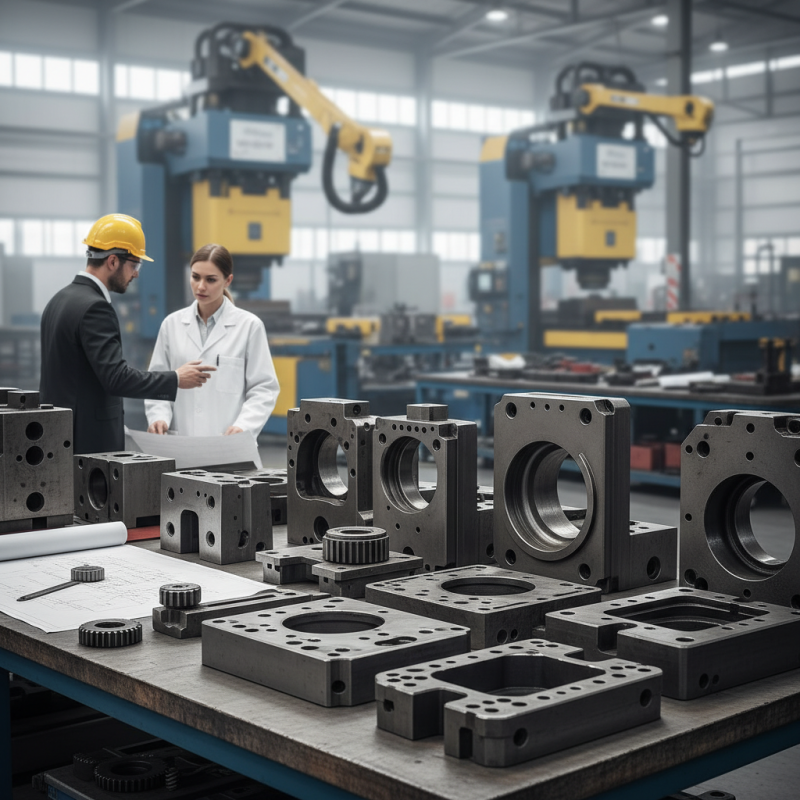
Choosing the right automotive component dies can significantly impact production efficiency. Various types of dies serve different purposes in the manufacturing process. Understanding these types allows you to make informed decisions based on your needs.
There are several common types of automotive component dies. Progressive dies allow for multiple operations in one press cycle. This can be more efficient. However, they require precise engineering and a higher upfront cost. Single-operation dies are simpler and easier to use, but they may not be as efficient for large-scale production.
Tips: Evaluate your production volume before deciding. Higher volumes can justify complex dies. You should also consider the die material. Tool steel is popular for its durability. It withstands wear better than softer metals but may also increase costs.
When selecting a die, consider future needs too. If your designs change often, versatility is key. Some dies can be modified, but not all. Reducing waste in the manufacturing process is also a crucial point to consider. Reflect on your current workflows to identify areas for improvement.
Choosing the right dies for automotive components involves a thorough understanding of material compatibility. The right material ensures that the die can withstand the mechanical stress and thermal conditions during production. For instance, steel and aluminum are common choices, but assessing their properties is crucial. Each material reacts differently under heat and pressure, impacting the final product’s quality.
Tips: Always perform a compatibility test. This can save both time and money. Consider the temperature ranges and stress levels during manufacturing. Testing small runs with different materials can provide valuable insights. Document your findings to refine your choices over time.
Not all materials perform consistently. Variations can lead to defects in components. Consider the environmental conditions where the components will be used. Understanding factors such as corrosion resistance and fatigue limits is essential. Sometimes, you might have to compromise ideal performance for cost-effectiveness. Be prepared to iterate on your choices as you gather more data. Use failures as a learning opportunity to improve your selection process.
When budgeting for automotive projects, die production costs play a crucial role. Understanding the factors that influence these costs is essential. Material selection, complexity of design, and production volume are all key components. A simple die might save money initially, but could incur higher long-term costs if it doesn't meet durability standards. Conversely, investing in a high-quality die can enhance efficiency and reduce replacements over time.
It’s vital to assess your project’s needs and align them with your budget. Often, businesses underestimate the hidden costs associated with die production. This includes maintenance and potential modifications. Regular evaluations of these elements can prevent unexpected expenses. Each project differs. Some may require elaborate designs, while others may benefit from simpler solutions.
Reflecting on past projects can provide valuable insights. Did the chosen die meet performance expectations? How did it affect overall production efficiency? These reflections can guide future purchasing decisions. Collaborating with experienced professionals can also improve your understanding of die costs. Their expertise can help you navigate potential pitfalls effectively.
| Component Type | Material Type | Production Cost ($) | Expected Lifespan (Cycles) | Lead Time (Weeks) |
|---|---|---|---|---|
| Brake Disc | Cast Iron | 1500 | 250,000 | 6 |
| Engine Block | Aluminum Alloy | 2500 | 500,000 | 8 |
| Transmission Housing | Steel | 2000 | 300,000 | 7 |
| Fuel Tank | Polyethylene | 1200 | 200,000 | 5 |
| Suspension Arm | High-Strength Steel | 1800 | 400,000 | 6 |
When selecting automotive component dies, analyzing performance metrics is crucial. Various parameters, such as hardness and tensile strength, significantly impact die efficiency. Hardness influences wear resistance. A harder die typically lasts longer, reducing downtime for replacements. However, too much hardness may lead to brittleness. Finding a balance is essential.
Longevity is another critical factor. Dies made from high-quality materials may offer better durability. Each component's design affects its lifespan as well. Complex designs can lead to stress concentrations, which might cause premature failure. Regular inspections can identify flaws early, but they require additional resources. Knowing when to retire a die is often a hard decision.
Moreover, environmental factors can't be overlooked. Temperature variations, moisture, and corrosive materials can affect a die’s performance. Attention to maintenance practices is needed. Implementing a robust maintenance schedule can extend die life and improve performance. Yet, many manufacturers neglect this aspect. Are you truly taking care of your dies?
When choosing between custom and standard dies for automotive components, various factors come into play. Standard dies are pre-manufactured and readily available. They often provide a cost-effective solution for common parts. However, they may not meet specific performance requirements or fit unique designs. If precision is paramount, standard dies might fall short.
On the other hand, custom dies are designed specifically for your needs. They take into account the exact dimensions and specifications required for your automotive components. This customization often leads to enhanced performance and efficiency. Nevertheless, the development process can be time-consuming and more expensive. It's important to weigh these factors carefully. Consider your production volume and long-term goals before making a decision.
Reflecting on your project’s needs can provide clarity. Is the part you're producing unique? Will you need to scale this production in the future? Answering these questions can guide you toward the right choice. While standard dies might seem tempting, custom solutions often deliver superior results in the long run.
„Thanks to the LUVIR technology, the solder resist process could be switched directly from the previously used mask exposure to direct exposure. As an outstanding digital solution on the market, this technology has been able to demonstrate fast process times and superior quality on our certified conventional ink in production. This allowed us to fully digitize the solder mask process at low cost – without process or ink adjustments. An excellent benefit to our production in Rot am See.“
Ralf Göhringer (Head of Production WE Rot am See)
I would definitely recommend the Limata machine and team for a future company purchase
Michael Greenaway
Compunetics Inc.
“The Limata ldi has been amazing!! Best thing we did was buy this machine”
Richard Brady
GM
Circuitlabs
“Since 2019, we have been running the Limata X1000 LDI system (including LUVIR for solder mask imaging) in daily production as an addition to our current process with film. The machine was capable of properly exposing Taiyo PSR-4000 BN (DI) solder mask types on normal to high-copper boards using a new and unique direct imaging process. The machine operating interface is very user friendly which allowed for a quick technical training curve. The pre-registration processing reduced several seconds of production time at every print. Limata support and service staff is incomparable. They supported our team every step of the way at basically any time of the day or night, with literally, an immediate response time, customizing the software interface to best fit our Operations and needs.
We have exposed more than 8,000 prints since end of October, on various solder mask colors and some resist film panels. Limata, has proven to be very capable and innovative. They are a strong contender in the industry.
We have very much enjoyed this project, and working with the team!
Thank you Limata for the continued support and being a part of our growth.”
Bill Sezate
Vice President, GM
Summit Interconnect
As a replacement to our current contact exposure process with film, the LIMATA X2000 system including LUVIR-Technology was capable of properly exposing non-LDI solder mask types using a direct imaging process. The machine offers cutting edge software with a very intuitive operating interface which allowed for quick technician training curve. The dual drawer system combined with pre-registration processing reduced several seconds of production time at every machine cycle. Limata support and service staff is world class. They added software patches to keep production running at shortest possible response times, customized the software interface to best fit our in-house Operations system, and even wrote a step-by-step machine processing manual. As a result of the project, we have exposed more than 16,000 times on various product types and solder mask brands/colors. Limata, in a very short timeframe as a company, has definitely shown they are truly innovative and will be challenging the industry of direct imaging for the top spot.
Kevin Beattie
Process Engineer
TTM Technologies
Forest Grove Division
