Choosing the right brake shoe for your car is crucial. Brake shoes are essential for vehicle safety. Reports indicate that improper brake shoe selection can lead to increased stopping distances and even accidents. According to the National Highway Traffic Safety Administration (NHTSA), nearly 30% of all vehicle crashes are linked to brake failures.
When selecting a brake shoe, consider material type and compatibility with your car’s make and model. Reliable data show that organic brake shoes are quieter but wear out faster. Conversely, metallic shoes offer better performance but may cause noise. Research suggests that drivers should replace brake shoes every 30,000 to 70,000 miles, depending on usage.
It’s not easy to choose the perfect brake shoe car. Factors such as driving style, weather, and road conditions play a significant role. Some drivers may overlook their specific needs or preferences, leading to poor choices. Relying on expert reviews and professional recommendations can enhance your decision-making. Take the time to evaluate your options thoroughly for optimal safety and performance.
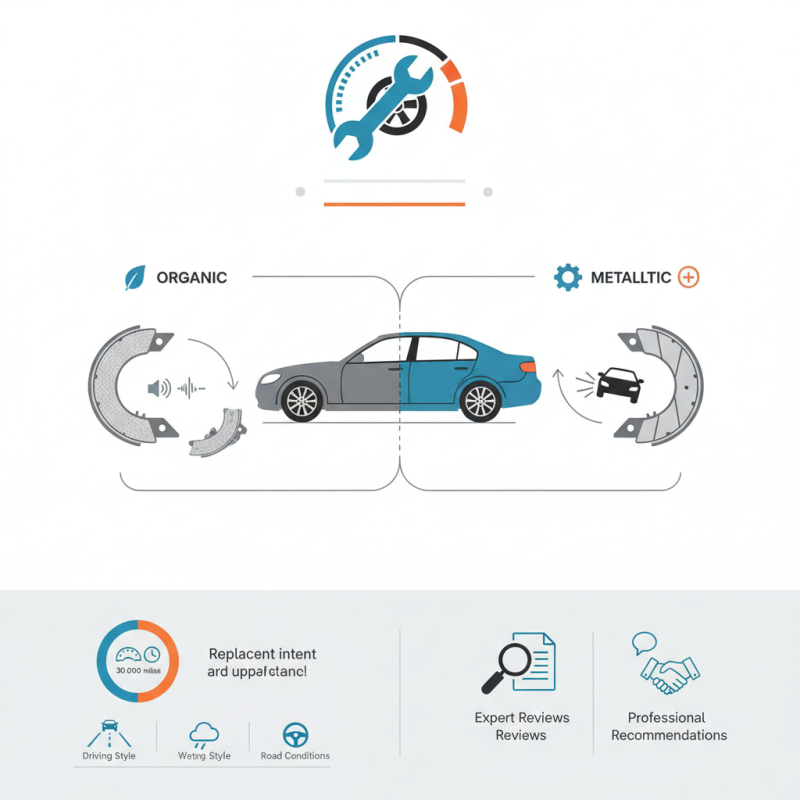
When choosing brake shoes, understanding the types available is crucial. Brake shoes come in various materials and designs, each offering distinct advantages.
Organic brake shoes are commonly used for their quiet operation and smooth braking. They provide decent performance but wear out faster. On the other hand, semi-metallic brake shoes include metal fibers mixed with other materials. These offer better stopping power and durability, making them ideal for heavy vehicles. If you drive in demanding conditions, consider these options for enhanced performance.
Tips for selection: Examine your driving habits. If you frequently drive in urban areas, organic shoes may suffice. However, for highway driving or towing, think about semi-metallic options. Pay attention to brake dust, as organic models generate less dust, contributing to a cleaner wheel.
Another option is ceramic brake shoes. They resist wear and provide consistent braking performance. However, they can be pricier than other types. Weigh the cost against the benefits. Always check the specifications carefully. Each vehicle has unique requirements, and the wrong choice can lead to issues. Optimal performance depends on the right fit and material choice.
When selecting brake shoes for your vehicle, it's crucial to consider several key factors. One important aspect is the material of the brake shoes. They are typically made from organic, metallic, or ceramic materials. Each material has its pros and cons. Organic shoes are quieter but wear out faster. Metallic options offer better performance but can be noisy. Ceramic shoes are a balance between the two, providing durability and low noise levels.
Pay attention to the fit and compatibility of the brake shoes with your vehicle. Ensure they match the specifications of your braking system. An incorrect fit can lead to performance issues and safety hazards. Checking reviews and consulting with experts can provide insights on the best options for your car.
Tips: Always replace brake shoes in pairs to maintain balance. Regularly inspect them for wear and tear. A simple check can prevent more costly repairs down the line. Keep in mind that sometimes your budget may limit your options, but safety should never be compromised.
When selecting brake shoes, material composition is crucial. The three main options are asbestos, ceramic, and semi-metallic. Each has distinct properties affecting performance and safety.
Asbestos was once a standard choice due to its heat resistance. However, its use has sharply declined due to health risks. Reports indicate that exposure can lead to serious lung diseases. Consequently, many consumers now favor safer alternatives.
Ceramic brake shoes offer good performance with less dust production. They provide quiet operation and reduce wear on rotors. Data shows these shoes can last longer than others, sometimes exceeding 70,000 miles. Yet, they may not be as effective in extreme conditions.
Semi-metallic brake shoes combine metal fibers with resin. They are better at dissipating heat but often cause more wear on rotors. Some studies reveal that their lifespan can vary widely, based on driving habits and environmental factors. Each material requires careful consideration based on usage. Be aware of your driving conditions before making a choice.
| Material Type | Pros | Cons | Best For |
|---|---|---|---|
| Asbestos | Good heat resistance, durability | Health risks, not widely used | Older vehicles, classic cars |
| Ceramic | Less dust, quieter operation | Higher cost, may produce fade at high heat | Daily driving, light to moderate braking |
| Semi-Metallic | Good performance, effective heat dissipation | More noise, can wear down rotors faster | Heavy-duty applications, performance vehicles |
When evaluating brake shoe performance, consider three key factors: wear rate, noise levels, and stopping power. Each plays a vital role in ensuring your vehicle's safety and efficiency.
Wear rate indicates how quickly brake shoes degrade over time. Faster wear may lead to frequent replacements, increasing costs. Regularly inspect the thickness of your brake shoes. A sudden drop in thickness could signal an issue. Aim for shoes that offer durability without compromising performance.
Noise levels can be a significant concern. Squeaking or grinding often suggests a problem. Sometimes, this could be due to dust accumulation or improper installation. Keep an ear out for unusual sounds. Addressing these early can prevent further damage to the braking system.
Stopping power is crucial. This refers to how effectively your vehicle can come to a halt. Choose brake shoes that provide reliable stopping power in various conditions. Look for options that specifically mention performance in wet or cold climates. Test different types to understand the best fit for your driving style.
Tips: Always consult a professional mechanic if you're unsure. Their expertise can guide you in making the right choice. Also, consider your driving habits when selecting brake shoes to match their performance to your needs.
When budgeting for brake shoes, understanding costs is crucial. Quality brake shoes typically range from $50 to $150 per set. This variance often depends on the materials used, such as semi-metallic or organic composites. Installation fees can add another $75 to $150. Labor costs may differ based on the mechanic's expertise and location.
It's worth noting that while cheaper options exist, they could compromise safety. According to industry reports, high-quality brake shoes improve stopping distance by up to 30%. Investing in reliable brake shoes enhances vehicle safety significantly. Many vehicle owners may overlook this, focusing solely on upfront costs rather than long-term value.
Vehicle maintenance is often viewed through a short-term lens. However, cutting corners on brake shoes can lead to greater expenses later. Ignoring quality can lead to potential safety hazards and performance issues. Regularly reviewing installation and material options is essential for smart budgeting. Being informed allows you to strike the right balance between cost and safety.
„Thanks to the LUVIR technology, the solder resist process could be switched directly from the previously used mask exposure to direct exposure. As an outstanding digital solution on the market, this technology has been able to demonstrate fast process times and superior quality on our certified conventional ink in production. This allowed us to fully digitize the solder mask process at low cost – without process or ink adjustments. An excellent benefit to our production in Rot am See.“
Ralf Göhringer (Head of Production WE Rot am See)
I would definitely recommend the Limata machine and team for a future company purchase
Michael Greenaway
Compunetics Inc.
“The Limata ldi has been amazing!! Best thing we did was buy this machine”
Richard Brady
GM
Circuitlabs
“Since 2019, we have been running the Limata X1000 LDI system (including LUVIR for solder mask imaging) in daily production as an addition to our current process with film. The machine was capable of properly exposing Taiyo PSR-4000 BN (DI) solder mask types on normal to high-copper boards using a new and unique direct imaging process. The machine operating interface is very user friendly which allowed for a quick technical training curve. The pre-registration processing reduced several seconds of production time at every print. Limata support and service staff is incomparable. They supported our team every step of the way at basically any time of the day or night, with literally, an immediate response time, customizing the software interface to best fit our Operations and needs.
We have exposed more than 8,000 prints since end of October, on various solder mask colors and some resist film panels. Limata, has proven to be very capable and innovative. They are a strong contender in the industry.
We have very much enjoyed this project, and working with the team!
Thank you Limata for the continued support and being a part of our growth.”
Bill Sezate
Vice President, GM
Summit Interconnect
As a replacement to our current contact exposure process with film, the LIMATA X2000 system including LUVIR-Technology was capable of properly exposing non-LDI solder mask types using a direct imaging process. The machine offers cutting edge software with a very intuitive operating interface which allowed for quick technician training curve. The dual drawer system combined with pre-registration processing reduced several seconds of production time at every machine cycle. Limata support and service staff is world class. They added software patches to keep production running at shortest possible response times, customized the software interface to best fit our in-house Operations system, and even wrote a step-by-step machine processing manual. As a result of the project, we have exposed more than 16,000 times on various product types and solder mask brands/colors. Limata, in a very short timeframe as a company, has definitely shown they are truly innovative and will be challenging the industry of direct imaging for the top spot.
Kevin Beattie
Process Engineer
TTM Technologies
Forest Grove Division
