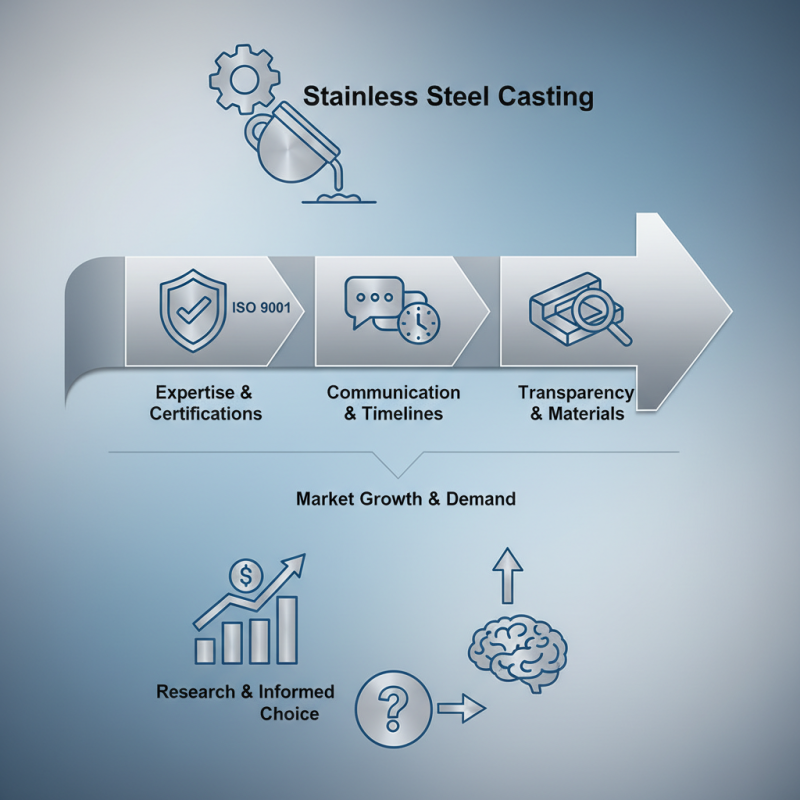
Choosing the right stainless steel casting supplier is crucial for achieving quality and efficiency. Stainless steel casting is a process that impacts various industries, from automotive to aerospace. In 2022, the global stainless steel casting market was valued at approximately $10 billion, with a projected growth rate of 6.5% from 2023 to 2030. These statistics highlight the increasing demand for reliable suppliers.
When assessing suppliers, expertise is key. Look for companies with extensive experience and a strong reputation in stainless steel casting. Quality certifications, such as ISO 9001, ensure that manufacturers adhere to rigorous standards. However, not all suppliers meet these criteria, which can lead to inconsistent results.
Additionally, communication plays a vital role. Suppliers should provide clear timelines and be responsive to inquiries. Transparency about materials and production processes is essential. Many buyers overlook these aspects, which can result in complications later. Therefore, conducting thorough research and asking the right questions is critical for making an informed choice.
Stainless steel casting is a pivotal method in various industries, including automotive, aerospace, and medical. It involves pouring molten stainless steel into molds. This process yields complex shapes with high strength and corrosion resistance. These properties make stainless steel an ideal choice for demanding applications. Cast parts can endure extreme temperatures and harsh environments. This versatility is essential in today’s competitive market.
Many industries rely on stainless steel components. In the automotive sector, they are used in exhaust systems and structural parts. In aerospace, their lightweight yet strong features enhance performance. Medical devices also benefit from stainless steel's biocompatibility and ease of sterilization. However, the casting quality can greatly vary based on supplier expertise.
Choosing the right supplier is critical. A supplier's experience can influence the final product's quality. It's important to assess their production capabilities and quality control measures. Evaluating past projects and client feedback can provide insights. Industries need to balance cost and quality. Sometimes, the cheapest option may lead to disappointing results. Reflecting on these factors can drive better decision-making in supplier selection.
Choosing the right stainless steel casting supplier is crucial for any manufacturing process. The first key factor is assessing their experience. Suppliers with a proven track record show they understand the complexities of stainless steel casting. Look for providers with several years in the industry. Don’t hesitate to ask for case studies or references to validate their expertise.
Next, evaluate the quality control processes in place. Reliable suppliers should have robust quality assurance protocols. Ask about their testing methodologies. How do they ensure the finished products meet industry standards? This transparency indicates their commitment to quality.
Tips: Always check certifications. Industry standards, such as ISO or ASTM, can provide an assurance of quality.
Another vital aspect is communication. A responsive supplier who actively engages in discussions can significantly impact your project. Notice how quickly they reply to inquiries. A slow response may indicate their overall service quality. Ensure they are accessible and willing to collaborate closely with your team.
Tip: Consider visiting their facility if possible. Observing their operations can provide clear insights into their efficiency and capabilities.
When selecting stainless steel casting suppliers, evaluating their capabilities is essential. Start by reviewing their manufacturing processes. A reliable supplier should employ advanced technologies, ensuring precision and efficiency in production. Look for suppliers with certifications that reflect their commitment to quality. These validations often indicate a proven track record.
Tips: Ask for samples of their products. This helps assess the finish and quality of their castings. If the samples meet your standards, it’s a promising sign.
Also, consider the supplier's sourcing of materials. Are they using high-grade stainless steel? Understanding the quality of raw materials can impact the final product significantly.
Assessing a supplier's capacity is equally important. Can they meet your volume requirements? Investigate their past projects and client feedback. This allows you to gauge reliability and performance. A solid reputation can often lead to successful partnerships.
Tips: Direct communication is crucial. Discuss project timelines and delivery expectations before making commitments. A supplier's willingness to communicate openly often reflects their professionalism.
When selecting stainless steel casting suppliers, quality control is paramount. Industry reports indicate that over 70% of manufacturing issues stem from inadequate quality standards. This highlights the need for suppliers to adhere strictly to recognized certifications like ISO 9001, which ensures consistent quality management systems.
Quality control measures should also extend to materials used in the casting process. For instance, suppliers must demonstrate the use of alloy compositions that meet industry specifications, like ASTM and ASME. Inadequate checks can lead to costly defects. A study from the American Foundry Society suggests that even minor deviations in alloy composition can reduce performance by up to 20%.
Another aspect to consider is the testing protocols in place. Suppliers should not only conduct standard tests but also use advanced techniques like X-ray fluorescence and metallographic analysis. While many suppliers claim robust testing procedures, there’s always a risk of oversights. Prospective buyers should audit and verify these practices regularly to ensure reliability. This ensures a consistent quality and can help prevent future production problems.
Building long-term relationships with stainless steel suppliers is crucial for businesses. Trust is fundamental. When suppliers understand your needs, they can deliver better quality products. Communication should be consistent. Frequent updates and feedback strengthen these bonds.
Consider visiting suppliers’ facilities. This allows you to see their processes firsthand. It also shows your commitment. Building rapport with key team members helps too. Knowing who manages production can ease concerns. Yet, be ready for challenges. Misunderstandings may arise. Address issues promptly to maintain trust.
Long-term partnerships also create opportunities for innovation. Suppliers can suggest improvements based on their expertise. Together, you can explore new designs or materials. However, don’t assume all suggestions will fit perfectly. It's important to critically evaluate new ideas. This collaborative approach can lead to valuable advancements.
| Supplier Criteria | Importance Level (1-5) | Notes |
|---|---|---|
| Quality Certifications | 5 | Look for ISO and ASTM certifications to ensure standards. |
| Experience in Industry | 4 | Suppliers with extensive experience often have better reliability. |
| Production Capacity | 4 | Ensure they can meet your demand levels. |
| Technical Support | 5 | Good technical support can help in solving issues quickly. |
| Pricing Competitiveness | 3 | Balance between cost and quality is crucial. |
| Communication | 5 | Clear communication is key to any successful partnership. |
| Delivery Reliability | 5 | Timely deliveries help in maintaining production schedules. |
| Sustainability Practices | 4 | Consider suppliers committed to eco-friendly practices. |
„Thanks to the LUVIR technology, the solder resist process could be switched directly from the previously used mask exposure to direct exposure. As an outstanding digital solution on the market, this technology has been able to demonstrate fast process times and superior quality on our certified conventional ink in production. This allowed us to fully digitize the solder mask process at low cost – without process or ink adjustments. An excellent benefit to our production in Rot am See.“
Ralf Göhringer (Head of Production WE Rot am See)
I would definitely recommend the Limata machine and team for a future company purchase
Michael Greenaway
Compunetics Inc.
“The Limata ldi has been amazing!! Best thing we did was buy this machine”
Richard Brady
GM
Circuitlabs
“Since 2019, we have been running the Limata X1000 LDI system (including LUVIR for solder mask imaging) in daily production as an addition to our current process with film. The machine was capable of properly exposing Taiyo PSR-4000 BN (DI) solder mask types on normal to high-copper boards using a new and unique direct imaging process. The machine operating interface is very user friendly which allowed for a quick technical training curve. The pre-registration processing reduced several seconds of production time at every print. Limata support and service staff is incomparable. They supported our team every step of the way at basically any time of the day or night, with literally, an immediate response time, customizing the software interface to best fit our Operations and needs.
We have exposed more than 8,000 prints since end of October, on various solder mask colors and some resist film panels. Limata, has proven to be very capable and innovative. They are a strong contender in the industry.
We have very much enjoyed this project, and working with the team!
Thank you Limata for the continued support and being a part of our growth.”
Bill Sezate
Vice President, GM
Summit Interconnect
As a replacement to our current contact exposure process with film, the LIMATA X2000 system including LUVIR-Technology was capable of properly exposing non-LDI solder mask types using a direct imaging process. The machine offers cutting edge software with a very intuitive operating interface which allowed for quick technician training curve. The dual drawer system combined with pre-registration processing reduced several seconds of production time at every machine cycle. Limata support and service staff is world class. They added software patches to keep production running at shortest possible response times, customized the software interface to best fit our in-house Operations system, and even wrote a step-by-step machine processing manual. As a result of the project, we have exposed more than 16,000 times on various product types and solder mask brands/colors. Limata, in a very short timeframe as a company, has definitely shown they are truly innovative and will be challenging the industry of direct imaging for the top spot.
Kevin Beattie
Process Engineer
TTM Technologies
Forest Grove Division
