Choosing the right Volleyball Training Machine can be challenging, especially for beginners. With various options available on the market, it’s essential to consider what best suits your needs. A Volleyball Training Machine not only helps improve your skills but also helps build your confidence on the court.
When selecting a machine, consider factors like ease of use, versatility, and durability. Beginners might prioritize features that facilitate learning basic techniques. A machine that offers adjustable speeds and angles can be beneficial. It allows for tailored training sessions. However, some machines may seem too complex, leading to frustration. Reflecting on personal goals is crucial.
The price range varies widely. Investing in a quality machine can be worth it. But it’s easy to feel overwhelmed by options. Take the time to read reviews from other users. Their experiences can provide valuable insights. Remember, the right Volleyball Training Machine can make a significant difference in your training journey, so choose wisely.
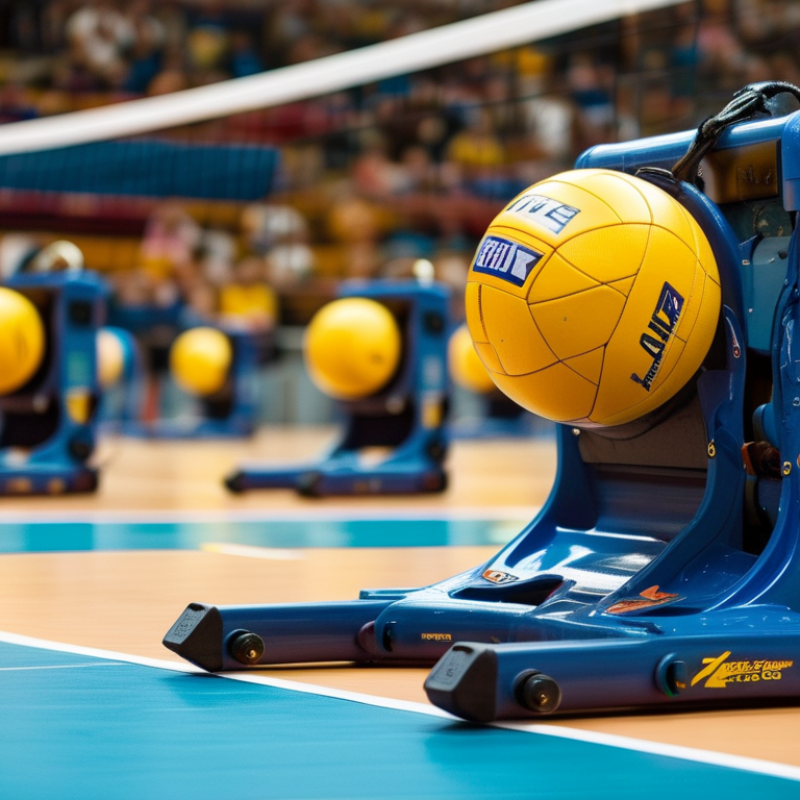
When starting out in volleyball, a training machine can be a great asset. It helps beginners practice their timing and accuracy without needing a partner. These machines can serve the ball at various speeds and angles. This allows players to adjust their techniques and learn from their mistakes. However, choosing the right one can be a bit tricky.
Understanding the basics of volleyball training machines is essential. They vary in features like ball capacity and speed settings. Some machines are designed for specific drills, while others are more versatile. Beginners might feel overwhelmed by the options. It’s important to align your choice with your training goals. Ask yourself: what do I want to improve? Is it my serve, spike, or overall reaction time?
A common mistake is overlooking build quality. A machine that seems perfect on paper might not hold up after a few months. Durability matters, especially for beginners who are still refining their skills. Consider user reviews and expert insights to gauge reliability. Don’t underestimate the value of a simple design. Sometimes, less is more when it comes to functionality. Reflect on your needs and preferences before making a decision.
When selecting a volleyball training machine, understanding the types available is essential. Two common types are ball machines and serving machines. Ball machines often have adjustable speed and angle settings. This allows players to practice receiving and passing with different trajectories. The ability to set the interval between shots helps beginners develop timing and coordination.
Serving machines focus specifically on improving serve accuracy and power. These machines can simulate different types of serves, making them ideal for honing specific skills. While they can be beneficial, not every beginner requires extensive features. It's crucial to assess your training goals and challenges. Some players may prefer simpler machines that provide consistent feeding. Others might find value in advanced models that offer a range of settings.
Throwing machines fill another niche. They can help refine spiking techniques by delivering balls at varying heights and angles. Many beginners struggle with proper timing and footwork. A throwing machine can build these skills through repetition. Yet, finding a balance between machine training and on-court practice is necessary. Relying solely on machines may hinder overall gameplay development. A mixed approach often yields the best results for aspiring athletes.
When selecting a volleyball training machine for beginners, key features are essential. Look for machines that offer adjustable settings. Beginners may need different speeds and angles. This versatility helps in developing various skills effectively. A machine with multiple modes allows users to practice serves, spikes, and digs, enhancing overall training.
Consider the machine's durability and build quality. It should withstand regular use while maintaining performance. Often, cheaper models may compromise on these aspects. A sturdy machine instills confidence in beginners. Stability is crucial in ensuring safe practice sessions, reducing the chance of accidents.
Portability is another important feature. Beginners may want to train in different locations. A lightweight machine that is easy to transport can enhance training flexibility. It's worth reflecting on how often you’ll move the machine. Sometimes, convenience leads to inconsistent training routines. Thus, balancing portability with functionality is vital for effective home or court use.
When selecting a volleyball training machine, budget is a crucial factor. Beginners often have limited resources. Research shows that entry-level machines range from $300 to $1,000. Many beginner-friendly options provide essential features without overwhelming costs. A simple machine can help improve basic skills like passing and setting, which is vital for new players.
Investing wisely requires balancing quality and price. Some valuable machines may cost more initially. However, paying for durability can save money in the long run. Many training tools allow for easy adjustments and varied drills. Reports indicate that machines with customizable settings can enhance skill acquisition faster. They enable beginners to practice not just consistently but also effectively.
Additionally, before making a purchase, consider equipment longevity. Look for machines with solid warranties and reliable reviews. Beginners should seek out equipment that fits their development needs. It’s common to overlook the importance of these aspects. In many cases, skipping on quality can hinder progress, leaving players frustrated and unmotivated. Careful evaluation ensures that you choose the right tool for improvement.
This chart illustrates the budget considerations when selecting volleyball training machines for beginners. The price ranges for entry-level, mid-range, and high-end machines are displayed, helping users to identify which type fits their budget best.
Maximizing the use of your volleyball training machine requires some focused strategies. Start by setting clear goals before each session. Are you aiming to improve your serve accuracy or strengthen your spikes? Specific goals help track your progress. For better skill development, focus on a few key techniques each session. Overloading too many skills at once can lead to confusion and frustration.
Understand the settings of your training machine. Pay attention to the speed and angle of the balls. Adjusting these parameters can significantly change the ball trajectory. Beginners often miss this vital step. Experiment with lower speeds first to build confidence, then gradually increase as you improve.
Regular practice is important, but so is reflection. After each session, take a moment to assess what worked and what didn’t. Jot down notes on your performance. Did you struggle with certain shots? Identify the weak points, and consider additional drills to target those areas. Embracing imperfections is part of growth. Learning from mistakes accelerates skill development and prepares you for real-game scenarios.
„Thanks to the LUVIR technology, the solder resist process could be switched directly from the previously used mask exposure to direct exposure. As an outstanding digital solution on the market, this technology has been able to demonstrate fast process times and superior quality on our certified conventional ink in production. This allowed us to fully digitize the solder mask process at low cost – without process or ink adjustments. An excellent benefit to our production in Rot am See.“
Ralf Göhringer (Head of Production WE Rot am See)
I would definitely recommend the Limata machine and team for a future company purchase
Michael Greenaway
Compunetics Inc.
“The Limata ldi has been amazing!! Best thing we did was buy this machine”
Richard Brady
GM
Circuitlabs
“Since 2019, we have been running the Limata X1000 LDI system (including LUVIR for solder mask imaging) in daily production as an addition to our current process with film. The machine was capable of properly exposing Taiyo PSR-4000 BN (DI) solder mask types on normal to high-copper boards using a new and unique direct imaging process. The machine operating interface is very user friendly which allowed for a quick technical training curve. The pre-registration processing reduced several seconds of production time at every print. Limata support and service staff is incomparable. They supported our team every step of the way at basically any time of the day or night, with literally, an immediate response time, customizing the software interface to best fit our Operations and needs.
We have exposed more than 8,000 prints since end of October, on various solder mask colors and some resist film panels. Limata, has proven to be very capable and innovative. They are a strong contender in the industry.
We have very much enjoyed this project, and working with the team!
Thank you Limata for the continued support and being a part of our growth.”
Bill Sezate
Vice President, GM
Summit Interconnect
As a replacement to our current contact exposure process with film, the LIMATA X2000 system including LUVIR-Technology was capable of properly exposing non-LDI solder mask types using a direct imaging process. The machine offers cutting edge software with a very intuitive operating interface which allowed for quick technician training curve. The dual drawer system combined with pre-registration processing reduced several seconds of production time at every machine cycle. Limata support and service staff is world class. They added software patches to keep production running at shortest possible response times, customized the software interface to best fit our in-house Operations system, and even wrote a step-by-step machine processing manual. As a result of the project, we have exposed more than 16,000 times on various product types and solder mask brands/colors. Limata, in a very short timeframe as a company, has definitely shown they are truly innovative and will be challenging the industry of direct imaging for the top spot.
Kevin Beattie
Process Engineer
TTM Technologies
Forest Grove Division
