Choosing the right farm tractor attachments is crucial for efficiency and productivity in agricultural operations. According to the American Society of Agricultural and Biological Engineers, over 60% of farmers report that the appropriate attachments significantly enhance their workflow. These tools, ranging from plows to seeders, can transform the capabilities of a tractor, making it essential to understand your specific needs.
Understanding the variety of farm tractor attachments can be daunting. Each attachment has unique features tailored for specific tasks. For instance, a skid steer loader attachment can assist with landscaping, while front-end loaders tackle heavy material lifting. Farmers must evaluate their workload and the terrain they work on to select attachments that best serve their purposes.
Investing in the right attachments can lead to long-term savings and higher output. However, choosing poorly could result in wasted resources and unfulfilled projects. It is not just about having attachments; it's about having the right ones. Hence, farmers need to reflect on their current operations, identify gaps, and explore versatile options that can address their ongoing challenges.
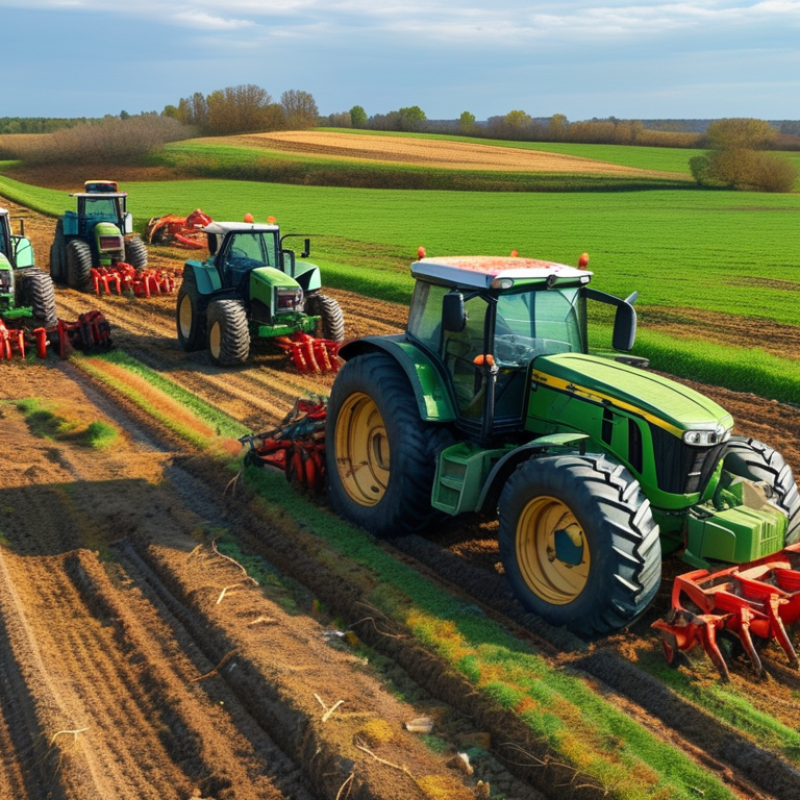
Understanding your farming needs is essential when selecting tractor attachments. A study from the American Society of Agricultural and Biological Engineers reveals that properly matched attachments can increase productivity by 30% or more. Knowing your goals—whether it's crop production, haymaking, or land clearing—sets the foundation for effective equipment choices.
Analyzing the size and type of your farm is crucial. For example, small farms may benefit from lightweight attachments that prevent soil compaction. A report by the USDA highlights that 40% of farmers choose attachments based on operational efficiency and soil health. However, it’s easy to overlook how specific tasks can impact your efficiency. Misjudging the size or capacity of an attachment can lead to wasted time and resources.
You also need to consider seasonal tasks. For instance, if you plan to expand your operations, investing in versatile attachments is wise. Many farmers regret not considering future needs. Data from farming surveys shows that 25% of attachment purchases are made without long-term goals in mind. Aligning your purchases with anticipated demands enhances your farm's overall productivity.
When selecting tractor attachments, understanding your tractor's specifications is crucial. Each tractor comes with specific capabilities, including horsepower, hydraulic capacity, and lift height. According to the American Society of Agricultural and Biological Engineers, proper matching of attachments can enhance efficiency by up to 25%. Assessing your tractor's horsepower is especially important, as most attachments require a minimum power requirement to function properly.
Compatibility is not just about size. The hydraulic system must also align with the attachment's needs. For instance, a loader might require a higher flow rate than what your tractor provides. A report from the Agricultural Equipment Manufacturers Association indicates that mismatched hydraulic systems are a common issue among operators. This misalignment can lead to inefficient performance or even damage.
It’s essential to consider your specific tasks when choosing attachments. Depending on your farming needs, tools can vary widely. For example, if you intend to till, ensure your tractor has enough lift height for the tiller. Farmers sometimes overlook these details, leading to frustration and wasted resources. Always consult your tractor’s manual and review attachment specifications before purchasing. Taking the time to understand these elements can result in better decision-making and improved productivity.
| Attachment Type | Power Requirement (HP) | Weight (lbs) | Working Width (inches) | Tractor Compatibility |
|---|---|---|---|---|
| Front Loader | 30 - 50 HP | 800 - 1200 | 60 | Compatibility with Loader Mount |
| Plow | 25 - 45 HP | 400 - 700 | 40 | 3-Point Hitch |
| Hitch Seeder | 20 - 40 HP | 300 - 500 | 48 | Compatible with Category I |
| Box Blade | 25 - 50 HP | 600 - 900 | 60 | 3-Point Hitch |
| Rotary Cutter | 30 - 50 HP | 500 - 800 | 60 | Category I or II |
When selecting tractor attachments, understanding the different types available is crucial. Attachments vary widely in function and capability. For instance, front loaders are excellent for moving soil and debris. They can lift heavy loads, enhancing productivity on the farm. A study by the Agricultural and Food Research Council shows that farmers using front loaders can increase their efficiency by up to 25%.
Another essential type of attachment is the plow. Plows are vital for land preparation. They break up the soil and create furrows for planting. Research indicates that using a plow can lead to a 15% increase in crop yield by improving soil conditions. However, not all plows suit every type of soil. Evaluating soil texture and type before choosing is necessary.
Consider also specialized attachments like seeders or mowers. Seeders automate planting, saving time and reducing labor costs. Mowers help manage overgrown fields, a task critical for maintaining pasture health. With various options available, farmers often experience hesitation in choosing the right attachment. A careful analysis of your specific farming needs, combined with performance data and soil conditions, can guide your decision effectively.
When choosing farm tractor attachments, evaluating their performance and versatility is key. Various attachments can drastically change how you operate your tractor. Some attachments may excel in specific tasks but may not perform well in others. Understanding your land and needs can help make the right choice.
Testing the versatility of an attachment helps maximize your investment. For instance, a loader can be used for various tasks, such as moving dirt or lifting bales. However, if it cannot effectively handle heavy loads, it may not be worth purchasing. Always consider the weight capacity and the tasks you plan to accomplish.
Tips for evaluation:
When budgeting for farm tractor attachments, it’s essential to assess your specific needs. Each attachment serves a unique purpose, such as plowing, tilling, or hauling. Understanding what tasks you will perform can significantly influence your spending. Prioritize essential attachments over luxury options. Sometimes, cheaper alternatives perform just as well for basic tasks.
Tips: Always explore second-hand options. Many farmers sell barely-used equipment at a fraction of the cost. Inspect attachments thoroughly before purchase. Look for signs of wear and tear that might lead to unexpected costs later.
Factor in long-term expenses beyond the initial purchase price. Maintenance, repairs, and necessary accessories can add to the overall cost. Consider how frequently you will use each attachment. Frequently used items may justify a higher expense. However, seldom-used tools might need deeper reflection. Not every attachment is worth the investment, especially if it gathers dust in the barn.
„Thanks to the LUVIR technology, the solder resist process could be switched directly from the previously used mask exposure to direct exposure. As an outstanding digital solution on the market, this technology has been able to demonstrate fast process times and superior quality on our certified conventional ink in production. This allowed us to fully digitize the solder mask process at low cost – without process or ink adjustments. An excellent benefit to our production in Rot am See.“
Ralf Göhringer (Head of Production WE Rot am See)
I would definitely recommend the Limata machine and team for a future company purchase
Michael Greenaway
Compunetics Inc.
“The Limata ldi has been amazing!! Best thing we did was buy this machine”
Richard Brady
GM
Circuitlabs
“Since 2019, we have been running the Limata X1000 LDI system (including LUVIR for solder mask imaging) in daily production as an addition to our current process with film. The machine was capable of properly exposing Taiyo PSR-4000 BN (DI) solder mask types on normal to high-copper boards using a new and unique direct imaging process. The machine operating interface is very user friendly which allowed for a quick technical training curve. The pre-registration processing reduced several seconds of production time at every print. Limata support and service staff is incomparable. They supported our team every step of the way at basically any time of the day or night, with literally, an immediate response time, customizing the software interface to best fit our Operations and needs.
We have exposed more than 8,000 prints since end of October, on various solder mask colors and some resist film panels. Limata, has proven to be very capable and innovative. They are a strong contender in the industry.
We have very much enjoyed this project, and working with the team!
Thank you Limata for the continued support and being a part of our growth.”
Bill Sezate
Vice President, GM
Summit Interconnect
As a replacement to our current contact exposure process with film, the LIMATA X2000 system including LUVIR-Technology was capable of properly exposing non-LDI solder mask types using a direct imaging process. The machine offers cutting edge software with a very intuitive operating interface which allowed for quick technician training curve. The dual drawer system combined with pre-registration processing reduced several seconds of production time at every machine cycle. Limata support and service staff is world class. They added software patches to keep production running at shortest possible response times, customized the software interface to best fit our in-house Operations system, and even wrote a step-by-step machine processing manual. As a result of the project, we have exposed more than 16,000 times on various product types and solder mask brands/colors. Limata, in a very short timeframe as a company, has definitely shown they are truly innovative and will be challenging the industry of direct imaging for the top spot.
Kevin Beattie
Process Engineer
TTM Technologies
Forest Grove Division
