The construction industry is rapidly evolving, and the choice of machinery plays a crucial role in efficiency and sustainability. The Hydraulic Interlocking Brick Making Machine stands out for its innovation. According to a recent report by the International Cement Review, the global market for interlocking bricks is projected to grow by 8% annually over the next five years. This shift highlights the growing demand for eco-friendly building solutions.
Expert in the field, Dr. Emily Hartman, states, "The Hydraulic Interlocking Brick Making Machine not only enhances production speed but also reduces material waste." Such insights emphasize why many construction companies are considering this equipment. With increased environmental awareness, builders are turning towards sustainable options.
However, it is essential to reflect on the initial costs of these machines. While they promise long-term gains, the upfront investment can be daunting. Companies need to balance immediate financial pressures with potential future benefits. In an industry that often prioritizes short-term gains, this shift towards hydraulic technology presents both challenges and opportunities for growth.
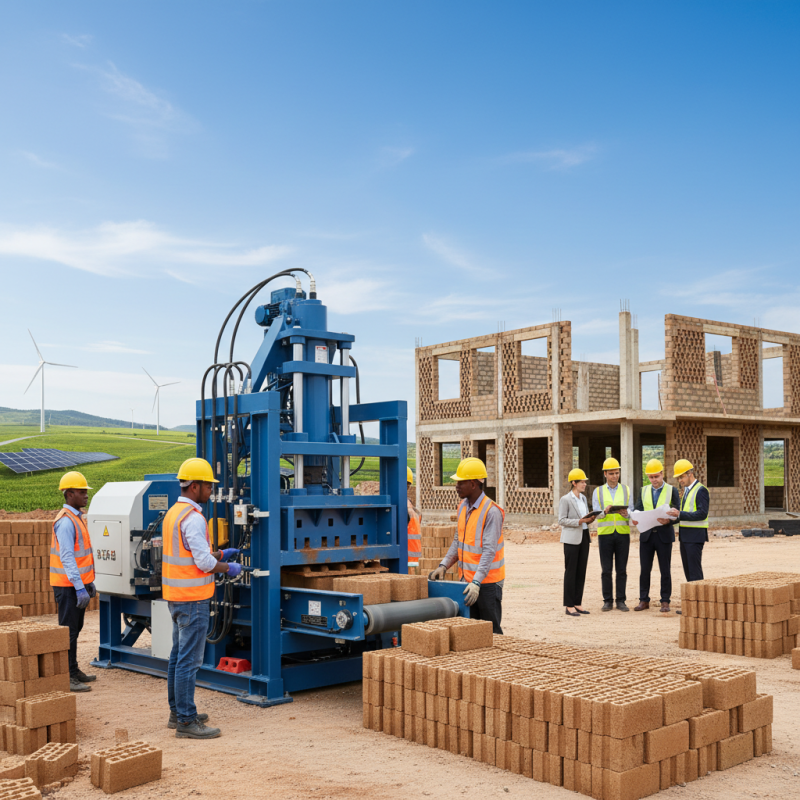
A hydraulic interlocking brick making machine offers numerous benefits for construction projects. One significant advantage is its efficiency. These machines can produce high-quality bricks at a faster rate compared to traditional methods. They use hydraulic pressure to compact the raw materials, resulting in durable bricks. The automation involved reduces labor costs and minimizes human error in the production process.
Another key benefit is the sustainability aspect. The bricks produced are made from earth-friendly materials. This approach not only conserves resources but also reduces waste. Moreover, interlocking bricks require less mortar. This factor can lower construction costs and make the building process quicker. However, adopting this technology does require an initial investment, which may pose a challenge for some.
Maintenance is crucial for these machines to function effectively. Regular checks and upkeep ensure longevity and consistent performance. While hydraulic machines provide many advantages, they can be complex to operate. Proper training is essential for operators. This complexity can lead to inefficiencies if not managed correctly. Ultimately, choosing a hydraulic interlocking brick making machine can enhance construction projects, but it requires careful consideration and planning.
Hydraulic interlocking brick making machines represent a significant advancement in brick production technology. Their hydraulic mechanisms facilitate quicker mold setting and efficient compaction. According to industry reports, machines utilizing hydraulic technology can enhance production speed by up to 30%. This increase in efficiency often leads to a reduction in labor costs as well.
Moreover, hydraulic machines provide better pressure control. This ability results in denser and more durable bricks. Studies show that bricks made under hydraulic pressure can have a compressive strength of over 14 MPa, significantly exceeding traditional methods. However, it is important to note that not all hydraulic systems operate equally. Some machines may require more maintenance, which can impact long-term efficiency.
The automation of hydraulic brick making machines also aids in reducing human error. Yet, when transitioning to hydraulic technology, operators must undergo proper training. A lack of expertise can result in suboptimal production outcomes. Industry experts emphasize continuous learning to maximize these machines' potential. By focusing on training, companies can fully leverage the benefits of hydraulic brick production.
Hydraulic interlocking brick manufacturing presents several environmental advantages. This method promotes sustainability by utilizing local materials, which reduces transportation emissions. A report from the International Society for Soil and Water Conservation indicates that the bricks can be made using up to 80% recycled materials, significantly lowering the carbon footprint.
Additionally, hydraulic machines use less energy compared to traditional brick-making methods. According to the United Nations Environment Programme, conventional brick production can emit over 700 kg of CO2 for every 1,000 bricks. However, using hydraulic technology can cut this figure by up to 50%. This transition not only mitigates air pollution but also conserves energy resources, aligning with global sustainability goals.
Despite these benefits, challenges remain. The initial investment in a hydraulic interlocking brick making machine can be high. Additionally, operational knowledge is crucial to ensure the production process remains efficient and environmentally friendly. Regular training and updates are necessary to keep pace with technological advancements. Addressing these issues thoughtfully can enhance the positive impact on our environment while promoting responsible manufacturing practices.
Hydraulic interlocking brick making machines offer a modern approach to brick production. The cost analysis reveals significant differences when compared to traditional methods. With hydraulic machines, production efficiency increases. This means less labor is needed, which can reduce overall costs. Workers can produce bricks faster, allowing businesses to meet demand more effectively.
Traditional brick-making methods often involve labor-intensive processes. This can lead to higher costs due to manual labor, longer production times, and material waste. While some may feel comfortable using these traditional techniques, they may not always yield consistent quality. Hydraulic machines, on the other hand, produce uniform bricks that ensure structural integrity, which is vital in construction projects.
However, investing in hydraulic technology can be a significant initial expense. Operators may face a learning curve when adapting to the technology. This transition period can impact production efficiency temporarily. It's crucial to weigh these factors carefully. While hydraulic machines can lead to long-term savings, the short-term challenges should not be overlooked. Transitioning to modern methods requires careful planning and consideration.
When selecting a hydraulic interlocking brick making machine, it's crucial to focus on its key features. One essential aspect is the machine's build quality. Look for robust construction using durable materials. A sturdy frame ensures reliable performance and longevity. Additionally, check the hydraulic system. A high-quality hydraulic setup can significantly enhance efficiency and precision in brick production.
Another important factor is the versatility of the machine. It should accommodate various brick sizes and shapes. This adaptability can open new markets and meet diverse customer needs. Ease of operation is also vital. A user-friendly interface allows operators to start production quickly. It reduces the learning curve for new employees and minimizes operational errors.
Finally, assess the energy efficiency of the machine. Lower energy consumption reduces production costs. However, achieving this balance can be challenging. You want a machine that performs well without excessive energy use. Consider overall maintenance requirements too. While some machines boast low maintenance, they may demand technical expertise. This can complicate operations, leading to potential downtime. Making the right choice requires careful evaluation of these features, balancing practicality with innovation.
„Thanks to the LUVIR technology, the solder resist process could be switched directly from the previously used mask exposure to direct exposure. As an outstanding digital solution on the market, this technology has been able to demonstrate fast process times and superior quality on our certified conventional ink in production. This allowed us to fully digitize the solder mask process at low cost – without process or ink adjustments. An excellent benefit to our production in Rot am See.“
Ralf Göhringer (Head of Production WE Rot am See)
I would definitely recommend the Limata machine and team for a future company purchase
Michael Greenaway
Compunetics Inc.
“The Limata ldi has been amazing!! Best thing we did was buy this machine”
Richard Brady
GM
Circuitlabs
“Since 2019, we have been running the Limata X1000 LDI system (including LUVIR for solder mask imaging) in daily production as an addition to our current process with film. The machine was capable of properly exposing Taiyo PSR-4000 BN (DI) solder mask types on normal to high-copper boards using a new and unique direct imaging process. The machine operating interface is very user friendly which allowed for a quick technical training curve. The pre-registration processing reduced several seconds of production time at every print. Limata support and service staff is incomparable. They supported our team every step of the way at basically any time of the day or night, with literally, an immediate response time, customizing the software interface to best fit our Operations and needs.
We have exposed more than 8,000 prints since end of October, on various solder mask colors and some resist film panels. Limata, has proven to be very capable and innovative. They are a strong contender in the industry.
We have very much enjoyed this project, and working with the team!
Thank you Limata for the continued support and being a part of our growth.”
Bill Sezate
Vice President, GM
Summit Interconnect
As a replacement to our current contact exposure process with film, the LIMATA X2000 system including LUVIR-Technology was capable of properly exposing non-LDI solder mask types using a direct imaging process. The machine offers cutting edge software with a very intuitive operating interface which allowed for quick technician training curve. The dual drawer system combined with pre-registration processing reduced several seconds of production time at every machine cycle. Limata support and service staff is world class. They added software patches to keep production running at shortest possible response times, customized the software interface to best fit our in-house Operations system, and even wrote a step-by-step machine processing manual. As a result of the project, we have exposed more than 16,000 times on various product types and solder mask brands/colors. Limata, in a very short timeframe as a company, has definitely shown they are truly innovative and will be challenging the industry of direct imaging for the top spot.
Kevin Beattie
Process Engineer
TTM Technologies
Forest Grove Division
