Choosing the right LTCC green tape is crucial for your manufacturing success. This specialized tape plays a significant role in producing durable and efficient electronic components. Understanding its properties and applications can enhance your production quality.
When selecting LTCC green tape, several factors must be considered. The right tape must meet your specific requirements. Features such as thickness, dielectric constant, and adhesion strength all impact performance. Additionally, the choice of manufacturer can affect consistency and reliability. It's essential to research and compare options thoroughly.
Moreover, experience with LTCC green tape is vital. Some manufacturers may not provide the same level of quality. Reflecting on past choices can guide better decisions in the future. Being informed is key to optimizing your manufacturing process. Use this insight to elevate your approach and ensure that you select the best LTCC green tape for your needs.
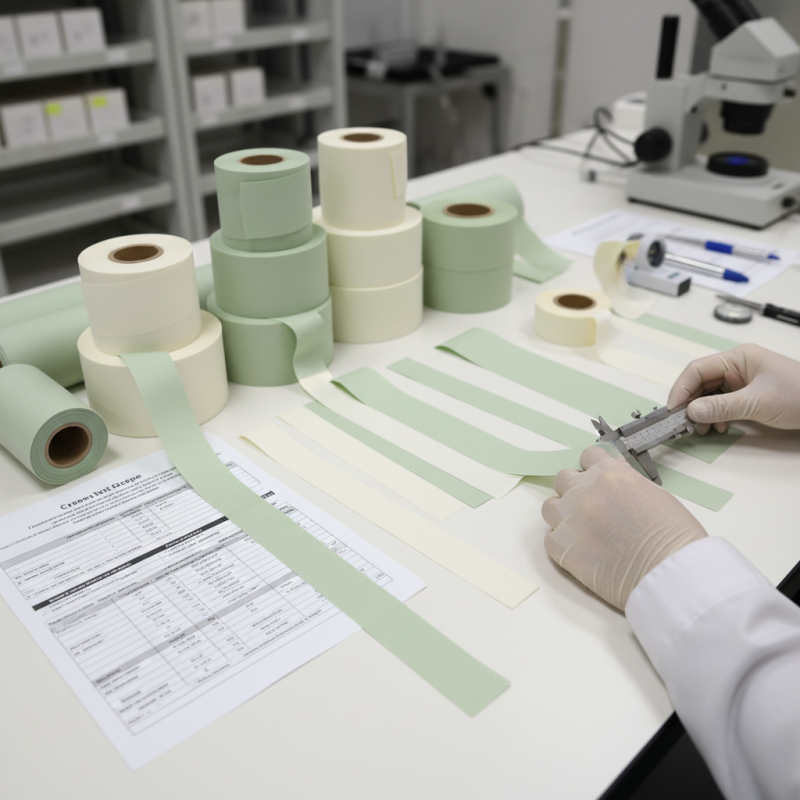
LTCC (Low Temperature Co-fired Ceramic) green tape is essential in electronics manufacturing. It serves as a substrate for various applications, including multilayer circuits and high-frequency devices. Understanding its composition helps in choosing the right type for your needs. LTCC green tape typically comprises glass-ceramic materials, which provide excellent dielectric properties.
The manufacturing process of LTCC involves co-firing ceramic and metal layers at lower temperatures than traditional methods. This characteristic enhances compatibility with diverse components. However, while selecting LTCC, consider factors like sintering temperature and shrinkage rate. These can impact the final dimensions of your product. Customization options are available, but they might require additional testing.
Incorporating LTCC green tape into your designs can bring both benefits and challenges. Limited availability might affect timely production. Additionally, the learning curve for new users can be steep. It is vital to evaluate how this material aligns with your project goals. Engaging experts in the field can provide valuable insights during this decision-making process.
| Property | Description | Typical Values |
|---|---|---|
| Thickness | The measure of how thick the tape is, impacting the layering in manufacturing. | 50 - 200 microns |
| Dielectric Strength | Ability to withstand electric fields without breaking down. | > 10 kV/mm |
| Cure Temperature | Temperature at which the tape hardens and achieves its final properties. | 850 - 900 °C |
| Flexural Strength | Resistance to bending forces, important for reliability in applications. | > 100 MPa |
| Applications | Common uses for LTCC green tape, ranging from electronics to sensors. | RFID tags, sensors, filters, and substrates for microwave circuits |
| Material Composition | Basic materials used in the formulation of LTCC green tape. | Layered ceramic and glass materials |
When selecting LTCC green tape, understanding its thermal and electrical performance is crucial. LTCC, or Low-Temperature Co-fired Ceramic, green tape can endure high temperatures while maintaining structural integrity. It usually has a dielectric constant between 4.5 and 8.5, which is ideal for various applications in electronics.
Thermal performance is a defining characteristic of LTCC materials. Many LTCC tapes can withstand temperatures exceeding 800°C without significant degradation. According to industry reports, the coefficient of thermal expansion (CTE) of LTCC green tape typically ranges from 5 to 9 ppm/°C. This low CTE is advantageous for high-density interconnects, as it helps prevent mechanical failure in tightly packed circuits.
Regarding electrical performance, LTCC green tapes exhibit excellent insulation resistance, often exceeding 10^12 ohms. This property makes them suitable for high-frequency applications. Additionally, the loss tangent values of LTCC tapes are typically low, enhancing signal integrity. However, achieving optimal performance necessitates careful selection based on specific application requirements. Some tapes may not perform well under extreme conditions, highlighting the importance of thorough testing and evaluation.
When selecting LTCC green tape for manufacturing, evaluating its mechanical properties is crucial. Strength and flexibility are two key attributes that affect performance. Industry reports indicate that the tensile strength of high-quality green tape can exceed 50 MPa. This strength ensures that the tape can withstand the mechanical stresses encountered during processing. Additionally, the flexibility of the tape plays a significant role in its applications, particularly in complex geometries.
Consider the specific requirements of your project. It’s important to match the mechanical properties of the tape to the demands of your application. For instance, if your design involves bending or shaping, a more flexible tape might be necessary. On the other hand, rigidity may be required for applications that need structural integrity.
Tip: Always review the manufacturer’s datasheet for detailed mechanical properties. Transparency in specifications reflects reliability. It’s wise to conduct your tests. Real-world performance can differ from lab results. Evaluating samples can reveal inconsistencies that data alone may not show. Adjust your choices based on practical insights.
When selecting LTCC (Low Temperature Co-fired Ceramics) green tape, understanding the variations among manufacturers is crucial. The cost can vary significantly based on several factors, including composition and processing techniques. Some companies may offer lower prices, but this often comes at the cost of quality. Checking specifications, such as thickness and dielectric properties, is essential. Remember, lower cost does not always equate to better value.
Quality is another critical factor. It affects durability and performance. Poor-quality tape can result in defects during the co-firing process. Such defects lead to wasted materials and increased production time. Ideally, manufacturers provide testing data to prove their products' reliability. Seek recommendations and reviews from others in your field. Evaluating multiple suppliers helps make a more informed decision.
Reflecting on your needs is also important. Are you looking for high-volume production or specialized applications? Balancing quality and cost often requires trade-offs. Some manufacturers may excel in one area but fall short in another. Conducting thorough research aids in understanding these nuances. Consider the long-term implications of your choice.
Selecting the right thickness and size for LTCC green tape is crucial for manufacturing success. The thickness influences the tape's electrical and thermal properties. Typically, thickness options range from 50μm to 200μm. A study published by the Institute of Electrical and Electronics Engineers suggests that for high-frequency applications, thinner tapes are often preferred. However, thicker tapes may provide better structural integrity for larger components.
Size also matters when choosing LTCC tape. The width and length can affect material yield and production efficiency. Industry standards often recommend a width of at least 100 mm for large-scale production. Smaller widths can lead to increased waste and rework. A report from the Ceramic Society indicates that precise size selection can reduce scrap rates by up to 20%. This insight shows the importance of careful calculations during the planning phase.
However, not all manufacturers pay enough attention to these guidelines. Rushing the selection process can lead to costly mistakes. Manufacturers sometimes opt for standard sizes, ignoring specific production needs. A mismatch between tape thickness and design can lead to poor performance and reliability issues. Reflecting on these factors can significantly enhance product outcome and performance in the field.
„Thanks to the LUVIR technology, the solder resist process could be switched directly from the previously used mask exposure to direct exposure. As an outstanding digital solution on the market, this technology has been able to demonstrate fast process times and superior quality on our certified conventional ink in production. This allowed us to fully digitize the solder mask process at low cost – without process or ink adjustments. An excellent benefit to our production in Rot am See.“
Ralf Göhringer (Head of Production WE Rot am See)
I would definitely recommend the Limata machine and team for a future company purchase
Michael Greenaway
Compunetics Inc.
“The Limata ldi has been amazing!! Best thing we did was buy this machine”
Richard Brady
GM
Circuitlabs
“Since 2019, we have been running the Limata X1000 LDI system (including LUVIR for solder mask imaging) in daily production as an addition to our current process with film. The machine was capable of properly exposing Taiyo PSR-4000 BN (DI) solder mask types on normal to high-copper boards using a new and unique direct imaging process. The machine operating interface is very user friendly which allowed for a quick technical training curve. The pre-registration processing reduced several seconds of production time at every print. Limata support and service staff is incomparable. They supported our team every step of the way at basically any time of the day or night, with literally, an immediate response time, customizing the software interface to best fit our Operations and needs.
We have exposed more than 8,000 prints since end of October, on various solder mask colors and some resist film panels. Limata, has proven to be very capable and innovative. They are a strong contender in the industry.
We have very much enjoyed this project, and working with the team!
Thank you Limata for the continued support and being a part of our growth.”
Bill Sezate
Vice President, GM
Summit Interconnect
As a replacement to our current contact exposure process with film, the LIMATA X2000 system including LUVIR-Technology was capable of properly exposing non-LDI solder mask types using a direct imaging process. The machine offers cutting edge software with a very intuitive operating interface which allowed for quick technician training curve. The dual drawer system combined with pre-registration processing reduced several seconds of production time at every machine cycle. Limata support and service staff is world class. They added software patches to keep production running at shortest possible response times, customized the software interface to best fit our in-house Operations system, and even wrote a step-by-step machine processing manual. As a result of the project, we have exposed more than 16,000 times on various product types and solder mask brands/colors. Limata, in a very short timeframe as a company, has definitely shown they are truly innovative and will be challenging the industry of direct imaging for the top spot.
Kevin Beattie
Process Engineer
TTM Technologies
Forest Grove Division
