Choosing the right Air Compressor Air Tank is crucial for optimal performance. John Smith, a leading expert in pneumatic systems, once stated, “Selecting the right air tank can greatly enhance your compressor's efficiency.” His insight underscores the importance of making an informed choice.
The Air Compressor Air Tank serves as a storage unit. It ensures a steady air supply. There are many sizes and types available. Some tanks are portable, while others are stationary. Each option has its specific use. Factors like pressure requirements and tank capacity must be considered.
An incorrect choice can lead to operational issues. A tank that is too small may run out quickly. Conversely, a tank that is too large may be cumbersome. It's essential to assess your individual needs. Understanding these aspects can prevent unnecessary frustrations.
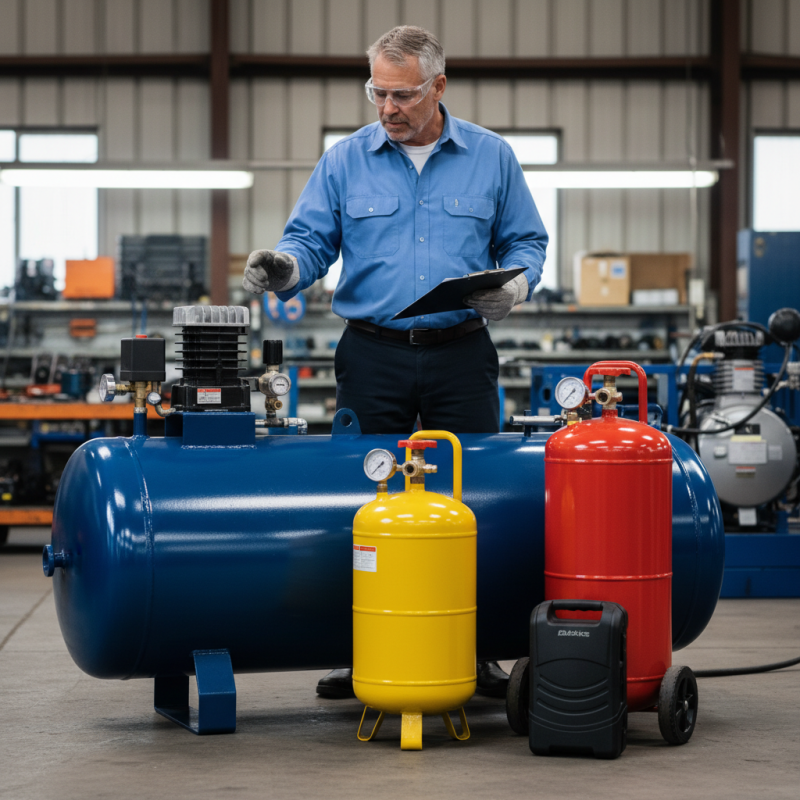
Choosing the right air compressor air tank can significantly enhance your projects. Understanding its key functions is essential. Air tanks store compressed air, ensuring a steady supply. They help maintain consistent pressure, crucial for the efficient operation of tools. When pressure drops, tools can lag, affecting productivity. This storage function allows for sustained use.
An air tank’s size matters. A larger tank can provide more air, but it also takes up space. Smaller tanks are portable but may run out quickly. Balancing size and capacity is vital based on your needs. Furthermore, knowing the airflow demands of your tools helps in selecting the right tank. If you’re unsure, consult with experts or do thorough research.
Efficiency is not just about size; it is also about how you utilize the tank. Regular maintenance can prevent leaks. Monitoring pressure levels ensures you operate within optimal ranges. Always reflect on your usage patterns. You might find that your initial decisions did not meet your expectations. Adjusting your setup can lead to significant gains in efficiency.
Choosing the right air compressor tank often hinges on your specific needs. Whether for home or industrial applications, understanding your requirements is crucial. Home users typically need smaller tanks, often ranging from 1 to 6 gallons. These tanks can handle light tasks, like inflating tires or powering small tools. In contrast, industrial applications often demand tanks with larger capacities, from 30 gallons to over 100 gallons. They support high-demand operations like automotive shops or construction sites.
Tip: Assess the tools you'll use. Match the tank size to your equipment's requirements. If you're using multiple tools simultaneously, a larger tank is ideal. Think about pressure and volume. Home use may require lower PSI, while industrial settings might need higher pressures and consistent airflow.
Reflect on your workspace. Home setups can benefit from portability. Compact tanks are easy to store. In an industrial context, a larger, stationary tank is often more convenient. However, keep in mind the space limitations and power availability. Your choice should balance efficiency and practicality.
Choosing the right air compressor air tank is crucial for performance. One of the key factors is tank size. A larger tank offers more air storage, which boosts efficiency in high-demand tasks. However, it adds weight and can take up more space. This balance is vital when making your decision.
Consider your specific use case. If you frequently use air tools continuously, go for a larger capacity tank. It reduces the frequency of the compressor cycling on and off, which can be beneficial for maintaining pressure. Yet, if your needs are sporadic, a smaller tank may suffice. You might save space with less storage, but this requires more frequent compressor engagement.
Tips: Always assess the tools you plan to use with the air compressor. Match the tank size to those air demands. If you’re uncertain, consult with an expert or conduct a test run. This hands-on experience can help refine your choice. Remember, an air tank too small can lead to inconsistent performance, while one that’s excessively large can be inefficient. Balance is key.
When selecting an air compressor air tank, material choice significantly influences performance and longevity. Steel tanks are robust and resistant to wear. They can handle high pressure, making them suitable for heavy-duty tasks. However, they are heavier, which can make transport and installation difficult. Over time, steel tanks may also corrode if not properly maintained. Regular inspections are crucial to ensure safety and functionality.
On the other hand, aluminum tanks offer lightweight convenience. They are less prone to rust and corrosion, meaning they typically require less maintenance. This can be a significant advantage in humid environments. Yet, aluminum is more vulnerable to dents and physical damage. Users must weigh the benefits of durability against the potential for wear and tear. Reflection on these aspects is vital for long-term satisfaction with your investment.
When choosing an air compressor tank, assessing added features is crucial. Safety valves are vital. They prevent pressure build-up, reducing explosion risks. According to the American Society of Mechanical Engineers, about 70% of air compressor accidents stem from over-pressurization. A reliable safety valve can mitigate these dangers, safeguarding users and equipment.
Pressure gauges are equally important. They provide real-time system monitoring. A study by the National Institute for Occupational Safety and Health noted that incorrect pressure readings led to a 30% reduction in efficiency for many operations. Accurate gauges can enhance performance and prevent damage to tools. Users should regularly check and maintain them.
Portability is another consideration. Many tasks require mobility. A canvas-based study showed that 65% of users prefer compressors that are easy to transport. Look for lightweight options with wheels. However, portability often compromises tank capacity. Find a balanced choice that suits your specific needs.
| Feature | Importance | Description | Recommended Size | Portability |
|---|---|---|---|---|
| Safety Valves | High | Prevents overpressure and ensures safe operation. | N/A | N/A |
| Pressure Gauges | Medium | Allows user to monitor air pressure levels. | Multi-range (0-150 PSI) | Typically stationary |
| Tank Size | High | Determines how much air the compressor can store. | 2-80 gallons | Varies by model |
| Portability | Medium | Ease of transport and movement for various tasks. | Handheld to wheeled models | Portable options available |
| Noise Level | Medium | Impact on working environment, especially in residential areas. | 60-90 dB | Stationary models typically louder |
„Thanks to the LUVIR technology, the solder resist process could be switched directly from the previously used mask exposure to direct exposure. As an outstanding digital solution on the market, this technology has been able to demonstrate fast process times and superior quality on our certified conventional ink in production. This allowed us to fully digitize the solder mask process at low cost – without process or ink adjustments. An excellent benefit to our production in Rot am See.“
Ralf Göhringer (Head of Production WE Rot am See)
I would definitely recommend the Limata machine and team for a future company purchase
Michael Greenaway
Compunetics Inc.
“The Limata ldi has been amazing!! Best thing we did was buy this machine”
Richard Brady
GM
Circuitlabs
“Since 2019, we have been running the Limata X1000 LDI system (including LUVIR for solder mask imaging) in daily production as an addition to our current process with film. The machine was capable of properly exposing Taiyo PSR-4000 BN (DI) solder mask types on normal to high-copper boards using a new and unique direct imaging process. The machine operating interface is very user friendly which allowed for a quick technical training curve. The pre-registration processing reduced several seconds of production time at every print. Limata support and service staff is incomparable. They supported our team every step of the way at basically any time of the day or night, with literally, an immediate response time, customizing the software interface to best fit our Operations and needs.
We have exposed more than 8,000 prints since end of October, on various solder mask colors and some resist film panels. Limata, has proven to be very capable and innovative. They are a strong contender in the industry.
We have very much enjoyed this project, and working with the team!
Thank you Limata for the continued support and being a part of our growth.”
Bill Sezate
Vice President, GM
Summit Interconnect
As a replacement to our current contact exposure process with film, the LIMATA X2000 system including LUVIR-Technology was capable of properly exposing non-LDI solder mask types using a direct imaging process. The machine offers cutting edge software with a very intuitive operating interface which allowed for quick technician training curve. The dual drawer system combined with pre-registration processing reduced several seconds of production time at every machine cycle. Limata support and service staff is world class. They added software patches to keep production running at shortest possible response times, customized the software interface to best fit our in-house Operations system, and even wrote a step-by-step machine processing manual. As a result of the project, we have exposed more than 16,000 times on various product types and solder mask brands/colors. Limata, in a very short timeframe as a company, has definitely shown they are truly innovative and will be challenging the industry of direct imaging for the top spot.
Kevin Beattie
Process Engineer
TTM Technologies
Forest Grove Division
