Choosing the right Electric Cars Charger can significantly impact your electric vehicle experience. Many users overlook this key factor. A suitable charger provides convenience and efficiency, ensuring your car is always ready for the road. Poor choices may lead to long charging times or even damage to your vehicle.
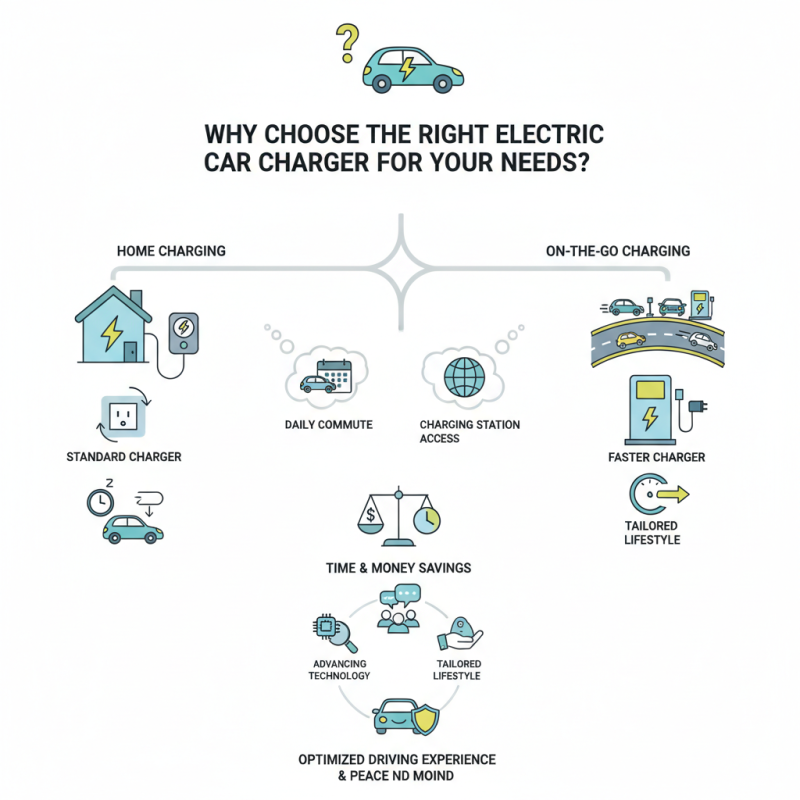
It's essential to assess your unique charging needs. Not everyone has the same daily commute or access to charging stations. Some may find a standard home charger sufficient, while others need faster options for on-the-go charging. Understanding these differences can save you time and money.
In a rapidly evolving market, the options can be overwhelming. Charging technology continues to advance, making it challenging to keep up. Relying on expert reviews and experiences can help users navigate these choices. Selecting an Electric Cars Charger tailored to your lifestyle will optimize your driving experience and provide peace of mind.
When choosing the right electric car charger, it’s essential to understand the various types available. These chargers fall into three main categories: Level 1, Level 2, and DC Fast Chargers. Level 1 chargers use a standard 120V outlet and are convenient for home use. They typically add about 4-5 miles of range per hour, making them suitable for overnight charging. According to the U.S. Department of Energy, nearly 80% of EV owners use Level 1 chargers at home.
Level 2 chargers operate on a 240V outlet and can provide 10-60 miles of range per hour. They are commonly found in public charging stations and are ideal for workplace installations. DC Fast Chargers, on the other hand, can recharge an electric vehicle to around 80% in just 30 minutes. This type is becoming more prevalent along highways, as reported by the International Energy Agency, with over 34,000 DC Fast Chargers installed worldwide.
Tips: Consider charging at home to save on costs. Assess your daily driving habits to choose the right charger. For longer journeys, plan routes that include DC Fast Chargers.
Not all chargers are compatible with every electric vehicle. This is a common consideration that needs attention. Some communities may lack sufficient public charging infrastructure. This can limit EV adoption, as a study by the Electric Power Research Institute indicates that charging availability significantly influences consumer decisions. Reflecting on personal needs can help ensure you choose the right type of charger.
When considering the right electric vehicle charger, assessing your charging needs based on driving habits is essential. According to a recent report by the International Energy Agency, over 80% of electric vehicle owners drive less than 100 miles daily. This statistic highlights the importance of understanding your typical range. If you fall into this category, a Level 2 charger could efficiently meet your needs, providing a full charge overnight.
Analyzing your charging habits also involves examining your travel patterns. For those who frequently embark on longer trips, a fast charger with DC capability may be necessary. Reports indicate that the average U.S. driver covers about 13,500 miles yearly, which translates to roughly 37 miles daily. If you anticipate longer commutes or weekend getaways, investing in a public charging network could be wise.
Moreover, many electric vehicle users find themselves without a personal charger at home. This situation can lead to a reliance on public charging stations, which may be inconvenient. Industry trends show that access to fast charging can significantly influence a buyer's decision. Yet, not all locations offer reliable fast charging options. This gap can create uncertainty for drivers who need to charge during peak travel times. Balancing these factors is vital to making an informed choice about your electric car charger.
When considering electric cars, the choice of charger greatly impacts your experience. There are three primary types of chargers: Level 1, Level 2, and DC Fast Charging. Each has unique benefits and limitations.
Level 1 chargers use a standard 120-volt outlet. They are widely available but can take a long time to charge a vehicle. Overnight charging may be sufficient for commuters. However, if you drive long distances, this might not meet your needs.
Level 2 chargers offer faster charging, typically utilizing a 240-volt outlet. They can charge most electric vehicles in about four to six hours. While more effective, they may require installation at home or access to public stations.
DC Fast Charging is the fastest option, designed for quick top-ups during long trips. They can provide an 80% charge in about 30 minutes. However, these chargers are not always available everywhere. Reliability can vary by location.
Tips: Always assess your driving habits before deciding. If you rarely travel far, a Level 1 may suffice. Consider the installation cost for Level 2. For road trips, plan charging stops at DC Fast Charging stations. Think about your usual patterns, as they affect the best charger choice for you.
When selecting an electric car charger, several key features warrant careful consideration. Charging speed is often a primary concern. Level 1 chargers offer slow charging, suitable for overnight use. However, if you need faster replenishing, Level 2 options are ideal for home installations. They provide a more efficient charge, reducing downtime significantly.
Another crucial aspect is compatibility with your vehicle. Not all chargers work with every electric car model. Check the requirements of your car to avoid frustration later. Additionally, ease of installation is important. Some chargers require professional installation, while others are user-friendly and can be set up DIY. This could save money and time.
Finally, consider smart features. Some chargers connect to mobile apps, allowing remote monitoring and scheduling. However, these features may come with a higher price tag. Balancing cost with functionality is vital. Reflecting on these aspects will help you find the right charger tailored to your specific needs.
Selecting the right charger for electric cars is crucial. Understanding costs and installation can help maximize convenience. The cost for a Level 2 home charger typically ranges from $500 to $2,000, including installation. According to the Department of Energy, installing a home charger can increase property value. This potential return is worth considering.
Public charging stations vary significantly in cost. Many locations charge per kWh, with average rates around $0.20 to $0.30. Some networks offer subscription plans for regular users. Installation at public sites demands more than a residential setup. Costs can escalate, with an average installation expense up to $50,000 for fast chargers. Local regulations also influence these costs.
When choosing a charger, consider your daily driving habits. A home unit may be ideal for low-mileage drivers. Fast public chargers cater to longer trips but often come with higher costs. Each option has its own benefits and drawbacks, ultimately reflecting on convenience and budget. It's vital to assess which type fits individual lifestyles best, considering not just efficiency but also long-term implications.
„Thanks to the LUVIR technology, the solder resist process could be switched directly from the previously used mask exposure to direct exposure. As an outstanding digital solution on the market, this technology has been able to demonstrate fast process times and superior quality on our certified conventional ink in production. This allowed us to fully digitize the solder mask process at low cost – without process or ink adjustments. An excellent benefit to our production in Rot am See.“
Ralf Göhringer (Head of Production WE Rot am See)
I would definitely recommend the Limata machine and team for a future company purchase
Michael Greenaway
Compunetics Inc.
“The Limata ldi has been amazing!! Best thing we did was buy this machine”
Richard Brady
GM
Circuitlabs
“Since 2019, we have been running the Limata X1000 LDI system (including LUVIR for solder mask imaging) in daily production as an addition to our current process with film. The machine was capable of properly exposing Taiyo PSR-4000 BN (DI) solder mask types on normal to high-copper boards using a new and unique direct imaging process. The machine operating interface is very user friendly which allowed for a quick technical training curve. The pre-registration processing reduced several seconds of production time at every print. Limata support and service staff is incomparable. They supported our team every step of the way at basically any time of the day or night, with literally, an immediate response time, customizing the software interface to best fit our Operations and needs.
We have exposed more than 8,000 prints since end of October, on various solder mask colors and some resist film panels. Limata, has proven to be very capable and innovative. They are a strong contender in the industry.
We have very much enjoyed this project, and working with the team!
Thank you Limata for the continued support and being a part of our growth.”
Bill Sezate
Vice President, GM
Summit Interconnect
As a replacement to our current contact exposure process with film, the LIMATA X2000 system including LUVIR-Technology was capable of properly exposing non-LDI solder mask types using a direct imaging process. The machine offers cutting edge software with a very intuitive operating interface which allowed for quick technician training curve. The dual drawer system combined with pre-registration processing reduced several seconds of production time at every machine cycle. Limata support and service staff is world class. They added software patches to keep production running at shortest possible response times, customized the software interface to best fit our in-house Operations system, and even wrote a step-by-step machine processing manual. As a result of the project, we have exposed more than 16,000 times on various product types and solder mask brands/colors. Limata, in a very short timeframe as a company, has definitely shown they are truly innovative and will be challenging the industry of direct imaging for the top spot.
Kevin Beattie
Process Engineer
TTM Technologies
Forest Grove Division
