Choosing Rtls Tags for global asset tracking is not a simple specification exercise. It is a field decision shaped by distance, materials, climate, connectivity, and human behavior. A tag that performs well inside a dry warehouse may struggle near metal containers, refrigerated rooms, or open transport yards. Global deployments add more variables, including regional network availability, battery replacement access, and local data requirements.
RTLS specialist Tim Zimmerman has said, “The tag is only as useful as the location data it produces.” That principle deserves attention. Buyers should examine location accuracy, update frequency, battery life, attachment methods, and system compatibility together. Ultra-wideband tags can support precise indoor positioning, while cellular or satellite-enabled devices may suit remote shipments. Bluetooth Low Energy tags often reduce cost, but they depend heavily on gateway placement and signal planning. There is no universal winner.
Real-world testing matters more than a polished product sheet. Place sample tags on steel tools, plastic pallets, medical equipment, and moving vehicles. Record signal loss, temperature changes, battery behavior, and missed readings. Small details become expensive at scale. A weak adhesive can lose a high-value asset. A short battery cycle can create thousands of service tasks.
This guide examines how to compare Rtls Tags for dependable global tracking. It also questions common assumptions, because perfect visibility is rarely achieved. The strongest choice balances accuracy, resilience, operational effort, and measurable business value.
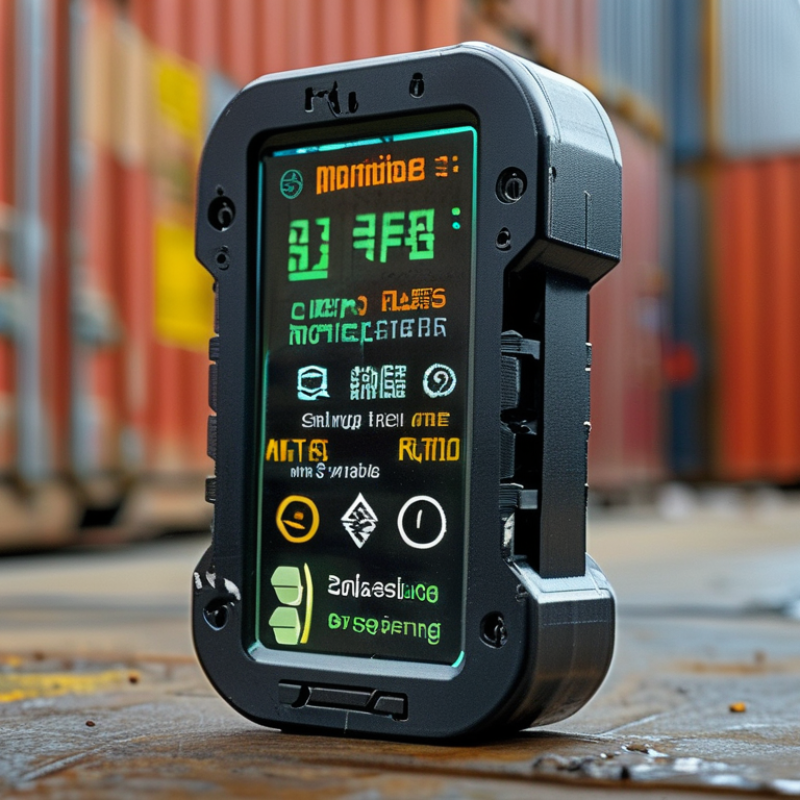
How to Choose RTLS Tags for Global Asset Tracking?
Define the tracking goal before comparing tag specifications. Do you need room-level location, dock-door visibility, theft alerts, or temperature history? Each goal changes the required accuracy, battery life, sensor package, and update frequency. A pallet moving through a warehouse may need periodic location updates. A medical device may require tighter accuracy and frequent status checks. Do not track everything equally.
The State of IoT—Spring 2024 report estimated 16.7 billion connected IoT devices in 2023. That scale makes tag selection a financial decision, not merely a technical one. Classify assets by value, movement, replacement cost, and handling risk. Then record the operating environment. Metal racks, concrete walls, refrigeration units, outdoor yards, and explosive-risk areas can affect signal performance and approved hardware choices. The World Bank’s 2023 Logistics Performance Index collected 4,090 assessments across 115 countries, highlighting how varied global logistics conditions can be. A tag that performs well indoors may struggle across ports, trucks, and open storage areas.
Test tags with real assets, not empty cartons. Measure battery behavior, read accuracy, installation time, and data continuity. Small details matter. A poorly placed tag can create false confidence. Global programs also need regional connectivity planning and maintenance procedures. I would not assume one tag type fits every site. That assumption deserves testing.
Define the tracking goal, asset type, and operating environment before selecting a tag. The chart compares representative battery-life expectations for common RTLS tag categories.
Passive UHF RFID tags require no battery, while BLE, UWB, and GNSS tags use batteries for periodic transmissions. Actual life depends on update frequency, transmit power, temperature, network conditions, and whether location is calculated continuously or only during scheduled scans.
How to Choose RTLS Tags for Global Asset Tracking?
Choosing an RTLS tag for global asset tracking starts with the required location accuracy. A pallet moving through a warehouse may need zone-level visibility, while a medical cart may need room-level precision. These are different jobs. RFID is cost-effective for checkpoint events, but it does not provide continuous positioning. BLE tags can cover broad indoor areas with modest battery use. Their accuracy often depends on beacon placement and signal interference.
UWB generally delivers more precise indoor positioning, often within tens of centimeters under controlled conditions. It needs denser infrastructure and careful calibration. Wi-Fi positioning can reuse existing networks, yet accuracy may vary from several meters to more than ten. GNSS tags work well outdoors, especially across open yards and transport routes. Buildings, containers, and heavy cover can weaken their signals. No technology wins everywhere.
In real deployments, I compare accuracy at the asset, not only in a datasheet. Walk the same route during busy and quiet periods. Record missed updates, battery changes, and location drift. A tag claiming one-meter accuracy may perform differently near metal racks or stacked goods. That gap deserves attention. Global use also exposes practical limits, including network availability, temperature, and local radio requirements. I would pilot two tag types before committing to thousands of units. The cheaper option is not always cheaper after maintenance and replacement. One unexplained location jump can weaken user trust.
Global asset tracking fails quietly when tag specifications are chosen from brochures alone. Battery life deserves field testing. A 2024 technical study from the Bluetooth Special Interest Group documents low-energy coded modes at 125 and 500 kilobits per second. These modes can improve range, but walls, metal racks, and temperature still reduce performance. Request results from warehouses, yards, and refrigerated zones.
Range must match the tracking purpose. The FiRa Consortium reports that ultra-wideband systems can achieve centimeter-level ranging under controlled conditions. Real facilities are less polite. Forklifts create reflections, and stacked containers block signals. Test tags at the farthest aisle, not beside the gateway. Record missed updates, location drift, and recovery time.
Durability is equally practical. IEC 60068 environmental testing covers vibration, shock, moisture, and temperature exposure. Use those test categories when reviewing tag evidence. For outdoor assets, check sealing, UV resistance, and connector protection. For returnable containers, examine the mounting point after repeated impacts. A tag claiming five-year battery life may achieve less with frequent transmissions or cold storage. A spreadsheet can look precise and still lie. Pilot testing often reveals the uncomfortable gap between laboratory endurance and daily operations. The 2023 GS1 RFID guidance also stresses orientation, material interference, and reader configuration as major performance variables. Choose tags using measured results, not the longest advertised range.
Choosing RTLS tags for global asset tracking starts with network compatibility. A tag may perform well in one warehouse and fail across borders. Check supported cellular bands, satellite positioning options, Wi-Fi standards, and regional gateway coverage. Battery life also changes when signals are weak. In field evaluations, metal racks and concrete walls often reduce location accuracy. Test tags in loading bays, refrigerated rooms, and outdoor yards. Real conditions matter.
Security needs more than encrypted messages. Look for secure device identity, signed firmware, protected keys, and controlled access to location data. Ask how updates are authenticated and how lost tags are disabled. Data should move through encrypted connections and remain traceable during maintenance. Do not overlook privacy requirements for workers or visitors. A security review should include suppliers, cloud services, and local administrators. One overlooked account can create unnecessary exposure.
Global scalability depends on operations, not only radio range. Select tags that can be provisioned remotely, configured by region, and monitored from one dashboard. Check SIM or eSIM support, roaming behavior, and local connectivity costs. Confirm that the platform handles different time zones, languages, and data retention rules. We once treated network availability as a simple coverage map. That assumption was too optimistic. Coverage changed inside ports and underground storage areas. Pilot deployments should measure battery drain, message delays, and replacement time across several countries. Keep spare units. Plans will change.
Choosing an RTLS tag starts with the asset, not the technology. Identify its value, movement pattern, location accuracy, and operating environment. A reusable tag may suit pallets, while compact tags fit tools or mobile equipment. Battery life also affects labor costs, because replacement work can exceed the purchase price. A 2023 Real-Time Location Systems Market report projected the sector to grow from approximately USD 5.1 billion to USD 10.3 billion by 2028. That growth signals wider adoption, but it does not guarantee a low total cost.
Calculate hardware, installation, gateways, software, calibration, connectivity, maintenance, and battery replacement. Include customs handling and regional support for global deployments. A tag costing less may require more frequent service. A premium configuration may reduce failures in cold storage, metal-heavy areas, or outdoor zones. Signal behavior can change across buildings. A perfect configuration rarely exists. My first estimate would still be wrong without a site pilot.
Tips: Start with the asset. Test before scaling. Compare three-year cost per tracked asset, not unit price alone. Record missed reads, battery changes, and technician hours during the pilot. A 2024 global asset-tracking survey reported that data accuracy and integration remain major deployment concerns. Treat those findings seriously. A tag is useful only when its location data supports a real operational decision.
„Thanks to the LUVIR technology, the solder resist process could be switched directly from the previously used mask exposure to direct exposure. As an outstanding digital solution on the market, this technology has been able to demonstrate fast process times and superior quality on our certified conventional ink in production. This allowed us to fully digitize the solder mask process at low cost – without process or ink adjustments. An excellent benefit to our production in Rot am See.“
Ralf Göhringer (Head of Production WE Rot am See)
I would definitely recommend the Limata machine and team for a future company purchase
Michael Greenaway
Compunetics Inc.
“The Limata ldi has been amazing!! Best thing we did was buy this machine”
Richard Brady
GM
Circuitlabs
“Since 2019, we have been running the Limata X1000 LDI system (including LUVIR for solder mask imaging) in daily production as an addition to our current process with film. The machine was capable of properly exposing Taiyo PSR-4000 BN (DI) solder mask types on normal to high-copper boards using a new and unique direct imaging process. The machine operating interface is very user friendly which allowed for a quick technical training curve. The pre-registration processing reduced several seconds of production time at every print. Limata support and service staff is incomparable. They supported our team every step of the way at basically any time of the day or night, with literally, an immediate response time, customizing the software interface to best fit our Operations and needs.
We have exposed more than 8,000 prints since end of October, on various solder mask colors and some resist film panels. Limata, has proven to be very capable and innovative. They are a strong contender in the industry.
We have very much enjoyed this project, and working with the team!
Thank you Limata for the continued support and being a part of our growth.”
Bill Sezate
Vice President, GM
Summit Interconnect
As a replacement to our current contact exposure process with film, the LIMATA X2000 system including LUVIR-Technology was capable of properly exposing non-LDI solder mask types using a direct imaging process. The machine offers cutting edge software with a very intuitive operating interface which allowed for quick technician training curve. The dual drawer system combined with pre-registration processing reduced several seconds of production time at every machine cycle. Limata support and service staff is world class. They added software patches to keep production running at shortest possible response times, customized the software interface to best fit our in-house Operations system, and even wrote a step-by-step machine processing manual. As a result of the project, we have exposed more than 16,000 times on various product types and solder mask brands/colors. Limata, in a very short timeframe as a company, has definitely shown they are truly innovative and will be challenging the industry of direct imaging for the top spot.
Kevin Beattie
Process Engineer
TTM Technologies
Forest Grove Division
