Agricultural machinery plays a vital role in modern farming. It needs parts that are durable and efficient. This is where Agricultural Machinery Sintered Parts come into play. These components offer several advantages over traditional manufacturing methods. They are made through a process that ensures high density and uniform structure. This leads to improved performance in harsh field conditions.
Sintered parts are known for their reliability. They can withstand wear and tear in demanding agricultural environments. By utilizing these parts, manufacturers can enhance the longevity of machinery. Additionally, they allow for more complex shapes, increasing design flexibility. This adaptability is essential for meeting diverse agricultural needs.
However, selecting the right sintered parts requires careful consideration. Not all sintered materials are suitable for every application. Understanding the specific requirements of your agricultural equipment is crucial. The choice of material and design can significantly impact overall performance and durability. Thus, analyzing various options is key to making informed decisions in the selection process.
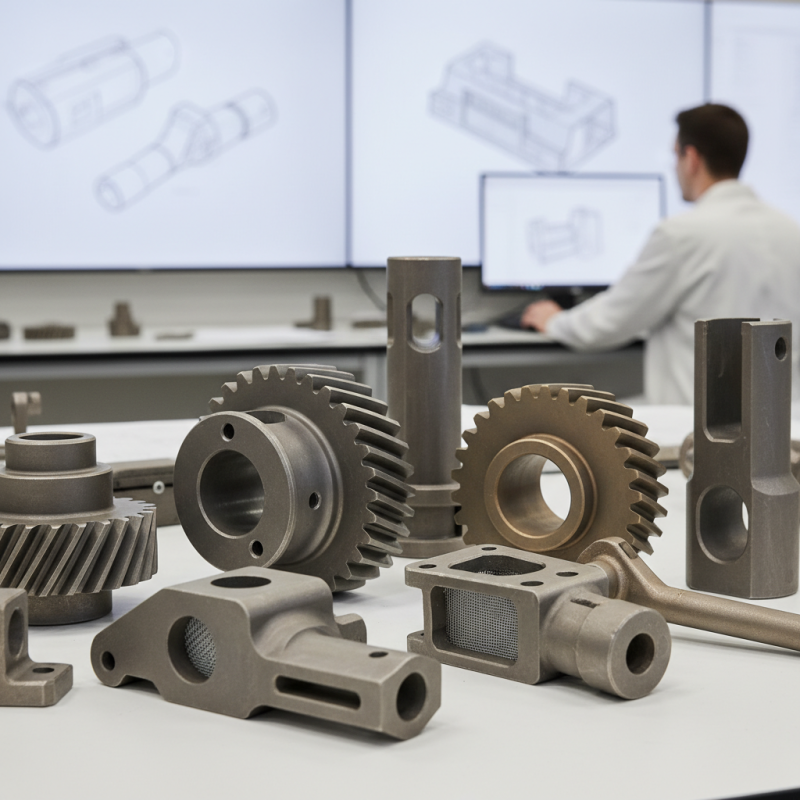
Sintered parts play a crucial role in agricultural machinery. They offer several benefits that enhance the efficiency and durability of equipment. The manufacturing process involves compacting and heating metal powders, resulting in components with excellent mechanical properties. This method allows for the creation of complex shapes that are often difficult to achieve with traditional casting.
One notable advantage is the improved wear resistance of sintered components. Agricultural machinery operates in harsh environments, and these parts can withstand friction and impact better than conventional alternatives. This durability translates to longer equipment life and reduced maintenance costs. Additionally, sintered parts often have a uniform microstructure, which contributes to their reliability.
However, there are challenges associated with using sintered parts. The initial manufacturing costs can be higher than other methods. Managing quality control is also essential to ensure consistency in performance. Additionally, some might question whether the benefits justify these costs. Balancing cost and performance remains a key consideration for many manufacturers in the agricultural sector.
Sintered components excel in durability and resistance, particularly in agricultural machinery. Using powdered metal, these parts undergo a process of heating, which fuses the particles together. This method results in dense, robust parts that can withstand harsh conditions. Farmers rely on durable tools to face unpredictable weather and tough terrains.
In addition to strength, sintered parts offer excellent wear resistance. They can endure high levels of stress without suffering from fatigue. This characteristic is vital for machinery that works long hours in demanding environments. However, while they excel in many areas, sintered components can sometimes lack the precision found in other manufacturing techniques. This might lead to occasional misfits in assembly.
Maintenance remains a crucial factor. Sintered parts may require specific lubricants to optimize performance. Regular inspections help ensure they operate efficiently over time. This proactive approach promotes longevity, although it does add to operational complexity. Balancing these needs is essential for those in the agricultural sector. As demands evolve, so do the requirements for machinery components.
| Feature | Sintered Parts | Conventional Parts |
|---|---|---|
| Durability | High: Excellent wear resistance | Medium: Variable based on material |
| Resistance to Corrosion | High: Often treated for greater resistance | Low to Medium: Dependent on coating |
| Cost-Effectiveness | High: Lower production costs in bulk | Variable: Higher machining costs |
| Material Utilization | High: Minimal waste in production | Low: Significant waste during machining |
| Customization | Moderate: Limited by sintering process | High: Extensive machining options available |
Sintered parts have gained traction in agriculture due to their remarkable cost-effectiveness. The sintering process uses powdered metals fused under heat and pressure, reducing material waste significantly. This efficiency lowers raw material costs, a crucial factor for large-scale machinery production. Additionally, complex shapes can be produced with little machining, saving time and labor expenses.
Durability is another advantage. Sintered components exhibit consistent density and strength, essential for withstanding harsh field conditions. While the initial investment in sintering equipment may seem high, the long-term savings come from reduced maintenance and less frequent part replacements. However, one must consider that sintered parts sometimes face limitations in extremely high-stress applications, which requires careful material selection and design.
The agricultural sector benefits greatly by implementing sintered parts, blending expert engineering with economical production. This balance encourages sustainable practices, yet there is room for improvement in the process consistency and part customization for specific machinery needs. Reflecting on these factors, sintering appears promising though not without challenges.
Sintered parts offer remarkable design flexibility, crucial for agricultural machinery. Their ability to be customized makes them a preferred choice. Manufacturers can easily tailor shapes, sizes, and materials. This adaptability promotes innovative designs that enhance machinery performance.
Using advanced techniques, sintered parts allow for complex geometries. These can meet specific requirements in different agricultural applications. It is crucial to consider the implications of material choice. Some materials may affect durability and wear resistance. A thoughtful selection ensures optimal performance in challenging environments.
Tips: Always evaluate your design needs carefully. Identify what customization is required upfront. Engaging with experts can fine-tune your design process. Feedback from users can also help refine specifications. Regularly review performance metrics to identify areas for improvement. This iterative approach strengthens your project outcomes.
Sintered manufacturing is gaining attention in agricultural machinery for its environmental benefits. This process, which uses compacted powder metals, minimizes waste compared to traditional machining. Reports indicate that sintered methods generate up to 70% less scrap material. Additionally, sintering typically requires lower energy input, reducing CO2 emissions significantly.
Sustainability is a key consideration in agricultural practices. The metal industry is responsible for about 8% of global greenhouse gas emissions. By switching to sintered parts, the agricultural sector can mitigate its environmental impact. Studies show that using recycled materials in sintered processes can further decrease the ecological footprint. This shift not only supports sustainable practices but also promotes resource conservation.
Challenges persist, though. The consistency of sintered parts can vary based on material quality and processing methods. Initial setup costs for sintered manufacturing also concern some manufacturers. However, long-term savings on materials and energy can justify these investments. The agricultural industry must carefully weigh these factors when considering sintered solutions. Embracing sintering could lead to a greener future, yet attention to quality remains critical.
„Thanks to the LUVIR technology, the solder resist process could be switched directly from the previously used mask exposure to direct exposure. As an outstanding digital solution on the market, this technology has been able to demonstrate fast process times and superior quality on our certified conventional ink in production. This allowed us to fully digitize the solder mask process at low cost – without process or ink adjustments. An excellent benefit to our production in Rot am See.“
Ralf Göhringer (Head of Production WE Rot am See)
I would definitely recommend the Limata machine and team for a future company purchase
Michael Greenaway
Compunetics Inc.
“The Limata ldi has been amazing!! Best thing we did was buy this machine”
Richard Brady
GM
Circuitlabs
“Since 2019, we have been running the Limata X1000 LDI system (including LUVIR for solder mask imaging) in daily production as an addition to our current process with film. The machine was capable of properly exposing Taiyo PSR-4000 BN (DI) solder mask types on normal to high-copper boards using a new and unique direct imaging process. The machine operating interface is very user friendly which allowed for a quick technical training curve. The pre-registration processing reduced several seconds of production time at every print. Limata support and service staff is incomparable. They supported our team every step of the way at basically any time of the day or night, with literally, an immediate response time, customizing the software interface to best fit our Operations and needs.
We have exposed more than 8,000 prints since end of October, on various solder mask colors and some resist film panels. Limata, has proven to be very capable and innovative. They are a strong contender in the industry.
We have very much enjoyed this project, and working with the team!
Thank you Limata for the continued support and being a part of our growth.”
Bill Sezate
Vice President, GM
Summit Interconnect
As a replacement to our current contact exposure process with film, the LIMATA X2000 system including LUVIR-Technology was capable of properly exposing non-LDI solder mask types using a direct imaging process. The machine offers cutting edge software with a very intuitive operating interface which allowed for quick technician training curve. The dual drawer system combined with pre-registration processing reduced several seconds of production time at every machine cycle. Limata support and service staff is world class. They added software patches to keep production running at shortest possible response times, customized the software interface to best fit our in-house Operations system, and even wrote a step-by-step machine processing manual. As a result of the project, we have exposed more than 16,000 times on various product types and solder mask brands/colors. Limata, in a very short timeframe as a company, has definitely shown they are truly innovative and will be challenging the industry of direct imaging for the top spot.
Kevin Beattie
Process Engineer
TTM Technologies
Forest Grove Division
