Choosing the right Smt Type Pcb Board To Board Connector is crucial for modern electronic applications. As per a recent market analysis, the global demand for PCB connectors is projected to grow at a CAGR of 5.6% from 2022 to 2028. This growth correlates with the rising complexity of electronics and the need for reliable interconnection solutions.
In manufacturing, selecting the proper connector affects performance and reliability. A mismatch can lead to failure in electronic systems. Over 25% of engineers face challenges in connector selection, which can complicate project timelines. Understanding specific requirements is essential for ensuring quality.
The Smt Type Pcb Board To Board Connector offers advantages in compact design and ease of assembly. However, not all connectors are created equal. Factors like pin count, pitch, and current rating impact performance and durability. As the industry evolves, reevaluating the criteria for selecting connectors can help mitigate risks. Emphasizing reliability in choice leads to greater project success.
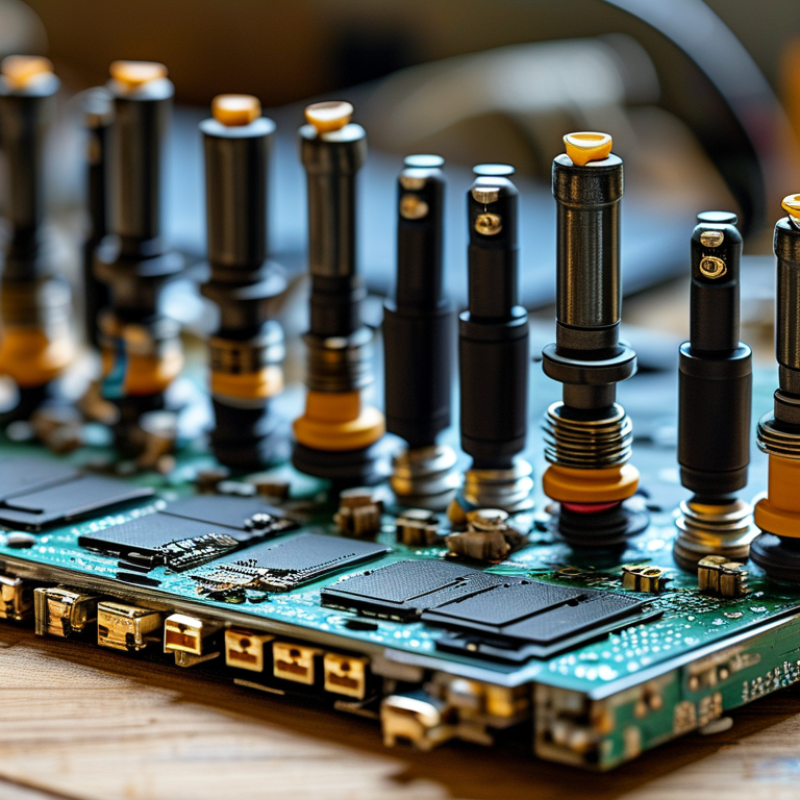
Understanding the basics of SMT type PCB board connectors is crucial for effective design and application. Surface Mount Technology (SMT) connectors are widely used for their compact size and reliability. They connect two printed circuit boards (PCBs) securely, making them essential in complex electronic systems. Knowing their specifications is critical.
Consider pin count and pitch. More pins can handle better data transfer but require more space. The footprint on the PCB should accommodate the selected connector size. The choice of materials impacts durability and performance. Metal types, plating, and insulation can affect conductivity and resistance.
Designers often face challenges with alignment and soldering techniques. Misalignment during manufacturing can cause failures. It’s important to have precise assembly processes to avoid such issues. Testing and validating the connectors after installation is necessary. This helps ensure they meet performance criteria. Each decision plays a role in achieving a reliable connection.
When selecting SMT type PCB board-to-board connectors, several key factors come into play. First, consider the pitch of the connector. Pitch refers to the distance between pin centers. A smaller pitch allows for more compact designs. However, it can complicate manufacturing processes. Choose a pitch that fits your dimensions and assembly capabilities.
Another factor is the number of pins. More pins can help in transferring data but might lead to increased complexity. Ensure that your design requires the necessary pin count. Additionally, examine the environmental conditions where the connectors will operate. Factors like humidity, temperature, and vibration affect performance.
Tips: Always review your design constraints early in the process. Assess compatibility with other components. Testing prototypes under actual conditions is essential. Look for flexibility in design for future adjustments. This can save time and resources later.
Connector orientation should not be overlooked. Vertical and horizontal arrangements have different applications. Understand the spatial requirements of your project. Evaluate how the connectors align with your PCB layout. Small misalignments can cause significant issues. These considerations will guide you in making an informed choice.
When selecting an SMT type PCB board-to-board connector, compatibility with the PCB design and layout is crucial. Ensure the connector’s footprint aligns with the PCB layout. The placement of the connector should not interfere with other components. A well-planned layout enhances performance and reduces assembly complexity.
Consider the space available on the PCB. The dimensions of the connector must fit within the design constraints. Check the height of the connector to avoid issues during assembly. Tolerance in manufacturing can lead to misalignment, affecting overall functionality. Simulating the design can help identify potential conflicts early.
Understanding the electrical requirements is also essential. The connector should handle the necessary voltage and current ratings. Look into the materials used in the connectors. They play a significant role in reliability. Reflection on these aspects can reveal oversights. Small details can lead to significant problems later.
When selecting an SMT type PCB board-to-board connector, electrical and mechanical specifications play a crucial role. When considering electrical specifications, factors like current rating, voltage rating, and signal integrity must be examined. These attributes determine how well the connector will perform in different applications. Properly analyzing these features prevents issues like overheating and signal loss.
Mechanical specifications are just as essential. They include connector dimensions, mating cycles, and durability ratings. For instance, ensuring the connector can withstand the expected mating cycles ensures longevity. Additionally, understanding the orientation and mounting options can impact the overall design. This knowledge helps avoid fitment issues, which can lead to further complications.
Evaluating these specifications should not be rushed. Each aspect requires careful examination to ensure compatibility with your PCB design. Often, overlooked details lead to significant problems in performance. Testing and prototyping connectors in real-world scenarios is wise. This approach helps identify potential weaknesses before full-scale production.
| Specifications | Details |
|---|---|
| Connector Type | Board to Board Connector |
| Number of Pins | 20 Pins |
| Pitch Size | 1.0 mm |
| Operating Voltage | 50 V |
| Current Rating | 1 A |
| Temperature Range | -40°C to +85°C |
| Material | PBT (Polybutylene Terephthalate) |
| Finish Type | Gold Plated |
| Mating Life | 500 Cycles |
When assessing the cost and availability of PCB connectors, multiple factors come into play. The global market for PCB connectors is projected to reach approximately $48 billion by 2027, according to industry reports. This growth highlights the increasing demand for reliable and efficient connection solutions across various sectors, including consumer electronics and automotive industries.
Standardization of connector types can considerably affect costs. Connectors produced in large volumes generally benefit from economies of scale, reducing prices. However, choosing an uncommon type may result in higher costs due to limited options. The first step involves evaluating whether standard SMT (Surface Mount Technology) connectors meet your application requirements. If they do not, your project could encounter higher costs and longer lead times.
Availability is another critical factor. An estimated 30% of semiconductor supply chains experienced disruptions in recent years. Unique or bespoke connectors can suffer more from supply chain issues compared to standard types. Monitoring inventory levels and lead times is essential. Relying on a diverse supplier base can mitigate risks related to shortages. Balancing cost and availability requires a careful analysis of sourcing options, especially in a volatile market.
„Thanks to the LUVIR technology, the solder resist process could be switched directly from the previously used mask exposure to direct exposure. As an outstanding digital solution on the market, this technology has been able to demonstrate fast process times and superior quality on our certified conventional ink in production. This allowed us to fully digitize the solder mask process at low cost – without process or ink adjustments. An excellent benefit to our production in Rot am See.“
Ralf Göhringer (Head of Production WE Rot am See)
I would definitely recommend the Limata machine and team for a future company purchase
Michael Greenaway
Compunetics Inc.
“The Limata ldi has been amazing!! Best thing we did was buy this machine”
Richard Brady
GM
Circuitlabs
“Since 2019, we have been running the Limata X1000 LDI system (including LUVIR for solder mask imaging) in daily production as an addition to our current process with film. The machine was capable of properly exposing Taiyo PSR-4000 BN (DI) solder mask types on normal to high-copper boards using a new and unique direct imaging process. The machine operating interface is very user friendly which allowed for a quick technical training curve. The pre-registration processing reduced several seconds of production time at every print. Limata support and service staff is incomparable. They supported our team every step of the way at basically any time of the day or night, with literally, an immediate response time, customizing the software interface to best fit our Operations and needs.
We have exposed more than 8,000 prints since end of October, on various solder mask colors and some resist film panels. Limata, has proven to be very capable and innovative. They are a strong contender in the industry.
We have very much enjoyed this project, and working with the team!
Thank you Limata for the continued support and being a part of our growth.”
Bill Sezate
Vice President, GM
Summit Interconnect
As a replacement to our current contact exposure process with film, the LIMATA X2000 system including LUVIR-Technology was capable of properly exposing non-LDI solder mask types using a direct imaging process. The machine offers cutting edge software with a very intuitive operating interface which allowed for quick technician training curve. The dual drawer system combined with pre-registration processing reduced several seconds of production time at every machine cycle. Limata support and service staff is world class. They added software patches to keep production running at shortest possible response times, customized the software interface to best fit our in-house Operations system, and even wrote a step-by-step machine processing manual. As a result of the project, we have exposed more than 16,000 times on various product types and solder mask brands/colors. Limata, in a very short timeframe as a company, has definitely shown they are truly innovative and will be challenging the industry of direct imaging for the top spot.
Kevin Beattie
Process Engineer
TTM Technologies
Forest Grove Division
