Choosing the best China End Mill is crucial for quality machining. In 2022, the global end mill market was valued at over $3 billion, with China contributing significantly to this growth. Chinese manufacturers are known for producing high-quality end mills at competitive prices. However, with many options available, selecting the right one can be daunting.
Factors like material, coating, and geometry greatly influence performance. Research indicates that the right end mill can increase productivity by up to 30%. This highlights the importance of making informed decisions when sourcing tools. Often, users overlook vital specifications, which can lead to suboptimal results.
Furthermore, dynamics in the industry can impact availability and pricing. It's crucial to remain vigilant about market trends and supplier reliability. Buyers should prioritize quality, even when faced with attractive pricing. By thoroughly evaluating options, one can find the ideal China End Mill for their specific needs.
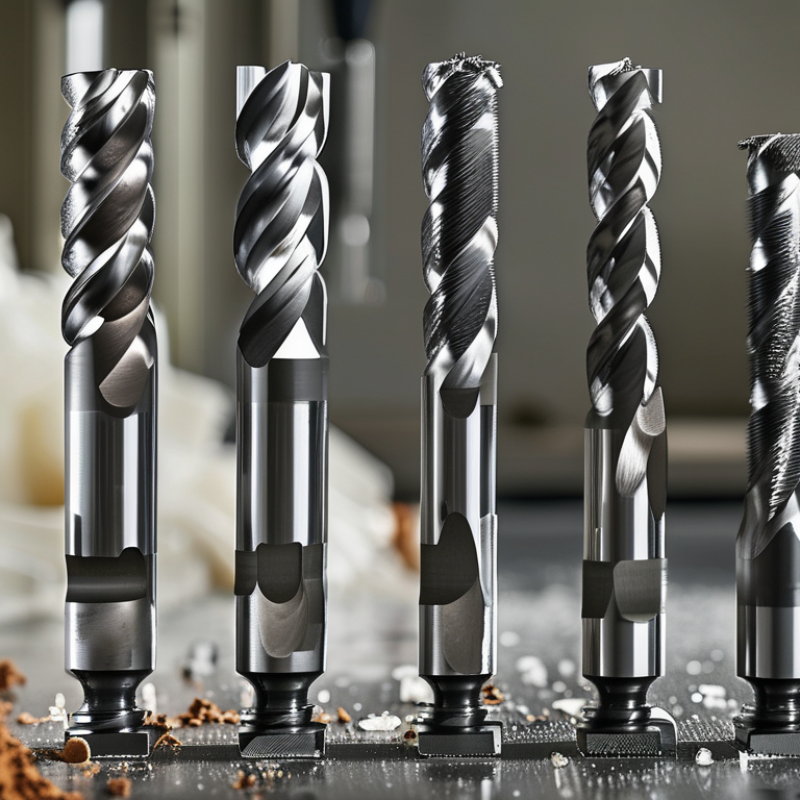
End mills play a crucial role in machining. These tools are essential for cutting, shaping, and finishing materials across various industries. Understanding their applications is vital for selecting the right type for specific projects. The global market for end mills was valued at approximately $3 billion in 2022, with expected growth of 5% annually. This trend highlights the increasing importance of advanced machining tools.
Different end mills serve distinct functions. For example, ball nose end mills excel at creating complex and curved surfaces. Square end mills offer precision for flat surfaces and corners. Understanding these characteristics allows machinists to make informed choices. A perhaps overlooked factor is the choice of material. High-speed steel (HSS) is commonly used, but carbide tools last longer in demanding conditions.
Tip: Always consider the specific requirements of your project. Analyze the material you are working with and the desired finish. This helps in selecting the proper end mill type.
Additionally, you should reflect on the tool's wear rate. Even high-quality end mills will dull over time, affecting precision and surface finish. Regularly inspecting your tools can prevent costly mistakes and rework. By understanding end mills thoroughly, you can enhance your machining outcomes significantly.
When selecting an end mill from China, consider the material. High-speed steel (HSS) offers good versatility. However, carbide provides better durability for tough materials. This choice directly impacts the lifespan and efficiency of your projects. Tool geometry also plays a crucial role in performance. Understand the desired cut, whether it’s flat, ball, or chamfered. Each shape affects the cut quality and precision.
Another important factor is the coating. A coated end mill can enhance friction resistance and reduce wear. Choose coatings that suit your specific applications. Remember that cheaper options may compromise quality. This could lead to inconsistent results in your work. Reliability is key; research reviews and testimonials from other users. A tool may look perfect but fail in practice.
Lastly, confirm supplier credibility. Ensure they have a good track record with consistent quality. Test samples can provide insight into the performance of the end mill. Don’t hesitate to question manufacturers about their processes. Gathering this information helps you avoid costly mistakes. Making an informed choice requires effort but pays off in the long run.
When selecting an end mill, it’s essential to understand the types available. Commonly, end mills fall into two categories: flat end mills and ball end mills. Flat end mills have a squared-off tip. They are great for making precise, flat-bottomed cuts. Ball end mills, on the other hand, have a rounded tip. This design is preferred for contouring and sculpting projects.
Another type to consider is the corner radius end mill. It combines features from both flat and ball end mills. This design reduces tool wear and enhances cutting strength. Some users struggle to choose based on their specific needs. The various materials used also play a crucial role. High-speed steel (HSS) end mills are popular for general applications. Carbide end mills offer better durability for tougher materials.
It's vital to assess the coatings on end mills too. Coatings can increase tool life and performance. However, selecting the wrong coating can lead to inefficiencies. Many newcomers may overlook this detail, which can affect results. Understanding these aspects aids in making informed choices for projects. Experimenting with different types could lead to surprising discoveries about your machining process.
When evaluating China end mills, quality and price are crucial factors. Numerous studies show that price fluctuations in this sector can influence purchasing decisions significantly. A report from a leading industry survey found that 70% of buyers prioritize cost over quality. This trend raises concerns about the long-term impact on machining precision and durability.
Many manufacturers in China offer end mills at competitive prices. However, lower prices often indicate compromises in material quality. A data analysis indicated that tools made from subpar materials can lead to a 20% decrease in lifespan compared to higher-quality options. Users must consider this trade-off carefully.
Additionally, customer reviews and ratings can provide insights into performance. Over 60% of users reported dissatisfaction with low-priced end mills due to inconsistent performance. Finding the right balance between quality and price requires diligent research. It's essential to consider both user feedback and technical specifications before making a final decision.
| End Mill Type | Material | Coating | Diameter (mm) | Price (USD) | Quality Rating |
|---|---|---|---|---|---|
| 4-Flute End Mill | HSS | TiN | 10 | 15.00 | 4.5/5 |
| Ball Nose End Mill | Carbide | AlTiN | 12 | 20.00 | 4.7/5 |
| Chamfer End Mill | HSS | None | 8 | 12.00 | 4.0/5 |
| Corner Radius End Mill | Carbide | TiAlN | 10 | 18.00 | 4.6/5 |
Maintaining end mills is crucial for maximizing their lifespan and performance. Regular cleaning is essential to remove debris and prevent buildup. A simple solution is to use a soft brush to dislodge chips after each use. When necessary, soak the tools in a suitable cleaning solution. This action helps maintain the precision of the cutting edges.
Proper storage can also extend the life of your end mills. Keeping them in a protective case prevents damage and wear. Avoid placing them in environments with high humidity or extreme temperatures. Ideally, every user should ensure that they arrive in a sharp condition. Dull edges lead to inefficient performance and can cause frustrations during machining projects.
Sharpening techniques can differ, and some methods might not work for all types of end mills. Utilizing a professional sharpening service might be necessary for strict tolerances. Overconfidence in DIY sharpening can lead to poor results. Reflecting on your approach to maintenance can help identify areas for improvement. Consider keeping track of usage patterns to optimize care practices.
„Thanks to the LUVIR technology, the solder resist process could be switched directly from the previously used mask exposure to direct exposure. As an outstanding digital solution on the market, this technology has been able to demonstrate fast process times and superior quality on our certified conventional ink in production. This allowed us to fully digitize the solder mask process at low cost – without process or ink adjustments. An excellent benefit to our production in Rot am See.“
Ralf Göhringer (Head of Production WE Rot am See)
I would definitely recommend the Limata machine and team for a future company purchase
Michael Greenaway
Compunetics Inc.
“The Limata ldi has been amazing!! Best thing we did was buy this machine”
Richard Brady
GM
Circuitlabs
“Since 2019, we have been running the Limata X1000 LDI system (including LUVIR for solder mask imaging) in daily production as an addition to our current process with film. The machine was capable of properly exposing Taiyo PSR-4000 BN (DI) solder mask types on normal to high-copper boards using a new and unique direct imaging process. The machine operating interface is very user friendly which allowed for a quick technical training curve. The pre-registration processing reduced several seconds of production time at every print. Limata support and service staff is incomparable. They supported our team every step of the way at basically any time of the day or night, with literally, an immediate response time, customizing the software interface to best fit our Operations and needs.
We have exposed more than 8,000 prints since end of October, on various solder mask colors and some resist film panels. Limata, has proven to be very capable and innovative. They are a strong contender in the industry.
We have very much enjoyed this project, and working with the team!
Thank you Limata for the continued support and being a part of our growth.”
Bill Sezate
Vice President, GM
Summit Interconnect
As a replacement to our current contact exposure process with film, the LIMATA X2000 system including LUVIR-Technology was capable of properly exposing non-LDI solder mask types using a direct imaging process. The machine offers cutting edge software with a very intuitive operating interface which allowed for quick technician training curve. The dual drawer system combined with pre-registration processing reduced several seconds of production time at every machine cycle. Limata support and service staff is world class. They added software patches to keep production running at shortest possible response times, customized the software interface to best fit our in-house Operations system, and even wrote a step-by-step machine processing manual. As a result of the project, we have exposed more than 16,000 times on various product types and solder mask brands/colors. Limata, in a very short timeframe as a company, has definitely shown they are truly innovative and will be challenging the industry of direct imaging for the top spot.
Kevin Beattie
Process Engineer
TTM Technologies
Forest Grove Division
