Selecting the right Flotation Equipment is crucial for your operational success. The effectiveness of these tools can significantly impact your overall productivity and results. Understanding your specific needs is the first step in this process.
Different flotation systems cater to various applications, from mining to wastewater treatment. Each type comes with its own set of strengths and weaknesses. To navigate through these options effectively, gather knowledge from trusted sources. It could lead to more informed decisions.
Consider not only the efficiency but also the maintenance aspects of the equipment. You might face unforeseen challenges that require adaptation. Engage with experts when necessary. This collaboration ensures you select the most appropriate Flotation Equipment for your requirements, yielding better outcomes in the long run.
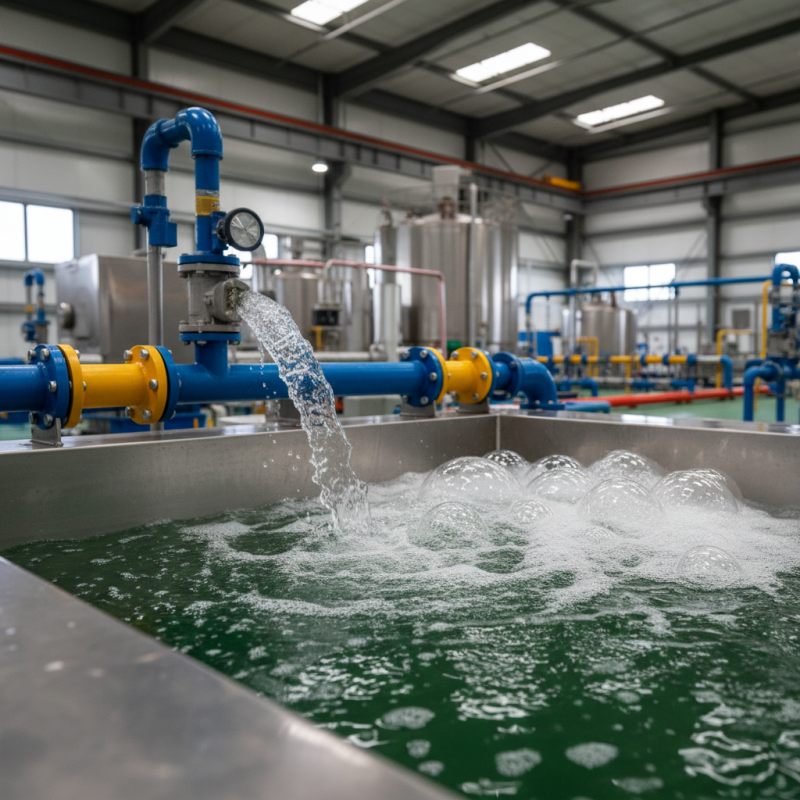
Choosing the right flotation equipment is crucial for various industries. Different applications may require specific features. Understanding your operational needs is vital. For example, mining operations often demand a robust design. It’s not just about efficiency; durability matters too. Equipment may face harsh conditions, so reliability is key.
Consider the materials being processed. Some substances may require specialized equipment to maximize recovery rates. Compatibility is essential for effective separation. In wastewater treatment, flotation systems cater to different types of contaminants. Each setup can vary greatly based on the target material. This variation can make choices complex.
It’s important to factor in maintenance needs as well. Some systems may be high-maintenance, while others offer ease of use. Assessing these aspects can impact long-term costs. Don't overlook energy efficiency, as it plays a significant role in operational expenses. Also, engage with industry experts for insights. Their experience can guide you to make informed decisions. Balancing these factors can lead to improved outcomes, but remember: it’s a process of trial and reflection.
| Industry | Type of Flotation Equipment | Key Factors to Consider | Typical Applications |
|---|---|---|---|
| Mining | Mechanical Flotation Cell | Capacity, Efficiency, Recovery Rate | Copper, Gold, Nickel Extraction |
| Wastewater Treatment | Dissolved Air Flotation | Footprint, Water Quality, Sludge Handling | Industrial Waste, Oil Separation |
| Aquaculture | Induced Gas Flotation | Air Flow Rate, Bubble Size, Material Compatibility | Fish Farms, Shellfish Processing |
| Chemical Industry | Column Flotation | Reagent Types, Product Purity, Scaling | Mineral Processing, Chemical Recovery |
| Food Processing | Plate Flotation | Cleanliness, Process Compliance, Cost | Oils, Fats Recovery |
When selecting flotation equipment, it is essential to understand the various types available and their specific applications. The most common types include mechanical cells, column flotation cells, and dissolved air flotation systems. Mechanical cells are widely used for their versatility and cost-effectiveness. They work well in mining and wastewater treatment, effectively separating minerals from unwanted materials. However, their efficiency may vary based on the specific materials being processed.
Column flotation cells are ideal for fine particle separation. These systems utilize bubbles to elevate desired materials, making them suitable for the mineral processing industry. They can be more efficient than mechanical cells for certain types of ores. Yet, they require careful monitoring and may struggle with extreme variations in feed composition.
Dissolved air flotation (DAF) systems excel in treating wastewater. They remove suspended solids and oils. DAF systems can adapt to various flow rates, but their upfront costs can be higher. It's crucial to consider the specific needs of your operation. Each equipment type has its strengths and weaknesses, so reflection on your requirements is necessary. Take time to analyze your process challenges before making a decision.
When choosing flotation equipment, understanding key performance indicators (KPIs) is essential. These metrics help evaluate system efficiency. The right KPIs provide insights into operation and maintenance needs. Common indicators to focus on include recovery rate, concentrate grade, and froth stability. Each of these factors plays a critical role in assessing flotation performance.
A high recovery rate indicates that the system effectively captures valuable minerals. However, balancing recovery with concentrate grade is crucial. A too high recovery may lower the overall quality of the concentrate. Froth stability is another vital aspect. It profoundly affects the flotation process. If the froth collapses too quickly, valuable minerals may be lost.
**Tip:** Regularly monitor these indicators to make informed adjustments. Implementing a feedback loop can significantly enhance performance. Review and assess results periodically. Stay aware of how changes impact each KPI. Continuous reflection can lead to optimal equipment selection and improved operational efficiency. Explore each aspect carefully to avoid unforeseen pitfalls.
When selecting flotation equipment, cost analysis is crucial. Capital expenses include purchase price, installation, and commissioning costs. Typically, these costs can range from $50,000 to over $500,000, depending on capacity and technology. A comprehensive industry report from Frost & Sullivan suggests that operating expenses for flotation systems can reach 30% of total mineral processing costs.
Operating expenses include energy consumption, maintenance, and labor. Energy costs are significant, often accounting for 15% to 20% of total operating expenses. Continuous operation can lead to unexpected wear and tear, raising maintenance costs. Data from the International Journal of Mineral Processing indicates that a poorly maintained system can increase operating costs by 25%.
Understanding these financial components is vital. A high initial investment may deter some operators. However, focusing on long-term efficiency can yield better returns. Industry leaders report that advanced flotation technologies reduce energy consumption by up to 40%. Balancing initial costs with potential savings can lead to better decisions.
Recent advancements in flotation equipment significantly enhance mineral recovery. Innovations in design and technology optimize the process. Enhanced aeration systems improve bubble size distribution, leading to better particle attachment. Sensors now monitor real-time performance, ensuring efficient operation.
Automated control systems adapt to varying conditions. This flexibility allows for a more responsive approach. Advanced materials reduce wear and energy consumption, which is crucial for long-term sustainability. However, the implementation of new technologies can pose challenges. Training personnel to operate and maintain these systems effectively is essential.
Despite these improvements, the industry still grapples with inefficiencies. Not all operations benefit equally from new technologies, as each situation is unique. A careful evaluation of specific needs is necessary to maximize effectiveness. Organizations must continuously reflect on their processes to embrace change successfully. Choosing the right flotation equipment requires a commitment to innovation and a willingness to adapt.
„Thanks to the LUVIR technology, the solder resist process could be switched directly from the previously used mask exposure to direct exposure. As an outstanding digital solution on the market, this technology has been able to demonstrate fast process times and superior quality on our certified conventional ink in production. This allowed us to fully digitize the solder mask process at low cost – without process or ink adjustments. An excellent benefit to our production in Rot am See.“
Ralf Göhringer (Head of Production WE Rot am See)
I would definitely recommend the Limata machine and team for a future company purchase
Michael Greenaway
Compunetics Inc.
“The Limata ldi has been amazing!! Best thing we did was buy this machine”
Richard Brady
GM
Circuitlabs
“Since 2019, we have been running the Limata X1000 LDI system (including LUVIR for solder mask imaging) in daily production as an addition to our current process with film. The machine was capable of properly exposing Taiyo PSR-4000 BN (DI) solder mask types on normal to high-copper boards using a new and unique direct imaging process. The machine operating interface is very user friendly which allowed for a quick technical training curve. The pre-registration processing reduced several seconds of production time at every print. Limata support and service staff is incomparable. They supported our team every step of the way at basically any time of the day or night, with literally, an immediate response time, customizing the software interface to best fit our Operations and needs.
We have exposed more than 8,000 prints since end of October, on various solder mask colors and some resist film panels. Limata, has proven to be very capable and innovative. They are a strong contender in the industry.
We have very much enjoyed this project, and working with the team!
Thank you Limata for the continued support and being a part of our growth.”
Bill Sezate
Vice President, GM
Summit Interconnect
As a replacement to our current contact exposure process with film, the LIMATA X2000 system including LUVIR-Technology was capable of properly exposing non-LDI solder mask types using a direct imaging process. The machine offers cutting edge software with a very intuitive operating interface which allowed for quick technician training curve. The dual drawer system combined with pre-registration processing reduced several seconds of production time at every machine cycle. Limata support and service staff is world class. They added software patches to keep production running at shortest possible response times, customized the software interface to best fit our in-house Operations system, and even wrote a step-by-step machine processing manual. As a result of the project, we have exposed more than 16,000 times on various product types and solder mask brands/colors. Limata, in a very short timeframe as a company, has definitely shown they are truly innovative and will be challenging the industry of direct imaging for the top spot.
Kevin Beattie
Process Engineer
TTM Technologies
Forest Grove Division
